Table of Contents >> Show >> Hide
- The Players: Norm, Tony, and Why This Hit a Nerve
- What Happened in 2016: The Accusation, the Defense, the Debate
- The “Shallow Grave” Premise: Why Similar Jokes Are So Hard to Judge
- Parallel Thinking vs. Joke Theft: The Unwritten Rules of Stand-Up
- Why Netflix Specials Raise the Stakes (and the Temperature)
- Was One Shot Really “Scrubbed” From Netflix?
- Why the Story Came Roaring Back Years Later
- So… Did He Steal It?
- Conclusion
- Experiences Related to the Topic ()
In stand-up comedy, you can bomb. You can overshare. You can wear the same hoodie for an entire tour and smell like “airport cinnamon roll” by week three. But there’s one career-kryptonite that makes comedians clutch their notebooks like they’re protecting the nuclear codes: joke theft.
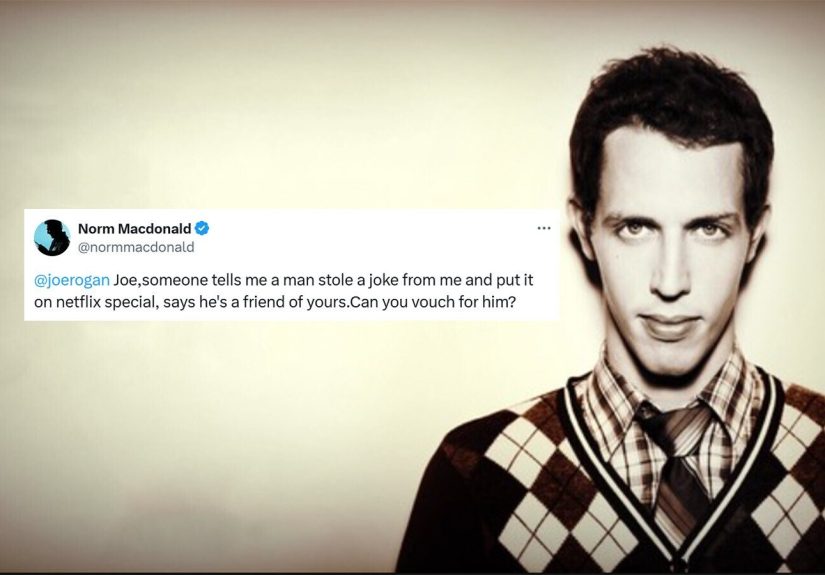
That’s why a weird little moment from early 2016 still gets dragged back into the daylight whenever comedy discourse needs fresh oxygen. The headline version goes like this: Norm Macdonald publicly suggested that Tony Hinchcliffe lifted a setup from Norm’s material for Hinchcliffe’s Netflix special Tony Hinchcliffe: One Shot. The mess got louder because Joe Rogan jumped in to defend Hinchcliffe, fans argued about “parallel thinking,” andlike so many internet flare-upsthe original posts didn’t stick around forever.
And yes, the phrase “terrible Netflix special” is doing a lot of work here. Comedy is subjective. “Terrible” is an opinion. But what’s not subjective is that One Shot became a punchline in certain comedy corners, and it eventually became hard to find through normal streaming channels. That scarcity only made the story more collectiblelike a baseball card you can’t stop arguing about.
The Players: Norm, Tony, and Why This Hit a Nerve
Norm Macdonald: A comic’s comic with a scalpel for timing
Norm Macdonald built a career on saying the quiet part out loudthen staring at the audience like they were the weird ones. His comedy loved long setups, sideways logic, and a delivery so specific that people still argue whether anyone can “cover” a Norm joke the way bands cover songs. (Spoiler: not really.)
Norm died in September 2021 after a private battle with acute leukemia. After his passing, Netflix released Norm Macdonald: Nothing Special in 2022, a final set recorded in 2020 that reminded everyone how much he could do with a simple premise and relentless commitment to the bit.
Tony Hinchcliffe: Roast-comedy operator and “Kill Tony” ringmaster
Tony Hinchcliffe rose through roast-style comedysharp, mean, fast, and built for the kind of rooms where the audience laughs while also checking if the exit signs are working. He’s best known today as the host of Kill Tony, a live show/podcast where new comics do a minute and then get evaluated (or spiritually disassembled) by Tony and guests.
But back in 2016, Hinchcliffe had a Netflix special: Tony Hinchcliffe: One Shot, filmed as a single continuous take at The Ice House in Pasadena. The concept was the selling point: no edits, no safety netjust a long tightrope walk in one unbroken shot.
What Happened in 2016: The Accusation, the Defense, the Debate
The core of the story is simple: Norm saw (or was sent) a clip from Hinchcliffe’s special and believed a specific idea/setup was too close to Norm’s own materialparticularly a moment associated with Norm’s “Janice” routine (as fans commonly label it). On social media, Norm suggested it wasn’t “parallel thinking” and used the word “stolen.”
The situation escalated because comedy fans treat joke theft like a true-crime documentary where the murderer is “a guy who tells premises.” People immediately started comparing clips and timestamps. Some agreed with Norm. Some didn’t. Some argued Norm was half-trolling, which is a very Norm thing to do: accuse someone of plagiarism while also sounding like he’s doing a character who accuses people of plagiarism.
Joe Rogan then jumped in publicly to defend Hinchcliffe, saying the jokes were about the same subject but “completely different.” That defense mattered because Rogan is famous in comedy circles for treating joke theft like a felonyespecially after his very public feud with Carlos Mencia in the 2000s. In other words, if Rogan is telling you “this isn’t theft,” some fans take that like a Supreme Court ruling. Others take it like… Joe Rogan saying something on the internet. So: mixed authority.
Meanwhile, the original Norm posts became harder to locate later because at least some were deleted. But screenshots, reposts, and forum threads kept the substance alive: Norm believed it was stolen; Rogan said it wasn’t; the audience did what the audience always doesturned it into a permanent group project.
The “Shallow Grave” Premise: Why Similar Jokes Are So Hard to Judge
The disputed overlap (as fans described it) centers on a premise about serial killers and burying bodiesspecifically the idea that the most dangerous, exhausting, or “make-or-break” part isn’t the murder, it’s digging the grave… and that a killer might get lazy right at the end and leave a shallow grave.
If you’re thinking, “That sounds like a premise more than a punchline,” congratulationsyou understand why these arguments never die. Stand-up is built from premises (big ideas), setups (how you frame them), turns (the angle change), and punchlines (the payoff). Two comics can share a premise without sharing a joke. Two comics can share a setup without sharing a punchline. And sometimes the “steal” allegation turns on something squishier: cadence, wording, sequence, or an unmistakable “this is the same joke wearing a fake mustache.”
In this case, defenders argued the bits diverged in structure and payoff. Critics argued the similarity was too specific to ignore. What makes it extra messy is that Norm’s comedy often used plain language and classic ideasso when someone else uses a similar idea, it can feel like a copy even when the intention was independent.
Parallel Thinking vs. Joke Theft: The Unwritten Rules of Stand-Up
Comedians talk about parallel thinking the way parents talk about “kids these days”: it’s always happening, and it’s always somebody else’s fault. Parallel thinking means two comics independently arrive at a similar bit because they share the same cultural inputs: the same news story, the same social trend, the same everyday annoyance, the same “wait, why do we do it like that?”
Joke theft, on the other hand, usually looks like one of these:
- Same route, same destination: not just the premise, but the same sequence of logical steps.
- Signature phrasing: the kind of wording that doesn’t happen by accident.
- Too close, too soon: one bit appears shortly after another becomes known in the same scene.
- A pattern: the comic has multiple “coincidences,” which stops feeling like coincidence.
Legally, it’s complicated. Copyright generally protects expression, not ideas. And jokes are short. That’s why stand-up has historically relied on social enforcement: reputations, call-outs, and the dreaded label “thief” whispered backstage like it’s a curse word you can’t wash off.
Norm’s accusation landed hard because it came from someone widely respected for originality and craft. But it also landed in a space where the “jury” is the internet: enthusiastic, underqualified, and extremely confident while typing in all caps.
Why Netflix Specials Raise the Stakes (and the Temperature)
In a club, a questionable similarity might get handled privatelyan awkward conversation, a quiet warning, a comic deciding to drop a bit. On Netflix, the stakes change:
- Scale: the material reaches millions, not a Tuesday crowd of 38 people and one bartender who hates you.
- Receipts: viewers can rewind, clip, and compare. Forever.
- Legacy: a recorded special becomes a timestamp that can outlive your reputation.
That’s why accusations tied to a filmed special feel “bigger” than the usual comedy-scene noise. Whether you believe Norm or not, the claim attached itself to the special like gum under a theater seat.
Was One Shot Really “Scrubbed” From Netflix?
Here’s where the internet lore meets the messy reality of streaming catalogs. Tony Hinchcliffe: One Shot is documented as a Netflix title and a 2016 TV special, and it’s been listed as unavailable in various places at different times. Streaming libraries change constantlylicenses expire, regions differ, and “available” can mean “available where you live.”
Tracking sites have reported that it left Netflix’s U.S. availability years ago (roughly the 2016–2018 window). That doesn’t prove anything about quality or intentit just explains why so many people talk about it like it’s a missing episode of television that only exists in screenshots and arguments.
Why the Story Came Roaring Back Years Later
Old comedy disputes don’t disappear; they hibernate. Then something happensa new controversy, a renewed spotlight, a fresh Netflix dealand the internet goes digging like a true-crime fan with a shovel and an espresso.
In late October 2024, Hinchcliffe received major backlash for jokes made during a Trump rally at Madison Square Garden, including a line that compared Puerto Rico to “a floating island of garbage.” The blowback was widespread across news and politics, and the Trump campaign publicly distanced itself from the remark. Around the same time, articles resurfaced older controversies and comedy-community disputesbecause that’s what happens when someone becomes a headline.
Then, in March 2025, Netflix announced a deal involving Kill Tony specials and a Hinchcliffe stand-up hour, putting him back into the “Netflix comedy” conversation. That combinationfresh platform attention plus old allegationshelped revive the Norm story again.
So… Did He Steal It?
If you were hoping for a tidy verdict, comedy is not your genre. The honest answer is: Norm believed the similarity crossed the line, and many fans still debate whether it was theft or parallel thinking. The original social posts aren’t all easily accessible now, so the conversation relies heavily on archived threads, screenshots, and memorynever a recipe for peace.
What you can take away is bigger than one premise about shallow graves: stand-up is a craft built on originality, and even the suggestion of borrowing can stain a reputation. That’s why comedians guard their material fiercely, why they obsess over wording, and why the community’s informal “IP system” can be harsher than anything a courtroom would ever do.
Conclusion
Norm Macdonald accusing Tony Hinchcliffe of joke theft wasn’t just a spicy internet momentit was a peek into comedy’s internal justice system. One side sees an iconic comic protecting the craft. The other side sees a premise-level overlap blown up into a scandal. Either way, the story keeps resurfacing because it hits a nerve: comedy is personal, jokes are currency, and nobody wants to laugh at something that feels borrowed.
If you’re a fan, the best move is simple: compare thoughtfully, leave room for nuance, and remember that “parallel thinking” is real but so is the temptation to take a shortcut when the cameras are rolling.
Experiences Related to the Topic ()
If you’ve ever hung around stand-up long enoughopen mics, small clubs, or even just the internet comment section where confidence goes to cosplay as expertise you learn that joke-theft talk is its own species of weather. It rolls in fast, everyone swears they felt the pressure drop first, and after it passes, the room smells like adrenaline and energy drinks.
Picture a typical open mic night: the stage is three inches higher than the floor, the spotlight is a single bulb doing its best, and the audience is half comedians and half people who wandered in because the bar had a two-for-one special. A comic goes up and does a bit about a shared cultural idea a true-crime obsession, a strange airline policy, a weird thing their phone autocorrect did. It gets a mild laugh. No big deal.
Then someone else goes up later and hits a similar premise. Not the same jokesjust the same neighborhood. And suddenly you can feel the air change. Not because the audience cares, but because the comedians do. Backstage, people start playing mental pinball: “Did I hear that before? Did they hear me do that? Who wrote it first? Is it the same angle or just the same topic?”
Most of the time, it’s honestly parallel thinking. Two brains bump into the same idea because the world is handing everyone the same inputs: news stories, viral clips, shared anxieties. Stand-up is a mirror, and a lot of us are standing in the same bathroom. But there’s a different feeling when it’s not parallel thinkingwhen the rhythm, the turns, and the phrasing line up like tracing paper. The room doesn’t just get tense; it gets quiet in a way that feels intentional.
What’s fascinating about the Norm-and-Tony story is how it mirrors that backstage vibe, just at internet scale. When a famous comic accuses another famous comic, it’s like someone grabbed the mic at the bar and yelled, “Hey! Everybody come look at this!” Suddenly, people who’ve never done five minutes are acting like forensic accountants: pausing clips, comparing words, building timelines. Meanwhile, actual comedians are often thinking: “This could be nothing… or it could be everything.”
And the streaming era adds another emotional layer. When a joke lives on a special, it’s not ephemeral anymore. It’s not “I said that once in Cleveland and then I fixed it.” It’s “This is recorded, indexed, clipped, and stored forever.” That permanence is why accusations feel so combustiblebecause they threaten the thing comics need most: trust that their voice is theirs.
Even as a viewer, you can feel it. When you suspect a joke is borrowed, you don’t just laugh lessyou start listening differently. You’re scanning for authenticity, for fingerprints, for that weird little spark that says, “Only this person would say it this way.” That’s why fans still argue about these stories years later: not because they love drama (okay, also because they love drama), but because comedy is intimate, and nobody likes feeling tricked by a laugh.