Table of Contents >> Show >> Hide
- Why NORDLI Works So Well as a Nightstand
- Wireless Charging Basics (So Your Phone Actually Charges)
- Three Ways to Make a NORDLI Nightstand “Wireless-Charging Ready”
- Designing a NORDLI Wireless Charging Setup That Feels Built-In
- Practical Styling Ideas (Because Your Nightstand Is Also a Stage)
- Safety, Heat, and the Unsexy Stuff That Actually Matters
- Who This Setup Is Perfect For (and Who Might Want a Different Route)
- Conclusion
- Real-Life Experiences: Living With a NORDLI Nightstand + Wireless Charging (Extra Detail)
The modern bedroom has a problem. Not the “where did my other sock go?” mystery (that’s a separate
task force). I’m talking about the nightstand cable salad: one cord for your phone, one for your
watch, one for your earbuds, one for your lamp, and somehow a random HDMI cable you swear you
didn’t invite.
Enter the IKEA NORDLI nightstand setupspecifically the NORDLI 2-drawer chest used as a
bedside tablepaired with wireless charging. Done right, it becomes a clean, practical, “why
didn’t I do this sooner?” upgrade: real storage, a sturdy top, and a charging spot that doesn’t require
nightly plug-in gymnastics.
This guide breaks down what the NORDLI nightstand does well, the wireless charging options that
actually make sense at the bedside, and how to combine the two without turning your room into a
science fair project. There’s also a longer “real-life” experience section at the end (because the truth
is always in the day-to-day details).
Why NORDLI Works So Well as a Nightstand
It’s the “Goldilocks” size for most beds
The NORDLI 2-drawer chest lands in a sweet spot: compact enough for tight bedrooms, but substantial
enough to feel like a real piece of furniturenot a flimsy side table that wobbles when you sneeze.
The top is wide enough for a lamp, a water glass, and a charging zone, while the two drawers give you
actual storage for the stuff you want hidden (cables, books, hand cream, spare chargers, and that one
chapstick you keep buying because the others vanish into a pocket dimension).
Soft-close drawers and smooth runners: small luxury, big mood
NORDLI’s integrated damper means drawers close slowly and quietlyuseful if you’re grabbing something
at night and don’t want to announce it to the entire household. The concealed runners help drawers glide
smoothly even when you load them up with heavier items. These details matter because a nightstand is
the furniture equivalent of an everyday carry: you use it constantly, and friction adds up.
Adjustable feet: underrated problem-solver
Bedrooms are rarely perfect. Floors slope, rugs bunch, older homes settle. NORDLI’s adjustable feet let
you compensate for uneven flooring so the unit sits stableespecially helpful if you’re adding wireless
charging, because stability makes “drop-and-charge” more reliable (your phone won’t slide off a tilted top
like it’s auditioning for a stunt show).
Modular family vibes
One reason NORDLI is popular is that it’s part of a modular bedroom storage lineup. That matters if you
want your nightstands to match a larger dresser or you’re building a coordinated, Scandinavian-style bedroom
without playing “guess the white finish” across different collections.
Wireless Charging Basics (So Your Phone Actually Charges)
Qi vs. Qi2: what’s the difference in normal-human terms?
Most wireless charging uses Qi (pronounced “chee”), a widely adopted standard that lets many
phones and accessories charge on compatible pads. The newer generation, Qi2, adds more consistent
alignment and can support faster charging in certified setupsoften helped by magnets that guide the phone into
the ideal spot. In plain language: Qi is “wireless charging,” and Qi2 is “wireless charging that’s less fussy
about placement and can be faster when everything supports it.”
Wireless charging is about convenience, not speed
At the bedside, wireless charging shines because it reduces friction. You set your phone down and it charges.
You don’t hunt for a cable. You don’t bend the connector at an angle that makes your phone feel like it’s in
physical therapy.
The tradeoff is that wireless charging often runs warmer and may charge slower than a good wired connection.
That’s not a dealbreaker at nightsleep is long, charging is patientbut it is something to factor into your
setup, especially if you go with hidden-under-the-surface chargers that prioritize invisibility over speed.
Cases and “why is my phone charging like it’s on a coffee break?”
Thick cases, metal inserts (like magnetic rings), and wallets between the phone and the charging surface can reduce
charging efficiencyor stop it altogether. If you want a reliable wireless-charging nightstand, your phone case
matters almost as much as the charger.
Three Ways to Make a NORDLI Nightstand “Wireless-Charging Ready”
When people say “NORDLI nightstand with wireless charging,” they usually mean one of these approaches:
Option A: Hidden charging (under the top) for a clean, built-in look
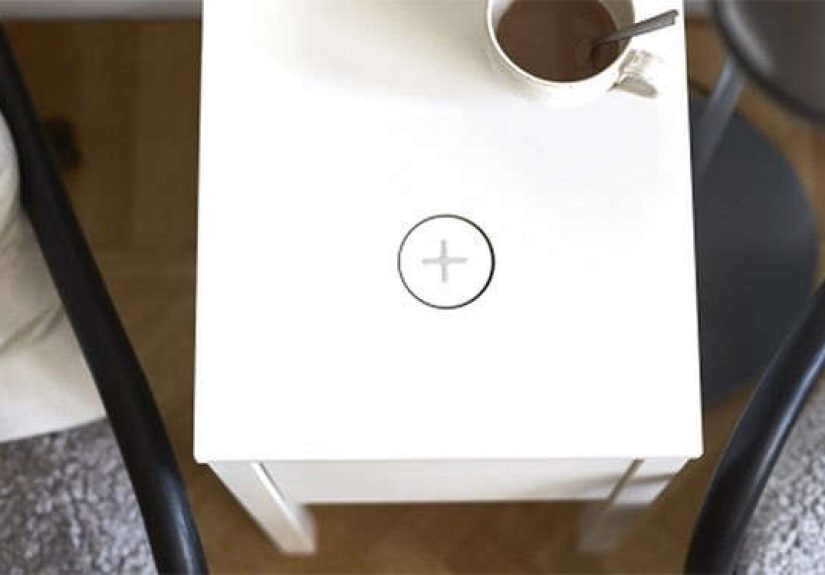
This is the minimalist dream: the charging hardware is mounted underneath the NORDLI top, so the surface stays clean.
You place your phone on the “magic spot” and it chargesno visible pad.
The big advantage is aesthetics and everyday simplicity. The big limitation is physics: charging through a surface
typically means standard-speed wireless charging, and you’ll need to be mindful of surface thickness, materials, and
positioning.
Best for:
- People who hate visual clutter
- Bedrooms where you want a “hotel tidy” look
- Anyone who wants the nightstand top to stay multi-purpose (book, lamp, cup, charging spot)
Tradeoffs:
- Placement mattersyour phone needs to sit in the right zone
- Usually standard-speed wireless charging
- Thick cases may reduce reliability
Option B: A simple pad on top (the “no-drama” approach)
This is the easiest route: put a wireless charger pad on top of the NORDLI and plug it into power.
It’s not invisible, but it’s straightforward and adaptable. You can also upgrade chargers later without
touching the furniture.
Best for:
- Renters (no modifications, no commitment)
- People who swap phones often
- Anyone who wants predictable charging placement
Tradeoffs:
- You’ll see the charger
- You still need some cable management (unless you enjoy cord-based decor)
Option C: A Qi2 magnetic charger for faster, more reliable alignment
If you want a “set it down and it just works” feeling, Qi2 magnetic chargers can be a great bedside match
especially if your phone supports magnetic alignment (or you use a compatible case). The magnets help guide the
phone into the optimal charging position, which can improve consistency.
Best for:
- People who want more reliable alignment than basic Qi pads
- Anyone who tends to drop their phone down at weird angles when half asleep
- Households with multiple devices that benefit from a more standardized “snap” placement
Tradeoffs:
- Not every phone/case combination benefits equally
- You’ll still want thoughtful cable routing
Designing a NORDLI Wireless Charging Setup That Feels Built-In
Step one: decide what you want your nightstand top to do
Before you pick a charger style, decide how you actually live:
- Are you a “clear surface” person? Hidden charging is your best friend.
- Do you keep a book and a water glass up top? Choose a charger location that doesn’t compete.
- Do you charge earbuds and a phone? Consider a second pad or a compact multi-device setup nearby.
Step two: pick a “charging zone” you can hit without looking
The best bedside charging zone is easy to land on in the dark. A good mental trick is to place it slightly toward
the back corner of the nightstand (away from the edge), so your phone naturally rests where it’s less likely to
get knocked off during midnight blanket negotiations.
Step three: make the cable disappear on purpose
Wireless charging still needs power, so cable management is the difference between “sleek” and “electronics aisle.”
Aim for a clean cable path down the back of the NORDLI, secured so it doesn’t migrate into view.
Step four: keep drawers functional
Your drawers are the whole point of choosing a chest-style nightstand. Don’t let charging hardware steal that space.
A clean setup keeps cables and adapters routed behind the unit or positioned so they don’t interfere with drawer
movement. The goal is: drawers open smoothly, and you don’t snag a cord like it’s a tripwire.
Practical Styling Ideas (Because Your Nightstand Is Also a Stage)
The “bedside landing strip” layout
- Back left: lamp
- Back right: wireless charging zone
- Front: small tray for rings, lip balm, and keys
This layout keeps your phone charge spot consistent while still giving you room for the tiny life objects that appear
at night like they were teleported in.
Hide the mess, not the essentials
Use the top drawer for the stuff you need oftensleep mask, charging cables, hand lotion, earplugsso your nightstand
top stays calm. Use the bottom drawer for bulkier items like books you’re “definitely going to read next” (and yes,
that includes the one you started six months ago).
Safety, Heat, and the Unsexy Stuff That Actually Matters
Anchor tall or drawer-heavy furniture when needed
A nightstand is smaller than a full dresser, but it’s still smart to take furniture stability seriouslyespecially in
homes with kids or pets who climb, jump, or interpret drawers as ladders. Anchoring guidance exists for a reason, and
it’s much easier to install safety hardware than to deal with a tip-over accident.
Wireless charging generates warmthplan around it
Wireless charging uses magnetic induction, and warmth is part of the deal. Keep the charging zone clear of metal
objects (coins, keys, random paperclips) and don’t bury your phone under a stack of stuff while it’s charging.
If your phone regularly feels hot, improve airflow and consider switching to a charger that’s more efficient
(or simply charge earlier in the evening so it’s not working hard all night).
Case compatibility: make it boring by making it reliable
If your charging setup is inconsistent, your case is a prime suspect. Thick cases, metal components, and wallet
attachments can all interfere. For a “NORDLI nightstand with wireless charging” setup that you can trust nightly,
choose a case designed for wireless charging and keep the charging spot clear.
Who This Setup Is Perfect For (and Who Might Want a Different Route)
Perfect for:
- Small bedrooms where you want storage without a bulky nightstand footprint
- Minimalists who crave clear surfaces and fewer visible cords
- Busy people who want “drop phone, go to sleep, wake up happy” simplicity
Consider alternatives if:
- You need a much wider top for a large lamp, decor, and multiple devices
- You strongly prefer fastest possible charging (a good wired setup still wins)
- You want built-in charging with zero alignment concerns (a dedicated charging stand might be easier)
Conclusion
A NORDLI nightstand with wireless charging is one of those upgrades that feels smalluntil you live with it.
The drawers give you real storage, the design is clean and modern, and wireless charging reduces daily friction.
Whether you go hidden-under-the-top for a seamless look, a simple pad for maximum flexibility, or a Qi2 magnetic
charger for better alignment, the win is the same: fewer cords, less clutter, and one less tiny annoyance at the end
of the day.
And honestly? Anything that makes bedtime easier is basically self-care. (Yes, even if your version of self-care is
“not stepping on a charging brick at 2 a.m.”)
Real-Life Experiences: Living With a NORDLI Nightstand + Wireless Charging (Extra Detail)
In real bedrooms, the magic of a wireless-charging nightstand isn’t the spec sheetit’s the routine. Most people
notice the upgrade in two moments: the last 30 seconds before sleep and the first 30 seconds after waking.
At night, you’re tired, the lights are low, and the “find the cable, find the right side of the connector, plug it in”
ritual feels like it requires a tiny engineering degree. A consistent charging zone on a NORDLI top changes that into
a single motion: place phone, done. It’s a small reduction in effort that feels oddly satisfyinglike finally putting
your keys in the same spot every day and suddenly becoming a functional adult.
The drawers are what make NORDLI particularly good for this. People tend to develop a “top drawer = daily essentials”
habit quickly. The top drawer becomes the home for spare charging cables, a compact power adapter, hand cream, and a
backup set of earbuds. The bottom drawer becomes the “quiet storage” zone: a book, a notebook, maybe a spare blanket.
What changes is the surface: it stays calmer, because the clutter has somewhere to go. And when the surface is calm,
wireless charging feels more reliablethere’s nothing bumping your phone out of position.
The biggest real-life surprise is that wireless charging is only as effortless as your alignment. With a basic pad,
some users end up doing the “micro-adjust shuffle”sliding the phone half an inch until the charging indicator appears.
That’s why people who charge half asleep often prefer a magnetic Qi2-style charger or a setup that subtly “guides”
placement (like a small tray edge or a consistent corner location). Once your hands learn the landing zone, it becomes
automatic. If you’ve ever gotten good at tossing your phone onto your bed without looking, it’s thatbut with charging.
Another common experience: charging speed expectations reset. Overnight, slower charging is usually fine, but it can
feel disappointing if you’re expecting a rapid battery jump in 10 minutes. In practice, people who love the setup
use it for what it’s great at: steady, predictable charging while they sleep. If you want speed, many keep a wired
fast-charging cable in the top drawer for “emergency top-ups,” then default to wireless for nightly convenience.
That hybrid approach ends up being the best of both worlds: your nightstand stays neat, but you’re never stuck at
3% battery when you need to run out the door.
Heat comes up in real-life use, tooespecially if you place your phone on the charger while it’s already warm (after
streaming video, gaming, or using navigation). People who are happiest long-term tend to build a tiny habit: phone goes
onto the charger before it becomes a space heater. And if the phone ever feels too warm, they simply move it slightly, clear
the surface, or swap cases. Wireless charging works best when it’s boring, consistent, and not fighting extra barriers.
Finally, there’s a subtle “bedroom vibe” benefit. A NORDLI nightstand with a defined charging zone tends to reduce the
visual reminder of work and tech at bedtime. Fewer cables on display, fewer devices sprawled everywhere, and more of a
“this is where sleep happens” atmosphere. That’s not magic, but it is environment designsmall choices that make your
space feel more intentional. And if your bedroom feels intentional, you’re more likely to keep it that way, which is
basically the adult version of leveling up.