Table of Contents >> Show >> Hide
- Why Gypsy Rose Blanchard’s Early Release Became National News
- Understanding the Abuse at the Center of the Case
- The Complicated Road to Prison and Parole
- What Freedom Actually Meant for Gypsy Rose
- Why the Public Still Can’t Look Away
- The Bigger Lesson Behind the Release
- Conclusion
- A Longer Reflection on the Experiences Surrounding This Case
- SEO Tags
Some headlines flash by like a highway billboard. This one does not. The story of Gypsy Rose Blanchard has never fit neatly into a single box, and that is exactly why her early prison release drew such intense attention. It is a true-crime story, yes, but it is also a story about child abuse, medical deception, trauma, control, public obsession, and the uneasy question of what justice looks like when a victim also becomes part of a crime.
When Blanchard was released from a Missouri prison in late December 2023 after serving most of a 10-year sentence, the news instantly reignited national debate. For some people, her release felt like overdue mercy for a woman who had lived through years of abuse under her mother, Clauddine “Dee Dee” Blanchard. For others, the case remained morally tangled because it ended in a killing. And for nearly everyone watching, the story carried the same unsettling message it always has: sometimes abuse does not look loud, obvious, or easy to prove. Sometimes it wears a caregiver’s smile and shows up in a doctor’s office holding a clipboard.
Why Gypsy Rose Blanchard’s Early Release Became National News
Blanchard’s release was not a sudden magic trick pulled from a legal hat. It followed a parole decision and came after she had served the large majority of her sentence for second-degree murder. She had pleaded guilty in 2016 for her role in the 2015 killing of her mother, while her former boyfriend, Nicholas Godejohn, was later convicted and sentenced to life in prison without parole for carrying out the murder.
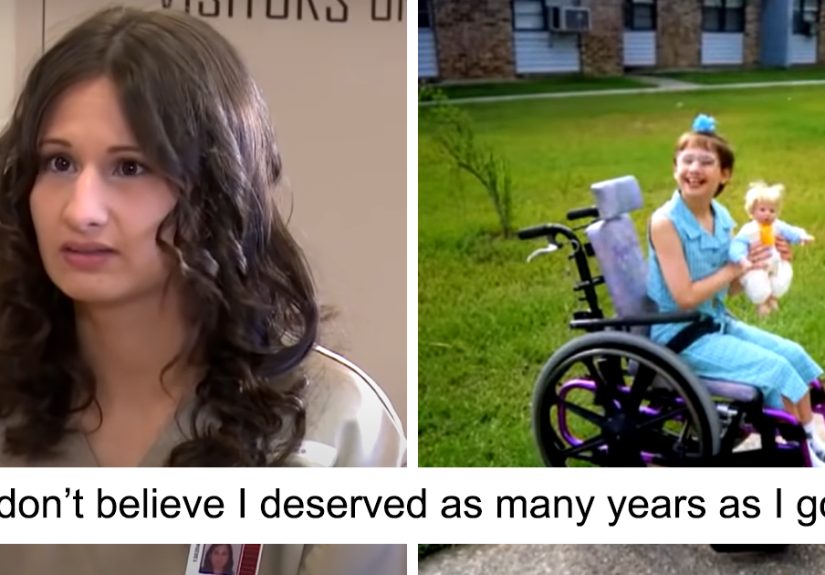
On paper, those are the headline facts. In human terms, though, the case was never just about a plea agreement or a release date. It became one of the most discussed abuse cases in America because investigators and the public learned that Gypsy had spent years being presented as desperately ill, disabled, and fragile when much of that story had allegedly been fabricated or exaggerated by her mother.
That revelation turned the case from a straightforward murder headline into something far more disturbing. Neighbors believed Gypsy could not walk. Supporters believed she was gravely sick. Charities, doctors, and community members were drawn into a life built around sympathy, urgency, and constant medical drama. Then the curtain got yanked back, and America collectively had the same reaction: wait, what?
That collective shock is part of why her prison release drew such a huge audience. People were not simply reacting to a woman leaving prison. They were revisiting one of the most haunting modern examples of medical child abuse and asking whether the legal system had punished a perpetrator, a victim, or some painful combination of both.
Understanding the Abuse at the Center of the Case
The phrase many people still know is Munchausen by proxy. The more current clinical term is factitious disorder imposed on another, or FDIA. In plain English, it describes a form of abuse in which a caregiver lies about, exaggerates, or even causes illness in someone under their care in order to gain attention, sympathy, control, or validation.
That matters because the Gypsy Rose Blanchard case was not built on a simple family lie or a few exaggerated symptoms. The allegations described a long pattern of deception that reportedly shaped nearly every part of Gypsy’s childhood and young adult life. Serious illnesses were claimed. Physical limitations were emphasized. Unnecessary medical treatment became part of daily reality. Her independence was restricted. Her identity was essentially written by someone else, as if her life were a script and she had not been given the courtesy of reading it.
Cases like this are notoriously hard to identify. Medical child abuse can hide behind what looks like devoted caregiving. The abuser often appears attentive, informed, and deeply involved. That can confuse outsiders, delay intervention, and make victims look unreliable when they try to speak up. In other words, the very performance that creates the abuse can also protect the abuser. It is manipulation with a stethoscope nearby.
That is one reason this case continues to hit such a nerve. It exposes how systems that are supposed to protect vulnerable people can be fooled when abuse is wrapped in medical language and parental devotion. It also reminds the public that not every victim understands, at every moment, that they are a victim. Trauma can blur reality. Long-term control can rewrite a person’s internal map of what is normal.
The Complicated Road to Prison and Parole
None of this erases the crime. That point is essential. Dee Dee Blanchard died in 2015, and the legal system treated that death as a homicide. Gypsy Rose Blanchard later accepted responsibility through a guilty plea to second-degree murder. Her sentence reflected both the seriousness of the crime and the extraordinary abuse allegations surrounding it.
That balance is what made the case so legally and emotionally complicated from the beginning. Prosecutors, defense teams, journalists, and viewers all had to wrestle with the same uncomfortable truth: abuse can help explain a crime without making the crime disappear. That is not a tidy answer. It is not a TV answer. It is a real-life answer, which is usually messier and much less satisfying.
By the time parole became part of the conversation, public sympathy for Gypsy had already been shaped by years of documentaries, interviews, articles, and dramatizations. Many people saw a woman who had already lost most of her life before she ever entered prison. Others worried that public fascination had turned a deeply tragic case into binge-watch material. Both reactions existed at once, sometimes in the same person.
Her early release, then, was not just a criminal justice update. It was a cultural event. It asked the public to decide whether prison had served its purpose, whether trauma should weigh heavily in sentencing and parole, and whether society knows how to talk about victims whose stories do not fit cleanly into saint-or-sinner categories.
What Freedom Actually Meant for Gypsy Rose
Freedom sounded glamorous in the headlines, but in reality it came with heavy baggage. Blanchard walked out of prison into a world where millions of strangers already knew her name, believed they knew her story, and had opinions ready to go before she even picked up her suitcase. That is not normal reentry. That is reentry with a spotlight taped to your forehead.
In interviews around her release, she described wanting ordinary things: privacy, stability, connection with family, and the chance to figure out who she was outside both abuse and incarceration. That sounds simple, but it is anything but. Imagine trying to build an adult identity after years of coercive control, years in prison, and years of internet commentary from people who act like they earned season passes to your trauma.
That post-release reality helps explain why the story continued making news long after the prison gates opened. She became a public figure almost overnight, drawing enormous social media attention, media bookings, documentary coverage, and fresh debate about accountability, healing, and spectacle. In later chapters of her post-prison life, she would also speak publicly about the emotional strain of that attention.
So when people say Gypsy Rose Blanchard was “granted early release,” the phrase is technically correct but emotionally incomplete. Yes, she left prison early. But she did not step into a blank slate. She stepped into notoriety, scrutiny, and the difficult work of rebuilding a self that had been controlled first by an abusive parent and then by a correctional system.
Why the Public Still Can’t Look Away
The fascination around this case is not hard to understand, even if it is uncomfortable to admit. It contains nearly every element that modern audiences latch onto: family betrayal, hidden abuse, medical deception, courtroom drama, moral ambiguity, and a central figure who is both sympathetic and controversial. It is the kind of story that makes people lean in, then feel strange about the fact that they leaned in.
There is also a broader social reason this case endures. It forces a conversation about how abuse is recognized. Many people still picture abuse as visible bruises, loud threats, or obvious violence. This case challenged that image. It showed how abuse can be bureaucratic, clinical, and suffocatingly polite. It can happen through appointments, prescriptions, misinformation, isolation, and emotional domination.
That is part of what made the public response to her release so intense. The case was never just about one woman leaving prison. It became a national cautionary tale about how easy it can be for an abuser to build a false reality when institutions fail to connect the dots.
The Bigger Lesson Behind the Release
If there is a larger lesson in the story of Gypsy Rose Blanchard, it is that justice does not always arrive in a clean package. Sometimes the legal system has to make decisions in cases where victimhood, coercion, responsibility, and punishment overlap in painful ways. That does not make accountability optional. It does mean context matters.
Her release also revived attention on factitious disorder imposed on another and the need for better awareness among medical professionals, schools, relatives, and communities. Abuse that centers on fake illness can remain hidden for years because it exploits our instinct to trust caregivers and to protect sick children. That instinct is good. It just becomes dangerous when manipulation is smarter than the system around it.
For advocates, the case underscores the importance of listening carefully when something feels off. For the justice system, it is a reminder that trauma history cannot be treated like a footnote. And for the public, it is a warning not to flatten complicated lives into simple slogans. “Victim.” “Mastermind.” “Monster.” “Celebrity.” None of those labels does enough work on its own.
Conclusion
Gypsy Rose Blanchard’s early prison release mattered because it reopened one of America’s most unsettling abuse cases and forced the public to confront its contradictions all over again. She was a victim of prolonged medical child abuse. She also took part in a crime that ended a life. Both things are true. The difficulty of holding those truths together is exactly why this story continues to echo.
In the end, the real significance of her release may be less about true-crime curiosity and more about what the case reveals: abuse can hide in plain sight, justice can be painfully imperfect, and freedom after trauma is never as simple as opening a door. Sometimes release is not the end of the story. It is the beginning of the hardest chapter, where a person must learn, often in public, how to live beyond survival.
A Longer Reflection on the Experiences Surrounding This Case
To understand why this topic remains so emotionally charged, it helps to look beyond the legal milestones and into the lived experience surrounding a case like this. The experience of someone raised under coercive medical abuse is not just about bad memories. It can affect identity, body image, trust, relationships, and even the ability to make ordinary choices. When a person is told for years who they are, what they can do, what they supposedly suffer from, and what the world thinks of them, freedom can feel less like a party and more like stepping into bright sunlight after years underground.
For survivors of controlling abuse, simple decisions may not feel simple at all. Choosing what to wear, what to eat, where to go, or whom to trust can carry surprising emotional weight. There is often grief mixed into the relief. Grief for the lost childhood. Grief for the years wasted. Grief for the version of life that might have existed if someone had stepped in earlier. In that sense, release is not only physical. It is psychological, social, and deeply uneven.
That is one reason Gypsy Rose Blanchard’s post-prison life attracted such fascination. The public was not just watching a former inmate. It was watching someone attempt to learn normal adulthood after abnormal control. Everyday experiences that many people barely notice, such as making coffee, going shopping, speaking openly online, or setting personal boundaries, can carry oversized meaning when a person has spent years being managed by someone else. Ordinary life becomes extraordinary because it was once denied.
There is also the strange experience of being both a survivor and a public spectacle. That combination can be brutal. Survivors often need privacy to heal, but notoriety makes privacy expensive. Every public appearance invites commentary. Every relationship becomes content for strangers. Every mistake gets treated like evidence in a courtroom that never really adjourned. That dynamic can make healing harder because it encourages people to perform recovery instead of quietly living it.
Families are affected too. Parents, step-parents, relatives, and loved ones often find themselves rebuilding trust after years of separation, secrecy, and public noise. Reentry after prison already requires patience. Reentry after abuse requires even more. Add cameras, internet chatter, and cultural fascination, and the process can start to feel less like a homecoming and more like a reality show no one actually auditioned for.
What makes this story resonate so widely is that it speaks to a universal fear: what happens when the person who is supposed to protect you becomes the person shaping your harm? That question is bigger than one case. It reaches into hospitals, schools, courts, and homes. It reminds readers that manipulation is not always dramatic. Sometimes it is incremental, persuasive, and wrapped in concern.
That is why the lasting conversation around Gypsy Rose Blanchard should be bigger than celebrity, scandal, or social media. The deeper issue is how society responds to hidden abuse, how institutions can do better, and how survivors can be given room to rebuild without being reduced to a headline forever. Cases like this do not just ask what happened. They ask what kind of support, awareness, and accountability should come next.