Table of Contents >> Show >> Hide
- The Tattoo That Became a Love Letter
- Why a Tattoo Can Mean More Than a Speech
- What Research Says: Support Isn’t “Nice”It’s Protective
- Support That Actually Helps: Practical, Doable, Human
- If You’re Considering a Support Tattoo: Thoughtful Ideas
- Common Questions People Ask (And Better Answers)
- What This Story Really Teaches Us
- of Real-World Experiences Around Support Like This
- Conclusion
There are a lot of ways to tell your kid, “I’m with you.” You can say it. You can show up. You can
correct Aunt Linda (again) when she “forgets” pronouns (again). And sometimes, you can literally
ink it into your skin in a way that makes your love impossible to ignore.
That’s why the story of a mom who updated a tattoo to reflect her transgender son’s identity still
hits people right in the feelings. It’s not just about body art. It’s about what happens when a
family treats a child’s truth like something worth celebratingloudly, proudly, and permanently.
The Tattoo That Became a Love Letter
The headline sounds like a quick feel-good scroll. But the reason it went viral is deeper: the
tattoo update wasn’t “a makeover.” It was a choice to align a public symbol with a private reality.
In other words, it was a parent saying: I see you, and I want the world to see you too.
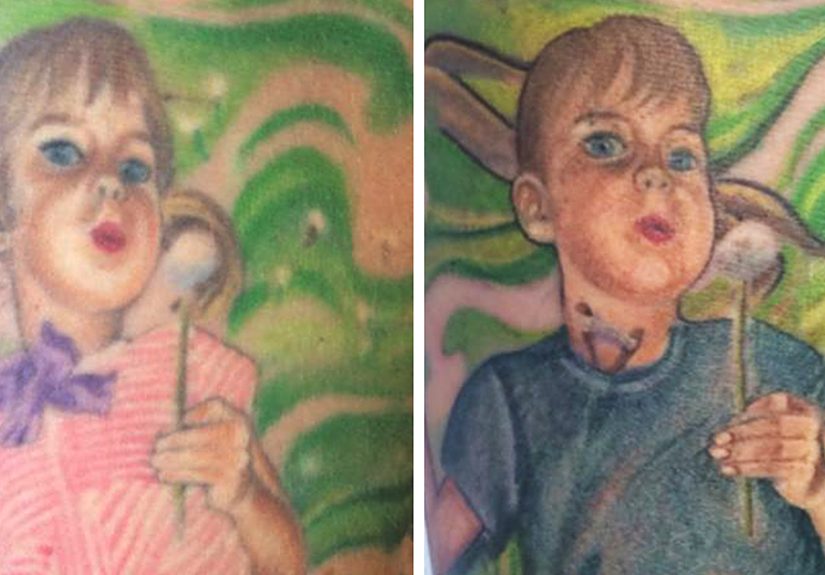
In the widely shared story (covered by major outlets), the original tattoo was a portrait-style
image of the parent’s child from years earlierdrawn based on how the child was perceived at the
time. After the teen came out as transgender, the parent worked with a tattoo artist to revise the
image so it better matched who their son is: haircut, clothes, and small details that transformed
the portrait from “then” to “now.”
The update mattered because it removed a tiny, everyday sting that many trans people know too well:
being represented as someone you are notespecially in spaces that are supposed to feel safe.
A family portrait should feel like home. If it doesn’t, changing it can be a radical kind of care.
Why a Tattoo Can Mean More Than a Speech
Here’s the thing about a tattoo: it’s not a temporary social media post you delete after a tense
Thanksgiving. It’s a long-term commitment. That’s why supportive tattoos land emotionallyeven on
people who don’t like needles, don’t like pain, and definitely don’t like explaining their
relationship decisions to strangers at Target.
1) It turns support into action
Many parents feel supportive internally but aren’t sure what to do externally. A tattoo update is
an unmistakable “do.” It’s a visible action that says, “I’m not just accepting you in theoryI’m
showing up in practice.”
2) It’s a public shield
For some families, the first big wave of discomfort isn’t inside the homeit’s outside: questions
from relatives, remarks from acquaintances, and the occasional unsolicited opinion from a stranger
who somehow thinks your family is their group project. A supportive tattoo can function like a tiny
suit of armor: it signals solidarity before anyone even opens their mouth.
3) It reframes “permanence”
People love to warn trans kids about “permanent decisions” while forgetting that shame can also be
permanent if families don’t intervene. A tattoo doesn’t have to be about permanence of gender; it
can be about permanence of love. The message becomes: “No matter what changes, I’m staying.”
What Research Says: Support Isn’t “Nice”It’s Protective
Feel-good stories matter because they model something measurable. Multiple large studies and major
professional organizations emphasize that family acceptance and support are linked to better mental
health outcomes for LGBTQ+ youth, including lower risk of suicide attempts. This doesn’t mean a
tattoo is a clinical intervention (it’s not). It means supportive environmentsespecially at
homeare a serious protective factor.
Surveys and research briefs from youth mental health organizations have found strong associations
between having accepting adults and lower odds of suicide attempts among LGBTQ+ young people.
Peer-reviewed work also points to parental support buffering depression and suicidality for LGBTQ+
adolescents. And research examining transgender youth experiences highlights how supportive family
environments can mitigate risk during identity development, while unsupportive environments can
worsen it.
Translation: small actions can carry big weight. The point isn’t that every parent should sprint
to a tattoo studio. The point is that supportive signalsconsistent, clear, and repeatedhelp a
kid’s nervous system stop bracing for impact.
Support That Actually Helps: Practical, Doable, Human
If you loved the tattoo story but you’re not a “needle person” (or you are, but your budget says
“absolutely not”), here are ways families commonly show meaningful supportno ink required.
Use the name and pronounsconsistently
This is the “drink water” of support advice: basic, essential, and oddly hard for some adults who
can memorize fantasy football stats. If you slip up, correct yourself and move on. Don’t make your
kid comfort you about your mistake.
Make home an affirming place
Support isn’t only what you say; it’s the atmosphere. Do you defend your child when others are
disrespectful? Do you shut down jokes that land like tiny knives? Do you avoid “debating” your
child’s identity like it’s a spicy opinion on the internet?
Learn from credible resources, not comment sections
Families who do well often do one unglamorous thing: they read. They seek guidance from families’
organizations, major medical associations, and evidence-based mental health resources.
Ask your child what support looks like to them
Some kids want a big gesture. Others want quiet consistency: correct pronouns, a safe ride to
appointments, help with school paperwork, and a home where their identity isn’t a daily
interrogation.
Be the “bad guy” when necessary
Protective parenting sometimes means you become the person who enforces boundaries. If a relative
refuses to be respectful, you don’t negotiate your child’s dignity. You set limits. You leave.
You hang up. You choose your kid.
If You’re Considering a Support Tattoo: Thoughtful Ideas
Tattoos can be beautiful and meaningful, but they’re personaland they should be handled with care.
If you’re thinking about a tattoo to support your transgender son (or any trans loved one), consider:
- Let your child lead the symbolism. Ask what feels affirming: a date, a phrase, a subtle icon, a shared inside joke.
- Prioritize privacy if your child wants it. Not every trans person wants visibility. A supportive tattoo can be discreet.
- Avoid “before/after” framing that centers the past. Some people don’t want reminders of pre-transition images or names.
- Keep it about love, not headlines. The goal isn’t to “prove” anything. It’s to reflect commitment and care.
A simple approach many families prefer: a design that honors shared identity as a familywithout
making the child’s gender a public exhibit. Think “I’m with you,” not “Let’s host a TED Talk on my arm.”
Common Questions People Ask (And Better Answers)
“But what if it’s a phase?”
Treating your child with respect is never a mistake. Using a name and pronouns, listening, and
creating safety does not harm a child. What harms kids is rejection, ridicule, and turning their
home into a courtroom.
“What if I don’t understand everything yet?”
You don’t need a PhD in Gender Studies to be kind. Start with what’s immediate: respect, safety,
and curiosity without interrogation. You can learn while still being supportive.
“Won’t I mess up?”
Probably. Welcome to parenting, where nobody gets a perfect score and the rules change every six
months. The difference is whether you repair quickly and keep tryingor make your child pay the
emotional cost of your discomfort.
What This Story Really Teaches Us
The mom who updated her tattoo didn’t just “do a nice thing.” She modeled a powerful shift:
she changed her own representation of her child rather than asking her child to shrink, hide, or
tolerate discomfort for everyone else’s convenience.
That’s what support looks like at its best: adults doing the work so kids don’t have to carry it.
It’s not dramatic. It’s not performative. It’s steady, protective lovesometimes with fresh ink.
of Real-World Experiences Around Support Like This
Stories like the tattoo update resonate because they mirror experiences many families describe when
a child comes out as transgender: a series of small moments that add up to a big turning point.
The “big reveal” is rarely the whole story. The real story is what happens the next morning, and
the next week, and the next time someone gets it wrong.
For many parents, the first experience is a strange blend of love and laglove that’s immediate,
and a brain that’s still catching up. A parent might feel fiercely protective and also unexpectedly
clumsy, like they’re trying to assemble IKEA furniture without the tiny Allen wrench. They practice
a new name in the car. They whisper-practice pronouns while loading the dishwasher. They replay
old photos and realize the child in those pictures was always the same personjust not always
seen clearly.
Kids often describe a different kind of experience: relief mixed with vigilance. Even in supportive
homes, trans teens may wait for the “catch”the moment support becomes conditional, or the subject
becomes taboo, or family members turn their identity into a recurring debate topic. That’s why
consistent actions matter more than one emotional conversation. Every time a parent corrects a
misgendering without making it awkwardly theatrical, it sends a message: “You don’t have to fight
alone.” Every time a parent updates a contact name, changes a label on a bedroom door, or advocates
at school, it’s a small vote for safety.
Some families talk about “social friction” as the hardest partthe outside world rubbing against
their child. That’s where symbols (like a tattoo) can feel powerful. Not because they solve
everything, but because they set a tone. A visible sign of allyship can stop certain comments
before they start. It can also invite the right conversations with the right peoplefriends who
want to learn, relatives who want to do better, or other parents who quietly needed permission to
support their own child more boldly.
And then there’s the quietest experience of all: joy. The haircut that makes a teen grin at their
reflection. The first time a parent uses the right pronouns without thinking. The moment a child
realizes the love in the room didn’t shrinkit expanded. A tattoo update is one dramatic snapshot
of that bigger, ongoing experience: a family choosing alignment over nostalgia, and love over
fear, again and again.
Conclusion
“Mom Updated Her Tattoo To Support Transgender Son” isn’t just a headlineit’s a blueprint for how
support can look: concrete, visible, and centered on the child’s dignity. Whether your support is a
tattoo, a pronoun correction, a boundary with relatives, or a thousand ordinary acts of protection,
the message that matters is the same: I see you, and you’re safe with me.