Table of Contents >> Show >> Hide
- The Tractor Fight That Turned Into Comedy Gold
- Why Inherited Stuff Starts So Many Family Fights
- Why the Son-In-Law’s Move Was So Funny
- What the Story Gets Right About Boundaries
- A Tractor Is Never Just a Tractor
- The Real Lesson Behind the Laughs
- Relatable Experiences That Make This Story Hit Home
- Conclusion: A Family Feud With Rust, Wheels, and a Punchline
Note: This article is provided in body-only HTML and written in standard American English for easy publishing.
Some family arguments are dramatic. Some are heartbreaking. And some are so absurd they deserve their own theme music, preferably played on a banjo while someone backs a trailer into a front yard. That is exactly the energy behind the now-viral tale summed up by the headline “MIL Insists On Keeping Tractor She Inherited, Son-In-Law Makes Sure She Gets It In The Funniest Way.”
At first glance, it sounds like a niche feud starring a stubborn mother-in-law, a rusty piece of farm equipment, and a son-in-law who finally ran out of patience. But that is why the story works so well. Beneath the tractor drama is something millions of families instantly recognize: the chaos that can erupt when inheritance, entitlement, grief, memory, and control all show up at the same time and demand coffee.
This story is funny because it is specific. It is relatable because it is not really about a tractor. It is about the emotional power people assign to things, especially after someone dies. It is about how families can turn a shed full of forgotten junk into a courtroom-level dispute. And it is about the special kind of humor that appears when one person says, “Fine, take it,” and another person decides to take those words with glorious, inconvenient literalness.
The Tractor Fight That Turned Into Comedy Gold
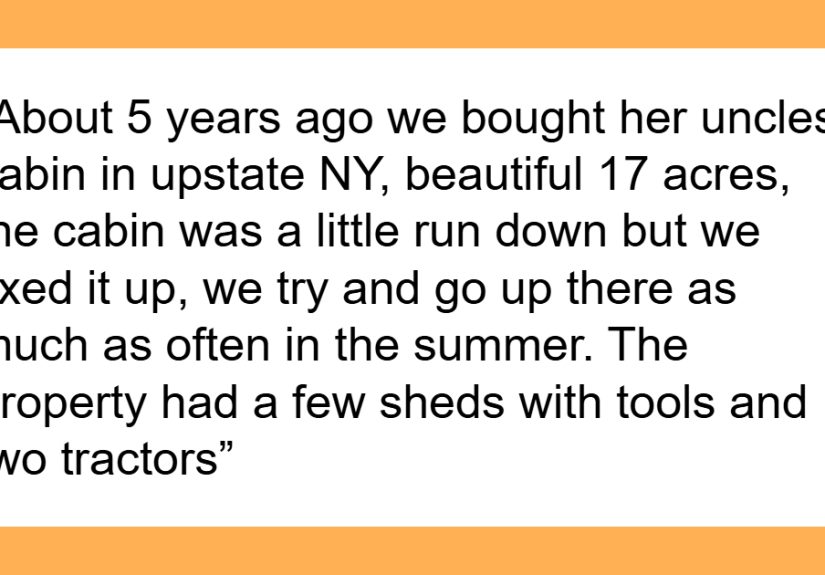
The viral story centers on a mother-in-law who insisted she had a right to keep an old tractor she inherited, even though it had reportedly sat ignored for a long time and was not exactly a shining example of practical value. Her son-in-law, clearly done with the drama, decided to give her exactly what she wanted. Not symbolically. Not politely. Literally.
And that is where the comedy kicks in. Instead of arguing forever, negotiating in circles, or entering the family Olympics of passive-aggressive texting, he made sure she got the tractor. Delivered. Received. Problem technically solved. Emotionally? Absolutely not. Comedically? Perfect.
The genius of the story lies in its malicious compliance energy. He did not refuse. He did not hide the thing. He did not start a philosophical debate on whether a neglected old tractor was treasure, trash, or a tetanus-themed time capsule. He simply honored the request in the most inconveniently complete way possible. The result was the kind of petty-but-clean punchline that internet readers love because it feels satisfying without requiring a villain monologue or a courtroom scene.
It also taps into a universal truth: sometimes the funniest revenge is not revenge at all. It is administration. It is paperwork with attitude. It is logistics weaponized by someone who has finally had enough.
Why Inherited Stuff Starts So Many Family Fights
If this whole saga feels ridiculous, that is because family inheritance disputes often are ridiculous from the outside and deeply emotional from the inside. An old tractor can look like a heap of metal to one person and a sacred family relic to another. That mismatch is where the trouble starts.
Sentimental value is rarely rational
One person sees maintenance costs, rust, dead batteries, and a machine that has not moved since the last good decade for country music. Another sees a parent, sibling, uncle, or grandparent. People attach memory to objects because objects feel concrete when grief does not. That is why fights over furniture, tools, jewelry, kitchenware, and yes, tractors, can escalate so fast. The item becomes a stand-in for love, status, fairness, and remembrance.
In families, sentimental value rarely arrives with an instruction manual. Nobody says, “This old machine matters to me because I never felt chosen, and now I want proof that I still matter.” Instead, they say, “That is mine,” and suddenly everyone is one sentence away from a Thanksgiving incident.
Lack of planning makes ordinary items explosive
Experts in estate planning have said for years that vague wishes and poor documentation are prime ingredients for inheritance conflict. When families do not clearly spell out who gets what, surviving relatives are left to interpret intention, memory, and fairness all at once. That is a terrible group project.
It gets even messier with personal property. Land and money at least have paperwork. But old equipment, tools, collectibles, and “stuff in the shed” often exist in a legal and emotional gray zone. One person remembers a promise. Another remembers a different promise. A third person suddenly becomes very passionate about a shop vacuum they have ignored since the Obama administration.
That is why this tractor story feels bigger than one family joke. It reflects a very real pattern. Inherited property often creates conflict not because people suddenly become greedy out of nowhere, but because grief, memory, and unclear expectations make everyone a little weird around objects.
Why the Son-In-Law’s Move Was So Funny
Comedy loves contrast, and this story has plenty of it. On one side, there is high drama over an item that may not be especially useful. On the other, there is an ultra-literal response that slices right through the emotional fog. The mother-in-law wanted the tractor. The son-in-law said, in effect, “Excellent. Here is your tractor. Enjoy your prize.”
That is funny because it flips the usual script. Most family disputes drag on through guilt, demands, silence, and long speeches that begin with “After everything I have done…” But here, the final move was not emotional. It was procedural. Calmly procedural, which somehow makes it funnier.
There is also the visual comedy. A tractor is not a scarf. It is not a casserole dish. It is a huge, awkward, loud symbol of commitment. If you insist on owning one, congratulations: you now have to deal with one. Storage, transport, repairs, safety, neighbors asking questions, and the deeply humbling moment when your symbolic victory starts leaking oil.
Humor often appears when people get exactly what they asked for but not in the cute, cinematic way they imagined. That is this story in a nutshell. It is the agricultural version of “Be careful what you wish for.” Only heavier. Much heavier.
What the Story Gets Right About Boundaries
Underneath the laughter, the story is also a boundary story. Family experts consistently point out that difficult relatives often thrive on ambiguity. If nobody draws a line, the loudest person wins. That is exhausting for couples, especially when one spouse feels caught between a parent and a partner.
Couples need a united front
One reason stories like this spread so widely is that readers recognize the relationship dynamic immediately. A pushy parent or in-law often causes less damage when the couple involved presents a clear, united position. Not a hostile position. Not a dramatic one. Just a consistent one. “Here is what we are doing. Here is what we are not doing. Here is the item you requested. Discussion closed.”
That kind of calm consistency is not flashy, but it works. It reduces the oxygen available to endless family power struggles. It also protects the marriage from becoming a side casualty in a dispute that should have been settled by clearer communication in the first place.
Literal follow-through can expose unreasonable demands
Sometimes people make demands because they expect resistance, negotiation, or emotional leverage. When someone responds with exact compliance, the unreasonable nature of the request becomes obvious. Suddenly the issue is no longer abstract. It is sitting in your yard.
That is what makes the son-in-law’s move memorable. He did not argue theory. He delivered reality. And reality is a terrible place for flimsy demands to hide.
A Tractor Is Never Just a Tractor
In farming culture, tractors carry more symbolism than city people often realize. They can represent family legacy, independence, mechanical skill, land stewardship, and memory. Old tractors are often restored, preserved, and passed down with pride. Some stay in families for decades, long after their practical working life has faded. In that sense, it makes perfect sense that a tractor could become emotionally loaded.
But here is the practical side nobody should ignore: old tractors are not harmless heirlooms. They are heavy machinery. Safety experts have spent years warning that older tractors can be especially dangerous if they lack rollover protection, proper maintenance, safe access, clear lighting, or trained operators. A sentimental machine can still injure someone. Nostalgia is not a brake system.
That is why any real-life version of this story should include one very unfunny but very necessary reality check: if an inherited tractor is going to be kept, moved, repaired, operated, or displayed, it needs to be evaluated seriously. Is it roadworthy? Is it stable? Does it have appropriate safety features? Is it a restoration project, a collectible, or just a giant argument with tires?
In other words, people can fight over tractors all they want, but once somebody actually gets one, they inherit the responsibility too. You do not just inherit the object. You inherit the upkeep, the storage, the transport headache, and the safety obligations. That is part of why the son-in-law’s “solution” feels so satisfying. He transferred not only possession, but consequence.
The Real Lesson Behind the Laughs
For all its internet-ready punchline energy, this story leaves behind a genuinely useful lesson. Families should not wait until after a death to figure out who cares about what. If there are sentimental items, working machines, family heirlooms, or things with financial value, talk about them early. Write things down. Label them. Get appraisals when needed. Be specific. “The tractor goes to so-and-so” is not an overly dramatic sentence when the alternative is three adults shouting in a driveway.
There is also a relationship lesson here. People often think boundaries must be loud to be effective. They do not. Sometimes the strongest boundary is a calm action that ends the argument. No speech. No debate club. No twelve-part text message written like a hostage note. Just a firm, practical answer.
And finally, there is the emotional lesson. Sometimes what people demand is not actually what they want. They want recognition. Control. Validation. A sense that they still matter in the family story. But when those feelings get wrapped around an object, the object becomes a battleground. That is how a tractor ends up carrying the emotional weight of an entire family grudge.
Which is why this story is not just funny. It is familiar. Many readers may never have argued over a tractor, but they absolutely understand fighting over “that one thing” that somehow became a symbol for every unresolved issue in the family tree.
Relatable Experiences That Make This Story Hit Home
What makes “MIL Insists On Keeping Tractor She Inherited, Son-In-Law Makes Sure She Gets It In The Funniest Way” so memorable is that it mirrors dozens of everyday family experiences, just with more horsepower. Plenty of people have watched a relative become emotionally attached to an item they ignored for years, only to claim it the second someone else cleaned it, moved it, fixed it, or found a use for it.
Maybe it was not a tractor. Maybe it was an old dining table “nobody wanted” until it was refinished. Maybe it was a dusty tool chest suddenly declared priceless the moment someone tried to haul it away. Maybe it was a box of holiday decorations, a recliner, a cast-iron skillet, or a garage full of mystery equipment that every family member pretended not to care about until distribution day arrived.
In many families, the same pattern repeats. A loved one passes away. Everyone is grieving. There is genuine sadness in the room. Then, somewhere between the sorting, the paperwork, and the first trip to the garage, people start attaching meaning to objects at lightning speed. The nephew wants the fishing gear because he remembers childhood trips. The daughter wants the recipe box because it smells like home. The cousin suddenly needs the ancient ladder for reasons known only to the ladder and God.
Then comes the strangest part: people often become territorial over things they do not even want to use. They want them because the items prove a point. Ownership becomes emotional evidence. “I mattered.” “I was remembered.” “I was promised this.” “You do not get to erase me.” Seen through that lens, the tractor in this story stops being a machine and starts becoming a symbol with an engine.
There is also a very real experience many couples know too well: one difficult relative can drain the joy out of a practical situation. What should have been a simple clean-out becomes a months-long exercise in diplomacy. Every decision gets questioned. Every compromise gets treated like a personal insult. And the person causing the chaos somehow acts shocked when everyone else stops finding the situation charming.
That is why the son-in-law’s move feels cathartic. Readers have all imagined that moment of clean, elegant closure. Not screaming. Not revenge fantasy. Just one perfect act of compliance that turns a manipulative demand into a self-inflicted inconvenience. It is the emotional equivalent of saying, “Certainly, ma’am,” while backing a trailer into destiny.
People also relate to the aftermath. In many families, silence after conflict can feel like a reward. A person who thrives on drama often disappears once the drama stops paying dividends. Suddenly there are no more circular arguments, no more performative outrage, and no more emergency-level phone calls over an object that was allegedly essential but mysteriously has not been touched since delivery.
That is what makes this story linger in people’s minds. It is funny on the surface, but underneath it captures a very ordinary human experience: the point where patience expires, practicality takes over, and the truth rolls up on four wheels.
Conclusion: A Family Feud With Rust, Wheels, and a Punchline
In the end, “MIL Insists On Keeping Tractor She Inherited, Son-In-Law Makes Sure She Gets It In The Funniest Way” works because it blends three things the internet never gets tired of: family drama, petty precision, and consequences with excellent visual potential. It is funny because the request was honored. It is satisfying because the chaos was returned to its sender. And it is memorable because it reminds us that some of the biggest family battles are never really about the object in question.
The tractor is the hook, but the deeper story is about inheritance conflict, mother-in-law drama, emotional symbolism, and the power of firm boundaries. It is also a reminder that if you absolutely insist on keeping the giant rusty heirloom, somebody may one day helpfully make sure you get every pound of it.
And honestly? That may be the most efficient family therapy session a trailer hitch has ever delivered.