Table of Contents >> Show >> Hide
- Why Group Roles Matter in Secondary Classrooms
- What Makes a Group Role Meaningful?
- Best Meaningful Group Roles for Students in Middle and High School
- How to Match Roles to the Task
- Middle School vs. High School: What Changes?
- How Teachers Can Make Group Roles Actually Work
- Common Mistakes to Avoid
- What Meaningful Group Roles Teach Beyond the Assignment
- Experiences Related to Meaningful Group Roles for Students in Middle and High School
- Conclusion
- SEO Tags
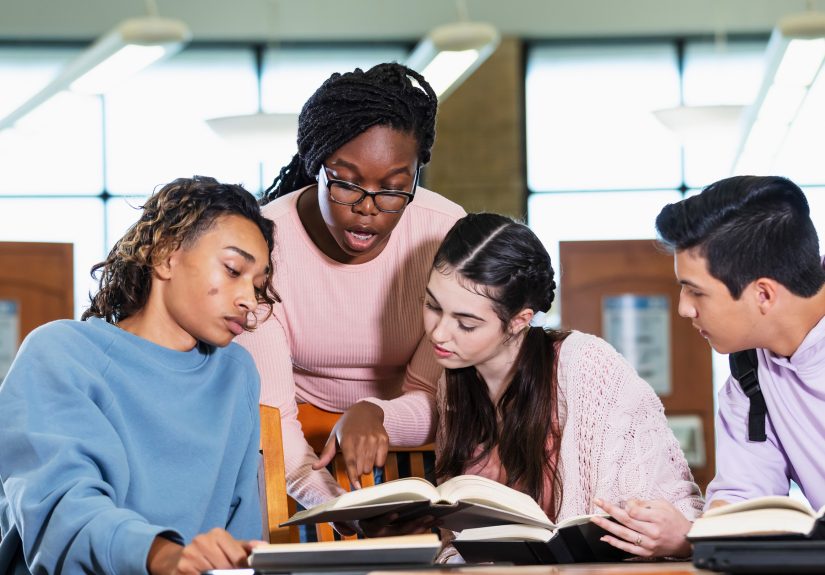
Group work has a reputation problem. Mention it in class and one student lights up, one student sighs like they have been assigned taxes, and one student immediately starts scanning the room for the person who will do all the work. That is exactly why meaningful group roles for students in middle and high school matter so much. Good roles do not just make a project look organized on paper. They help students participate more fairly, think more deeply, and avoid the classic “one kid builds the spaceship while everyone else holds the glue stick” disaster.
When group roles are clear, students know what is expected, how they contribute, and why their part matters. That clarity can improve accountability, reduce social loafing, and create a more positive learning experience. Even better, meaningful roles can teach real-world skills such as leadership, communication, time management, problem-solving, and constructive feedback. In other words, group work can stop being a classroom comedy of errors and start acting like an actual learning strategy.
This guide breaks down what makes a role meaningful, which roles work best for middle and high school students, how to adapt roles for different assignments, and how teachers can keep group work fair without turning into air traffic controllers with dry-erase markers.
Why Group Roles Matter in Secondary Classrooms
Middle and high school students are developmentally ready for more complex collaboration, but that does not mean they automatically know how to do it well. Put four adolescents in a group with vague instructions and you may get one brilliant leader, two polite spectators, and one student passionately redesigning the title font. Clear group roles give structure to the chaos.
Meaningful roles matter because they help students:
- Share responsibility: Everyone has a job that contributes to the final outcome.
- Participate more equitably: Roles reduce domination by one voice and invite quieter students into the work.
- Build collaboration skills: Students practice facilitation, note-taking, questioning, presenting, and managing time.
- Stay focused: A team with defined roles is less likely to drift into off-topic chatter or last-minute panic.
- Understand accountability: Students can see how individual effort supports group success.
In short, group roles are not decorative labels. They are instructional tools. If the roles are designed well, students learn both the content and the process of working with others. That is a two-for-one deal teachers rarely get.
What Makes a Group Role Meaningful?
Not every role deserves a laminated name card. A meaningful role is one that is essential to the task, not just helpful for classroom aesthetics. If a role can disappear without affecting the quality of the group’s work, it is probably not meaningful.
1. The role must connect directly to the assignment
A science lab may need a data manager and procedure leader. A history debate may need an evidence finder and discussion facilitator. A multimedia project may need a slide designer or tech manager. Roles should match the real work students must do, not come from a generic template used for every lesson from algebra to Shakespeare.
2. The role must have clear responsibilities
“Be helpful” is not a role. “Track the group’s deadlines, remind the team of checkpoints, and confirm that each section is submitted on time” is a role. Students do better when the expectations are specific, visible, and easy to explain in one or two sentences.
3. The role must require thinking, not just compliance
The strongest roles involve decision-making and academic thinking. A quality checker who compares the group’s answer to the rubric is doing more cognitive work than a student who is only told to “hold the materials.” Even support roles should contribute to learning, not just logistics.
4. The role must support accountability
If teachers cannot tell whether a student fulfilled the role, students probably cannot tell either. Good roles make contribution visible. That can happen through checklists, reflection forms, peer feedback, teacher observation, or a quick end-of-task report.
5. The role should be flexible and accessible
Meaningful does not mean rigid. Roles should rotate over time so students do not get permanently cast as “the quiet note-taker” or “the kid who always presents.” Roles should also be assigned with accessibility in mind. A student with dyslexia may not thrive as the recorder every time, and a student with anxiety may need support before becoming the spokesperson. Equity matters as much as efficiency.
Best Meaningful Group Roles for Students in Middle and High School
The best group roles are simple, purposeful, and adaptable. Here are some of the most effective options for secondary classrooms.
Facilitator
The facilitator keeps the discussion moving and makes sure the group understands the task. This student invites input, asks follow-up questions, and helps the group make decisions without steamrolling anyone. Think of this role as part host, part referee, part “let us please return to the actual assignment.”
Best for: Discussions, problem-solving tasks, inquiry work, seminars, and project planning.
Recorder or Scribe
The recorder captures the group’s ideas, decisions, and draft responses. This role is especially useful when groups need a written product, shared notes, or a record of how their thinking developed. The recorder should not be a passive stenographer; they should help organize ideas clearly and accurately.
Best for: Brainstorming, collaborative writing, lab notes, and planning sheets.
Timekeeper or Project Manager
The timekeeper monitors the pace of the task and helps the group move through checkpoints. In longer assignments, this role often becomes more like a project manager who tracks deadlines, assigns next steps, and reminds the team what still needs to get done.
Best for: Multi-step projects, presentations, labs, and anything students usually finish “almost” on time.
Evidence Finder or Researcher
This student locates supporting information, examples, quotes, or data the group needs. In a literature class, that might mean finding textual evidence. In social studies, it could mean locating primary or secondary sources. In science, it may involve pulling relevant facts from notes or lab results.
Best for: Research projects, debates, document-based questions, and analytical writing.
Spokesperson or Presenter
The spokesperson shares the group’s ideas with the class, another group, or the teacher. This role encourages students to summarize accurately and communicate clearly. It should rotate often so public speaking does not become one student’s permanent destiny.
Best for: Presentations, share-outs, gallery walks, and peer teaching.
Equity Monitor or Participation Tracker
This role is especially valuable in secondary classrooms. The equity monitor watches for balanced participation and helps ensure that all voices are included. That does not mean calling out classmates like a tiny HR department. It means noticing patterns and nudging the group toward fairness: “We have heard two ideas from Maya. Let’s check in with Jordan too.”
Best for: Discussions, complex tasks, and classrooms working on collaboration norms.
Quality Checker or Critical Friend
The quality checker compares the group’s work against the rubric, directions, or success criteria. This student asks questions like: Did we answer every part? Is our evidence strong enough? Does this make sense? It is the role most likely to save a group from confidently turning in something completely wrong.
Best for: Written work, projects, presentations, and performance tasks.
Materials or Tech Manager
This student manages supplies, devices, links, files, and digital tools. In a modern classroom, this can be a very meaningful role when students are working with slides, design tools, spreadsheets, lab materials, or shared documents. The key is making sure the role includes organization and troubleshooting, not just “person nearest the Chromebook cart.”
Best for: Labs, digital projects, design tasks, and multimedia presentations.
How to Match Roles to the Task
The smartest way to assign roles is to start with the assignment itself. Ask: What kinds of work must happen for this task to succeed? Then build roles around those actions.
For a research project
- Facilitator
- Researcher
- Recorder
- Quality Checker
- Presenter
For a science lab
- Procedure Leader
- Materials Manager
- Data Recorder
- Analysis Lead
- Spokesperson
For a classroom debate
- Facilitator
- Evidence Finder
- Counterargument Specialist
- Speech Organizer
- Presenter
For project-based learning
- Project Manager
- Researcher
- Designer or Tech Lead
- Recorder
- Quality Checker
- Presenter
Not every group needs five or six roles every time. In a short activity, two or three roles may be enough. In a longer project, students may take one main role plus one rotating support role. The goal is not to create bureaucracy. The goal is to create purpose.
Middle School vs. High School: What Changes?
Both age groups benefit from meaningful roles, but the design should evolve with maturity.
Middle school students
Middle schoolers usually need more visible structure. Short role descriptions, checklists, sentence starters, and teacher modeling go a long way. They often benefit from concrete roles such as timekeeper, recorder, and materials manager before moving into more abstract roles like participation tracker or quality checker.
High school students
High schoolers can usually handle more autonomy and complexity. Their roles can be more specialized and more closely tied to academic outcomes, such as evidence analyst, discussion leader, editor, or data interpreter. High school students also benefit from reflecting on how well they fulfilled a role and how that role contributed to the group’s product.
In both settings, role rotation matters. Students should practice different collaboration skills over time, not just the ones that feel easiest or safest.
How Teachers Can Make Group Roles Actually Work
Teach the roles before expecting perfect teamwork
Students are not born knowing how to facilitate discussion or give useful feedback. Teachers should model what each role sounds like and looks like. A quick role card, a sample script, or a mini-demo can prevent a lot of confusion later.
Start with low-stakes practice
Do not save roles for the giant end-of-unit project worth half the grading period. Let students practice during short discussions, warm-up tasks, and mini-challenges. That way they learn the process before the stakes are high and the glue guns are out.
Use group-worthy tasks
Roles work best when the task actually requires collaboration. If one student could complete the assignment alone in eight minutes, the group will sense that immediately. Better tasks are open-ended, challenging, and rich enough to need multiple perspectives.
Assess both product and process
If teachers only grade the final poster or slideshow, students may treat collaboration like background noise. Include reflection questions, peer feedback, or short role check-ins. Students should know that how they worked matters too.
Build in reflection
After the activity, ask students: Which role helped the group most? What was difficult? Did everyone contribute? What should change next time? Reflection turns group work from a one-time survival event into skill-building.
Common Mistakes to Avoid
- Using the same roles for every assignment: Roles should fit the task, not become classroom wallpaper.
- Making roles too vague: Students need specific responsibilities, not inspirational job titles.
- Keeping one student in one role forever: Rotate roles so students build a range of skills.
- Ignoring accessibility: Match roles thoughtfully and offer alternatives when needed.
- Assuming roles alone fix bad tasks: Even the best timekeeper cannot rescue a boring, unclear assignment.
- Grading unfairly: Avoid giving identical grades for wildly different contributions without any reflection or evidence.
What Meaningful Group Roles Teach Beyond the Assignment
When students use meaningful group roles regularly, they learn more than content. They learn how to speak up without taking over, how to listen without disappearing, how to manage deadlines, how to question ideas respectfully, and how to improve shared work. Those are not tiny classroom extras. Those are life skills with sneakers on.
In the best classrooms, group roles help students see that collaboration is not just dividing the work. It is building the work together. That shift matters in middle school, high school, college, and every future workplace where someone eventually says, “Let’s form a team,” and half the room tries not to make eye contact.
Experiences Related to Meaningful Group Roles for Students in Middle and High School
In real classrooms, the difference between random group work and meaningful group roles is obvious almost immediately. In a middle school English class, for example, students working on a short story analysis often begin by talking over one another, drifting off topic, or waiting for the strongest reader to rescue the whole table. But when the teacher assigns a facilitator, evidence finder, recorder, and presenter, the energy changes. The facilitator invites each student to weigh in. The evidence finder goes hunting for lines from the text. The recorder organizes the group’s claims. Suddenly, the student who usually stays quiet has a clear entry point into the discussion because the job itself gives them permission to participate.
High school classrooms show a similar pattern, but with more sophisticated roles. In a history class preparing a debate, one student might manage the claim, another gathers evidence, a third develops rebuttals, and a fourth checks the final argument against the rubric. Students often report that the work feels more fair because everyone can see who is responsible for what. Teachers also notice something important: roles reduce the social guessing game. Instead of wondering, “Am I supposed to lead this?” students know when to step up and when to support the group.
Another common experience is that roles help students who are not always confident in traditional academic settings. A student who struggles with writing may shine as the discussion facilitator. A student who dislikes public speaking may be excellent at tracking evidence or managing the team’s digital files. That kind of success matters. It tells students that collaboration is not about being the loudest or fastest. It is about contributing real value.
Teachers also learn plenty from using group roles. One of the biggest lessons is that roles cannot be fake jobs. Students detect busywork at superhero speed. If “materials manager” just means passing out markers for 20 seconds, the role feels meaningless. But if the same student is also responsible for organizing digital resources, handling lab tools safely, and confirming that the group has what it needs to finish, the role becomes real. Experience shows that students take roles seriously when the work is genuinely important.
There can be bumps, of course. Some students try to cling to the role they find easiest. Some want to present every time because they like the spotlight. Others would happily become permanent note-takers and never say a word in public again. That is why role rotation matters. Over time, students gain confidence by trying different responsibilities. A shy seventh grader who begins as a recorder may eventually become a calm, capable spokesperson. A chatty ninth grader may learn that being the facilitator is not about talking most, but about helping others talk better.
Perhaps the most meaningful classroom experience is watching students realize that group work can actually feel productive. Not magical, not perfect, not suddenly free of awkward pauses or one weird tangent about lunch, but productive. Students learn that well-designed roles make teamwork less stressful and more useful. They stop seeing group work as punishment disguised as learning and start seeing it as a skill they can improve. That shift is powerful, and it is exactly why meaningful group roles deserve a permanent place in middle and high school classrooms.
Conclusion
Meaningful group roles for students in middle and high school can transform collaboration from messy guesswork into focused, fair, skill-building learning. The best roles are tied directly to the task, clear enough for students to follow, flexible enough to rotate, and important enough to matter. Whether students are leading discussion, tracking evidence, checking quality, or managing time, strong roles help every learner contribute. When teachers pair those roles with group-worthy assignments, low-stakes practice, and reflection, group work becomes far more than a classroom routine. It becomes a practical way to build academic understanding and real-world collaboration skills at the same time.