Table of Contents >> Show >> Hide
- What Is Mark Albrecht's Peg Rail?
- Who Is Mark Albrecht?
- Design Features That Make the Peg Rail Stand Out
- Bodie's Peg Rail: A Lighting Evolution
- Where to Use Mark Albrecht's Peg Rail
- How to Style a Peg Rail Without Creating Visual Clutter
- Why Designers Love Peg Rails Again
- Buying Considerations Before Choosing a Peg Rail
- Experience Section: Living With Mark Albrecht's Peg Rail
- Conclusion
Some furniture pieces enter a room quietly. Others announce themselves with the confidence of a brass band in a studio apartment. Mark Albrecht’s Peg Rail belongs to the first group: calm, precise, beautifully useful, and almost suspiciously good at making clutter behave. It is the kind of wall-mounted object that looks simple at first glance, then slowly reveals the intelligence behind every line, peg, finish, and proportion.
At its core, Mark Albrecht’s Peg Rail is a refined interpretation of a classic storage idea: a horizontal rail fitted with pegs for hanging coats, bags, hats, towels, tools, or whatever else life insists on dropping across chairs. But calling it “just a peg rail” would be like calling a tailored suit “just fabric.” The design takes a humble household form and elevates it through material quality, clean geometry, and a distinctly modern sense of restraint.
For homeowners, interior designers, architects, and design lovers, this peg rail offers more than a convenient place to hang a jacket. It represents a larger movement toward functional minimalism: objects that work hard without shouting, that organize daily life without making a room feel like a storage unit wearing lipstick. In a world where the average entryway can turn into a crime scene of backpacks and raincoats by 5 p.m., that is no small achievement.
What Is Mark Albrecht’s Peg Rail?
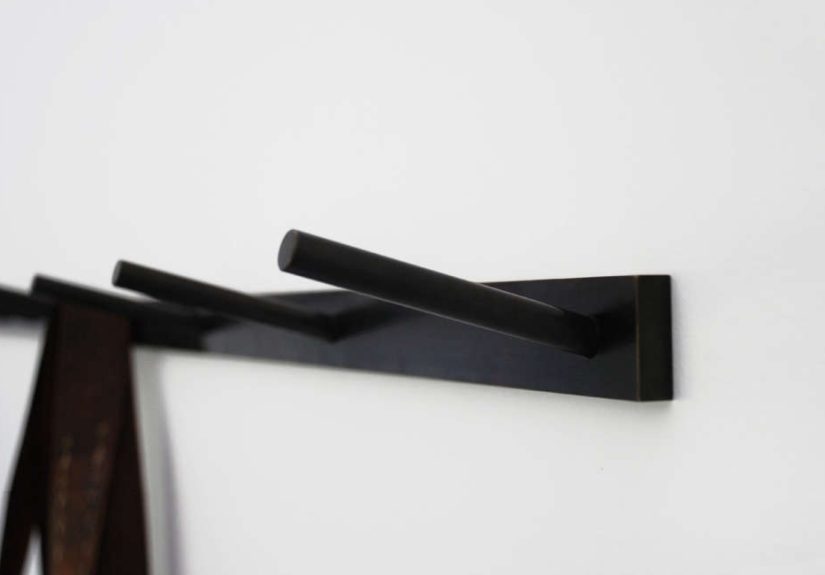
Mark Albrecht’s Peg Rail is a wall-mounted, multi-purpose peg rack designed by Mark Albrecht Studio, a New York-based furniture and lighting studio known for refined materials, modernist principles, and a warm minimalist approach. Earlier versions of the Peg Rail have been described as available in finishes such as bronze, black steel, satin stainless steel, and polished stainless steel, with a slim profile and lengths that could extend dramatically across a wall.
The product sits at the intersection of architecture, furniture, and hardware. It is not a freestanding storage piece, yet it changes how a room functions. It is not decorative in the fussy sense, yet it adds rhythm and structure to a wall. It is not flashy, yet a well-placed metal peg rail can become the detail everyone notices without knowing exactly why the space feels so polished.
A Modern Object With Shaker DNA
The peg rail has deep roots in Shaker design, one of the most influential traditions in American furniture history. Shaker interiors used simple wall-mounted peg rails to keep rooms orderly and flexible. Chairs, brooms, textiles, clocks, and household tools could be lifted off the floor, creating rooms that were easier to clean and adapt for different purposes. The original idea was practical, almost severe, but also quietly elegant.
Mark Albrecht’s version takes that historical storage logic and translates it into a contemporary design language. Instead of rustic nostalgia, the piece leans toward metal, precision, and architectural clarity. It keeps the Shaker spirit of utility and order but swaps farmhouse sentimentality for urban refinement. Think less “country cottage with a butter churn” and more “gallery-like entryway where even the tote bags seem to have better posture.”
Who Is Mark Albrecht?
Mark Albrecht is a designer whose work is often associated with rigor, refinement, minimalism, and warmth. His studio is known for furniture and lighting made from high-quality materials, including metal, leather, wood, bronze, and steel. Before establishing his New York furniture studio, Albrecht studied at the École des Beaux-Arts in Paris and worked as a sculptor in France, a background that helps explain the disciplined proportions and sculptural calm visible in his work.
That sculptural influence matters. The Peg Rail is not designed like an afterthought. It has the presence of an architectural line: long, horizontal, useful, and visually stabilizing. In a room with tall ceilings, it can emphasize width. In a narrow hallway, it can create order. In a mudroom, it can turn daily chaos into something close to choreography. Shoes may still rebel, of course. No peg rail can solve everything.
Design Features That Make the Peg Rail Stand Out
1. Minimal Form, Maximum Use
The beauty of Mark Albrecht’s Peg Rail lies in how little it needs to do a lot. A slim wall-mounted profile gives the piece a clean, almost built-in look. The pegs create repeatable hanging points without bulky brackets or decorative noise. This makes the rail especially valuable in spaces where every inch counts: apartments, compact entryways, guest rooms, bathrooms, kitchens, dressing areas, laundry rooms, and modern mudrooms.
2. Premium Materials and Finishes
Materials are a major part of the appeal. Metal finishes such as bronze, black steel, satin stainless steel, and polished stainless steel give the rail a more sophisticated character than a standard wooden rack. Bronze can feel warm and timeless. Black steel adds graphic contrast. Satin stainless steel offers a subtle professional look. Polished stainless steel brings a brighter, more reflective finish for interiors that can handle a little sparkle without turning into a nightclub lobby.
3. Long Horizontal Proportions
A peg rail is most powerful when it is allowed to stretch. Short rails are useful, but longer rails create an architectural gesture. Mark Albrecht’s Peg Rail has been noted in generous lengths, making it suitable for wide walls, corridors, dressing rooms, commercial interiors, and hospitality spaces. A long rail can unify a wall while offering practical storage along the entire run.
4. A Fine Balance Between Utility and Sculpture
The best functional objects are the ones you notice even when they are empty. Mark Albrecht’s Peg Rail has that quality. Without coats or bags, it reads as a clean horizontal line with measured punctuation. With objects hanging from it, the piece becomes an organizing system. It is flexible enough for daily use but refined enough to remain visually composed.
Bodie’s Peg Rail: A Lighting Evolution
Mark Albrecht Studio has also developed Bodie’s Peg Rail, a related lighting piece that expands the peg rail concept into a hybrid of storage, sculpture, and illumination. Available with metal or paper shade options, Bodie’s Peg Rail combines functional hanging capacity with adjustable lighting. This makes it especially interesting for bedrooms, entryways, reading corners, boutique hospitality projects, and high-design residential spaces.
The metal shade version has a slimmer profile, while the paper shade version offers a softer, more ambient presence. Depending on the configuration, Bodie’s Peg Rail is available in sizes around 43 inches, 63 inches, and 83 inches wide, with one-light and two-light options. The result is a piece that does not simply hold objects; it also shapes the mood of a room.
This is where the design becomes especially clever. A traditional peg rail helps you organize. A lighting peg rail helps you organize and see what you organized. For anyone who has ever searched for keys under a decorative bowl while muttering dramatic things about “this household,” that is a meaningful upgrade.
Where to Use Mark Albrecht’s Peg Rail
Entryway
The entryway is the most obvious place for a peg rail, and for good reason. It is where coats, scarves, bags, umbrellas, dog leashes, and hats naturally pile up. A Mark Albrecht peg rail can create a clean drop zone without requiring a bulky cabinet or console. In a narrow hallway, the rail keeps storage vertical and shallow, preserving walking space while giving every item a designated landing spot.
Mudroom
In a mudroom, the peg rail becomes a daily workhorse. It can hold jackets, backpacks, baskets, garden totes, and seasonal accessories. For families, assigning a section of rail to each person can reduce morning traffic jams. Children may still forget their lunchboxes, but at least the backpacks have a fighting chance.
Bathroom
A metal peg rail in a bathroom can hold towels, robes, brushes, or small hanging baskets. Compared with individual hooks, a continuous rail feels more intentional and architectural. It can also tie together other metal finishes in the room, such as faucets, mirror frames, lighting, or cabinet hardware.
Kitchen
Shaker peg rails have long been useful in kitchens, where they can hold aprons, utensils, cutting boards, baskets, and small tools. Mark Albrecht’s more refined version works especially well in kitchens that blend utility with high-end finishes. A black steel rail against white plaster, for example, creates strong contrast, while bronze can warm up stone, wood, or painted cabinetry.
Bedroom or Dressing Area
In a bedroom, a peg rail can serve as a quiet alternative to a valet stand. Hang tomorrow’s outfit, a robe, a favorite hat, or a tote bag. In a dressing area, the rail can hold accessories while keeping surfaces clear. This is useful for anyone whose chair has slowly become a “clothing archive.” We all know the chair. The chair knows too much.
Commercial and Hospitality Spaces
Because Mark Albrecht’s work has a contract-friendly, design-forward character, the peg rail concept also fits restaurants, boutique hotels, galleries, offices, and retail interiors. In commercial spaces, a rail can provide practical guest storage while reinforcing the overall design language. It feels custom, intentional, and durable.
How to Style a Peg Rail Without Creating Visual Clutter
The secret to styling a peg rail is restraint. A peg rail is not an invitation to hang every item you have ever owned since middle school. It works best when the objects on it are useful, beautiful, or both. A canvas tote, a wool hat, a linen apron, a leather leash, or a woven basket can look effortless. Twelve plastic shopping bags and a mystery charger from 2017? Less effortless.
Start by choosing a clear purpose for the rail. In an entryway, it might be coats and bags. In a kitchen, it might be aprons and tools. In a bathroom, towels and robes. Once the purpose is clear, edit what stays visible. Leave a few pegs empty so the line can breathe. Negative space is not wasted space; it is the design equivalent of taking a deep breath.
Color coordination also helps. If the rail is black steel, repeat black elsewhere in the room through lighting, picture frames, or cabinet pulls. If it is bronze, echo warmth through wood, leather, stone, or warm-toned textiles. The goal is not perfect matching. The goal is conversation between materials.
Why Designers Love Peg Rails Again
Peg rails are enjoying renewed attention because they solve a very modern problem with a very old idea. Homes today need to be flexible. One room may function as an entry, office, homework station, pet zone, and package drop-off area before lunch. Built-in storage can be expensive and permanent, while freestanding storage can eat up floor space. A peg rail offers a simpler solution: use the wall.
Designers also appreciate the way peg rails add rhythm. The repeated pegs introduce pattern without wallpaper, texture without bulk, and function without visual heaviness. In minimalist interiors, the rail prevents a room from feeling sterile. In traditional interiors, it adds authenticity. In transitional spaces, it bridges old and new with ease.
Buying Considerations Before Choosing a Peg Rail
Measure the Wall First
Before selecting a peg rail, measure the wall carefully. Consider not only width but also nearby doors, switches, art, mirrors, and furniture. A long rail can look stunning, but it needs breathing room. If the wall is short, a smaller section may feel more deliberate than forcing a rail into a cramped spot.
Think About Height
Traditional Shaker rails were often installed high enough to keep objects off the floor and allow rooms to function flexibly. In modern homes, the best height depends on use. For adult coats, higher placement works well. For children, lower placement encourages independence. For kitchens and bathrooms, height should match reach and task.
Match the Finish to the Room
Choose a finish that connects with the room’s existing materials. Black steel suits graphic, modern, or industrial interiors. Bronze works beautifully with warm wood, limewash, plaster, and traditional details. Stainless steel can feel clean, practical, and contemporary. The finish should look intentional, not like it wandered in from another house.
Plan for Real Weight
A peg rail is only as useful as its installation. Heavy coats, bags, and baskets require secure mounting. When dealing with designer pieces, especially metal rails or versions with integrated lighting, professional installation is often the wisest route. Nobody wants a luxury peg rail making a dramatic exit from the wall.
Experience Section: Living With Mark Albrecht’s Peg Rail
The real test of a peg rail is not how good it looks in a styled photograph. Styled photographs are beautiful, but they are also suspiciously calm. No one has just come home with groceries, wet shoes, a laptop bag, and a mailer they forgot to open three weeks ago. The real test is daily life, and that is where Mark Albrecht’s Peg Rail makes the most sense.
Imagine a narrow apartment entry where there is no proper closet. Before the peg rail, the first five feet of the home become a rotating exhibition titled “Things We Dropped.” A coat lands on a chair. Keys disappear under receipts. A tote bag slumps by the door like it has given up on civilization. Add a long, well-placed peg rail, and suddenly the wall becomes useful. Coats hang vertically. Bags line up. A small basket can hold gloves or dog-walking supplies. The entry still looks lived-in, but now it looks intentionally lived-in.
In a mudroom, the experience is even more practical. A metal peg rail can take on the daily traffic of a busy household without feeling visually heavy. One peg for a school bag, another for a raincoat, another for a canvas market tote. Over time, the rail becomes part of the family’s rhythm. People stop asking where things go because the wall answers for them. That is the hidden power of good design: it reduces the number of tiny decisions you have to make before coffee.
In a bathroom, the experience shifts from organization to atmosphere. A robe hanging from a bronze or black steel rail can make the room feel more considered, almost hotel-like. Towels dry better when they are not crowded onto one overworked hook. The rail adds a horizontal line that can visually balance a mirror, vanity, or tile wall. It is subtle, but subtle changes often do the most work.
In a kitchen, the rail can create a small ritual zone. Hang the apron you actually use, the market basket you always forget, or a beautiful brush that deserves better than being trapped in a drawer. The key is editing. A peg rail should not become open storage for everything. It should hold the items that make daily routines smoother and prettier. That combination is rare. Many things are useful. Many things are beautiful. The best home objects manage to be both without demanding applause.
The strongest experience related to Mark Albrecht’s Peg Rail is the feeling of quiet control. It does not transform a home through drama. It transforms it through small repeated acts: hanging up a jacket, finding the bag, grabbing the leash, reaching for the towel. The rail becomes a tool for order, but not a bossy one. It does not scold. It simply offers a better option. And in a home full of objects competing for attention, that kind of quiet usefulness feels genuinely luxurious.
Conclusion
Mark Albrecht’s Peg Rail proves that simple design can still feel fresh, luxurious, and deeply practical. Inspired by the long history of Shaker organization but shaped by modern materials and refined craftsmanship, it offers a smarter way to use the wall. Whether installed in an entryway, kitchen, bathroom, mudroom, bedroom, or boutique commercial space, the peg rail brings order without bulk and beauty without fuss.
Its appeal comes from balance. It is minimal but warm, functional but sculptural, historic in spirit but contemporary in execution. In a home where every surface seems to attract clutter, a well-designed peg rail is not just hardware. It is a small architectural intervention with a big daily payoff.