Table of Contents >> Show >> Hide
- The 30-Second Verdict
- At a Glance: Specs That Matter
- What Exactly Is the Magnifique Claypot Oven?
- Performance: What It Cooks Well (and Where It’s Just “Fine”)
- Ease of Use: Buttons, Learning Curves, and Cleanup
- Safety and “Non-Toxic” Claims: How to Think About It Like a Grown-Up
- Oven Safety and Temperature Confusion (Yes, We’re Going There)
- Design and Build: Pretty Enough to Leave Out
- Capacity Reality Check: 4 Quarts Is Not a Party Size
- Pros and Cons
- Who Should Buy It?
- Who Should Skip It?
- Tips to Get the Best Results (Without the Drama)
- Final Take: Is It Worth the Hot Hype?
- Extra: 500-Word “Living With It” Experience (What Your Week Might Look Like)
If you’ve spent any time in the internet’s “non-toxic kitchen” neighborhood lately, you’ve probably seen it: a cute countertop cooker with a clay pot, a clay lid, and the kind of cozy, one-pot glow-up that makes weeknight dinner look like you planned your life.
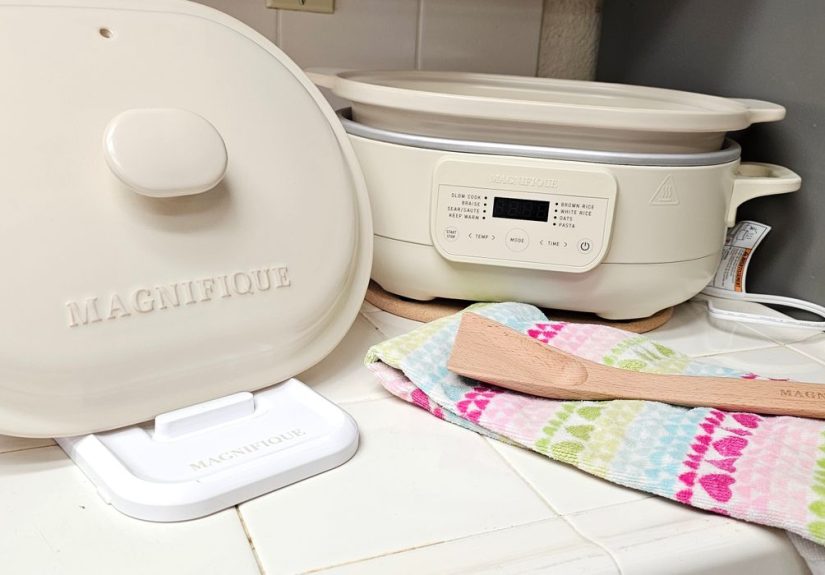
The Magnifique Claypot Oven (also sold as the Claypot Multicooker) is being talked about like it’s the love-child of a slow cooker, a Dutch oven, and that one friend who always remembers to thaw chicken. The big promise: clay-based cooking plus multi-directional heat for better texture, less “sad crockpot mush,” and an easier path to meals that taste like you used more than two brain cells.
So… is it worth the hype, or is it just another pretty appliance that becomes countertop décor by Week 3? Let’s break it downhonestly, in-depth, and with enough real-world context to help you decide if this clay cutie belongs in your kitchen.
The 30-Second Verdict
If you want a 4-quart, 8-in-1 cooker that can sear, braise, slow cook, and handle grains in a removable kaolin clay pot, the Magnifique Claypot Oven is compellingespecially if you care about avoiding typical nonstick coatings and you love a “cook, serve, store” vibe. It’s also a hit with reviewers for even heating, easy cleanup, and surprisingly good results for stews, braises, and one-pot meals.
The biggest tradeoffs are the 4-quart capacity (not great for big-batch families), and a small learning curve with controls and fill levels (because liquids + enthusiasm can overflow). If you’re expecting it to dethrone a dedicated rice cooker, you might feel lukewarmpun intended.
At a Glance: Specs That Matter
- Capacity: 4 quarts (best for ~2–4 people, or 4–5 if nobody expects seconds)
- Modes: Slow Cook, Braise, Sear/Sauté, Keep Warm, White Rice, Brown Rice, Oats, Pasta
- Materials: Kaolin clay pot + lid + glaze (manufacturer and major reviewers emphasize the clay build)
- Power: 120V, 1130W (countertop-appliance territory, not “don’t run the toaster” territory)
- Weight: about 13.5 lbs (sturdy, not “one-finger lift”)
- Footprint: roughly 17.5″ wide x 11.5″ deep; height about 8.75″ with lid (low-profile for many counters)
- Oven-safe pot/lid: manufacturer states up to 500°F (some third-party listings mention lower numbersmore on that below)
- Typical price: around $179.99 MSRP
What Exactly Is the Magnifique Claypot Oven?
Think of it as a multicooker that’s obsessed with one idea: clay. Instead of the usual metal pot with a coated nonstick surface, Magnifique’s whole pitch is a kaolin clay pot and lid, with a clay-based glaze designed to feel smooth and naturally nonstick. You cook in the clay insert while the electric base provides the heat and programming.
Unlike many slow cookers, it’s built for “start with flavor, finish with tenderness.” Reviewers highlight using it to sear (for browning) and then braise or slow cookall in the same vesselso you’re not dirtying a skillet first and then transferring to a crock like it’s a kitchen relay race.
Why Kaolin Clay Is the Star of the Show
Kaolin is famously used in high-quality ceramics and porcelain. Magnifique leans hard into kaolin’s reputation for durability and heat tolerance, and the brand positions it as chemically inert and non-reactive with foodsmeaning acidic dishes (tomato sauce, chili, citrusy braises) are less likely to pick up metallic notes you sometimes get with certain cookware.
In practice, what most people care about is the eating experience: clay cooking tends to support gentle heat retention and moisture-friendly cookingwhich is exactly what you want for stews, shredded meats, beans, and “let it simmer while I pretend I’m productive” meals. Reviewers specifically note that meat stays juicier and that the pot is easy to clean thanks to its smooth surface.
“OmniHeat” and the 360° Heating Idea
One major difference reviewers call out is the heating approach. Magnifique markets “OmniHeat” (multi-directional heating), and at least one major review explains it as heat coming from bottom, sides, and topnot just bottom and sides like many slow cookers. The practical promise: more even cooking and less “top layer is underdone while the bottom is over it.”
Multiple sources describe the results as faster cooking than you’d expect from a typical slow-cook approach, while still delivering tender braises and soft stewsbasically, you get the cozy without the waiting-for-next-week energy.
Performance: What It Cooks Well (and Where It’s Just “Fine”)
1) Sear + Braise: The “Okay, I’m Kind of a Chef Now” Combo
This is where the Claypot Oven gets its applause. Being able to sear in the same pot you’ll braise in is the kind of convenience that quietly changes your routine. A major reviewer described searing chicken thighs and potatoes, then braising them into a family-approved dinnerexactly the kind of meal that makes people ask what restaurant you ordered from (and you simply smile).
If you love:
- beef stew that tastes deeper than “seasoning packet + hope,”
- chili that isn’t watery,
- short ribs that don’t fight back,
- or braised beans that keep their shape instead of dissolving into beige paste,
the Magnifique is built for you.
2) Stews, Soups, and One-Pot Comfort Food
Several reviewers mention making veggie chili and beef stew, and the consistent theme is even heat + moisture retention. That translates into fewer dry edges, fewer scorched “hot spots,” and a more cohesive texture. If you’ve ever opened a slow cooker and thought, “Why does this look like it was boiled by a ghost?” this cooker is trying to solve that exact problem.
3) Rice and Grains: Great, with a Small Asterisk
The Claypot Oven includes white rice, brown rice, and oats presets. People do make rice successfully in it, but one thoughtful critique from a long-term reviewer is that rice isn’t necessarily better than what you’d get from a dedicated rice cooker. The pot is wider and shallower, which can encourage more crispy bits on the bottom and makes fluffing a little different.
Translation: if you want perfect rice like a rice-cooker loyalist, the Magnifique might not convert you. If you want good rice plus the ability to make chili, sear salmon, and braise chicken without switching appliances, that’s the trade.
4) Oats and Breakfast Mode: The Quiet Winner
Oats are where “set it and forget it” appliances shine. A preset that handles oatmeal without scorching is a big deal for busy morningsespecially if you’re trying to avoid the classic stove-top situation where oatmeal becomes a sentient creature the moment you look away.
5) Pasta Mode: Useful, but Know the Vibe
Pasta in a multicooker is less “Italian nonna romance” and more “I need dinner and I have a meeting in 20 minutes.” If you’re expecting al dente perfection, you’ll want to experiment with timing and liquid ratios. But for one-pot pasta dishes (think mac-and-cheese-adjacent comfort or weeknight red sauce situations), the convenience can be real.
Ease of Use: Buttons, Learning Curves, and Cleanup
Controls: Simple After You Learn It
Reviewers generally describe it as easy once you get the hang of the controls, but not always intuitive on day one. That’s common with multicookers: you’re learning the appliance’s logic while your stomach is asking why you made it complicated.
Best tip: use it a few times with forgiving recipes (oats, chili, stew) before you try the “sear then braise then reduce” masterpiece you saw on social media at 1 a.m.
Cleanup: One of Its Biggest Flexes
Cleanup is a repeat highlight. Multiple sources call out how easily the clay pot washes, and the manufacturer says the clay pot and lid are dishwasher safe. That’s the kind of detail that makes an appliance actually stay in your routine.
The base, like most electric appliances, is a wipe-down situationno sink baths, no spa day, no submerging.
Safety and “Non-Toxic” Claims: How to Think About It Like a Grown-Up
Magnifique’s marketing centers on “non-toxic” cooking. The company states its kaolin clay components are third-party tested and claims the clay contains no heavy metals (like lead and cadmium) and no PFAS, positioning the clay glaze as an alternative to conventional nonstick coatings.
Here’s the practical, helpful approach:
- It’s reasonable to like the idea of an uncoated-metal alternative if you’re avoiding traditional nonstick coatings.
- It’s also reasonable to ask for documentation (lab reports, test standards, what exactly was tested, and when).
- Don’t confuse “clay” with “indestructible.” The manufacturer warns against thermal shockso avoid going from fridge-cold to blazing hot.
Bottom line: the non-toxic angle is a big part of the appeal, but the smartest move is to treat it like any premium cookware claim: appreciate it, verify it if it matters to you, and follow the care instructions so the pot lasts.
Oven Safety and Temperature Confusion (Yes, We’re Going There)
The manufacturer states the clay pot and lid are oven safe up to 500°F. Some retail listings and third-party posts sometimes mention a lower temperature (often 450°F). That mismatch can happen when:
- different sellers list older specs,
- they’re mixing up models or inserts,
- or they’re defaulting to generic “ceramic pot” copy.
If oven use is a dealbreaker for you, follow the most reliable rule: use the temperature limit in the official manual for your exact model. (The current product page lists model MCP41P and the 500°F oven-safe note for the pot and lid.)
Design and Build: Pretty Enough to Leave Out
One reason this appliance gets attention is that it doesn’t look like a leftover from 2009. It’s designed to go from counter to table: reviewers describe lifting out the pot and serving directly from it like a casserole dish. If you’re short on counter space, the “only keep appliances that earn their rent” philosophy matters.
Magnifique also claims its clay glaze is unusually hard and chip-resistant. A reviewer noted using various utensils (including non-silicone in impatient moments) without leaving marksthough it’s still smart to stick to gentle tools if you want “heirloom” vibes instead of “oops, I scratched my fancy pot” vibes.
Capacity Reality Check: 4 Quarts Is Not a Party Size
The Claypot Oven is 4 quarts. That can work beautifully for:
- a medium chicken,
- a ~4 lb roast or pork shoulder,
- weeknight stews and chilis,
- and dinner for a small household.
It’s less ideal for:
- big families who meal prep by default,
- hosting,
- or anyone who thinks “leftovers” means “tomorrow’s lunch for six people.”
One reviewer who cooks for a large household explicitly wished it were bigger, noting overflow issues when scaling recipes up. So yes, the pot is roomybut it’s still a 4-quart world, and we’re all just living in it.
Pros and Cons
What People Love
- Versatility: sear, braise, slow cook, and handle grains in one appliance
- Even cooking: multi-directional heat concept helps avoid classic slow-cooker hot spots
- Flavor + texture: strong results for braises, stews, chili, and comfort food
- Easy cleanup: smooth pot surface; pot/lid dishwasher safe per manufacturer
- Looks good: serves as cookware and a serving dish, not just an appliance
What Might Bug You
- Size: 4 quarts can feel limiting for large families or batch cookers
- Learning curve: controls can feel tricky at first
- Rice perfectionists may not convert: good rice, but not necessarily “best rice of your life”
- Premium price: around $179.99 puts it above basic slow cookers
Who Should Buy It?
- You want fewer appliances: one cooker that can handle dinner end-to-end
- You love braises and stews: and want better texture than typical crockpot results
- You care about materials: you prefer clay-based cooking over conventional coated pots
- You’re a “pretty tools get used” person: aesthetics actually matter for your habits
- You cook for 1–4 most nights: and want easy leftovers (not a full meal-prep warehouse)
Who Should Skip It?
- You need volume: big family, big batch, big potluck energy
- You already own a multicooker you adore: and you mostly want pressure cooking (this isn’t that)
- You want a dedicated rice cooker outcome: especially if rice is your daily main event
- You want cheap and cheerful: basic slow cookers cost far less, and they still do the job
Tips to Get the Best Results (Without the Drama)
- Preheat for searing: give the pot time to come up to temperature before adding protein.
- Don’t overfill: especially with braises and soups. Leave headroom for bubbling and steam.
- Build flavor in layers: sauté aromatics first, then sear, then braisethis cooker is designed for that flow.
- Avoid thermal shock: don’t go fridge-cold pot straight into high heat. Let it temper a bit.
- Use gentle cleaning tools: skip abrasive pads; soak stubborn bits instead.
- Check your model’s oven limit: and follow the manual if you plan to bake or finish in the oven.
Final Take: Is It Worth the Hot Hype?
The Magnifique Claypot Oven earns its hype when you want premium everyday cookingnot just “set it and forget it,” but “sear, braise, and still barely think.” It’s especially strong for comfort foods that benefit from even heat and moisture retention, and it’s one of the rare appliances that people actually want to leave out on the counter.
If the price makes sense for your budget and the 4-quart size fits your reality, it’s a genuinely useful upgradenot a trend piece. But if you feed a crowd nightly or you mostly want “giant vat of soup,” you’ll likely be happier with a larger slow cooker or sticking to a classic Dutch oven.
Extra: 500-Word “Living With It” Experience (What Your Week Might Look Like)
Here’s the most realistic way the Claypot Oven wins you over: not with a single dramatic recipe, but with a bunch of tiny, low-friction moments that quietly stack up until you realize you’re using it three times a week.
Monday starts with oats. You toss in rolled oats, liquid, a pinch of salt, maybe cinnamon and frozen berries. You press the oats preset, walk away, andmiracle of miraclesnobody is scraping scorched oatmeal off the bottom of a pot. The texture is cozy, the cleanup is easy, and you feel suspiciously like the kind of person who meal-plans. (You’re not. But the appliance doesn’t need to know that.)
Tuesday is a classic “I forgot to thaw anything” dinner. This is where the Claypot Oven’s sear-and-braise personality shines. You sauté onion and garlic, sear a few pieces of chicken (or sausage, or whatever protein you found in the fridge), then add tomatoes, beans, broth, and spices for chili. The pot encourages a more even simmer, so you’re not getting that weird slow-cooker split where the bottom tastes fine and the top tastes like warm sadness. When it’s done, you serve directly from the clay pot and pretend it was always the plan to be “rustic.”
Wednesday is the busy-day victory lap: a simple beef stew or veggie stew that tastes like it had timeeven if you didn’t. The trick is that you can brown first, then braise, so your stew doesn’t taste like ingredients that met in a parking lot. The result is richer, more cohesive, and less watery than many basic crockpot stews. If you’ve ever wanted “stew that feels like a hug,” this is the setting.
Thursday becomes “rice night,” and this is where expectations matter. If you’re a rice-cooker purist, you might notice the rice is differentsometimes a bit more crispy at the bottom because of the pot shape. But if you’re the kind of cook who likes a little toasted edge (hello, crispy bits), you’ll call that a feature. You turn it into bowls: rice, sautéed greens, a quick protein, maybe a fried egg if you’re feeling bold.
Friday is leftovers, but the appliance still earns its keep because the pot cleans up without a fight. That’s the underrated secret: the easier it is to clean, the more often you’ll use it. Appliances don’t fail because they can’t cook. They fail because they’re annoying.
By the weekend, you’re using it like a small Dutch oven with benefits: something to braise, something to slow cook, something to serve straight from the pot when people come over. And that’s the real hype: it’s not that it makes you a different cook. It just removes enough friction that cooking stops feeling like a chore and starts feeling… possible.