Table of Contents >> Show >> Hide
- What “Retirement Age” Really Means (And Why It Doesn’t Mean “Retire”)
- The Reported Cosmetic Change: Less “Freeze-Frame,” More “Living Face”
- Why the Boyfriend Angle Makes Everyone Lose Their Minds
- Madonna and Reinvention: This Isn’t Her First “New Chapter”
- The Bigger Issue: Women Aren’t Allowed to Age “Normally” in Public
- What This Reported “Natural Shift” Might Look Like in Real Life
- Specific Examples: Why People Think This Story Has Momentum
- A Practical Takeaway (Without Turning This Into a Skincare Sermon)
- Real-World Experiences Related to the Topic (About )
- Conclusion: Retirement Age Is a Number, Not a Curtain Call
“Retirement age” is one of those phrases that sounds like a beige cardigan feels: practical, quiet, and vaguely scented with printer paper.
Which is exactly why it’s hilarious to hear it said in the same breath as Madonnaa person who has spent decades proving that
a “final form” is for video game bosses, not pop icons.
Still, the headline has teeth: Madonna has hit the age most people associate with “full benefits” and “early-bird specials,” and reportedly
made a beauty pivot after some input from her much younger boyfriend. The alleged advice? Not a new eyeliner hack. Not a trendy haircut.
Something more unexpected in celebrity-land: do less.
Let’s unpack what “retirement age” actually means, what the reported cosmetic change is (and isn’t), why the internet is so obsessed with
women aging in public, and what a person can learn from this story without needing a stadium tour budgetor a glam squad with a travel itinerary.
What “Retirement Age” Really Means (And Why It Doesn’t Mean “Retire”)
In everyday conversation, “retirement age” often points to 67, because that’s the full retirement age for many Americans.
But the official number can vary depending on your birth year. Translation: retirement age is less “a single birthday” and more “a range where
government forms start looking at you differently.”
Madonna was born in 1958, which puts her in that slice of America where full retirement age lands between 66 and 67.
So yesby the standards of paperwork, she’s in the “this is the full-benefit era” neighborhood.
By the standards of her career? She’s still doing what she’s always done: choosing her own rules and letting the world catch up.
And that’s the key point: retirement age is an eligibility milestone, not a personality transplant.
Plenty of people hit that age and keep working, keep creating, keep starting new chaptersespecially when the “work” is also the art.
The Reported Cosmetic Change: Less “Freeze-Frame,” More “Living Face”
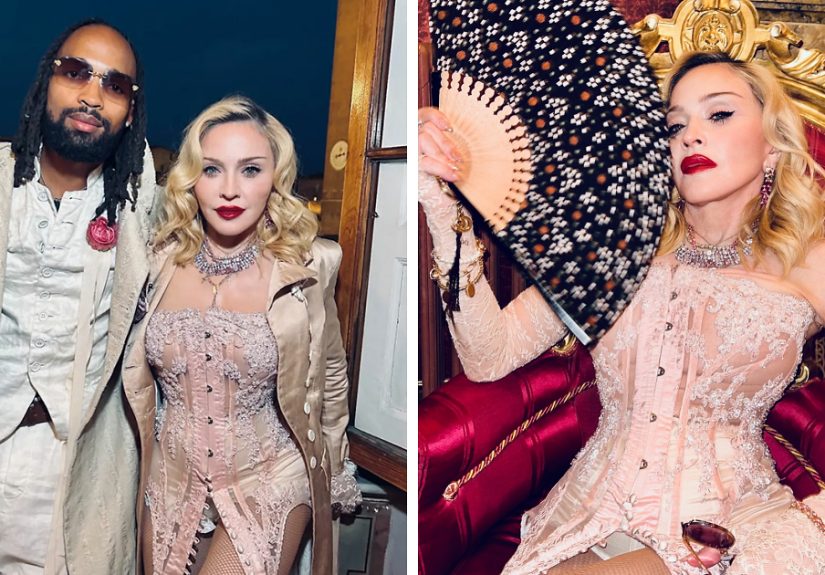
According to reports, Madonna’s 29-year-old boyfriend encouraged her to embrace a more natural approachmeaning she may be stepping
back from heavier cosmetic enhancements and leaning into treatments that aim for “refreshed” rather than “reconstructed.”
So… what does “more natural” mean in celebrity terms?
For most non-famous humans, “natural” might mean moisturizer and remembering to drink water before noon. For celebrities, “natural” can still include
professional skincare and aesthetic treatmentsjust with a lighter touch. Think in terms of skin health, texture, and glow instead of
dramatic reshaping.
The reported shift includes favoring gentler, non-surgical optionsthings like LED light treatments and oxygen facials
which are commonly marketed as ways to support a brighter, more even look without changing facial structure.
(The internet loves to treat the words “facial” and “procedure” like they’re villains in a telenovela, but plenty of these treatments are essentially
“high-maintenance skincare,” not a secret identity swap.)
Why “doing less” can look like “doing more”
Here’s the weird part about faces: they look different depending on lighting, lenses, angles, makeup, swelling, travel, stress, and whether a camera is
zooming in like it’s trying to find the last Pringle in the can. Public reactions can swing wildly from one appearance to the next because photography
isn’t realityit’s a moment, aggressively flattened.
So if someone scales back injectables or heavy “sculpting” and leans into skin-focused care, the result can read as:
more movement, softer features, and a vibe that says “human being” instead of “high-definition wax museum.”
That’s not a moral victory. It’s just a different aesthetic choice.
Why the Boyfriend Angle Makes Everyone Lose Their Minds
A story about a superstar shifting her beauty approach would already get clicks. Add “29-year-old boyfriend” and suddenly the internet shows up like
it heard there were free snacks and drama.
The age-gap relationship becomes part of the narrative, and the “advice” becomes a plot device. People want it to mean something bigger:
a power dynamic, a control story, a “she’s changing for him” storyline, or the opposite“he’s mature beyond his years” and she’s “finally letting go.”
Real life is usually less cinematic.
A more grounded read
Partners influence each other all the timeoften in small, ordinary ways. One person starts hiking, suddenly the other owns shoes that look like they
could climb a mountain. One person gets into cooking, suddenly there’s garlic in the house. One person says, “You don’t need to be so hard on yourself,”
and the other tries (messily, gradually) to believe it.
If the report is accurate, the “unexpected advice” isn’t a makeover mandateit’s a nudge toward comfort:
you don’t have to chase perfection every time the world watches you blink.
Madonna and Reinvention: This Isn’t Her First “New Chapter”
Madonna built a legacy on reinvention. Different eras, different aesthetics, different soundsoften ahead of the culture, sometimes fighting the culture,
and frequently forcing conversations that people didn’t realize they were avoiding.
That’s why a beauty pivotreal or rumoredfits the Madonna playbook. If a person has spent decades experimenting with image, fashion, and identity,
then experimenting with how to age in public is simply the next frontier.
And let’s be honest: aging is the one “trend” nobody can opt out of. You can skip low-rise jeans. You cannot skip time.
The question becomes: do you negotiate with it, ignore it, collaborate with it, or wrestle it in the driveway?
The Bigger Issue: Women Aren’t Allowed to Age “Normally” in Public
Celebrity culture sets up a trap that’s almost impossible to win:
Age naturally, and you’ll get “she let herself go.” Use cosmetic help, and you’ll get “she ruined her face.”
The goalposts aren’t just movingthey’re on roller skates, holding a megaphone.
Madonna sits at the intersection of intense fame, constant scrutiny, and a career that’s always been judged through the lens of appearance.
So when she turns an age associated with retirement, people don’t just commentthey project. They treat her face like it’s a public town hall
meeting and they’re the moderator. (Spoiler: they are not.)
What This Reported “Natural Shift” Might Look Like in Real Life
If someone decides to move toward a more natural look, it usually isn’t a single dramatic decision. It’s a series of smaller choices:
- Dialing back on procedures that change shape or movement.
- Prioritizing skin quality (hydration, texture, tone) over dramatic contouring.
- Changing makeup strategylighter base, softer highlighting, less “camera armor.”
- Letting time show up in a way that feels authentic rather than “defeated.”
Notice what’s missing: a moral lesson. This isn’t “good” or “bad.” It’s personal preference plus the reality that bodies and faces change.
Sometimes people want to lean into that. Sometimes they want help editing it. Many do both at different times.
Specific Examples: Why People Think This Story Has Momentum
A few recent, highly visible moments have made the idea of a “beauty reset” feel plausible to audiences:
-
Public chatter around past appearances: certain red-carpet moments sparked intense speculation online, which can pressure anyone
even a legendto reassess what feels worth it. -
A major health scare and recovery period: when your body forces you to slow down, priorities can shift. “How do I feel?” starts
mattering more than “How do I photograph?” - Family-focused milestones: big birthdays, travel with kids, and quieter celebrations often push “joy” ahead of “approval.”
- Creative work continuing: artists who stay active often recalibrate their look to match their current life, not the internet’s expectations.
None of this proves anything. But it explains why people find the report believableand why it’s being framed as a “moment,” not just a gossip item.
A Practical Takeaway (Without Turning This Into a Skincare Sermon)
If you strip away the celebrity noise, the core idea is surprisingly relatable:
When you feel watched, you can start managing yourself like a project instead of living like a person.
Sometimes it takes a friend, a partner, or a life event to remind you that you’re allowed to exist without “fixing” every visible sign of time.
Madonna’s version of this may involve top-tier professionals and fancy devices. Your version might be:
sleeping more, wearing less foundation, getting bangs, skipping the harsh lighting in your bathroom, orwild conceptbeing kinder to your own reflection.
Real-World Experiences Related to the Topic (About )
Even if you’ve never performed for 50,000 people, the emotional math behind this story can feel familiar. A lot of people hit “retirement age” (or any
big age) and notice a shift: suddenly the world speaks to them differently. Strangers call them “young lady” less and “ma’am” more. Beauty ads stop
implying “fun” and start implying “repair.” It’s subtle, but it can land like a loudspeaker: You are entering a new category.
One common experience is the “camera realization.” People will say they felt fine until they saw a photoat a wedding, a reunion, a holiday dinner.
Lighting is harsh, the angle is unflattering, and suddenly they’re zooming in like they’re investigating a mystery. That’s often when cosmetic questions
startsometimes driven by curiosity, sometimes by fear. What’s interesting about the reported Madonna shift is that it flips the usual script: instead of
reacting to photos by escalating changes, the alleged advice is to soften the response and step back.
Another shared experience is how relationships shape self-perception. Many peopleat any agefeel braver when they’re with someone who genuinely likes
them. Not in a cheesy movie way, but in a practical way: they laugh more, they sleep better, they try fewer “fixes,” and they stop treating their face
like a résumé. Sometimes a younger partner can bring a different emotional rhythmless nostalgia, more present-tense living. Sometimes an older partner
brings steadiness and perspective. Either way, the healthiest relationships tend to do the same thing: they reduce the urge to perform.
There’s also a very real “procedure fatigue” that people talk about. It’s not always regretit’s just exhaustion. The maintenance, the appointments,
the recovery time, the mental load of deciding what to change next. Even people who love the results can reach a point where they’d rather spend their
energy elsewhere: travel, family, hobbies, creating, feeling good in their own skin. A pivot toward gentler treatments (or simply fewer interventions)
often comes from that place: “I still care, but I don’t want to live inside the mirror.”
Finally, there’s the experience of choosing a new definition of “looking good.” For a lot of people, “looking good” starts to mean “looking like I’m
enjoying my life,” not “looking like I’m trying to prove something.” That’s why this Madonna headline resonates beyond gossip. It’s not just about a
celebrity face. It’s about a universal tension: how to keep showing up in the world as you changewithout apologizing for the fact that time is doing
what time does.
Conclusion: Retirement Age Is a Number, Not a Curtain Call
Madonna hitting “retirement age” isn’t a signal that she’s fading out. If anything, it highlights how outdated our cultural scripts areespecially for
women. The reported cosmetic shift, influenced by a younger boyfriend or not, points to a bigger truth: there’s power in choosing what you want your
face, your image, and your life to mean now.
Whether the change is real, exaggerated, or somewhere in the middle, the most useful message is simple:
you get to decide what “aging well” looks like for you. Not the internet. Not the camera. Not the comment section.