Table of Contents >> Show >> Hide
- Quick Lung Facts at a Glance
- Where Your Lungs Sit in the Body
- Major Parts of the Lungs: A Picture-Style Overview
- How Your Lungs Actually Work (Step by Step)
- Common Lung Conditions (In One Picture-Friendly List)
- How to Keep Your Lungs Healthy
- Picture-Style Summary: Lungs in Three Simple Images
- Experiences That Bring Lung Facts to Life
- Conclusion: A Clearer Picture of Your Lungs
Take a deep breath in. Now let it out. You just used a pair of pink, sponge-like organs that quietly keep you alive all day, every day.
Your lungs are busy power plants, air filters, emergency responders, and cheerleaders for every workout you do.
In this anatomy and overview guide, we’ll walk through essential lung facts, explore how they’re built, and use simple “picture-style” descriptions so you can visualize what’s going on inside your chest.
Even if you never become a pulmonologist, understanding basic lung anatomy and function can help you spot trouble early, talk confidently with your doctor,
and make smarter choices to protect your breathing for life.
Quick Lung Facts at a Glance
- You have two lungs, one on each side of your chest, sitting on either side of your heart.
- Your right lung has three sections (lobes); your left has two because your heart hogs some space.
- Adult lungs together contain hundreds of millions of tiny air sacs called alveoli.
- Your lungs and airways stretch for hundreds of miles if you could line them up end to end.
- At rest, most adults breathe around 12–20 times per minute, roughly 20,000 breaths per day.
- The main lung job: bring oxygen in, move carbon dioxide out, and keep your blood perfectly balanced.
Where Your Lungs Sit in the Body

Your lungs live inside the thoracic cavitythe space in your chest between your neck and your diaphragm.
The ribs act like a protective cage, and the diaphragm, a dome-shaped muscle underneath the lungs, works as the main breathing muscle that moves air in and out.
Each lung is wrapped in a thin, double-layered membrane called the pleura.
Between the layers is a tiny amount of fluid that lets the lungs slide smoothly against the chest wall as you breathe.
Think of it like a drop of oil between two glass plates: they stay together, but they can move without friction.
Right Lung vs. Left Lung
- Right lung: Slightly larger; divided into three lobes (upper, middle, lower).
- Left lung: Smaller; divided into two lobes (upper and lower) and has a notch to make room for the heart.
Even though they’re not perfectly symmetrical, both lungs work together as a team to move air, exchange gases, and support your body’s metabolism.
Major Parts of the Lungs: A Picture-Style Overview

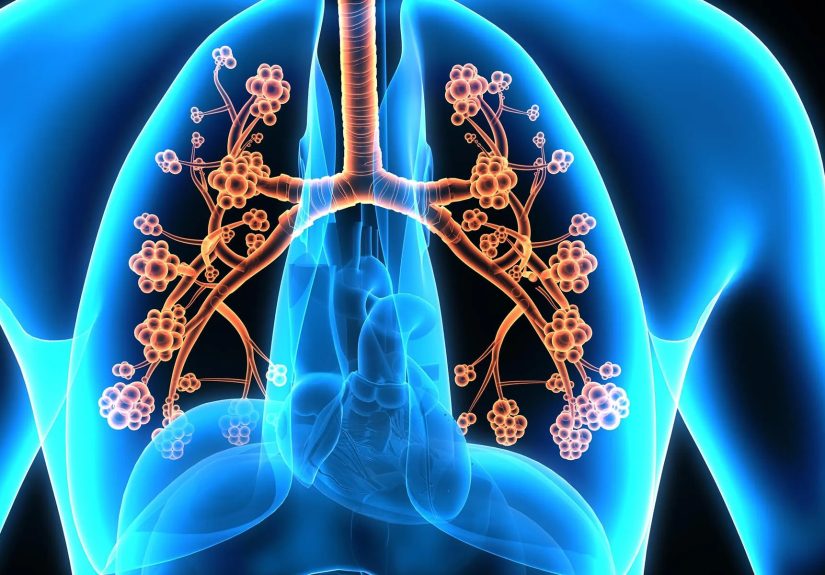
If you could slice your lungs open (please don’t), you’d see a branching pattern that looks like an upside-down tree.
The trunk is your windpipe, the branches are your bronchi and bronchioles, and the leaves at the ends are tiny air sacs called alveoli.
1. Trachea: The Windpipe
Air enters through your nose or mouth, travels down the throat, and passes through the trachea (windpipe).
The trachea is a flexible tube reinforced with C-shaped rings of cartilage so it stays open while you breathe, cough, laugh, or yell at the TV.
2. Bronchi and Bronchial Tree
At the bottom of the trachea, the airway splits into two main tubes:
- Right main bronchus going to the right lung
- Left main bronchus going to the left lung
Inside each lung, these main bronchi branch into lobar bronchi (one per lobe) and then into even smaller segmental bronchi.
This branching continues for many generations, creating a huge network of airways that deliver air throughout your lungs.
Eventually, the bronchi turn into very small bronchioles, which no longer have cartilage rings.
These bronchioles are like the twigs at the end of the tree, ending in clusters of microscopic air sacs.
3. Alveoli: Millions of Tiny Air Sacs

The alveoli are tiny, balloon-like structures at the very end of the airways.
They are grouped in clusters that look like bunches of grapes under a microscope.
Each alveolus has paper-thin walls surrounded by a dense network of capillaries (tiny blood vessels).
Here’s the magic: the barrier between the air in the alveolus and the blood in the capillary is extremely thinabout a micrometerso gases can move across quickly.
Oxygen crosses from the air into the blood, and carbon dioxide crosses from the blood into the air to be exhaled.
Because you have hundreds of millions of alveoli, the total surface area for gas exchange ends up being about the size of a tennis court.
That’s a lot of real estate packed into your chest.
4. Pulmonary Blood Vessels
The lungs are closely tied to the heart by the pulmonary circulation:
- Pulmonary arteries carry oxygen-poor blood from the right side of the heart to the lungs.
- In the capillaries around the alveoli, blood picks up oxygen and releases carbon dioxide.
- Pulmonary veins then carry oxygen-rich blood back to the left side of the heart to be pumped throughout the body.
How Your Lungs Actually Work (Step by Step)

Step 1: Inhale
When you inhale, your diaphragm contracts and moves downward, and the muscles between your ribs pull the rib cage slightly up and out.
This expands the chest cavity, creating a vacuum that draws air in through your nose or mouth.
The air flows down the trachea, through the bronchi and bronchioles, and finally into the alveoli.
Fresh air fills the air sacs with oxygen.
Step 2: Gas Exchange
In the alveoli, oxygen dissolves in a thin layer of fluid and diffuses into the blood in nearby capillaries.
Red blood cells bind the oxygen and carry it away to feed your tissues.
At the same time, carbon dioxidea waste product from your cellsmoves from the blood into the alveoli.
This constant exchange keeps your blood oxygen level high and your carbon dioxide level from building up.
Step 3: Exhale
When you exhale, the diaphragm relaxes and moves upward, and the rib cage settles slightly inward.
The chest cavity volume shrinks, pushing air out of the lungs.
Carbon dioxide-rich air travels back up through the bronchi, trachea, and out your nose or mouth.
This inhale-exchange-exhale cycle repeats automaticallywhile you sleep, talk, exercise, and scroll your phonewithout you having to think about it.
Common Lung Conditions (In One Picture-Friendly List)

Your lungs are tough but not invincible. Many conditions can affect the airways, lung tissue, or blood vessels. Some of the most common include:
-
Asthma: Airways become inflamed and narrowed, often reacting to triggers like allergens, cold air, or exercise.
Symptoms include wheezing, chest tightness, and shortness of breath. -
Chronic obstructive pulmonary disease (COPD): Usually linked to smoking, COPD causes chronic airway obstruction,
making it hard to exhale fully. Emphysema and chronic bronchitis are main types. - Pneumonia: Infection that inflames air sacs, which can fill with fluid or pus. Symptoms often include fever, cough, and difficulty breathing.
- Pulmonary fibrosis: Scarring in the lung tissue that stiffens the lungs and makes breathing and gas exchange harder.
- Lung cancer: Abnormal cell growth in lung tissue, strongly associated with smoking but can also occur in non-smokers.
- Blood-flow problems: Conditions like pulmonary embolism (blood clot in lung arteries) or pulmonary hypertension (high pressure in lung vessels).
The earlier these conditions are detected, the better the treatment outcomes usually areanother reason to pay attention to your breathing and get regular checkups.
How to Keep Your Lungs Healthy

1. Don’t Smoke (Seriously.)
Smoking is the single biggest risk factor for COPD, lung cancer, and many other lung diseases.
Quitting at any age improves lung function over time and reduces your risk of life-threatening illness.
If you don’t smoke, keep the streak going. If you do, talk to a healthcare professional about cessation aidspatches, medications, counseling, and support groups can make quitting much easier.
2. Avoid Secondhand Smoke and Polluted Air
Even if you’re not the one holding the cigarette, tobacco smoke can still damage your lungs.
Try to avoid smoky environments and high-pollution settings when possible. On days with poor air quality, limit intense outdoor exercise, especially if you have asthma or other lung conditions.
3. Move Your Body
Regular aerobic activitywalking, cycling, dancing, swimmingtrains your lungs and heart to work more efficiently.
Over time, you may notice you can walk farther, climb more stairs, or complete workouts with less breathlessness.
4. Keep Vaccinations Up to Date
Vaccines like influenza and pneumonia vaccines can help prevent serious respiratory infections that might damage lung tissue or worsen chronic lung disease.
Older adults and people with existing lung problems are especially encouraged to stay current on recommended vaccines.
5. Listen to Your Breath
Don’t ignore signs like persistent cough, wheezing, frequent chest infections, or shortness of breath that seems out of proportion to your activity level.
These can be early clues that something’s off in your lungs and worth a chat with a healthcare professional.
Picture-Style Summary: Lungs in Three Simple Images
-
Picture 1: A chest cutaway showing lungs, heart, ribs, and diaphragm.
Takeaway: Lungs sit in the chest cavity, protected by ribs and driven by the diaphragm. -
Picture 2: A branching tree from trachea to bronchi to bronchioles.
Takeaway: Air travels down a “respiratory tree” that gets narrower the deeper you go. -
Picture 3: A close-up of alveoli wrapped in capillaries.
Takeaway: Gas exchange happens at a microscopic level, where air and blood meet.
These three mental pictures give you a powerful shortcut to remember how lung anatomy supports lung function:
protected space, branching pipes, and millions of microscopic air sacs.
Experiences That Bring Lung Facts to Life
Facts and diagrams are great, but lungs really make sense when you connect them to everyday experiences.
You don’t need a medical degreejust pay attention to how your body feels in different situations.
Walking Up the Stairs vs. Walking on Flat Ground
Think about how you feel when you walk from your couch to your kitchen compared with climbing three flights of stairs.
On flat ground, your breathing might barely change; your lungs are handling a light workload.
On the stairs, your muscles demand more oxygen, so your breathing rate and depth increase.
That’s your lungs and heart teaming up to deliver extra oxygen and clear out extra carbon dioxide.
If you notice that a short flight of stairs leaves you unusually windedespecially if this is new for youthat’s one of those real-life clues that your lungs or heart might need a checkup.
High Altitude Trips
Maybe you’ve gone to a mountain town or taken a ski trip and felt unusually short of breath just walking around.
At higher altitudes, the air pressure is lower and there’s less oxygen available per breath.
Your lungs are doing the same job, but the “supply” of oxygen is weaker, so you breathe faster and deeper to compensate.
Over several days, your body starts adjustingmaking more red blood cells and improving how efficiently it uses oxygen.
This is a powerful, real-world example of how flexible your lungs and circulatory system can be.
Exercise Training and “Lung Capacity”
People often say, “I improved my lung capacity,” after getting into better shape.
What’s really happening is that regular exercise trains your body to use oxygen more efficiently.
Your respiratory muscles get stronger, your heart pumps more effectively, and your muscles extract more oxygen from the blood.
You might still have roughly the same total lung volume, but you’ll experience less breathlessness during activities that used to leave you gasping.
That improvement is something you can feel every time you climb a hill or jog to catch a bus.
Colds, Flu, and That Heavy-Chest Feeling
When you get a respiratory infection like a bad cold or flu, you may feel a heavy, tight sensation in your chest.
Mucus can build up in the airways, inflammation can narrow passages, and coughing becomes your body’s attempt to clear that mess out.
Lying down might make it feel harder to breathe, while sitting upright can feel easier.
That’s gravity influencing blood flow and drainage in your lungs, changing how air moves in and out and how comfortable your breathing feels.
Smoking and Shortness of Breath Over Time
Many people who smoke notice that they can’t walk as far or climb as many stairs without stopping to catch their breath.
Over time, smoke exposure irritates and damages the airways and tiny air sacs, making lung function less efficient.
What used to be an easy stroll becomes a “stop and rest” situation.
The hopeful side of this story: research shows that lung function often improves after quitting smoking, especially in the first few years.
Cough and shortness of breath can decrease, and activities become easier again.
It’s one of the clearest examples of how lifestyle choices can directly change how your lungs feel and perform day to day.
Mindful Breathing and Stress
Have you ever noticed that when you’re stressed, your breathing becomes shallow and fast?
Taking a few slow, deep breaths can calm your nervous system.
When you deliberately engage your diaphragm and take fuller breaths, more air reaches the lower parts of your lungs where blood flow is abundant, supporting better gas exchange and a stronger sense of calm.
This is why breathing exercises show up in yoga, meditation, and stress-management programs: they use your lung mechanics to influence your brain and mood.
Conclusion: A Clearer Picture of Your Lungs
Your lungs are more than just “air bags” in your chest. They’re intricate organs with a branching airway system,
millions of microscopic air sacs, and a tight partnership with your heart and blood vessels.
By holding a few simple mental pictureslungs in the chest, the respiratory tree, and the alveoli-capillary interfaceyou gain a powerful understanding of how breathing keeps you alive.
The better you understand how your lungs are built and how they work, the easier it is to notice changes early, ask smart questions at the doctor’s office,
and choose everyday habits that keep your breathing as effortless as possible.
Your lungs work hard for you; a bit of attention and care is the least we can give them in return.