Table of Contents >> Show >> Hide
- Lightning as a Natural Particle Accelerator
- “Dark Lightning” and Terrestrial Gamma-Ray Flashes
- When Lightning Triggers Tiny Nuclear Reactions
- “Radioactive Thunderstorms” and Spy-Plane Measurements
- How Much Radiation Are We Talking About?
- Downward Flashes and Ground-Level Effects
- Cosmic Rays, Lightning, and a Charged-Up Sky
- What Does This Mean for Climate and Technology?
- Should You Worry About Being Irradiated by Lightning?
- Conclusion: A Hidden High-Energy World Above Our Heads
- Experiences from an Irradiated Sky: How It Feels on the Front Lines
If you’ve ever watched a summer thunderstorm and thought, “Wow, that’s a lot of electricity,” you’re technically rightbut also adorably underestimating things. Modern science suggests that thunderstorms are not just giant Van de Graaff generators in the sky. They’re more like pop-up particle accelerators, firing off bursts of high-energy radiation that can rival what we build in billion-dollar labs.
That’s right: lightning might literally be irradiating our worldproducing gamma rays, X-rays, antimatter, and even tiny nuclear reactions in the atmosphere. Before you panic and order a lead umbrella, let’s unpack what’s really going on, how intense this radiation is, and what it means for people on the ground, airline passengers, and our planet as a whole.
Lightning as a Natural Particle Accelerator
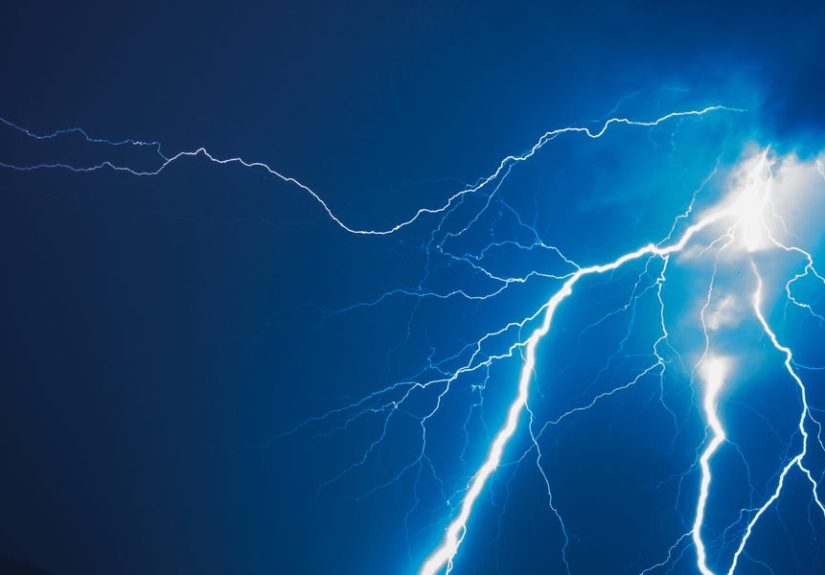
We tend to think of lightning as a simple electric spark: charges separate in a storm cloud, the electric field grows, the air breaks down, and boombright flash, loud thunder, dog under the bed. But inside and above thunderstorms, the electric fields can get strong enough to do something far more exotic.
In those intense fields, electrons can be pushed to incredibly high speeds, close to the speed of light. When these ultrafast electrons slam into atoms in the airmostly nitrogen and oxygenthey abruptly slow down and emit powerful radiation in the form of gamma rays. This process, called bremsstrahlung (German for “braking radiation”), is the same basic mechanism used in medical X-ray machines and some particle physics experimentsonly here, nature is running the show.
So a thunderstorm is not just a wet, noisy cloud. Under the right conditions, it becomes a natural high-energy lab, accelerating particles and blasting out gamma rays in millisecond bursts.
“Dark Lightning” and Terrestrial Gamma-Ray Flashes
Those intense but fleeting flashes of radiation have a name: terrestrial gamma-ray flashes, or TGFs. They were first discovered in the 1990s when satellites designed to watch for cosmic explosions accidentally noticed gamma rays coming from Earth instead of deep space.
Unlike ordinary lightning, TGFs are usually invisible to our eyes. They last less than a thousandth of a second and are made of ultra-energetic photonslight with tens of millions of times the energy of visible light. That’s why some researchers nicknamed the phenomenon “dark lightning”: it’s a powerful flash, but in a part of the spectrum we can’t see.
Spacecraft like NASA’s Fermi Gamma-ray Space Telescope and other satellites have detected hundreds to thousands of TGFs a day worldwide. That sounds like a lot, but remember: Earth sees millions of lightning flashes daily. TGFs are the special, high-octane subset of storms where the electric fields get extreme enough to run a full-blown particle experiment.
And these flashes don’t just produce photons. They can also generate beams of electrons and positrons (the antimatter twin of the electron) that shoot into space. In other words, thunderstorms occasionally act like giant antimatter cannons. That’s… not something Ben Franklin mentioned while flying his kite.
When Lightning Triggers Tiny Nuclear Reactions
If all that sounds dramatic, buckle up. In the last decade, researchers have also found evidence that thunderstorms can trigger photonuclear reactionsyes, nuclear reactionsright here in the lower atmosphere.
Here’s the basic idea: a TGF produces incredibly energetic gamma rays. Some of those photons are so powerful that when they collide with the nuclei of nitrogen or oxygen atoms, they can knock out neutrons and create short-lived radioactive isotopes. That’s the definition of a photonuclear reaction.
Ground-based detectors in Japan and elsewhere have recorded bursts of gamma rays from thunderstorms followed by a shower of neutrons and delayed radiation as those unstable isotopes decayed. For a brief moment, the air above a storm becomes a tiny, natural nuclear lab. The total energy involved is tiny by human standardsnothing like a reactor or a bombbut it’s a remarkable reminder of how wild our atmosphere can be.
So yes: in a very literal sense, storms can activate the air, producing short-lived radiation that spreads and fades within seconds to minutes.
“Radioactive Thunderstorms” and Spy-Plane Measurements
Most of what we just described was discovered from orbit or from instruments on the ground. But to really understand how much radiation a storm produces, you eventually have to fly right into the beast. (There is always some scientist who hears “dangerous” and thinks “great fieldwork opportunity!”)
Recent campaigns using high-altitude aircraftincluding retrofitted U-2 spy planes and research jetshave flown near massive tropical thunderstorms and measured unexpectedly high levels of gamma rays. These studies suggest that many large storms, especially in the tropics, are quietly producing a mix of:
- Short, intense TGFs associated with specific lightning discharges
- Longer-lasting “gamma-ray glows” that can persist for tens of seconds or more
- Occasional nuclear byproducts, like neutrons and radioactive isotopes
From the plane’s point of view, the storm below isn’t just a pile of cloudsit’s a glowing, turbulent radiation source.
How Much Radiation Are We Talking About?
Here’s the question everyone really cares about: if lightning is pumping out gamma rays and triggering nuclear reactions, how bad is that for humans?
Short answer: fascinating for scientists, not a major threat for your daily life.
Some early modeling studies suggested that an unlucky airplane flying directly through a particularly intense TGF could, in theory, expose passengers to a dose of radiation comparable to a few hundred chest X-raysdelivered in a fraction of a millisecond. That’s the scary-sounding headline.
But there are three big caveats:
- The danger zone is tiny. The region where radiation levels peak might be roughly the size of a football field or so. An airliner would have to thread that needle at exactly the wrong moment.
- Thunderstorm avoidance is already standard. Pilots are trained to give big storms a wide berth because of turbulence, hail, and lightning. That alone massively reduces the odds of entering the hot spot.
- It’s about probability, not just intensity. Even if a single event could be intense locally, the chance of a jet being in exactly the wrong place at exactly the wrong microsecond is extremely low.
Meanwhile, for people on the ground, the air and the bulk of the atmosphere act as excellent shields. Gamma rays and high-energy particles lose energy quickly as they pass through air. By the time the radiation from a TGF or gamma-ray glow reaches ground level, it’s usually tiny compared with what you already get from cosmic rays and natural radioactivity in rocks, buildings, and even bananas.
In other words, the global radiation budget of “lightning stuff” is currently thought to be a rounding error compared to everyday background sources. The atmosphere is getting zapped and tickled, but you’re not secretly getting cooked by every thunderstorm that rolls through town.
Downward Flashes and Ground-Level Effects
Most early measurements of TGFs came from satellites, which naturally see radiation beaming upward toward space. More recent work, however, has shown that some TGFs fire energy downward as welltoward the ground and flight levels.
Ground-based experiments in storm-prone regions like Japan have captured events where a persistent gamma-ray “glow” in the clouds suddenly shuts off the moment a lightning bolt strikes, followed by a brief, intense burst of higher-energy radiation. This appears to be a downward-directed TGF linked to the same lightning discharge.
Again, the key factor is distance. The strongest radiation fields are thought to exist in and just above the storm itself. Unless you’re flying near the top of the clouds or standing very close to a particularly energetic winter storm with detectors in hand, your actual dose is quite small.
Still, the discovery of downward TGFs matters for aviation safety, lightning physics, and our understanding of how energy moves between the atmosphere and the ground.
Cosmic Rays, Lightning, and a Charged-Up Sky
As if thunderstorms weren’t complex enough, there’s another character in this story: cosmic rays, high-energy particles from space that constantly bombard Earth’s atmosphere.
When cosmic rays hit the upper atmosphere, they produce showers of secondary particleselectrons, positrons, and more. Some research suggests that these showers can seed the runaway electron avalanches that lead to lightning, TGFs, and gamma-ray glows. In simple terms, a proton from a distant supernova might help set off a lightning bolt in your local storm.
Studies comparing lightning data with cosmic ray activity have found hints of a connection: changes in cosmic ray flux appear to influence how often lightning occurs and how strong storms become. Combined with recent modeling work, a picture is emerging where cosmic rays and storm electric fields team up to kick off high-energy chain reactions in thundercloudscomplete with X-rays, gamma rays, and electron avalanches.
If you like dramatic metaphors, you can think of a thunderstorm as the amplifier, and cosmic rays as the little taps that make it ring.
What Does This Mean for Climate and Technology?
Researchers are still sorting out the broader implications of lightning-produced radiation for our atmosphere and technology.
Some open questions include:
- Chemistry of the upper atmosphere: Photonuclear reactions and ionization events can create unusual isotopes and reactive molecules. Scientists are studying whether these effects measurably influence atmospheric chemistry, such as nitrogen oxides that affect ozone and climate.
- Impact on electronics: High-energy particles and gamma rays can, in principle, cause single-event upsetsrandom bit flipsin sensitive electronics on aircraft or satellites. Engineers already design systems with this in mind for cosmic rays; lightning-related radiation may be a smaller but related contributor.
- Improved lightning prediction: Because TGFs and gamma-ray glows are tightly linked to certain storm structures, monitoring them might help forecasters recognize the most intense lightning producers, improving warnings.
We’re not yet at the point where meteorologists will say, “Today’s forecast: 80% chance of showers, scattered TGFs, and light antimatter,” but the physics is moving in that direction of detail.
Should You Worry About Being Irradiated by Lightning?
Let’s put things in perspective.
- You’re constantly bathed in natural background radiationfrom the ground, the air, cosmic rays, food, and even your own body.
- Lightning and thunderstorms add a fascinating high-energy twist, but current estimates suggest they contribute a relatively small fraction to your total yearly dose.
- The main everyday hazards from storms are still the obvious ones: being struck by lightning, high winds, flooding, and flying lawn chairs.
For airline passengers and crew, the main radiation concern remains cosmic radiation at cruising altitude, not lightning-related gamma rays. Airlines already plan routes and altitudes with that in mind. TGFs and gamma-ray glows are active areas of research, but they’re not considered a major risk compared with other aviation hazards.
So no, you probably don’t need to add “mysterious gamma flash” to your personal anxiety listunless you are a scientist flying instruments into thunderstorms on purpose. In that case, thank you for your service, and please keep the data coming.
Conclusion: A Hidden High-Energy World Above Our Heads
Lightning has always been dramatic, but the more we study it, the weirder it gets. Thunderstorms are not only dazzling light shows; they’re natural particle accelerators that:
- Launch beams of gamma rays and X-rays into space and occasionally toward Earth
- Produce electrons, positrons, and other energetic particles
- Trigger tiny nuclear reactions in the atmosphere
- Possibly team up with cosmic rays to spark lightning in the first place
In that sense, lightning really is irradiating our worldbut mostly in ways that are scientifically thrilling rather than practically terrifying. The doses we receive are tiny, but the insights we gain about fundamental physics, atmospheric chemistry, and space weather are enormous.
The next time a thunderstorm rolls in, you can still enjoy the show (from a safe, indoor location, obviously). Just remember that behind every flash is a rapid-fire cascade of electrons, gamma rays, and maybe even a sprinkle of antimatterall happening above your head in a fraction of a second, in a natural high-energy experiment that puts our lab gear to shame.
Experiences from an Irradiated Sky: How It Feels on the Front Lines
All of this can feel pretty abstractnumbers, particles, and acronyms flying around faster than the electrons themselves. So let’s ground it in some lived experiences, drawn from the kinds of stories scientists, pilots, and storm chasers share when they talk about lightning and high-energy radiation.
A Pilot’s View: Trust the Radar, Not the Heroics
Imagine you’re a commercial pilot flying a red-eye route over the Gulf of Mexico in midsummer. Ahead of you, the weather radar lights up with a wall of thunderstorms, glowing in bright colors that all basically mean: “Do not go here.”
You don’t need to know the phrase “terrestrial gamma-ray flash” to make the right call. You call air traffic control, request a deviation, and arc the plane around the worst of the convection. The passengers barely notice. They’re trying to sleep, watch movies, or decide if the second mini soda was a mistake.
What they don’t see is that somewhere inside that storm cluster, a lightning channel might be firing off a TGF, briefly turning a volume of air into a super-charged radiation source. Because you and every other pilot are trained to avoid deep convective cells in the first place, the aircraft never gets close to the tiny danger zone. From your perspective in the cockpit, the “irradiated sky” simply looks like smart navigation and a slightly longer route.
The Researcher with a Detector in the Rain
Now picture a physicist standing under a metal shelter along a cold coastline, staring at a laptop that is, frankly, far too wet for comfort. On the table next to them are radiation detectors pointed at a winter thunderstorm barreling in off the sea.
Most of the time, the instruments show a mild glow of normal background radiation. Then, as the storm overhead grows more electrified, the count rate slowly creeps upward. It’s not a TGF yetmore like a “gamma-ray glow,” a diffuse bath of higher-energy photons building up inside the cloud.
Suddenly, lightning strikes nearby. In that same instant, the gamma-ray glow signal flatlines and a sharp spike of even higher-energy radiation registers on the detectors. A downward TGF has just happened practically overhead. The researcher doesn’t feel a thingno heat, no tingling, no sci-fi humming soundjust a thrill as the data writes itself to disk. Later, in the lab, they’ll use that spike to better understand how lightning channels develop and how those photonuclear reactions kick off.
The Storm Chaser Who Never Knew
Then there’s the storm chaser parked on a rural road in Kansas, camera on a tripod, happily photographing lightning bolts branching across the sky. They’re thinking about composition, shutter speed, and how not to get their car stuck in the mud.
What they don’t realize is that somewhere in the upper part of the storm, above their frame, a brief TGF might have fired upward toward spacecompletely invisible, over in less time than it takes their camera shutter to open. The photos they bring home show spectacular forks of white light, but not the invisible gamma-ray fireworks layered on top of the storm.
And honestly, that’s okay. The chaser gets their dramatic photos. The satellites quietly collect their gamma-ray data. Everyone goes home happy and (radiologically speaking) almost unchanged.
Living Under an Energetic Atmosphere
For the rest of us, the “experience” of an irradiated sky is mostly philosophical. You might be sitting on your couch, scrolling through weather radar while a line of storms passes 50 miles away. Somewhere inside those clouds, electrons are racing, gamma rays are flashing, and a small part of the atmosphere is temporarily turned into a high-energy physics playground.
Yet your daily life doesn’t change. Your risk from these events is still tiny compared with driving a car, skipping sunscreen, or reheating suspicious leftovers. What changes is your appreciation for how dynamic and extreme our planet really is.
Lightning went from “bright spark that scares the dog” to “massively complex, multi-scale phenomenon involving cosmic rays, electron avalanches, nuclear reactions, and gamma-ray bursts”and you didn’t even have to leave your living room to be part of that story. You just needed a thunderstorm, some curious scientists, and a slightly nerdy article like this one to connect the dots.
So the next time you hear thunder in the distance, you can smile and think: somewhere out there, nature might be running a tiny particle accelerator for freeirradiating our world just enough to keep physicists delighted and the rest of us wonderfully humbled.