Table of Contents >> Show >> Hide
- Why Sanjay Gupta’s viewpoint hits differently
- Lesson 1: Risk communication is a public health tool (not a PR accessory)
- Lesson 2: “Layered protection” beats one perfect solution
- Lesson 3: Public health data has to be fast, clear, and shareable
- Lesson 4: Trust is infrastructureand it’s harder to rebuild than a bridge
- Lesson 5: Vaccines were a scientific victoryand a communications marathon
- Lesson 6: Long COVID is a reminder that “mild” isn’t always simple
- Lesson 7: Healthcare workers can’t be the “infinite resource”
- Lesson 8: Telehealth proved its valuenow it needs smart rules
- So what do we do with these lessons?
- Experience appendix: what the lessons felt like (about )
- Conclusion
If the pandemic taught us anything, it’s that viruses don’t care about your weekend plans, your “strong immune system,” or the fact that you finally bought concert tickets.
And yet, somehow, we also learned we’re capable of building vaccines at lightning speed, reinventing healthcare overnight, and turning the phrase “supply chain” into a household swear word.
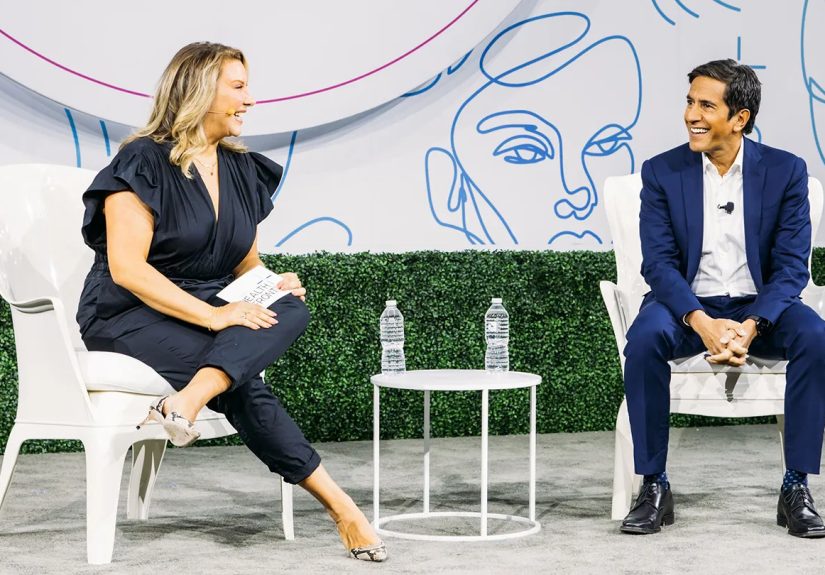
Dr. Sanjay Guptaneurosurgeon, longtime medical journalist, and one of the most recognizable health communicators in Americahas spent years translating complicated science into human language.
In a “discussion with Sanjay Gupta” spirit, this article pulls together the biggest pandemic lessons that kept showing up in expert conversations: what worked, what didn’t, and what we’d be smart to keep in our back pocket for the next big outbreak.
Why Sanjay Gupta’s viewpoint hits differently
Plenty of people can explain medical studies. Fewer can do it while also understanding how fear spreads, how trust breaks, and how a confusing headline can travel faster than a virus.
Gupta’s lane has always been the intersection of medicine and messagingwhere “the science” meets real humans who have jobs, kids, chronic conditions, and a group chat full of questionable health advice.
The pandemic was basically a national stress test for communication. If the message is too technical, people tune out. Too confident, people feel misled when guidance changes. Too vague, misinformation fills the vacuum.
One of the most practical lessons? Talking about health isn’t just about factsit’s also about clarity, empathy, and timing.
Lesson 1: Risk communication is a public health tool (not a PR accessory)
The pandemic’s early era was full of mixed signals: shifting guidance, changing definitions, and the uncomfortable truth that scientists were learning in real time.
That uncertainty wasn’t a failureit was the scientific process playing out in front of millions of anxious people who really wanted definitive answers by Tuesday.
The big takeaway: public health messaging needs to be honest about what’s known, what’s unknown, and what might change. When people understand why recommendations evolve, they’re less likely to interpret updates as “they lied.”
In plain terms: “Here’s what we think today, here’s what would make us change our minds, and here’s what you can do right now.”
Lesson 2: “Layered protection” beats one perfect solution
A lot of pandemic arguments happened because people wanted one silver bullet: a single rule, a single product, a single “correct” answer.
But respiratory viruses don’t work that way. What works best is stacking protective layersvaccination, ventilation, staying home when sick, testing when needed, and masking in high-risk settings.
Think of it like rain. One umbrella helps, but an umbrella plus a raincoat plus not standing under the waterfall is better.
This layered approach matters even more when you’re dealing with different environments: crowded indoor events, nursing homes, classrooms, hospitals, and homes with high-risk family members.
Indoor air quality finally got the attention it deserved
For years, “clean air” was treated like a nice-to-havesomething we cared about when wildfire smoke showed up or the office HVAC sounded like it was powered by squirrels.
COVID made it painfully clear that indoor air matters for infection risk. Ventilation and filtration are not just engineering jargonthey’re health measures.
Practical examples that became mainstream:
- Opening windows and doors when conditions allow
- Improving HVAC filtration where possible
- Using portable HEPA air cleaners in rooms with lots of people
- Shifting gatherings outdoors when risk is high
Lesson 3: Public health data has to be fast, clear, and shareable
The pandemic showed what happens when your data systems are fragmented: testing delays, confusing dashboards, and communities flying blind.
When data arrives late, it doesn’t guide decisionsit explains yesterday.
One bright spot was innovation in surveillance methods. Wastewater monitoring is a great example: it can help detect rising infection trends even when fewer people are testing or reporting.
It’s not a magic crystal ball, but it’s a valuable early signallike smelling smoke before you see flames.
Lesson 4: Trust is infrastructureand it’s harder to rebuild than a bridge
The pandemic didn’t just spread a virus. It spread confusion, fear, and misinformation at scale.
Once misinformation becomes identity (“my people believe this”), correcting it isn’t just fact-checkingit’s relationship work.
What helped, when it helped:
- Consistent guidance from trusted local messengers (community leaders, clinicians, pharmacists)
- Explaining trade-offs instead of pretending there aren’t any
- Calling out uncertainty early, so updates feel less like whiplash
- Focusing on practical actions rather than doom-scrolling statistics
And for individuals? The “trust lesson” is personal too: if your health information mostly comes from someone selling supplements, it might be time to reconsider your supply chain.
Lesson 5: Vaccines were a scientific victoryand a communications marathon
The speed of COVID-19 vaccine development looked sudden, but the underlying technologies and research weren’t invented overnight.
That nuance mattered, because “fast” can sound like “rushed” if people don’t understand the decades of groundwork behind it.
The deeper lesson: when the science is strong, communication still determines how much of that benefit reaches the public.
Vaccine confidence lives or dies on transparencyabout effectiveness, side effects, and what the shots can and can’t do as variants evolve.
Lesson 6: Long COVID is a reminder that “mild” isn’t always simple
One of the most sobering pandemic lessons is that recovery isn’t always a clean finish line.
Long COVID (often called post-COVID conditions) can involve lingering symptoms and new health challenges that last weeks, months, or longer.
What this changed in public health thinking:
- Prevention isn’t just about avoiding deathit’s also about reducing long-term disability
- Workplaces need realistic sick policies so people can actually stay home when ill
- Research infrastructure must be ready to study long-term effects quickly
Lesson 7: Healthcare workers can’t be the “infinite resource”
Hospitals can surge beds and buy equipment, but there’s no instant refill button for nurses, respiratory therapists, physicians, lab techs, and support staff.
The pandemic amplified burnout, moral distress, and workforce shortagesproblems that were already simmering.
The lesson is blunt: if we want resilient healthcare systems, we have to treat workforce well-being like a safety requirement, not a feel-good poster in a break room.
That means staffing, mental health support, safer workplaces, and leadership that actually listens to the people doing the work.
Lesson 8: Telehealth proved its valuenow it needs smart rules
Telehealth didn’t just “grow” during COVID; it exploded.
Millions of people got care without transportation barriers, waiting rooms, or taking half a day off work.
The lesson going forward is balance:
- Keep telehealth where it improves access and outcomes (especially behavioral health and follow-ups)
- Don’t pretend it works for every exam or every condition
- Build guardrails for privacy, quality, and fraud prevention
In other words: telehealth shouldn’t be a pandemic souvenir. It should be a well-designed tool.
So what do we do with these lessons?
Pandemic preparedness isn’t a single project you finish and check off. It’s a habitlike saving money, changing smoke detector batteries, or finally updating that one password you’ve had since 2009.
The most useful “next time” moves tend to be unglamorous: stronger public health systems, better indoor air standards, rapid testing capacity, clear communication plans, and research that can pivot quickly.
Personal readiness (without turning your garage into a bunker)
- Stay current on recommended vaccines and routine care
- Improve indoor air in the places you control (home, office, classroom)
- Normalize staying home when sickyour coworkers don’t want your “bravery”
- Build a short list of trusted health sources before the next crisis hits
- Keep a modest supply of basics (masks for high-risk situations, fever reducers, a thermometer)
Experience appendix: what the lessons felt like (about )
Facts explain what happened. Experiences explain why we remember.
If you want the pandemic’s lessons to stick, it helps to revisit the everyday moments where those lessons were learnedquietly, repeatedly, and sometimes the hard way.
Picture the nurse who finishes a twelve-hour shift and sits in the car for a minute before driving homenot because of traffic, but because her brain is still in the ICU.
She’s not thinking about abstract “healthcare capacity.” She’s thinking about whether she can do this again tomorrow. That’s Lesson 7 in real life:
systems don’t run on heroism forever.
Or the teacher cracking open classroom windows in November, students bundled up like it’s a camping trip.
It looked silly, but it was a real-time crash course in indoor air: not glamorous, not perfect, but practical.
Later, when portable air cleaners showed up, it felt like someone finally admitted the obvious:
the room itself is part of the health equation.
Then there’s the family group text.
Someone shares a video that says vaccines are dangerous. Someone else replies with a link. A third person says, “I don’t know what to believe anymore.”
That’s the trust problemnot just misinformation existing, but confusion spreading until people give up and default to whatever feels safest emotionally.
The “winning” move usually wasn’t dunking on someone with facts; it was a calm conversation with a trusted clinician, a local pharmacist, or a family member who could listen without escalating.
Many people can remember the first time they tried telehealth: sitting on a couch, talking to a doctor through a screen, realizing they could get help without rearranging their whole day.
For a parent with a sick child, a caregiver juggling appointments, or someone in a rural area, that wasn’t convenienceit was access.
The lesson wasn’t “telehealth is perfect.” It was “we can modernize healthcare when we choose to.”
And for lots of households, the most lasting change wasn’t a rule or a gadgetit was a new reflex.
You hear a cough and you don’t think, “tough it out.” You think, “stay home, test if needed, protect the vulnerable.”
That’s layered protection becoming culture: the kind of change that outlasts a crisis.
If we’re honest, the pandemic also taught us humility.
We learned that being smart doesn’t make you immune to fear, and being confident doesn’t make you correct.
The best lesson might be this: preparedness is not panicit’s respect for reality.
Conclusion
The pandemic wasn’t just a catastrophe; it was a giant, messy lesson plan.
Dr. Sanjay Gupta’s style of pandemic thinkingclear-eyed science, practical steps, and human-centered communicationfits the moment we’re in now:
less emergency, more long-term rebuilding.
The next outbreak won’t look exactly like COVID-19, but the smartest moves will rhyme:
protect indoor air, invest in public health, communicate honestly, fight misinformation with trust, and treat healthcare workers like the critical infrastructure they are.
The goal isn’t to live in fear. It’s to be readywithout having to learn everything the hard way again.