Table of Contents >> Show >> Hide
- Why Expandable Utensil Trays Are Such a Smart Kitchen Upgrade
- What Makes an Expandable Utensil Tray Different?
- How to Choose the Right Expandable Utensil Tray
- The Best Ways to Organize an Expandable Utensil Tray
- Common Mistakes to Avoid
- Are Expandable Utensil Trays Worth It?
- How Expandable Utensil Trays Improve Everyday Kitchen Life
- Experience: Living with Expandable Utensil Trays in Real Kitchens
- Final Thoughts
If your kitchen drawer looks like it has been hosting a tiny metal wrestling match every night, you are not alone. Forks slide under spatulas, measuring spoons disappear into the culinary abyss, and that one melon baller you swear you never wanted keeps resurfacing like a stubborn movie villain. This is exactly why expandable utensil trays have become one of the smartest upgrades in modern kitchen storage.
At first glance, an expandable utensil tray seems like a simple product. It sits in a drawer. It holds stuff. End of story. But in practice, it can completely change how a kitchen works. A good tray creates zones, cuts clutter, speeds up meal prep, and makes a drawer feel less like a junk pit and more like a calm, functional command center. Better still, an expandable design adapts to different drawer widths, which means you are not stuck trying to force a one-size-fits-none organizer into a drawer that clearly has other plans.
In this guide, we will break down what expandable utensil trays are, why they work so well, how to choose the right one, and how to use one without turning your kitchen into an over-organized museum where nobody can find the pizza cutter. Whether you live in a tiny apartment, a busy family home, or a place where every drawer is somehow full of takeout chopsticks, this storage solution can make a surprisingly big difference.
Why Expandable Utensil Trays Are Such a Smart Kitchen Upgrade
The best kitchen storage tools solve real problems without demanding a renovation budget or a weekend of dramatic soul-searching. Expandable utensil trays do exactly that. They take a high-traffic area, usually the most opened drawer in the whole kitchen, and turn it into a more efficient space.
The biggest advantage is flexibility. Standard silverware trays can be frustrating because drawers are not all the same width, depth, or height. Expandable versions are designed to widen or adjust, giving you extra compartments when you need them and a tighter footprint when you do not. That makes them especially helpful for renters, people moving into older homes, or anyone whose kitchen cabinets were apparently designed by chaos itself.
They also improve visibility. Instead of layering utensils on top of one another like an awkward metallic lasagna, an expandable tray separates items into categories. Forks go with forks. Serving spoons stop flirting with can openers. The result is less digging, less noise, and fewer moments where you are late for dinner because you cannot find the vegetable peeler.
There is also a hidden benefit: boundaries. Once you assign each item a home, you naturally limit how much you keep. If the tray is full, the drawer is telling you something. Usually, that message is, “You do not need seven bottle openers.”
What Makes an Expandable Utensil Tray Different?
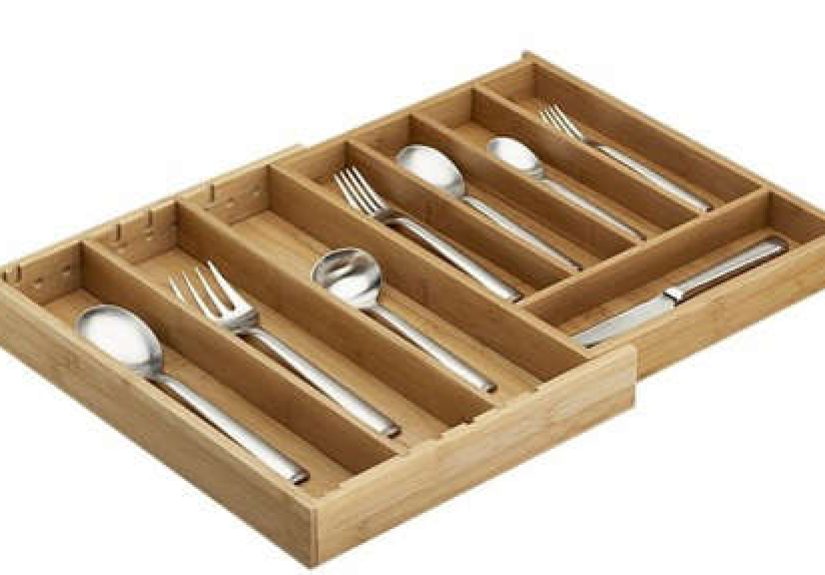
An expandable utensil tray is a drawer organizer with adjustable sides, sliding panels, or modular sections that increase usable storage space. Unlike a rigid flatware insert, it can adapt to the drawer instead of forcing the drawer to adapt to it. That difference matters more than it sounds.
1. It fits more drawers
A fixed tray may leave empty gaps on the sides, waste valuable space, or rattle every time the drawer opens. An expandable tray closes that gap and creates a more customized fit. In smaller kitchens, that little bit of extra width can mean the difference between one drawer doing the job or two drawers fighting over the same utensils.
2. It sorts more than silverware
Many people hear “utensil tray” and think only of forks, knives, and spoons. But expandable versions often include sections for serving utensils, peelers, shears, bottle stoppers, bag clips, corn holders, or other wonderfully random kitchen tools. Some designs even include removable cups or open areas for odd-shaped gadgets.
3. It uses space more efficiently
Good trays use square corners, deeper compartments, and adjustable dividers to make every inch count. That matters because rounded corners may look nice, but in a rectangular drawer they can leave dead zones where crumbs gather and useful storage goes to die.
How to Choose the Right Expandable Utensil Tray
Buying the right tray is less about grabbing the prettiest one online and more about understanding how your drawer actually works. A beautiful organizer that does not fit is just an expensive serving platter for disappointment.
Measure before you buy
Start with the inside dimensions of the drawer, not the cabinet exterior. Measure width, depth, and height. Width tells you whether the expandable range will fit. Depth determines whether the tray sits flush or leaves awkward space. Height is often ignored, but it matters a lot. If your drawer is shallow, a tray with tall walls may prevent it from closing properly. Nothing humbles a person faster than a drawer that refuses to shut because of one enthusiastic organizer.
Think about what you are storing
If you only need a place for daily flatware, a classic cutlery-style tray is enough. If you want to store larger kitchen tools, look for wider sections, adjustable compartments, or an open center zone. Some people benefit from a combination approach: one expandable tray for flatware and one separate organizer for cooking tools.
Choose the right material
Bamboo trays are popular because they look warm, polished, and more furniture-like than plastic. They work especially well in kitchens where aesthetics matter and the drawer stays relatively dry. Plastic trays are usually easier to wipe clean, lighter in weight, and often more affordable. Silicone-lined or non-slip features can help keep the organizer from sliding around like it is training for a drawer Olympics event.
Look for practical features
Small design details make a big difference. Non-slip feet keep the tray in place. Removable compartments make cleaning easier. Deep sections help contain loose utensils. Adjustable dividers let you create homes for irregular tools. A tray does not need bells and whistles, but it should at least act like it respects your drawer.
The Best Ways to Organize an Expandable Utensil Tray
Owning a tray does not automatically make a drawer organized. That is like buying running shoes and assuming you have completed a marathon. The setup matters.
Step 1: Empty the drawer completely
Yes, completely. Every fork. Every twist tie. Every mystery key that definitely does not belong there. Wipe the drawer clean before the tray goes in. This is your fresh start, and your future self deserves better than crumbs from 2023.
Step 2: Declutter ruthlessly
Keep what you use. Remove duplicates you forgot existed. Relocate non-kitchen items. Toss broken gadgets. If you have novelty utensils you only use once a year, store them elsewhere. Prime drawer real estate should go to items you reach for often.
Step 3: Create zones by frequency
Put daily items in the most accessible compartments. Forks, spoons, knives, and everyday prep tools should be front and center. Less-used items, like corn skewers or seafood picks, can go toward the edges or back. Organizing by frequency is what makes a drawer feel intuitive instead of merely neat.
Step 4: Group like with like
Flatware together. Measuring tools together. Baking gadgets together. Serving utensils together. This sounds obvious, but it is the difference between a calm kitchen and a drawer where tongs and teaspoons are in a committed but confusing relationship.
Step 5: Leave a little breathing room
Overfilling the tray defeats the purpose. A slightly underfilled organizer is easier to maintain, easier to clean, and less likely to turn messy the moment the drawer gets opened in a hurry.
Common Mistakes to Avoid
Even a great organizer can underperform if it is used badly. Here are the most common mistakes people make with expandable utensil trays.
Buying before measuring
This is the classic error. People buy first, then discover the tray is too wide, too deep, or too tall. Measure first. Save your future self from returning a drawer organizer while muttering dramatic speeches in the kitchen.
Using one tray for everything
Not every kitchen item belongs in the main utensil drawer. Trying to fit flatware, serving tools, kitchen scissors, gadgets, skewers, and batteries into one organizer is how order turns back into clutter. Use additional organizers when needed.
Ignoring drawer height
Some trays look perfect online but are too tall for shallow drawers. If utensils sit above the rim or handles catch on the drawer top, the drawer may stick or scrape. That is not storage. That is a mechanical argument.
Choosing style over function
Yes, bamboo is beautiful. Yes, clear acrylic looks sleek. But if the design slides around, wastes corner space, or cannot handle your utensil mix, it is not the right choice. The best organizer is the one that quietly makes life easier.
Never maintaining it
A utensil tray is not a magical force field. It still needs the occasional reset. Once a month or so, empty it, wipe it down, and send any drawer squatters back to their proper homes.
Are Expandable Utensil Trays Worth It?
For most kitchens, yes. They are one of the rare organizing tools that are affordable, practical, and instantly noticeable in daily life. You use the utensil drawer constantly, so even a small improvement pays off fast. Meal prep becomes smoother. Setting the table gets easier. Cleanup feels less annoying. You stop rummaging around like a raccoon in a shiny cave.
They are especially worth it if you have:
- Mismatch drawer sizes
- A small kitchen with limited storage
- A household that cooks often
- Too many loose utensils and gadgets
- A drawer that turns messy within 48 hours of cleaning it
If your kitchen is already highly customized with built-in inserts, you may not need one. But for the vast majority of homes, an expandable tray is a simple fix with a surprisingly big return.
How Expandable Utensil Trays Improve Everyday Kitchen Life
Good storage is not just about appearance. It changes behavior. When tools are visible and easy to reach, people are more likely to put them back in the right place. That means less mess over time and less friction in daily routines.
There is also a mental benefit. A tidy drawer creates a tiny but real sense of control. In a busy home, that matters. The kitchen is where mornings begin, meals happen, lunches get packed, and everyone seems to gather at the exact same time. A well-organized drawer removes one small point of chaos from an already busy room.
In design terms, expandable trays also support the broader trend toward hidden storage and cleaner countertops. Instead of crowding the counter with utensil crocks and containers, more homeowners prefer to keep what they use in drawers, where tools stay accessible but out of sight. The result is a kitchen that feels calmer, more open, and easier to clean.
Experience: Living with Expandable Utensil Trays in Real Kitchens
One of the most noticeable things about switching to an expandable utensil tray is how quickly the kitchen starts to feel different. Not dramatically different, like a celebrity home makeover with orchestral music in the background, but practically different. The kind of difference you notice on a Tuesday when you open a drawer and find the exact spoon you need in two seconds instead of twelve.
In a small apartment kitchen, an expandable tray often feels like cheating in the best possible way. A drawer that once held a messy pile of silverware can suddenly fit flatware, measuring spoons, kitchen scissors, and a peeler with room to spare. Because the tray expands to fit the drawer, there is less wasted space on the sides, and that extra inch or two can make a compact kitchen feel much more capable. People who cook in small spaces often describe this kind of upgrade as oddly satisfying because it makes the kitchen work harder without making it look busier.
In family kitchens, the biggest benefit is usually consistency. When everyone knows where forks go, where serving spoons live, and where the bottle opener belongs, cleanup gets easier. Kids can help set the table without asking where everything is. Adults are less likely to toss random gadgets into the wrong place. Even the famous junk-drawer energy starts to fade when the main utensil drawer has clear zones and limited room for nonsense.
There is also a maintenance advantage that people do not always expect. A good tray encourages regular reset habits. Once items are grouped neatly, it becomes obvious when something does not belong. A pen in the flatware section looks ridiculous. A rubber band next to the soup spoons suddenly seems deeply suspicious. Because the disorder stands out more, it gets corrected faster.
Some people also discover that expandable trays change what they keep. After organizing a drawer, duplicate tools become more visible. Five vegetable peelers start to look less like abundance and more like a strange personal choice. Many users end up editing their utensil collection without even planning to. The tray becomes a quiet reality check: if the drawer is full, maybe the solution is not a bigger drawer. Maybe it is fewer gadgets.
And then there is the aesthetic pleasure. Even if nobody else sees the inside of your drawer, you do. A tidy bamboo or clean-lined plastic organizer gives the drawer a finished look. It feels intentional. It feels grown-up. It feels like your kitchen has its life together, even if the sink is full and dinner is fifteen minutes behind schedule.
That is the charm of expandable utensil trays. They are not flashy, expensive, or complicated. They just work. They make ordinary kitchen moments easier, and over time, those small moments add up to a kitchen that feels calmer, smarter, and a little less chaotic.
Final Thoughts
Expandable utensil trays are one of the simplest ways to improve kitchen storage without remodeling, overspending, or pretending you enjoy digging through a drawer full of clattering metal. They fit a wide range of drawers, help organize both flatware and tools, and bring structure to one of the busiest spots in the kitchen.
The key is choosing the right tray for your drawer dimensions, your utensil mix, and your maintenance style. Measure carefully, declutter honestly, and organize by real-life use, not fantasy-chef ambitions. Do that, and this humble organizer can turn a frustrating drawer into one of the most functional parts of your kitchen.
In other words, an expandable utensil tray will not cook dinner for you. But it might help you find the spatula fast enough to save it.