Table of Contents >> Show >> Hide
- What Is a Kids’ Ear Infection, Exactly?
- Why Kids Get So Many Ear Infections
- Common Symptoms of Ear Infections in Kids
- When to Call the Doctor (or Seek Urgent Care)
- How Doctors Diagnose Kids’ Ear Infections
- Treatment Options for Kids’ Ear Infections
- Can Ear Infections Affect Hearing or Development?
- Preventing Kids’ Ear Infections (as Much as Possible)
- Real-Life Parenting Moments with Kids’ Ear Infections
- The Bottom Line
Few parenting rites of passage are as universal as the 2 a.m. “My ear hurts!” wake-up call.
Kids’ ear infections are incredibly common, incredibly uncomfortable, and incredibly confusing
when you’re trying to decide if you should wait it out or head to the pediatrician right now.
The good news: most children’s ear infections are short-lived and treatable. The tricky part is
understanding what’s going on inside that tiny ear, how to spot the signs early, and what your
child’s doctor might recommend. Below is a clear, research-based guide to kids’ ear infections so
you can feel a little less panicked and a little more prepared.
What Is a Kids’ Ear Infection, Exactly?
When people talk about “ear infections” in kids, they’re usually talking about a middle ear infection,
medically called acute otitis media (AOM). This happens when viruses or bacteria
infect the space behind the eardrum, often after a cold or upper respiratory infection.
Types of ear infections in children
-
Acute otitis media (AOM): A sudden infection in the middle ear. The space behind
the eardrum fills with infected fluid, causing ear pain, fever, and a very cranky child. -
Otitis media with effusion (OME): Fluid lingers in the middle ear even after an
infection has cleared. It may not cause pain, but it can cause muffled hearing or a feeling of
fullness in the ear. -
Otitis externa (“swimmer’s ear”): An infection of the ear canal, not the middle ear.
It’s more common in older kids and adults, especially after a lot of swimming or moisture in the ear.
Knowing which type of ear infection your child has matters, because the treatment and follow-up can differ.
Why Kids Get So Many Ear Infections
It’s not your imaginationear infections really are more common in children than in adults. In fact,
most kids will have at least one ear infection before school age, and many will have several.
Small anatomy, big problems
The middle ear connects to the back of the throat via a tiny passage called the eustachian tube.
In adults, this tube is longer and more vertical, which helps fluid drain properly. In children, it’s:
- Shorter
- Narrower
- More horizontal
That shape makes it easier for mucus and germs to get stuck and harder for fluid to drain, setting the stage
for infection.
Immune systems still in training
Kids’ immune systems are still developing, so they’re more likely to catch colds, flu, and other viral infections
that can lead to ear infections. Add in daycare, preschool, and a generous culture of toy sharing, and you have a
perfect storm of germ exposure.
Other risk factors
- Frequent colds or respiratory infections
- Attending group childcare
- Exposure to tobacco smoke
- Allergies that cause chronic nasal congestion
- Bottle-feeding while lying flat instead of upright
None of these mean you’re doing anything “wrong” as a parentthey just increase the odds that germs will find
their way into that small middle ear space.
Common Symptoms of Ear Infections in Kids
If your child is old enough to say “My ear hurts,” your detective work is easier. Younger children and babies,
though, rely on less obvious signs. According to the CDC, NIH, and major pediatric groups, typical symptoms can include:
- Ear pain, especially when lying down
- Tugging, pulling, or rubbing at one or both ears
- Increased fussiness, irritability, or crying
- Trouble sleeping or frequent waking at night
- Fever, especially in infants and younger children
- Difficulty hearing or not responding to quiet sounds
- Fluid or pus draining from the ear
- Balance problems or unusual clumsiness
- Reduced appetite or refusing to eat
Ear infections can look different from child to child. One kid might spike a fever and scream in pain, while
another just seems slightly off and sleeps poorly.
When to Call the Doctor (or Seek Urgent Care)
While many mild ear infections improve on their own, some situations need prompt medical attention. Major
health organizations suggest calling your child’s healthcare provider if your child has:
- A fever of 102.2°F (39°C) or higher
- Ear pain that lasts more than 2–3 days or is getting worse
- Pus, blood, or fluid draining from the ear
- Symptoms in a child younger than 6 months
- Hearing problems or trouble responding to sounds
- Severe headache, stiff neck, or unusual drowsiness
- Swelling, redness, or tenderness behind the ear
These signs don’t automatically mean something serious is happening, but they do mean a professional should
take a look. If you’re ever worriedtrust that instinct and call your pediatrician or local urgent care.
How Doctors Diagnose Kids’ Ear Infections
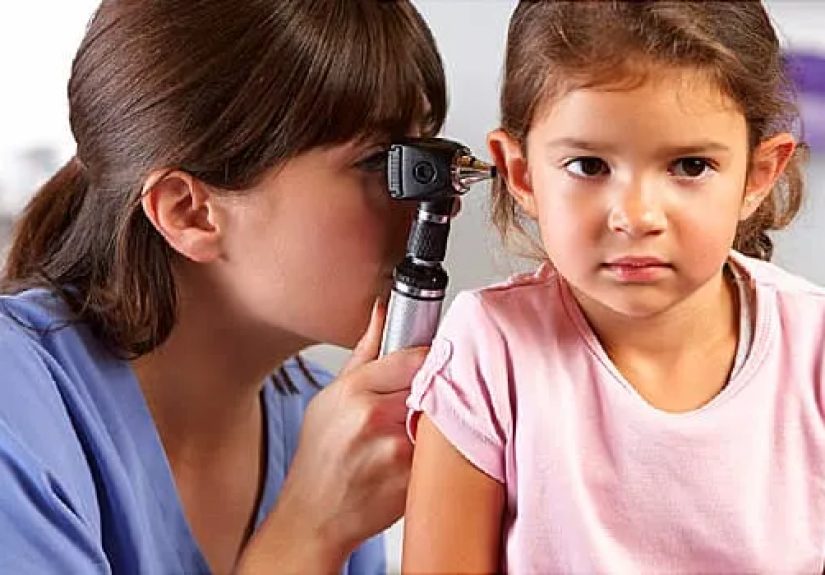
No amount of googling can match what your child’s doctor sees with an otoscope (the little lighted tool they
use to look inside the ear). According to pediatric guidelines, diagnosis of acute otitis media is based on:
- Symptoms: ear pain, fever, irritability, sleep problems, or hearing changes.
-
Physical exam: the provider looks for a bulging, red, or cloudy eardrum, sometimes with fluid
visible behind it. -
Movement of the eardrum: sometimes they use a small puff of air (pneumatic otoscopy) to see
how well the eardrum moves. A stiff or immobile eardrum suggests fluid behind it.
Blood tests or imaging are rarely needed for routine ear infections. The diagnosis is mostly clinicala mix
of what your child shows and what the doctor sees.
Treatment Options for Kids’ Ear Infections
Treatment isn’t one-size-fits-all. It depends on your child’s age, how sick they are, what the eardrum looks
like, and whether these infections keep coming back.
Relieving pain and keeping kids comfortable
For many kids, the most important first step is managing pain. Doctors commonly recommend:
- Age-appropriate pain relievers or fever reducers, such as acetaminophen or ibuprofen
- Plenty of fluids and rest
- A warm compress over the affected ear for comfort (careful with temperature)
Always ask your child’s healthcare provider or pharmacist about the right medicine and dose for your child’s
age and weightnever guess dosages for kids.
“Watchful waiting” vs. immediate antibiotics
In recent years, expert guidelines have emphasized that not every ear infection needs antibiotics.
Many mild infections, especially in older children, clear on their own as the body’s immune system does the work.
Your child’s doctor may suggest:
-
Watchful waiting: observing for 48–72 hours while using pain relief and monitoring symptoms.
If your child improves, antibiotics may never be needed. -
Immediate antibiotics: more likely for infants under 6 months, children with more severe symptoms,
very high fever, or certain medical conditions.
If antibiotics are prescribed, it’s important that your child takes them exactly as directed and finishes the full
courseeven if they feel better halfway throughto help prevent the infection from coming back and to reduce the
risk of antibiotic resistance.
Middle ear fluid and ear tubes
After an ear infection, fluid can hang around in the middle ear for weeks or even months. This can cause muffled
hearing and may impact speech if it’s long-lasting or repeated.
For children who have:
- Frequent ear infections, or
- Persistent middle-ear fluid with hearing problems
a pediatric ear, nose, and throat (ENT) specialist may recommend ear tubes (tympanostomy tubes).
These tiny tubes are placed through the eardrum to help fluid drain and allow air into the middle ear. They don’t
prevent every infection, but they usually reduce symptoms and improve hearing.
Can Ear Infections Affect Hearing or Development?
Short-term hearing changes are common with ear infections and leftover fluid. Most kids bounce back quickly once
the fluid clears. However, long-lasting fluid or very frequent infections can temporarily muffle hearing, which
may affect speech and language if it goes on for months.
That’s why follow-up visits matter. Your child’s doctor may recheck the ears several weeks after an infection to
make sure the fluid is gone or improving. If you ever notice your child turning up the TV, not responding to their
name, or saying “What?” more than usual, bring it up with the pediatrician.
Preventing Kids’ Ear Infections (as Much as Possible)
You can’t bubble-wrap your child’s immune system, but you can lower the odds of ear infections with a few practical habits:
-
Keep vaccines up to date. The pneumococcal and flu vaccines can help reduce respiratory infections
that often lead to ear infections. -
Avoid secondhand smoke. Tobacco smoke irritates the lining of the nose and eustachian tubes, making
infections more likely. - Encourage handwashing. Fewer colds generally mean fewer ear infections.
-
Feed infants upright. Avoid propping bottles flat in the cribmilk trickling toward the eustachian
tube is not helpful. - Talk with your doctor about allergies. Managing allergies that cause chronic congestion can also help.
You won’t be able to prevent every ear infection, but these steps can make them less frequent and easier to manage.
Real-Life Parenting Moments with Kids’ Ear Infections
Beyond guidelines and medical terms, there’s the human side: tired parents, clingy kids, and lots of half-drunk
cups of coffee. Here are some lived-experience style lessons many parents discover the hard way:
The “mystery meltdown” that wasn’t so mysterious
One of the most common stories goes like this: everything is fine during the day. Your toddler has a mild runny
nose, maybe a little extra whiney but still playing. Then bedtime hits, and suddenly they’re screaming, refusing
to lie down, and waking up every hour. The difference? When kids lie flat, pressure in the middle ear can increase,
making pain much worse. That’s often the cue that sends parents to the pediatrician the next morningwhere a quick
look in the ear explains the entire 24 hours.
Why “finishing the antibiotics” became a non-negotiable rule
Many caregivers share that early on, they stopped antibiotics as soon as their child looked better. The pain was
gone, fever disappeared, and it was a struggle to give medicine twice a day. Then, a few days laterboomthe pain
came back. After a couple of these cycles, most families become very motivated to finish every last prescribed dose.
It’s not just about “following rules”; it’s about avoiding repeat misery for everyone.
The surprising impact on speech and school
Some parents only realize how much persistent ear issues affected hearing after things improve. A preschooler who
seems “spacey,” ignores directions, or talks loudly might actually have muffled hearing from lingering fluid. Once
they get ear tubes or the fluid finally clears, teachers and parents often notice the child responding more quickly,
participating more in class, and even speaking more clearly. What looked like behavior sometimes turns out to be biology.
Learning to ask better questions at appointments
Over time, families become more confident asking specific questions, such as:
- “Is this acute otitis media or just fluid?”
- “What are the signs that we should switch from watchful waiting to antibiotics?”
- “How long do you expect the fluid to last, and when should we recheck?”
- “At what point should we consider an ENT referral or ear tubes?”
These questions help clarify the plan, set expectations, and reduce the fear of the unknown. Many parents say that
once they understand the logic behind watchful waiting and treatment choices, they feel much calmer at that next
2 a.m. wake-up.
Making kids part of the solution
Older children can be surprisingly cooperative when they understand what’s happening. Explaining that “there’s some
fluid and germs behind your eardrum, and the medicine and your body are working together to drain it” can make them
more willing to take medicine, use warm compresses, and tell you if the pain is getting better or worse. Turning
them into active teammates rather than passive patients can be a game changer.
What most caregivers ultimately learn
By the time a family has weathered a few ear infections, there’s a pattern:
- You become faster at spotting the early signs (that subtle ear tug, the “off” sleep, the sudden clinginess).
- You learn your child’s typical coursehow quickly they spike fevers, how they respond to pain relievers, and how long recovery usually takes.
- You gain a better sense of when to wait, when to call, and when you want your child seen urgently.
Ear infections may never be fun, but with knowledge, a supportive pediatric team, and a little experience, they
become less terrifying. You move from “What on earth is happening?” to “Okay, we’ve seen this before. We know what
to watch for, and we’re not alone in figuring it out.”
The Bottom Line
Kids’ ear infections are common, usually temporary, and often manageable with a mix of comfort care, careful
observation, and sometimes antibiotics. Understanding why they happen, what symptoms to watch for, and how
doctors decide on treatment can help you feel less helpless in the middle of the night.
Most importantly, you never have to navigate this alone. If something doesn’t feel right, or if your child’s
symptoms are intense, long-lasting, or worrying, your pediatrician is there to help you sort out what’s going
on and choose the safest path forward.