Table of Contents >> Show >> Hide
- The photoshoot that lit the fuse
- What the internet roasted (and why it landed)
- When the “Woman’s World” messaging met the male-gaze debate
- The collaborator controversy that poured gasoline on the roast
- So… was the roasting fair?
- What Katy Perry’s response reveals about modern pop backlash
- Marketing lessons from the “Woman’s World” rollout
- The bigger picture: why “roasted online” is the default setting now
- Conclusion: what “Woman’s World” teaches us about pop, optics, and the meme economy
- Experiences: what it feels like when a “NSFW” photoshoot becomes a public sport
The internet has a hobby. Some people crochet. Some people run marathons. And some peoplebless their Wi-Fitreat a celebrity photoshoot like a piñata: whack it hard enough and out comes candy, chaos, and 47 think pieces before lunch.
That’s the backdrop for the online roasting that flared up around Katy Perry’s provocative “Woman’s World” visualsespecially the bold promo imagery and cover-style shots that many viewers labeled “NSFW” (translation: “my boss walked by at the worst possible time”). The reaction wasn’t just about skin or styling. It became a bigger argument about pop comebacks, “empowerment” marketing, and what happens when a campaign feels like it’s trying to do three contradictory things at once.
Let’s break down what happened, why people piled on, and what this mini firestorm reveals about culture in 2024–2025where a photoshoot isn’t just a photoshoot. It’s a referendum.
The photoshoot that lit the fuse
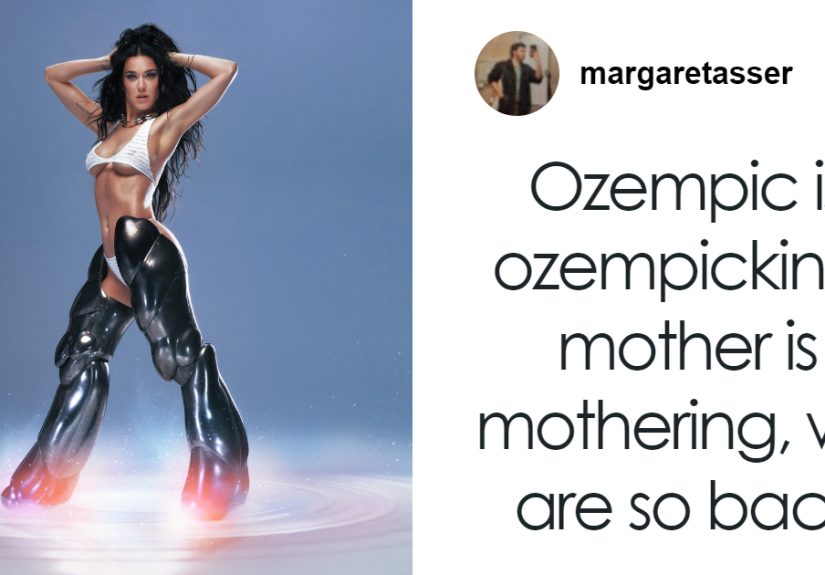
“Woman’s World” kicked off as a big, glossy pop-era announcementcomplete with striking promotional imagery. Early visuals showed Perry in futuristic, high-shine styling that read like “pop star returns from space” (but make it fashion) and leaned into lingerie/swimwear vibes in other teasers. The intent was clear: bold, maximal, headline-friendly.
The internet, however, doesn’t simply look. It annotates. It zooms. It jokes. And the promo imagescirculating widely on social platformsprompted a wave of commentary ranging from “this is camp” to “this is confusing” to “this is definitely getting me in trouble at work.”
Why people called it “NSFW”
The “NSFW” label wasn’t about anything explicit in the sense of graphic content. It was more about the overall presentation: a provocative aesthetic, skimpy silhouettes, and the kind of stylized sex appeal that’s been a staple of pop marketing for decades. But the timing and messaging mattered. When a campaign is positioned as a “women’s world” moment, the visuals get judged against that promise.
In other words: the photos didn’t just have to look good. They had to “mean” something. And if people couldn’t agree on what they meant, the comment section was ready to host the debate like it was a pay-per-view event.
What the internet roasted (and why it landed)
Online roasting usually follows a predictable recipe: take a single image, assign it a narrative, add memes, and stir until trending. With “Woman’s World,” several overlapping critiques fueled the pile-on.
1) The “empowerment vs. pin-up” whiplash
A big chunk of the reaction came down to mismatch. The concept of a women-forward anthem colliding with ultra-sexualized promo imagery can read as intentionalif the audience trusts the intention. If they don’t, it reads like a marketing meeting where three people shouted “feminist!” while four others whispered “but make it thirsty.”
That doesn’t mean “sexy” and “empowered” can’t coexist. They absolutely can. The issue is that viewers increasingly demand clarity: Are we celebrating self-owned sexuality? Satirizing old-school objectification? Or just using familiar attention hooks and calling it empowerment on the way out the door?
2) The “this feels like 2013” commentary
Another theme in the roast: time travel. Some critics framed the visuals as a throwback to an earlier pop eraone where “girl power” branding often came packaged with heavy male-gaze aesthetics and wink-wink irony. That older formula can still work, but it’s riskier now, because audiences are more fluent in media critique and less patient with mixed signals.
In 2024–2025, the internet’s default stance is: “Explain yourself.” If a campaign reminds people of the past, it doesn’t just evoke nostalgiait invites judgment about whether the artist is evolving or replaying the hits.
3) “She’s getting roasted because the internet loves a comeback test”
Comebacks come with a built-in exam. The public grades everything: styling, lyrics, collaborators, even the font on the teaser graphic. Perry’s return to a major pop rollout after years of different career chapters created a perfect “main character” momentmeaning it also created a perfect target.
And yes, people can be unfair. But the pattern is real: big pop returns attract big scrutiny, because the internet treats pop like sports. Everyone’s a coach. Everyone’s a critic. Everyone has “notes.”
When the “Woman’s World” messaging met the male-gaze debate
The roasting didn’t stop at still photos. When the “Woman’s World” music video dropped, the conversation escalatedbecause now there was a storyline, not just styling. Viewers criticized the visuals as leaning into exaggerated, sexualized imagery that felt at odds with the song’s empowerment framing. Some specifically argued it catered to the male gaze while trying to sell feminist energy.
That’s a complicated critique, but it’s also a familiar one in pop: if the camera lingers in ways that feel objectifying, the audience will ask who the “joke” is foreven if the lyrics say “women run the world.”
The satire defense: “You can do anything… even satire”
Perry responded by framing aspects of the video’s tone as sarcastic, slapstick, and “on the nose”essentially suggesting that the exaggerated “girl boss” aesthetics were meant to be read as satire. The idea: it’s intentionally overplayed, intentionally silly, intentionally too much.
The internet’s rebuttal was also predictable: satire has to read as satire immediately, or people assume you’re backpedaling after the fact. Some viewers accepted the explanation. Others argued the execution was muddybecause the visuals might be parody, but the song’s empowerment lyrics can feel earnest, creating a clash that leaves the audience unsure what they’re supposed to take seriously.
In pop culture terms, that’s the danger zone: if your message is “this is a joke,” but your marketing is “this is an anthem,” people will pick whichever interpretation gives them the funniest tweet.
The collaborator controversy that poured gasoline on the roast
There was also a separate, heavier layer to the backlash: the debate over working with producer Dr. Luke, whose history and legal battles have been publicly controversial due to allegations made by Kesha (which he has denied). For critics, the optics were jarring: releasing a “women’s world” moment while tied to a collaborator many associate with a painful chapter in pop industry power dynamics.
Even people who didn’t care about the photoshoot aesthetic often cared about this. Because while styling is subjective, collaborator choices feel like valuesespecially when the project is branded around women’s empowerment.
How this changed the way people interpreted the photos
Once a campaign is viewed through a controversy lens, everything becomes evidence. A provocative photoshoot stops being “just a photoshoot” and becomes part of a narrative about authenticity, feminism-as-branding, and who gets centered in the creative process.
That’s why some of the roasting felt less like teasing and more like cultural critique. The jokes weren’t only about the outfitthey were about the perceived gap between the slogan and the strategy.
So… was the roasting fair?
Fair? The internet has never met a “fair” it didn’t want to ratio.
But it’s worth separating two things:
-
Surface-level dunking: “This is cringe,” “this looks like an ad,” “my eyes need a parental advisory.”
That’s standard meme culturelow stakes, high velocity. -
Meaning-level critique: conversations about male gaze, feminist messaging, and the ethics of collaborators.
That’s bigger than a joke, even if it often arrives wrapped in a meme.
Perry’s challenge wasn’t that people teased the photos. It’s that the teasing merged with critiques that already had momentum. Once multiple controversies stack, the internet doesn’t debateit dogpiles.
What Katy Perry’s response reveals about modern pop backlash
One of the most revealing parts of this whole moment was the response strategy. Instead of ignoring it completely, Perry leaned into explanationbehind-the-scenes framing, tone clarification, and a “you either get it or you don’t” vibe.
That approach can work, but it’s a gamble:
- Best case: fans appreciate context, the satire clicks, and the narrative shifts to “ohhh, she meant it that way.”
- Worst case: people interpret it as a retroactive justification, and the roast gets a sequel.
The deeper truth: social media backlash is rarely about one clip. It’s about a story people already want to tell. The response doesn’t just defend the workit has to rewrite the story. And rewriting a story mid-viral cycle is like trying to change a tire on the freeway.
Marketing lessons from the “Woman’s World” rollout
If you’re a pop star, a brand, or anyone who has ever posted a photo and instantly regretted the caption, here are the takeaways.
Lesson 1: If your message is empowerment, your visuals need a thesis
“Sexy” isn’t the problem. Confusing is the problem. If you want to parody the male gaze, the parody has to be legible without a press conference. Otherwise, people default to the simplest interpretation: “they did it for attention.”
Lesson 2: The internet punishes mixed signals faster than it punishes bad taste
Plenty of campy, over-the-top pop moments survive finebecause they know what they are. The roasting got traction here because people couldn’t agree on whether they were watching satire, sincerity, or a nostalgia reboot.
Lesson 3: Collaborator choices can dominate the entire conversation
Once the Dr. Luke debate entered the chat, the aesthetic conversation became secondary. For a women-forward project, audiences were primed to judge alignment between message and method. When they felt a mismatch, the photos became symbolic.
The bigger picture: why “roasted online” is the default setting now
Celebrity culture used to be top-down: magazines, TV, controlled interviews. Now it’s comment-up: reaction videos, quote tweets, stitches, duets, and a thousand tiny critics with great lighting.
That’s not automatically badpublic critique can be meaningful, and audiences deserve to question powerful marketing narratives. But it does mean every rollout is a real-time focus group, and the feedback comes with jokes, not memos.
The “Woman’s World” photoshoot roasting is a case study in this new reality: you can’t just launch a look. You’re launching an argument about what the look represents.
Conclusion: what “Woman’s World” teaches us about pop, optics, and the meme economy
Katy Perry’s “Woman’s World” visuals sparked roasting because they sat at the crossroads of three high-voltage internet topics: female empowerment branding, sexualized pop imagery, and trust in a comeback narrative. Add collaborator controversy and the always-online appetite for cultural critique, and you’ve got a perfect stormone that turns a promo photoshoot into a full-blown discourse festival.
Whether you loved the look, hated it, or just enjoyed the memes with the quiet guilt of someone watching a reality show at 2 a.m., the takeaway is the same: in today’s pop landscape, the audience doesn’t just consume. It interprets, judges, and remixes. And if your message isn’t crystal clear, the internet will “help” you clarify itloudly.
Experiences: what it feels like when a “NSFW” photoshoot becomes a public sport
Even if you’re not a global pop star, you’ve probably felt a tiny version of this phenomenon: you post something you think is funan outfit, a gym selfie, a vacation photoand suddenly the reactions aren’t about the photo anymore. They’re about what the photo “means.” The internet is very good at turning a moment into a metaphor.
One shared experience people talk about during celebrity pile-ons is the weird split between entertainment and discomfort. On one hand, the jokes can be genuinely funny. A clever caption, a meme that nails the vibe, a perfectly timed reaction imagethere’s a reason this is the currency of online culture. On the other hand, there’s often a creeping feeling of “Wait… this is a real person.” The laughter comes with an asterisk.
For fans, a rollout like “Woman’s World” can feel like being pulled into a group chat you didn’t ask to join. You might go online to see the new visuals, and within minutes you’re watching strangers argue about satire, feminism, and whether the styling looks intentional or algorithm-bait. The experience isn’t passive anymoreit’s participatory. Even if you don’t comment, you’re choosing sides by what you like, share, or ignore.
For people who work in creative fieldsmarketing, photography, styling, social mediathe experience is especially relatable because you recognize the mechanics. You can almost see the brainstorming board: “big, bold, provocative,” “conversation starter,” “own the narrative.” And you also know the risk: once a campaign hits the feed, it doesn’t belong to the team who made it. It belongs to the audience who interprets it. Online, interpretation moves faster than intention.
Another common experience is the “context gap.” A photoshoot might be part of a larger conceptan album theme, a storyline, a satirical arcbut most people encounter it as a single image on a timeline. That’s like judging a movie by one frame, except the frame is wearing metallic pants and the comments are doing stand-up comedy. When the context isn’t obvious, viewers fill in the blank with whatever story fits their worldview: “This is empowerment,” “This is objectification,” “This is nostalgia,” “This is desperation.” All of those can be argued, which is exactly why the post becomes a battleground.
And then there’s the experience of escalation. Online reactions rarely stay proportional. A few jokes turn into a trend. A trend turns into hot takes. Hot takes turn into moral judgments. By the time you circle back, what began as “lol, that’s a wild photoshoot” has morphed into a full debate about cultural values. This is where empathy tends to fall off the truck. It’s easier to roast a symbol than a human.
The healthiest “experience-based” takeaway people share is also the simplest: slow down. Before piling on, ask what you’re responding toan aesthetic choice, a messaging mismatch, or a bigger frustration you’re projecting onto a celebrity because it’s safer than confronting it elsewhere. You can still critique. You can still joke. But you can do it without pretending a photoshoot is a criminal offense.
Because at the end of the day, the internet roast machine doesn’t run on truthit runs on momentum. And momentum is rarely gentle.