Table of Contents >> Show >> Hide
Some magazine issues politely tap you on the shoulder. The June 2025 edition of IA Magazine did not. It kicked open the office door, dropped a fresh cup of coffee on the conference table, and said, “All right, team, let’s talk about what the insurance business actually looks like right now.”
That is what makes this issue worth revisiting. The June 2025 issue of Independent Agent magazine, the publication tied to the Big “I” community, was not just a collection of articles tossed together because the calendar demanded content. It worked like a midyear reality check for independent agencies. The issue highlighted young leadership, cyber threats, automation, sales coaching, and the kind of community-minded agency culture that keeps the whole operation from turning into a stress-powered email machine.
If you want one sentence to sum up the theme, here it is: June 2025 IA Magazine argued that the future of the independent insurance agency will be built by people who can balance technology, trust, speed, and humanity without losing their minds in the process. That is a big ask. It is also a very 2025 ask.
What the June 2025 IA Magazine Issue Actually Focused On
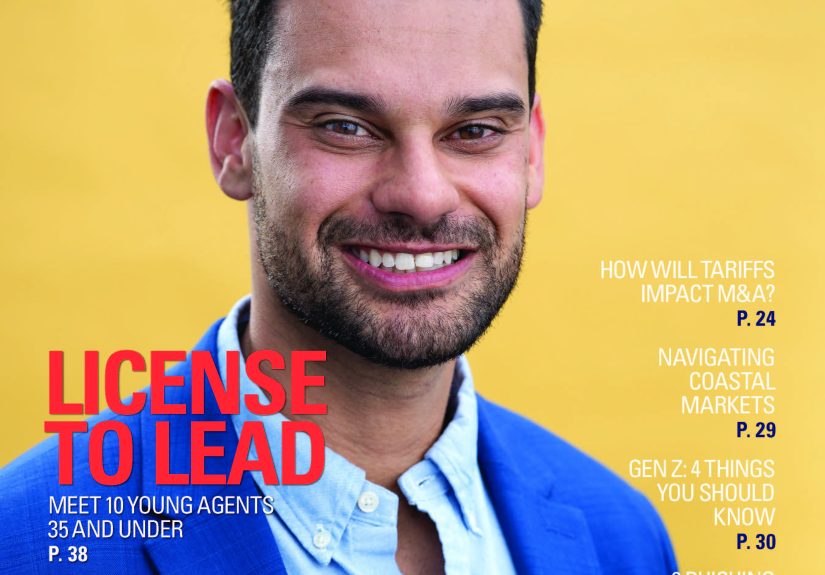
The issue revolved around five central pieces: License to Lead: Meet 10 Young Agents 35 and Under, 6 Phishing Techniques Cybercriminals Use to Scam Businesses, How Automation And Quote-By-Text Can Help Your Agency Win Big, How Individualized Sales Training Ignites Results, and Declaration of Independents: Brock Elliott. On paper, that lineup may look like a mixed bag. In practice, it reads like a blueprint.
The first theme: the next generation is not waiting for permission
The centerpiece article, “License to Lead”, signaled something important about the insurance industry in 2025: talent conversations were no longer just about recruiting warm bodies into open seats. They were about identifying young professionals who already see insurance as a serious, flexible, entrepreneurial career.
That matters because independent agencies have spent years wrestling with the industry’s image problem. To outsiders, insurance can look like paperwork, phone calls, and a suspicious number of spreadsheets. To people inside the business, though, it is relationship-building, risk advising, local leadership, and problem-solving with real financial consequences. June 2025 IA Magazine leaned hard into that distinction.
And honestly, it had to. In an environment where agencies are under pressure to replace retiring talent, attract younger producers, and keep teams engaged, showcasing ambitious younger agents was not a feel-good side quest. It was strategy. The issue effectively said, “Look, the future is already here. It just prefers better branding and probably communicates faster than fax speed.”
The second theme: cyber risk is no longer a sidebar
The article on phishing techniques landed with perfect timing. By mid-2025, cyber risk was not some abstract boogeyman lurking in a dark server closet. It was operational, immediate, and personal. Agencies, carriers, and clients were all exposed to fraud, account compromise, business interruption, and reputational damage. When a magazine issue aimed at independent agents dedicates major space to phishing tactics, that is not trend-chasing. That is triage with better formatting.
What made the June issue especially sharp was its practical tone. Instead of treating phishing like a problem only for IT departments wearing hoodies in a fluorescent server room, the article framed it as an everyday business threat. That framing is smart because phishing succeeds by exploiting people, not just systems. Urgency, impersonation, curiosity, and confusion remain wildly effective because human beings are busy, distracted, and sometimes one fake invoice away from a terrible afternoon.
In other words, the article did not just say “be careful online.” It reminded agencies that cyber hygiene is now part of customer service, E&O awareness, and operational survival.
The third theme: automation should make agencies faster, not colder
Another standout feature, “How Automation And Quote-By-Text Can Help Your Agency Win Big,” nailed one of the biggest tensions in modern insurance distribution: customers want speed, but they still value guidance. That is exactly where independent agencies live or die.
June 2025 IA Magazine did not present automation as a shiny robot mascot that magically solves every workflow problem. It presented automation as a tool for retention, responsiveness, and sanity. That is a much more realistic pitch. Renewal workflows, quick follow-ups, and text-enabled quoting are not glamorous, but they are the little gears that keep an agency from grinding itself into administrative dust.
The beauty of this perspective is that it rejects a false choice. Agencies do not have to choose between being high-tech and high-touch. In fact, the agencies best positioned for long-term growth are the ones that use technology to protect the human part of the relationship. If automation handles repetitive steps, producers and service teams have more time to do what clients actually remember: explain coverage clearly, answer panicked questions calmly, and sound like competent adults during stressful moments.
The fourth theme: sales training is not one-size-fits-all anymore
The June issue’s sales training article was another quiet bullseye. Generic sales advice has the shelf life of a gas station banana. It exists, sure, but no one should build a business around it. By arguing for individualized sales training, IA Magazine recognized that modern agency growth depends on coaching that matches the person, not just the quota.
That matters because agencies are filled with people who sell differently. Some are natural relationship builders. Some are detail-oriented technical explainers. Some are fearless networkers. Some need mindset coaching before they need pipeline coaching. June 2025 IA Magazine treated that not as a problem but as an opportunity. Personalized training can turn decent performers into strong contributors and strong contributors into culture-setters.
It also supports retention. People are more likely to stay in an industry when someone invests in how they grow instead of just measuring what they missed. That is especially important in insurance, where the talent pipeline is a frequent topic and where long-term success often comes from skill development, confidence, and repetition rather than instant charisma.
The fifth theme: leadership still looks local
Brock Elliott’s profile grounded the whole issue. In a month filled with digital tools, phishing warnings, and sales systems, the leadership feature served as a useful reminder that the independent agency channel still runs on community. Local involvement, service, advocacy, and peer engagement are not sentimental extras. They are part of the business model.
That community angle is one of the reasons IA Magazine continues to matter. It does not cover insurance as a faceless financial machine. It covers the people who make the machine worth trusting. June 2025 made that point clearly: leadership in this business is not only about production numbers or operational efficiency. It is also about showing up, mentoring others, improving associations, and making the profession feel bigger than one office, one state, or one book of business.
Why This Issue Hit So Hard in 2025
The issue worked because it mirrored broader insurance realities in 2025. Agencies were dealing with mixed market conditions, communication shifts, rising cyber exposure, AI experimentation, and real staff fatigue. The June 2025 issue did not feel disconnected from the industry. It felt like the industry talking to itself honestly for a change.
Consumer expectations were shifting fast. Clients increasingly wanted convenience, digital communication, and quicker answers, but they still expected an agent to step in when coverage became confusing or a claim became emotional. That tension showed up all over the market. Texting, mobile communication, proactive updates, and smoother digital experiences were becoming baseline expectations rather than premium perks.
Meanwhile, agencies were trying to modernize without overwhelming staff. That challenge is a recurring thread in 2025 insurance reporting because the workload problem is real. Hard-market pressures, account servicing demands, compliance, remarketing, and client education all pile up. So when June 2025 IA Magazine pushed automation and individualized support, it was not offering trendy talking points. It was answering a workplace reality that plenty of agency teams were already living.
Cyber threats added another layer. Carrier outages, phishing tactics, compromised credentials, and vendor exposure pushed agencies to think beyond “Did we buy cyber coverage?” and toward “Are our people, processes, and communication habits making us easier to hit?” That is a much tougher question, but also the more useful one.
And then there is AI. Even when the June issue was not explicitly an AI edition, its logic fit neatly into the AI conversation. Automation, personalized workflows, smarter communication, operational efficiency, and better staff support all sit adjacent to the same core question: How do agencies use technology without degrading trust? June 2025 IA Magazine did not pretend to have one universal answer, but it did point in the right direction. Use tech to reduce friction. Use people to build confidence. Repeat as needed.
What Independent Agents Could Take Away From the June 2025 Issue
Read closely, the June 2025 issue offered a playbook for independent agencies trying to stay competitive without becoming unrecognizable.
- Recruit by telling the truth about the career. Insurance is not boring when it is explained well. It is entrepreneurial, consultative, and community-based.
- Treat cyber awareness like a daily business discipline. Security is no longer separate from operations.
- Automate where clients do not need friction. Quotes, reminders, follow-ups, and routine communication should not require heroic effort.
- Coach real people, not idealized sales avatars. Personalized training beats generic motivation speeches every time.
- Build culture outside the org chart. Industry involvement, mentoring, and local leadership still matter.
That combination is exactly why the issue feels bigger than a monthly archive page. It captured where the independent insurance agency channel was headed. Faster, yes. More digital, definitely. But also more aware that its competitive edge still comes from relationships, judgment, and credibility.
Experience From the Field: What “June 2025 – IA Magazine” Really Felt Like
The following reflection is a composite, experience-based narrative shaped by the issue’s themes and real 2025 industry conditions.
Reading the June 2025 issue of IA Magazine felt a lot like standing in the middle of a busy agency on a Tuesday afternoon. The phones are ringing. Someone needs a certificate yesterday. A client wants a quote by text because they are in a parking lot between errands. Another customer is frustrated because rates are up again and they want a ten-minute explanation for a ten-year market problem. A suspicious email lands in someone’s inbox with just enough realism to make everybody nervous. In the middle of all that, a younger employee asks a smart question about career growth, and suddenly the future of the agency is sitting right there by the copier.
That is what this issue captured so well. It did not feel like a glossy publication floating above the industry. It felt like the industry with better grammar. The article on young agents was energizing because it reminded readers that insurance still has room for ambition, reinvention, and personality. The cyber article was sobering because it reflected how fragile ordinary business routines can become when one bad click turns into a disaster. The automation piece felt practical in the best possible way. Not flashy. Not breathless. Just useful. The kind of thing an agency owner reads and immediately thinks, “We should probably fix that.”
The sales training section likely hit a nerve for many leaders because it spoke to a universal frustration: not every talented person develops the same way, and pretending otherwise is expensive. Some people need structure. Some need confidence. Some need coaching that sounds less like a corporate memo and more like a real conversation. When the article argued for individualized development, it sounded less like theory and more like relief.
Then there was the leadership profile, which added warmth to the whole issue. It is easy for agencies to get trapped in process, compliance, and renewal cycles and forget that this is still a people business. Community involvement, mentoring, association work, and advocacy can sound secondary when workloads are high, but they are often the very things that keep professionals connected to a purpose bigger than inbox management.
There is also something undeniably mid-2025 about the overall emotional tone of the issue. It acknowledged pressure without becoming gloomy. It embraced technology without worshipping it. It talked about leadership without sounding like a motivational poster taped in a break room. Most importantly, it respected the intelligence of independent agents. It assumed readers were busy, informed, and looking for ideas they could actually use.
That is why “June 2025 – IA Magazine” works as more than an archive label. For readers in the industry, it feels like a snapshot of a profession trying to modernize while protecting what makes it valuable. It feels like the moment when agencies were asked to get faster, safer, more flexible, and more human all at once. No pressure, right?
And yet that is exactly why the issue matters. It documented a business in transition without making the transition sound hopeless. It suggested that the agencies most likely to thrive would be the ones that keep learning, keep adapting, keep coaching, and keep communicating clearly. In an industry where confusion is expensive and trust is everything, that is not just good editorial judgment. It is a survival strategy.
Conclusion
The June 2025 issue of IA Magazine was not memorable because it chased a single buzzword. It was memorable because it brought together the right mix of topics at the right time: younger leadership, cyber vigilance, workflow modernization, personalized sales development, and community-based professionalism. Put together, those themes formed a sharp picture of where the independent agency channel stood in mid-2025.
For agency owners, producers, account managers, and rising professionals, the issue delivered a clear message: the future belongs to agencies that move quickly without getting sloppy, use technology without getting robotic, and develop talent without treating people like interchangeable parts. That is a lot to juggle. But if June 2025 IA Magazine proved anything, it is that the independent agency model still has plenty of life in it. It just needs smart systems, stronger communication, and a few fewer suspicious links in the inbox.