Table of Contents >> Show >> Hide
- What Is Ocean Power?
- Why Traditional Ocean Energy Needs Help
- How Static Electricity Can Improve Ocean Power
- Key Benefits of Static-Electric Ocean Energy
- Real-World Applications
- Challenges That Still Need Solving
- How Static Electricity Fits Into the Future of Marine Energy
- Experience-Based Perspective: What It Feels Like to Improve Ocean Power With Static Electricity
- Conclusion
Ocean power has always sounded like the overachiever of renewable energy. Waves never stop fidgeting, tides arrive with the punctuality of a cosmic train schedule, and currents move enough water to make every river look like a garden hose. Yet turning all that motion into reliable electricity is harder than it looks. Saltwater corrodes equipment, storms treat machinery like chew toys, and slow, irregular waves are not exactly polite guests at the power-generation dinner table.
That is where static electricity enters the storynot as the tiny shock you get from a sweater, but as a serious energy-harvesting principle. Through technologies such as triboelectric nanogenerators, or TENGs, researchers are exploring ways to convert low-frequency ocean motion into usable power. The goal is not to replace every turbine tomorrow morning. It is to improve ocean power where traditional systems struggle: powering marine sensors, buoys, offshore platforms, environmental monitors, and eventually larger distributed energy networks.
What Is Ocean Power?
Ocean power refers to renewable energy captured from waves, tides, currents, salinity gradients, and temperature differences. Wave energy uses the rise and fall of surface waves. Tidal energy uses predictable tidal movement. Ocean current systems capture steady underwater flow. Ocean thermal energy conversion uses temperature differences between warm surface water and colder deep water.
The ocean is attractive because it is dense, energetic, and geographically widespread. Unlike sunshine, waves can continue after sunset. Unlike wind, tides can be forecast years in advance. The problem is that the ocean is also a brutal workplace. Devices must survive corrosion, biofouling, pressure, floating debris, storms, and maintenance challenges. In other words, the ocean is generous with energy but terrible with customer service.
Why Traditional Ocean Energy Needs Help
Most conventional marine energy systems rely on electromagnetic generators, hydraulics, turbines, or mechanical linkages. These can work well in certain conditions, especially where tidal currents are strong and predictable. However, wave energy is messy. Waves are slow, irregular, and multidirectional. A device may experience gentle bobbing one hour and violent loading the next.
Traditional generators often perform best at higher rotational speeds or with more consistent motion. Ocean waves, by contrast, may move slowly but with large force. Converting that movement efficiently requires durable mechanical systems, power take-off mechanisms, and expensive maintenance strategies. That is why many wave energy projects remain in pilot or demonstration stages.
How Static Electricity Can Improve Ocean Power
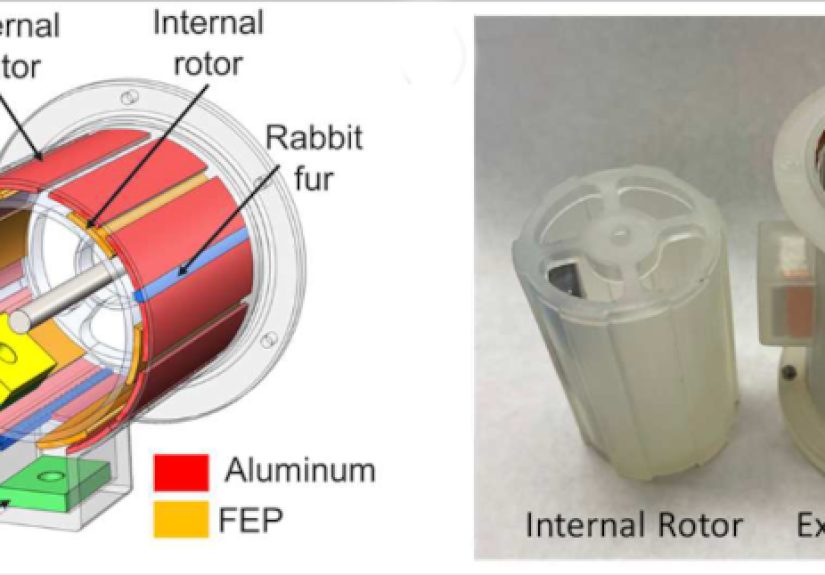
Static electricity is created when materials contact, separate, rub, or slide against each other, causing electric charges to build up. In triboelectric nanogenerators, this effect is engineered into a device. When two materials repeatedly touch and separate due to motion, electrons shift between surfaces. Electrodes then collect the resulting charge and convert it into electrical output.
For ocean energy, this is exciting because TENGs are especially good at harvesting low-frequency, irregular motionthe exact kind waves love to deliver. A floating ball, flexible membrane, rolling structure, or contact-separation surface can move with waves and generate electricity from repeated mechanical interaction.
The Simple Version
Imagine a sealed floating device bobbing in the waves. Inside it, lightweight materials touch and separate as the device rocks. Each movement creates tiny electrical charges. Add electrodes, circuits, and energy storage, and those small charges can power low-energy electronics. It is like turning ocean fidgeting into electricity. The sea wiggles; the sensor lives.
Key Benefits of Static-Electric Ocean Energy
1. Better Performance in Slow Waves
Wave motion is often slow compared with the speeds preferred by conventional rotating generators. TENGs can perform well under low-frequency movement, making them suitable for small wave conditions, random motion, and floating platforms.
2. Lightweight Device Design
Triboelectric devices can be made with lightweight polymers, flexible structures, and compact internal components. That matters offshore, where every extra kilogram increases installation and maintenance costs.
3. Useful for Remote Sensors
Many ocean instruments need small amounts of power for sensing, data logging, and wireless communication. Replacing batteries in the open ocean is expensive and inconvenient. Static-electric harvesters can help power wave buoys, weather stations, water-quality sensors, navigation markers, and marine research platforms.
4. Lower Mechanical Complexity
Some TENG designs avoid heavy gearboxes, hydraulic systems, or large rotating parts. Fewer moving parts may reduce maintenance, though long-term durability still needs real-world testing.
5. Complementary, Not Competitive
Static-electric devices do not need to compete directly with giant tidal turbines or offshore wind farms. Their strength may be in distributed, small-scale, self-powered systems that support the broader blue economy.
Real-World Applications
Self-Powered Ocean Sensors
One of the most practical uses is powering sensors that monitor wave height, temperature, salinity, storms, marine life, and water quality. These devices often need reliable power in places where cables are impossible and battery replacement is expensive.
Smart Buoys
Navigation buoys, research buoys, and offshore monitoring stations could use static-electric harvesters as backup or supplemental power. A buoy already moves with waves, so harvesting that motion is a logical upgradelike putting a tiny gym membership inside the buoy.
Offshore Aquaculture
Fish farms and seaweed farms need sensors, cameras, oxygen monitors, and communication equipment. Static-electric ocean power could help run small systems without constant battery swaps.
Disaster and Climate Monitoring
Coastal communities rely on accurate marine data for storm warnings, flooding forecasts, and climate research. Self-powered monitoring systems could improve resilience, especially in remote regions.
Challenges That Still Need Solving
Static-electric ocean power is promising, but it is not magic in a waterproof jacket. Engineers still need to solve several major issues.
Durability
Materials must survive saltwater, UV exposure, repeated motion, temperature changes, and marine growth. A device that works beautifully in a lab must still work after months or years at sea.
Power Output
TENGs are excellent for small-scale energy harvesting, but scaling them for large grid power remains difficult. Their output is often high voltage but low current, requiring smart power management.
Energy Storage
Wave motion is irregular, so harvested energy must be stored in batteries, capacitors, or hybrid systems. Without storage, the power supply can be as moody as the ocean itself.
Environmental Safety
Marine energy devices must avoid harming wildlife, blocking navigation, leaking materials, or disrupting habitats. Designs need careful testing before large deployment.
Cost
To become commercially useful, static-electric ocean devices must be affordable to manufacture, install, and maintain. Low-cost materials help, but marine deployment is never cheap.
How Static Electricity Fits Into the Future of Marine Energy
The future of ocean energy will likely be a mix of technologies. Tidal turbines may serve strong current locations. Wave-energy converters may support coastal grids or ports. Offshore wind will continue expanding. Static-electric harvesters may fill the smaller but important role of powering distributed ocean electronics.
This matters because the ocean is becoming more instrumented. Researchers, governments, shipping companies, fisheries, and coastal planners all need data. More sensors mean more power needs. If those sensors can harvest energy from the motion around them, the ocean becomes both the subject of measurement and the power source for measurement. Very efficient. Very ocean.
Experience-Based Perspective: What It Feels Like to Improve Ocean Power With Static Electricity
Working with the idea of static-electric ocean power feels different from thinking about traditional renewable energy. Solar panels are easy to picture: sunlight hits a panel, electricity comes out, everyone nods politely. Wind turbines are also simple enough: wind spins blades, blades spin a generator, the grid gets fed. But ocean power with static electricity asks you to think smaller, stranger, and more creatively.
The first experience is realizing that motion does not have to be dramatic to be useful. A wave does not need to crash like a movie scene to create energy. A gentle rocking motion, repeated thousands of times, can matter. That changes the mindset. Instead of asking, “How do we force the ocean to spin a big machine?” the question becomes, “How do we let the ocean’s natural motion create tiny, repeated electrical events?” It is a quieter kind of engineering.
The second experience is humility. The ocean is not a laboratory bench. On land, you can tighten a bolt, check a wire, and grab another coffee. Offshore, every repair requires planning, equipment, weather windows, and money. A small design flaw can become a very expensive boat ride. This is why simple, sealed, lightweight systems are so appealing. If a static-electric device can sit inside a buoy and quietly power a sensor without demanding attention, that is a huge win.
The third experience is learning that “small power” is not the same as “small importance.” A marine sensor may need only modest energy, but the data it collects can support storm warnings, climate studies, shipping safety, fisheries, and offshore construction. Powering one sensor may not sound heroic, but a network of self-powered sensors could make ocean monitoring more reliable and affordable. Not every renewable energy breakthrough has to light up a city. Some breakthroughs simply help us understand the planet better.
The fourth experience is appreciating hybrid thinking. Static-electric harvesting may work best when paired with solar panels, small wind units, batteries, supercapacitors, or conventional wave devices. Ocean systems do not need one perfect energy source; they need dependable combinations. A buoy might use solar power on clear days, wave-based static electricity at night, and stored energy during calm periods. That kind of layered design feels practical, not flashy.
Finally, the topic is exciting because it makes ocean energy feel more accessible. Huge offshore projects require major investment, permits, vessels, and infrastructure. Static-electric devices can start smaller: prototypes, buoys, sensors, research platforms, and coastal pilots. That creates room for universities, national labs, startups, and community-focused projects to experiment. The future of ocean power may include giant machines, yesbut also small clever devices bobbing around like hardworking rubber ducks with engineering degrees.
Conclusion
Improving ocean power with static electricity is not about turning sweater shocks into a national grid overnight. It is about using triboelectric energy harvesting to solve real marine power problems, especially where waves are slow, irregular, and difficult for traditional generators. Static-electric systems can help power remote sensors, smart buoys, offshore aquaculture tools, and environmental monitoring networks.
The technology still faces challenges in durability, scaling, storage, and cost. Yet its strengthslightweight design, low-frequency energy capture, and suitability for small distributed systemsmake it one of the most interesting tools in the marine renewable energy toolbox. The ocean is always moving. Static electricity gives engineers another way to listen, harvest, and make that motion useful.
Note: This article is based on real marine energy research, U.S. ocean energy information, national laboratory reporting, and recent studies on triboelectric nanogenerators for wave-energy harvesting.