Table of Contents >> Show >> Hide
- The Post-Olympics Look That Had Everyone Talking
- Why Imane Khelif Became One of Paris 2024’s Biggest Stories
- What Actually Happened in the Gender Controversy
- Why the Makeover Mattered More Than a Fashion Moment
- Public Image, Femininity, and the Very Tired Policing of Women Athletes
- What Comes Next for Imane Khelif
- The Bigger Lesson Behind the Makeover
- Related Experiences: What a Story Like This Feels Like in Real Life
- Conclusion
For a while, it felt like the internet could not decide whether Imane Khelif was supposed to be seen as a boxer, a headline, a lightning rod, or a full-blown culture-war symbol. So when the Algerian Olympic champion appeared in polished post-Paris social content with styled hair, makeup, jewelry, and a noticeably more glamorous presentation, the reaction was immediate: people called it a dramatic makeover, social media did what social media does best, and suddenly the conversation shifted from punches thrown in the ring to image, femininity, and public perception.
But here is the part worth slowing down for: Khelif’s post-Olympics glow-up was not just another viral celebrity-style reveal. It landed after one of the most exhausting athlete storylines of the Paris Games, a storm that mixed misinformation, politics, sports governance, and old-fashioned internet cruelty into one very messy cocktail. In other words, this was not merely a beauty moment. It was a reclamation moment.
And honestly, after everything that happened in Paris, who could blame her for wanting one video, one photo set, or one public appearance that said: I decide how I am seen?
The Post-Olympics Look That Had Everyone Talking
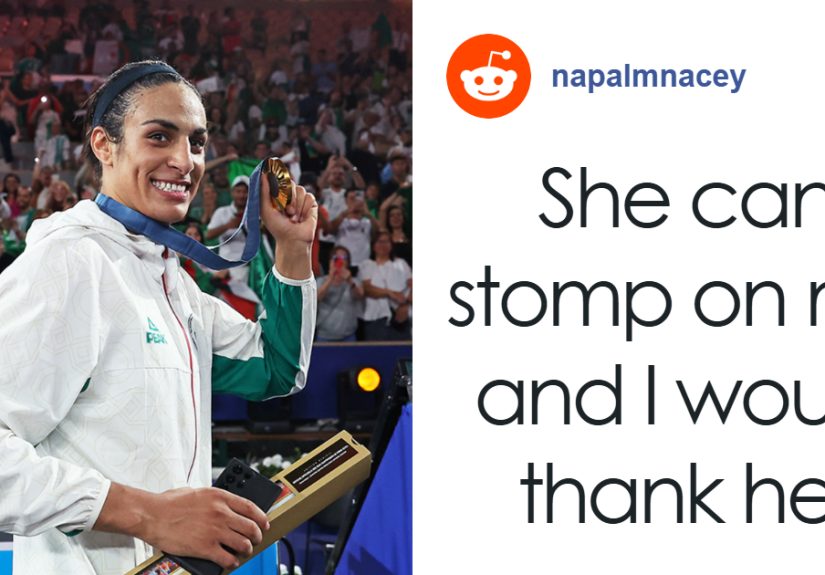
Shortly after her Paris triumph, Khelif shared social content that showed a softer, more styled side of her public image. Fans and entertainment outlets quickly framed the appearance as a dramatic makeover. The look contrasted with the image most global viewers had just seen during the Olympics: a focused competitor in boxing gear, expression locked in, shoulders squared, all business and absolutely not here for nonsense.
Then came the glam factor. The styling was more polished, more camera-ready, and more obviously curated for a different kind of stage. That shift was enough to send comment sections into overdrive. Some supporters celebrated it as a fun, confident reveal. Others treated it like breaking news from the Department of Hair and Eyeliner. The internet, naturally, responded with the emotional moderation of a toddler who just discovered espresso.
Still, the makeover chatter resonated for a reason. Khelif had just come through an Olympic run shaped by intense public scrutiny over her eligibility, much of it fueled by confusion, misinformation, and commentary from people who were far more interested in scoring ideological points than understanding the facts. Against that backdrop, a glam appearance was not trivial. It was symbolic.
Why Imane Khelif Became One of Paris 2024’s Biggest Stories
Khelif did not arrive in Paris as a novelty act. She arrived as a legitimate contender. She had already built a serious career in women’s boxing, competed at the Tokyo Olympics, and entered Paris with the kind of resume that tends to suggest one thing: this athlete can flat-out fight.
Her tournament became global news after her opening Olympic bout against Italy’s Angela Carini ended in just 46 seconds. Carini withdrew after absorbing heavy punches, and the moment exploded online almost instantly. Rather than staying where it belonged, in the ordinary universe of boxing outcomes and athlete reactions, the match became fuel for a wider argument over sex, fairness, and eligibility in women’s sport.
That argument did not appear from nowhere. In 2023, Khelif had been disqualified by the International Boxing Association before a world championship gold-medal bout under an eligibility process the organization did not explain transparently. The IOC, which was overseeing Olympic boxing in Paris after severing ties with the IBA over governance issues, later said the IBA’s handling of the matter was arbitrary and flawed. Under IOC rules, Khelif was eligible to compete in Paris, and she did.
That should have settled it. Instead, it turned into a festival of hot takes, bad faith, and keyboard bravado. Khelif became a target of relentless scrutiny even as Olympic officials continued to say she met the Games’ eligibility standards. She later spoke about the damaging effect of the bullying, calling attention to the mental toll such attacks can take on athletes and families.
What Actually Happened in the Gender Controversy
The IBA vs. the IOC
A major reason the controversy became so confusing is that two sports authorities were effectively telling two very different stories. The IBA had disqualified Khelif in 2023 through a process it did not fully clarify in public. The IOC, meanwhile, made clear that Khelif was eligible for Paris 2024 under the rules being used for Olympic boxing and publicly criticized the IBA’s process.
That institutional clash created a vacuum, and the internet rushed in to fill it with rumor. A lot of the loudest commentary online treated speculation as fact. That is never a great idea, but it is especially reckless when the target is a living person whose reputation, career, and mental health are on the line.
The Online Backlash
As the Games continued, Khelif faced a wave of abuse that moved far beyond sports debate. She was discussed as if she were a symbol first and a human being second. By the time she won Olympic gold, the medal felt like both a sporting achievement and a public rebuttal.
After Paris, Khelif filed a cyberharassment complaint in France. That legal move mattered because it signaled that what happened was not simply “controversy” in the vague, fluffy, entertainment-news sense. It involved real consequences, real allegations of online abuse, and a real effort to push back.
The Gold Medal That Changed the Tone
Khelif went on to win the women’s welterweight gold medal, defeating China’s Yang Liu in the final and becoming a defining story of the Games. Her Olympic run also included victories over Anna Luca Hamori and Janjaem Suwannapheng. Along the way, she kept returning to the same point: she belonged there, she had competed as a woman throughout her career, and the attacks against her were harmful.
That victory did not erase the ugliness of the public reaction, but it changed the frame. She was no longer merely the subject of a debate. She was the champion at the center of it.
Why the Makeover Mattered More Than a Fashion Moment
Let’s be honest: when a female athlete changes up her look, the culture can get weird about it very fast. There is still an exhausting expectation that women in sport must somehow pass two tests at once. First, they have to dominate in elite competition. Then, apparently, they must satisfy whatever random beauty standards the public drags into the room after the final whistle.
Khelif’s makeover landed right inside that double standard. The reaction said less about lipstick or styling and more about how many people still read femininity as a kind of public evidence file. If an athlete looks one way in competition and another way off-duty, audiences love to treat that like a revelation. But for athletes, it is just life. One day it is mouthguards and footwork. The next day it is a dressy photo, a polished face, and a gold medal worn like punctuation.
In Khelif’s case, the makeover also functioned as a reminder that no public controversy gets to fully own a person. She is not just the boxer from the headlines. She is also a young woman with personal style, media awareness, cultural presence, and enough confidence to step back into public view on her own terms.
That is why the makeover story resonated. It felt less like “Look, she changed!” and more like “Look, she is taking the narrative back.”
Public Image, Femininity, and the Very Tired Policing of Women Athletes
Khelif’s experience also plugged into a much older pattern in women’s sports. Female athletes, especially those who are powerful, muscular, non-Western, Black, brown, or simply not packaged in a way the public expects, often face intense scrutiny over their bodies. They are praised for strength one minute and punished for not looking “feminine enough” the next. It is a ridiculous game, and the rules always seem to be invented after the athlete wins.
That pattern helps explain why Khelif’s post-Olympics style moment became so widely discussed. People were not only reacting to a new look. They were reacting to their own assumptions about what a champion should look like, what femininity is supposed to signal, and whether women athletes are allowed to exist outside simplistic categories.
Her appearance after Paris became, in a sense, a mirror. Supporters saw confidence. Detractors saw something else. But the strongest interpretation is probably the simplest one: she showed another side of herself after one of the most invasive news cycles of her life.
What Comes Next for Imane Khelif
Khelif’s story did not end when the Olympic flame went out. The debate over eligibility in women’s boxing carried into 2025, when World Boxing introduced a new sex-testing policy and apologized after publicly naming Khelif in connection with it. That development reopened arguments that many observers thought should have cooled down after Paris. Instead, it confirmed that her name remains attached to a wider sports-governance battle over rules, privacy, and fairness.
At the same time, Khelif has projected resilience. She has spoken about continuing her career, defending her dignity, and focusing on the future rather than living forever inside last year’s discourse. That matters because athletes are not museum exhibits pinned to their most controversial headline. They keep moving. They train. They recover. They rebuild. They post a glam video, and the world can either handle it or have a little lie-down.
If she does compete again on the biggest stages, the conversation around her will likely remain charged. But Paris already showed something important: Khelif can endure extraordinary pressure and still deliver when it counts. That does not make the scrutiny acceptable. It just proves it did not break her.
The Bigger Lesson Behind the Makeover
In the end, the “dramatic makeover” angle works best when it is not reduced to a shallow before-and-after story. The more interesting transformation is not cosmetic. It is narrative. Khelif went from being discussed in the language of suspicion to being discussed in the language of victory, resilience, image control, and personal agency.
That shift is why this story stuck. Yes, there was a viral post. Yes, there was a glamorous look. Yes, people noticed. But the real reason it mattered is that the makeover arrived after months of public attempts to define her from the outside. In that context, choosing how to appear is not vanity. It is authorship.
And frankly, after winning Olympic gold while the whole world argued around her, she had earned the right to show up however she pleased.
Related Experiences: What a Story Like This Feels Like in Real Life
Stories like Khelif’s hit hard because they connect with a very modern experience: the feeling of being publicly interpreted before you have even had the chance to introduce yourself. Most people will never fight in an Olympic boxing ring, but plenty of people understand what it is like to be misread, judged by appearance, or pushed into a narrative they did not choose. That is part of why her post-controversy makeover attracted so much attention. It was not just celebrity curiosity. It was emotional recognition.
Imagine the whiplash. One moment, you are an athlete preparing for the biggest competition of your life. Your attention is supposed to be on training, recovery, strategy, timing, and surviving the usual Olympic pressure cooker. The next moment, the conversation around you is no longer about your skill, your game plan, or even your opponents. It is about your body, your identity, your legitimacy, and whether strangers on the internet think you fit their preferred version of womanhood. That is not a normal sports storyline. That is a psychological obstacle course wearing a news headline as a disguise.
Then comes the strange second chapter: image after impact. Once a person has been turned into a controversy, every future appearance gets overanalyzed. A casual photo becomes “a statement.” A polished beauty look becomes “proof” of something. A smile becomes “defiance.” A quiet post becomes “strategic silence.” The public starts reading tea leaves out of eyeliner, wardrobe, posture, and filters. It is a bizarre way to live, because it means even ordinary self-expression can stop feeling ordinary.
That is why a makeover can carry emotional weight. For many people, changing a look after a painful chapter is a way of regaining control. It can mark survival. It can say, “I am still here.” It can say, “You do not get the final word.” It can even be playful, which matters more than people admit. Joy is a form of resistance too. Sometimes the bold lipstick, the styled hair, or the camera-ready outfit is not about impressing anyone. Sometimes it is about returning to yourself after the world has made a spectacle out of you.
There is also a deeper social layer to this experience. Women, especially women in public-facing spaces, are often expected to perform a balancing act with no stable center. Be strong, but not too strong. Be feminine, but not too feminine. Be tough, but remain likable. Win, but do it in a way that does not unsettle anyone’s assumptions. That balancing act is exhausting for everyday people; for elite athletes, it can become brutal. Khelif’s story shows how quickly athletic excellence can get tangled up with cultural expectations that have very little to do with sport.
In that sense, the most relatable part of the entire saga may be the desire to be seen as a whole person. Not a debate topic. Not a symbol. Not a social media battlefield. Just a person with talent, style, ambition, and the right to define herself. That is the experience underneath the headlines, and it is probably why the makeover moment traveled so far. People did not just see a new look. They saw someone trying to reclaim the mirror.
Conclusion
Imane Khelif’s dramatic post-Paris makeover became a viral talking point, but the deeper story is far more compelling than a style recap. It came after an Olympic campaign marked by scrutiny, misinformation, and arguments over eligibility that often overshadowed her actual achievement. By the end of the Games, however, Khelif had done the one thing that tends to outlast noise: she won.
Her glam post-Olympics presentation did not rewrite the facts of the controversy, and it did not need to. What it did do was remind people that athletes are allowed to have identities beyond the headlines built around them. Khelif’s makeover mattered because it arrived as an act of visibility on her own terms. After Paris, that may have been the boldest statement of all.