Table of Contents >> Show >> Hide
- Why Budapest and Fog Are Such a Ridiculously Good Match
- The Places That Changed Every Time the Fog Returned
- How Four Years Changed the Way I Photographed the City
- What Fog Reveals About Budapest That Sunshine Hides
- Best Times and Conditions for Photographing Fog in Budapest
- Why I Never Got Tired of the Same Skyline
- Four Years in the Fog: The Experience That Stayed With Me
- Conclusion
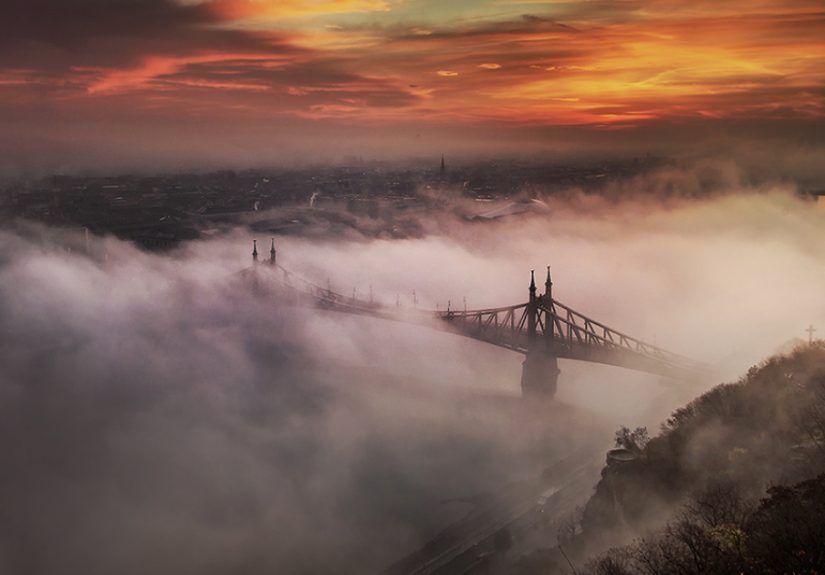
Budapest is gorgeous on a clear day. Everyone knows that. The Parliament glows, the Danube sparkles, and the city looks like it woke up wearing expensive jewelry. But fog? Fog turns Budapest into theater. Suddenly the bridges do not just cross the river, they emerge from nowhere. Church spires stop being buildings and start acting like secrets. The skyline quits showing off and starts whispering.
That is why I kept coming back.
Over four years, I learned that fog does not flatten Budapest. It edits it. It removes distractions, softens hard lines, and makes the city feel more emotional than architectural. On some mornings, the Hungarian Parliament looked like it had drifted in from a dream. On others, Fisherman’s Bastion resembled a castle built by clouds with a masonry hobby. And the Danube, usually the confident star of the show, became a mysterious co-conspirator.
If you have ever wondered why photographers obsess over Budapest in winter, or why foggy mornings along the river can feel more cinematic than a hundred sunsets, this is the answer. Budapest is not just beautiful when it is covered by fog. It becomes unforgettable.
Why Budapest and Fog Are Such a Ridiculously Good Match
Some cities look best when every detail is sharp. Budapest is not one of them. Budapest thrives on atmosphere. The city is already built like a dramatic argument between elegance and history: Buda rises in hills, Pest stretches flatter and wider, and the Danube slices between them like a polished steel ribbon. Add bridges, domes, towers, palaces, and riverbanks lined with stone, and you get a place that was practically designed to flirt with low cloud cover.
Fog works here because Budapest has layers. From the Buda side, you can look across the river and see the Parliament, the Chain Bridge, and the long geometry of Pest. From the Pest side, you get the lifted profile of Castle Hill, the terraces of Fisherman’s Bastion, and the dramatic slope toward Gellért Hill. When fog rolls in, those layers separate. The foreground sharpens, the middle distance fades, and the skyline hovers like a half-remembered story.
It also helps that Budapest has a winter personality. This is not a city that goes into hiding when temperatures drop. The colder months bring steamy baths, quieter streets at dawn, pale morning light, and the kind of moody weather that makes photographers forget basic human needs like breakfast and warm fingers.
The Places That Changed Every Time the Fog Returned
Fisherman’s Bastion: The Fairytale That Gets Even Better When Visibility Gets Worse
Fisherman’s Bastion is almost unfair. On clear mornings, it already looks like someone asked a set designer to build a romantic medieval fantasy with excellent railings. In fog, it becomes absurdly photogenic. The turrets fade in and out. The arches frame a ghostly Parliament across the river. The pale stone seems to collect light rather than reflect it.
What makes this spot special is contrast. The structure itself stays visible, but the city behind it can disappear and reappear within minutes. That gives every frame tension. You are not just photographing a landmark. You are photographing the moment before the city reveals itself.
I returned here more times than I can count, usually before sunrise, usually questioning my life choices on the uphill walk, and usually forgetting all of that the second the fog started lifting in layers over Pest.
The Hungarian Parliament Building: The Grand Performer
If Budapest has a diva, it is the Parliament Building. And to be clear, I say that with respect. It deserves the attention. The building is enormous, ornate, and unapologetically dramatic, especially from across the Danube. In fog, it stops being merely impressive and starts becoming emotional.
Some mornings, only the dome would appear. Other days, the lower portion vanished entirely, making the whole structure seem suspended above the water. It taught me patience. You cannot rush fog photography in Budapest. The best scene might arrive ten minutes after you nearly pack up, or thirty seconds before your coffee gets cold enough to be sad.
The Parliament also taught me a useful lesson: don’t always shoot the whole thing. In fog, fragments are often stronger than the full postcard view. A corner tower, a faint reflection, or a single glowing window can say more than the entire façade.
Chain Bridge: The City’s Best Piece of Suspense
The Chain Bridge is one of Budapest’s defining images on any day, but in fog it becomes pure narrative. It is less a bridge and more an entrance. The stone lions look even more watchful. The suspension lines fade into mist. Pedestrians appear briefly, then vanish again as if the city is editing them in real time.
I loved photographing it from both ends because each side gave it a different personality. From one angle, it felt monumental and historical. From another, it seemed intimate and quiet, especially when early traffic was light and the fog wrapped around the lamps. It is the kind of subject that rewards repetition. I took dozens of photos here over four years, and not one morning gave me the same bridge twice.
Gellért Hill: Where the City Looks Like It’s Floating
If you want scale, Gellért Hill is where Budapest shows off. From above, fog does something magical: it turns the river corridor into a moving border between worlds. You can watch church towers and rooftops poke through like islands. You can see how Buda and Pest balance one another. You can also realize that the city is somehow both grand and intimate, which is a very annoying trick for a capital to pull off so effortlessly.
This was one of the places where I began to understand Budapest as a photographer rather than just admire it as a traveler. A skyline in fog is not about visibility. It is about hierarchy. What remains visible matters more.
How Four Years Changed the Way I Photographed the City
During the first year, I chased famous shots. I wanted the classic panorama, the perfect symmetry, the “yes, that is definitely Budapest” composition. There is nothing wrong with that. The city gives you postcard material with shocking generosity. But over time, I became less interested in proving where I was and more interested in showing what it felt like to be there.
That shift changed everything.
By year two, I started paying attention to smaller moments: a tram entering the haze, a couple standing silently on the riverbank, the wet shine of stone steps leading down toward the Danube. Budapest in fog taught me to stop treating atmosphere like a backdrop. Atmosphere was the subject.
By year three, I stopped panicking when the “perfect view” disappeared. In fact, I started hoping for that. When landmarks become partly hidden, viewers fill in the missing pieces with their imagination. That makes the image more personal, more memorable, and often more powerful.
By year four, I had a routine. Wake before dawn. Dress like a sensible person who has accepted suffering as part of the art form. Walk to a viewpoint. Wait. Watch the city decide how much of itself it wanted to reveal. It sounds romantic now. At the time, it often felt like standing in cold wind while bargaining with weather systems. But the results were worth every numb fingertip.
What Fog Reveals About Budapest That Sunshine Hides
Clear weather celebrates Budapest’s beauty. Fog reveals its character.
On bright afternoons, the city can feel dazzling, polished, almost too handsome. Fog strips away the easy beauty and leaves mood behind. It highlights age, texture, silence, and scale. It makes the city feel older and wiser. It reminds you that Budapest is not just a collection of pretty buildings on a river. It is a place shaped by empire, war, rebuilding, art, memory, and daily life.
That is why the fog matters. It slows you down. It forces you to notice shape, light, and absence. It makes familiar landmarks feel mysterious again. Even the most photographed corners of Budapest regain some privacy when the air turns milky and the skyline softens.
It also transforms movement. The Danube becomes less reflective and more atmospheric. Boats glide through vapor like stage props. The bridges no longer connect fixed points so much as suggest them. Sound carries differently. Footsteps feel louder. Tram bells seem farther away. The whole city behaves as if it has lowered its voice.
Best Times and Conditions for Photographing Fog in Budapest
If you are hoping to experience Budapest this way, early morning is your best friend. That is mildly annoying, but true. The most rewarding fog tends to arrive during the colder months, especially when the air is still, the night has been cool, and the city has not yet fully stirred. Sunrise is often less about dramatic color and more about gradual revelation.
Winter and late fall are especially good for atmosphere. Rivers, low light, and temperature inversions can create those dense, persistent layers that give the city its dreamlike look. Some mornings bring a thin veil that gently softens everything. Others deliver dense fog that hides entire monuments until the light begins changing by the minute. Both are useful. Both are beautiful. Both will make you check your camera settings six times because mist has a funny way of messing with confidence.
For viewpoints, I kept returning to Fisherman’s Bastion, Gellért Hill, the riverbanks on both sides of the Danube, and the approaches to Chain Bridge. The key is variety. Budapest is a city of relationships: hill to river, bridge to dome, tower to skyline, stone to water. Fog makes those relationships more visible by making individual details less obvious.
Why I Never Got Tired of the Same Skyline
Because it was never the same skyline.
That may be the simplest truth I learned in four years of photographing Budapest in fog. The landmarks stayed in place, but the city never repeated itself. Light changed. Water changed. Wind changed. Visibility changed. Even my own way of seeing changed. A location I had photographed ten times could surprise me on the eleventh because the fog arrived lower, broke faster, or caught a spire I had ignored before.
Budapest rewards return visits because it is visually generous and emotionally layered. You can admire it instantly, but understanding it takes longer. Fog sped that process up by slowing me down. It made me look harder, wait longer, and care more about the space between monuments than the monuments themselves.
Four Years in the Fog: The Experience That Stayed With Me
After four years of chasing fog in Budapest, I can say this with full confidence: I did not just photograph a city. I built a relationship with its moods. That sounds dramatic, but so is Budapest, so honestly it felt appropriate.
There were mornings when I arrived at a viewpoint and saw almost nothing. Just pale air, damp stone, and vague outlines where the city should have been. At first that disappointed me. Later, I realized those mornings were part of the lesson. Fog is not a guarantee of spectacle. Sometimes it offers mystery instead of clarity, and that can be even better. Some of my favorite memories are not the grand reveal moments, but the quiet in-between ones: standing above the Danube with a camera in hand, hearing distant traffic, waiting for a tower or bridge lamp to emerge from the white.
I remember one especially cold morning near Fisherman’s Bastion when the Parliament was completely gone. Not hidden. Gone. The river seemed to lead nowhere. Tourists had not arrived yet, and the city felt private, like I had wandered into Budapest before it had finished loading. Then, slowly, the top of the dome appeared. Then a sliver of roofline. Then part of the façade. It felt less like the fog was clearing and more like the city was introducing itself in chapters.
Another morning on the Pest side, I spent nearly an hour photographing Chain Bridge while pedestrians drifted in and out of view. No famous sunrise. No spectacular color. Just soft gray light and the rhythm of people crossing into a day that had barely begun. Looking back, that session probably taught me more about storytelling than any “perfect” skyline shot ever did. The bridge was important, yes, but the real subject was transition. Budapest is full of those. East and west. Hill and plain. Old empire and modern capital. Tourist postcard and lived-in city. Fog made all those transitions visible.
I also learned how much emotion lives in repetition. People sometimes assume photographers get bored revisiting the same places, but Budapest cured me of that idea forever. Repetition is how you stop collecting images and start noticing patterns. Which rooftops catch the first warm light. Which stretch of river turns silver before dawn. Which tower stays visible longest when the fog thickens. Over time, the city stops being a checklist and starts becoming legible.
And maybe that is the real beauty of Budapest in fog. It refuses to give you everything at once. It asks you to return, to wait, to pay attention, to enjoy partial answers. In an age when everyone wants instant, bright, ultra-sharp everything, Budapest in fog offers the opposite. It gives you softness, patience, and atmosphere. It makes you earn the moment.
Would I do those four years again? Absolutely. I would gladly wake before sunrise, climb the hills, freeze a little, and wait by the Danube for the city to appear one careful layer at a time. Because when Budapest is covered by fog, it does not merely look beautiful. It feels alive in a quieter, deeper way. And once you have seen that version of the city, the clear-sky postcard almost feels like a spoiler.
Conclusion
Budapest covered by fog is not just a photographer’s dream. It is a master class in atmosphere, patience, and visual storytelling. The city’s landmarks are world-famous for a reason, but fog gives them a second life. It turns Parliament into a ghostly monument, Chain Bridge into suspense, Fisherman’s Bastion into fantasy, and the Danube into a moving line between memory and light.
After four years of photographing these moments, one thing became obvious: the beauty of Budapest is not only in what you can see clearly. It is also in what the city allows you to imagine when the fog rolls in and the details begin to disappear.