Table of Contents >> Show >> Hide
- What Is Ambrosia Salad, Exactly?
- Why a 1967 Ambrosia Salad Hits Different
- The 1967 Recipe I Recreated (Without Needing a Time Machine)
- Step-by-Step: How I Made It (And Avoided a Soupy Fruit Situation)
- 1) I drained the fruit like my reputation depended on it
- 2) I made the “pineapple bowl” because I’m not a quitter
- 3) I whipped the cream (or thawed the topping) and tasted for balance
- 4) I mixed the fruit first, then folded in the fluffy stuff
- 5) I chilled itbecause ambrosia needs a nap
- 6) I added bananas at the very end
- Here’s What Happened When I Took the First Bite
- What Surprised Me Most
- What I’d Do Differently Next Time
- How to Serve Ambrosia Salad So It Feels Intentional
- Make-Ahead Tips (Because Parties Are Stressful Enough)
- Food Safety Notes for Creamy Fruit Salads
- FAQ: Quick Answers Before You Grab the Marshmallows
- The Verdict
- Bonus: 500 More Words of Retro Ambrosia Adventures
Some recipes feel like time travel. Others feel like a prank your great-aunt pulled in a church basement, then somehow the prank got laminated and became “tradition.” Ambrosia salad is both.
So I did the thing: I grabbed a 1967-era ambrosia-inspired recipe, committed to the full retro vibe, and built a fluffy fruit “salad” that absolutely refuses to behave like a salad. It’s sweet. It’s cloudy. It’s cheerful. It’s confusing. And honestly? It’s kind of a party.
What Is Ambrosia Salad, Exactly?
Ambrosia salad is a classic American dessert salada category of dishes that politely borrows the word “salad” so you can justify eating whipped cream next to ham. Traditional ambrosia usually combines fruit (often citrus and pineapple), shredded coconut, and mini marshmallows with something creamy to hold it all together.
Depending on the family, the “creamy situation” might be whipped cream, whipped topping, sour cream, mayonnaise (yes, really), yogurt, pudding mix, or a combination. Ambrosia can show up at holiday tables, potlucks, BBQs, and any gathering where someone says, “Don’t worry, I brought something easy.”
Why a 1967 Ambrosia Salad Hits Different
The late ’60s were a golden age of entertainingwhen hosting meant themed platters, matching serving sets, and recipes that sounded like plot twists: “Pineapple Surprise,” “Fluffy Something,” “Cool Whip Delight,” and “Please Don’t Ask What’s In It.”
A 1967 ambrosia-inspired salad leans into two big ideas:
- Tropical drama: pineapple, oranges, cherries, bananas, grapesbasically a fruit parade.
- Fluffy magic: whipped cream (or whipped topping) plus marshmallows equals a bowl of edible nostalgia.
Also, the era loved presentation. Not just “put it in a bowl,” but “put it in a hollowed pineapple like you’re serving dessert on a tiny island.” Which is exactly the kind of energy I needed in my life.
The 1967 Recipe I Recreated (Without Needing a Time Machine)
The vintage version I based this on is an ambrosia-inspired fruit salad from a 1967 party cookbook. It’s tropical, it’s extra, and it famously suggests a custard component made ahead of timebecause apparently 1967 cooks had both patience and a dedicated “custard day.”
I made a modern-friendly adaptation that keeps the spirit of the original: lots of fruit, whipped cream, marshmallows, coconut, cherries, and that “wait…this is the side dish?” factor.
Ingredients (Ambrosia Salad, 1967-Inspired)
- 2 cups pineapple chunks or tidbits (well-drained)
- 1 1/2 cups mandarin oranges or orange segments (well-drained)
- 1 cup seedless grapes (halved if large)
- 1 banana (sliced right before serving)
- 1/2 cup maraschino cherries (halved, patted dry)
- 1 to 1 1/2 cups mini marshmallows
- 1/2 to 3/4 cup shredded coconut (toasted if you want extra flavor)
- 1/3 cup sliced almonds (toasted)
- 2 cups whipped cream (or 1 tub whipped topping, thawed)
- Optional: 2–3 tablespoons sour cream or Greek yogurt (for tang)
- Optional: a squeeze of lemon (for balance)
Optional Retro Custard (If You Want the Full 1967 Experience)
This is totally optional, but if you want that “I planned ahead like a 1967 hostess” feeling, a light custard adds richness and helps the fruit cling together.
- 1 egg yolk
- 3/4 cup milk
- 2 tablespoons sugar
- 1 teaspoon cornstarch
- 1/2 teaspoon vanilla
Step-by-Step: How I Made It (And Avoided a Soupy Fruit Situation)
1) I drained the fruit like my reputation depended on it
The #1 ambrosia salad mistake is watery fruit turning your fluffy dream into a fruit puddle. I drained everything, then patted juicy ingredients (especially cherries) dry with paper towels. This alone makes the final texture look intentional instead of… apologetic.
2) I made the “pineapple bowl” because I’m not a quitter
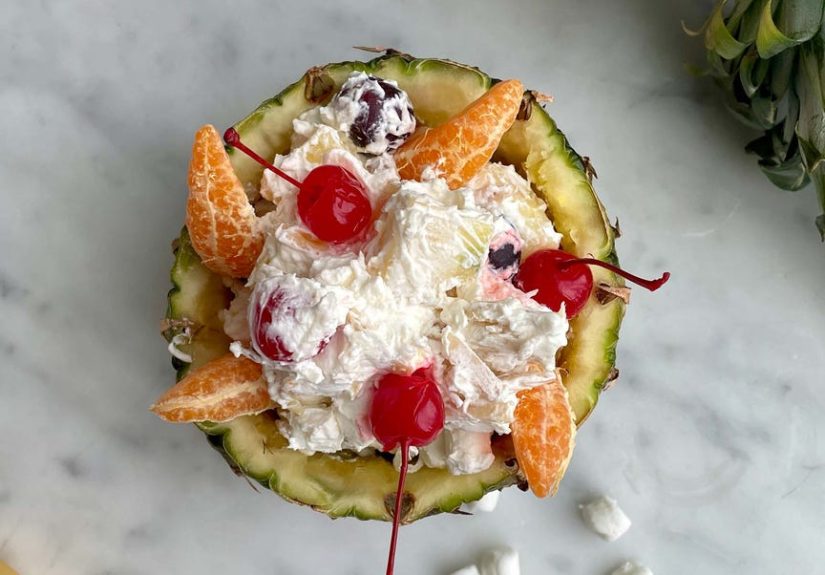
I cut a pineapple in half lengthwise, then carved out the inside. This step is equal parts “wow” and “why.” If you do it, use a sharp knife, then a spoon to scoop. Save the pineapple flesh for the salad (or snacks while you cook, because you deserve joy).
3) I whipped the cream (or thawed the topping) and tasted for balance
If using real whipped cream, I whipped it to soft peaks so it stayed fluffy but still folded easily. Then I tasted a spoonful with a piece of pineapple. Sweet + sweet can get loud fast, so this is where a little tang (sour cream, yogurt, or lemon) can turn chaos into harmony.
4) I mixed the fruit first, then folded in the fluffy stuff
I combined pineapple, oranges, grapes, and cherries in a big bowl. Then I stirred in marshmallows and coconut. Finally, I gently folded in whipped cream until everything looked like a pastel cloud with fruit confetti.
5) I chilled itbecause ambrosia needs a nap
Ambrosia salad gets better after chilling. Thirty minutes helps. Two hours is great. Overnight is peak “fluffy and cohesive.” The flavors mingle, the texture sets, and the marshmallows soften slightly (in a good way).
6) I added bananas at the very end
Bananas brown and go mushy if they sit too long. If your 1967-inspired recipe uses them, slice them right before serving so they stay creamy and bright instead of turning into a sad science experiment.
Here’s What Happened When I Took the First Bite
First impression: it tastes like a vacation that forgot to pack vegetables.
The pineapple brings tart-sweet punch. The oranges give that sunny citrus pop. The cherries add a familiar “dessert” note that instantly makes your brain think: birthday cake, sundae bar, celebratory vibes. Then the marshmallows show up like tiny pillows that refuse to be ignored.
Texture-wise, it’s a delightful mess: juicy fruit + fluffy cream + chewy marshmallows + coconut threads. The almonds add crunch, which is crucialwithout a little crunch, ambrosia can feel like you’re eating sweet clouds with a spoon. (Not necessarily bad. Just… emotionally complex.)
And the pineapple bowl? Absolutely ridiculous. Absolutely effective. People will stare. People will ask questions. People will take photos. Ambrosia salad is not here to be subtle.
What Surprised Me Most
It’s not trying to be modern
This isn’t a “lightened up fruit salad.” It’s a retro dessert salad that proudly exists in the space between side dish and dessert. It’s whimsical. It’s sugary. It’s the culinary equivalent of wearing glitter to brunch.
It’s oddly perfect for parties
Ambrosia is a conversation starter. On a table full of predictable dishes, it’s the wildcard. Even people who don’t love it will talk about itusually starting with, “So… what is that?” and ending with, “Okay, but I kind of get it.”
It taught me the value of tang
A small amount of sour cream or yogurt makes a huge difference. It cuts sweetness, adds creaminess, and makes the fruit taste brighter. Without it, the salad can lean candy-sweet, especially if you use very sweet canned fruit and lots of marshmallows.
What I’d Do Differently Next Time
- Use a tangy base: Try half whipped topping and a few spoonfuls of sour cream or Greek yogurt for balance.
- Toast the coconut: A quick toast in a dry pan brings out nutty flavor and makes the whole bowl smell incredible.
- Go easy on cherries: They’re powerful. A little goes a long way.
- Pick one “extra” fruit: Too many fruits can turn it into a chaotic fruit lottery. Choose a core mix and keep it focused.
- Add crunch on top: Nuts or toasted coconut sprinkled right before serving keeps it lively.
How to Serve Ambrosia Salad So It Feels Intentional
If you’re going full retro, serve it in a glass bowl or a pineapple shell. If you want it to feel more “today,” serve it in small cups like a parfait and top with toasted coconut or chopped nuts.
Ambrosia salad pairs surprisingly well with salty foodsthink BBQ, roasted ham, fried chicken, or anything smoky. Sweet + salty is the entire concept of party food, and ambrosia understood that decades ago.
Make-Ahead Tips (Because Parties Are Stressful Enough)
- Make it 2–24 hours ahead: Chill so flavors meld.
- Add bananas and crunchy toppings last: Keep them fresh and crisp.
- Drain fruit thoroughly: This is not optional if you want fluffy texture.
- Store covered: It stays best in the fridge for about 2–3 days.
Food Safety Notes for Creamy Fruit Salads
Because this is a creamy, perishable dish, treat it like you would potato salad or a dairy-based dessert. Keep it refrigerated until serving, and don’t let it hang out at room temperature for too longespecially at outdoor gatherings. If it’s a hot day, keep the serving bowl nested in ice to stay safely chilled.
FAQ: Quick Answers Before You Grab the Marshmallows
Is ambrosia salad a dessert or a side dish?
Yes. (But seriously: it’s served as both, especially at holiday meals and potlucks.)
Can I use Cool Whip?
Absolutely. It’s a classic choice for the vintage vibe and makes the texture extra stable.
Can I make it lighter?
You can use Greek yogurt and fresh fruit, and reduce marshmallows. It’ll still taste like ambrosiajust with less “sugar cloud” energy.
Does it freeze well?
Not really. Creamy bases can separate and fruit can turn mushy after thawing. Ambrosia is best enjoyed fresh from the fridge.
The Verdict
Making a 1967 ambrosia salad is like hosting a tiny retro party in your kitchen. It’s playful. It’s nostalgic. It’s not pretending to be health food. And it’s the kind of dish that makes people smileeven if they’re smiling because they’re slightly confused.
Would I eat it every week? No. Would I bring it to a party when I want to spark joy, start conversations, and make at least one person say, “My grandma used to make this!”? Absolutely.
Bonus: 500 More Words of Retro Ambrosia Adventures
Here’s the thing nobody tells you before you make a vintage ambrosia salad: you’re not just making a recipeyou’re stepping into a social experiment. The moment the bowl hits the table, it becomes a personality test. Some people light up like they’ve been waiting their whole life for marshmallows to return to the dinner plate. Others tilt their heads and squint, like the salad is about to confess a crime.
I learned this immediately when I assembled the final bowl. The colors were almost aggressively cheerfulsunny oranges, bright cherries, pale coconut, glossy grapesall swirled into a soft cream cloud. It looked like something you’d serve at a pool party where everyone wears sunglasses and nobody asks what year it is. The pineapple bowl didn’t help. It’s undeniably dramatic, but it also makes the salad look like it has a microphone and plans to make a speech.
Carving the pineapple was my first “1967 moment.” Modern recipes often skip the theatrical serving vessel, but the old-school entertaining world really believed in edible centerpieces. Hollowing it out made me feel like I should also be wearing a crisp apron and offering guests a choice of punch flavors. It was messy, sticky, and weirdly satisfyinglike crafting, but delicious. Plus, I got pineapple chunks as a snack while cooking, which is the kind of behind-the-scenes perk vintage cookbooks never mention.
Then came the texture decisions. Once the marshmallows hit the bowl, the whole mixture shifted from “fruit salad” to “dessert plot twist.” Marshmallows don’t blend in; they announce themselves. They float. They cling. They create tiny sweet pockets that make every bite slightly different. The coconut adds chew, which is either charming or alarming depending on your stance on shredded coconut. (I’m pro-coconut, but I respect that it has enemies.)
The taste was the biggest surprise: it wasn’t just sweet. With the right fruit mix, you get bursts of tang and brightness that keep it from being a one-note sugar bomb. Pineapple and citrus do a lot of heavy lifting here. And when I added just a little tang to the creamy base, the whole bowl suddenly tasted more balancedlike it was meant to be there, not just sneaking onto the plate beside the main dish.
But the real magic was the reaction factor. Ambrosia salad is a social dish. It invites commentary. People will tell you stories about relatives who made “something like this” every holiday. Someone will ask if it’s dessert. Someone else will insist it’s a side dish. A brave soul will take a bite and immediately go back for more, pretending it’s for “research.”
By the end, I understood why ambrosia salad survived for so long. It’s not just foodit’s nostalgia you can scoop. It’s a little outrageous, a little comforting, and completely unbothered by modern salad expectations. And honestly? That confidence is inspiring.