Table of Contents >> Show >> Hide
- Before You Start: Cocoa Powder vs. Chocolate (Why the Swap Isn’t “Just Add Cocoa”)
- Step-by-Step: How to Use Cocoa as a Chocolate Substitute
- Step 1: Identify What Kind of Chocolate the Recipe Wants
- Step 2: Choose the Right Cocoa Powder (Natural vs. Dutch-Process)
- Step 3: Use a Conversion That Replaces Both Cocoa Solids and Fat
- Step 4: Pick the Best Fat (Because Chocolate Isn’t Just “Chocolate Flavor”)
- Step 5: Match the Sweetness (Without Turning Your Cake Into a Candy Bar)
- Step 6: Bloom the Cocoa (The Easiest Way to Make Cocoa Taste “More Like Chocolate”)
- Step 7: Adjust Liquids and Mixing (Because Cocoa Is Thirsty)
- Step 8: Check Leavening (Natural Cocoa Is Acidic; Dutch-Process Isn’t)
- Step 9: Taste, Tweak, and Troubleshoot Like a Calm Person (Even If You’re Not One)
- Quick Cocoa-to-Chocolate Cheat Sheet
- Worked Examples You Can Copy
- Where Cocoa Substitution Works Best (and Where It Doesn’t)
- FAQ: Cocoa as a Chocolate Substitute
- Real-World Kitchen Experiences: of Cocoa Lessons (So You Don’t Learn Them the Hard Way)
- Conclusion
You’re halfway through a recipe, feeling like a domestic wizard, and thenplot twistyou’re out of chocolate.
Not “out of the good stuff,” but out of any chocolate. Before you start bargaining with the pantry,
here’s the good news: unsweetened cocoa powder can absolutely stand in for baking chocolate in many recipes.
The slightly trickier news: cocoa powder isn’t a one-to-one swap unless you also replace what cocoa powder
doesn’t havemainly cocoa butter (fat) and often sugar.
This guide walks you through a practical, recipe-friendly method for using cocoa as a chocolate substitute in
9 clear steps, with a cheat sheet, examples, and real-world tips to keep your brownies fudgy,
your cakes moist, and your sanity intact.
Before You Start: Cocoa Powder vs. Chocolate (Why the Swap Isn’t “Just Add Cocoa”)
Think of chocolate as a complete system: cocoa solids + cocoa butter (fat) + (usually) sugar,
plus emulsifiers and flavor notes depending on the type. Cocoa powder is mostly cocoa solids with much less fat,
and it behaves differently in batters and doughsespecially when moisture and leavening are involved.
So when you substitute cocoa powder for chocolate, you’re really doing a mini recipe redesign:
rebuilding chocolate using cocoa powder plus fat (and sometimes sugar), then adjusting texture and flavor.
Do it well, and your dessert tastes intentionalnot like a “pantry emergency.”
Step-by-Step: How to Use Cocoa as a Chocolate Substitute
-
Step 1: Identify What Kind of Chocolate the Recipe Wants
Don’t skip this. The right substitution depends on the chocolate type:
- Unsweetened baking chocolate: mostly cocoa solids + cocoa butter, no sugar.
- Bittersweet / semisweet: cocoa solids + cocoa butter + sugar (amount varies by brand).
- Sweet baking chocolate: more sugar, milder chocolate intensity.
- Chocolate chips: designed to hold shape; often contains stabilizers and less cocoa butter.
Cocoa powder substitutions work best when the chocolate is meant to melt into the batter (brownies, cakes, frosting).
If the recipe wants chocolate chunks, chips, or a shiny tempered finish, cocoa powder can’t replicate that behavior. -
Step 2: Choose the Right Cocoa Powder (Natural vs. Dutch-Process)
Cocoa powder isn’t a single ingredientit’s a family reunion with opinions. The two most common types:
- Natural cocoa (sometimes labeled “unsweetened cocoa”): brighter, sharper chocolate flavor and more acidity.
- Dutch-process cocoa (alkalized): darker color, smoother/mellower flavor, less acidity.
In baking, acidity matters because it affects leavening. As a practical rule:
natural cocoa plays well with baking soda, while Dutch-process often pairs better with baking powder.
(More on this in Step 8.)Also: use unsweetened baking cocoa, not hot cocoa mix. Hot cocoa mix is pre-sweetened and often includes milk powder and additives,
which can throw off sugar, moisture, and texture. -
Step 3: Use a Conversion That Replaces Both Cocoa Solids and Fat
Here’s the most widely used starting point for replacing unsweetened baking chocolate:
For 1 ounce (28 g) unsweetened chocolate:
Use 3 tablespoons unsweetened cocoa powder + 1 tablespoon fat (melted butter, oil, or shortening).For semisweet/bittersweet chocolate, you’ll still use cocoa + fat, but you’ll add sugar to match the sweetness.
Because “semisweet” varies by brand, treat this as a flexible target:- More chocolate-forward (less sweet): 3 Tbsp cocoa + 1 Tbsp fat + 1 Tbsp sugar per 1 oz chocolate
- Closer to typical semisweet sweetness: 3 Tbsp cocoa + 1 Tbsp fat + 2–3 Tbsp sugar per 1 oz chocolate
Prefer a weight-based method? For larger, precise substitutions, you can scale using a simple ratio:
replace unsweetened chocolate with a blend of cocoa powder and fat by weight, then adjust sweetness separately for sweetened chocolates.
This is especially handy if your recipe is in grams and you don’t want to measure cocoa powder by the tablespoon like it’s 1997. -
Step 4: Pick the Best Fat (Because Chocolate Isn’t Just “Chocolate Flavor”)
Chocolate brings cocoa butterfat that melts smoothly and sets in a particular way. You can approximate it with:
- Butter: great flavor, but contains some water (can slightly affect texture).
- Neutral oil (canola/vegetable): moist texture; flavor stays in the background.
- Shortening: closest “behavior” to cocoa butter in some baked applications, but less flavor.
If the recipe already contains a lot of fat (classic brownies, some frostings), you may not need the full added tablespoon per ounce.
Start with the standard conversion, then use Step 9 (taste + troubleshoot) to fine-tune. -
Step 5: Match the Sweetness (Without Turning Your Cake Into a Candy Bar)
Cocoa powder is unsweetened and can taste more intenseand more bitterthan the chocolate you’re replacing.
If your recipe called for sweetened chocolate, you’ll likely need to add sugar.A smart approach:
- Add sugar gradually (especially in frostings, sauces, or batters you can taste).
- Use brown sugar for extra moisture and caramel notes in brownies and cookies.
- Use granulated sugar when you want clean sweetness and a lighter crumb (cakes, some cookies).
If the recipe is something you can’t safely taste raw (like batter with raw eggs), aim conservative now and
add sweetness later via frosting, glaze, whipped cream, or a lightly sweet topping. -
Step 6: Bloom the Cocoa (The Easiest Way to Make Cocoa Taste “More Like Chocolate”)
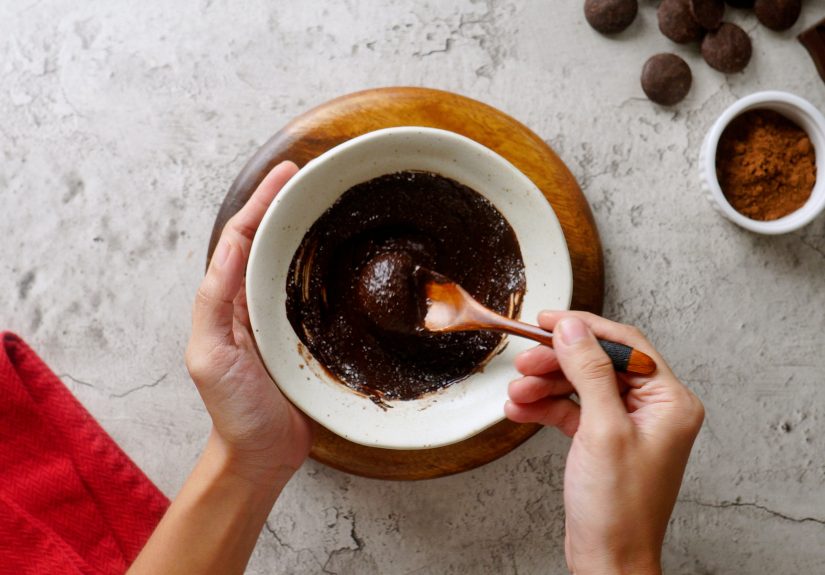
Blooming cocoa is a simple trick: mix cocoa powder with a hot liquid (or melted fat) to dissolve clumps and
intensify chocolate flavor. It also helps cocoa disperse evenly, reducing dry pockets in your finished bake.Quick blooming method:
- Put the cocoa powder in a bowl.
- Add a small amount of hot water or hot coffee (or melted butter/oil).
- Whisk until it forms a smooth paste, then let sit 30–60 seconds.
- Add that paste to your batter where the recipe includes liquid or melted fat.
For many recipes, 1–2 tablespoons hot liquid per 3 tablespoons cocoa is enough to form a paste.
Coffee deepens chocolate flavor without making your dessert taste like a latte (unless you really go for it). -
Step 7: Adjust Liquids and Mixing (Because Cocoa Is Thirsty)
Cocoa powder absorbs moisture aggressively. That can be great for a fudgy brownie, but not so great if your cake turns out dry.
When swapping in cocoa, watch batter consistency:- If the batter seems thicker than usual, add a tablespoon or two of liquid (milk, water, coffee) until it looks right.
- If the dough seems dry (cookies), add a small splash of milk or an extra teaspoon of oiltiny changes matter.
- Sift cocoa if it’s clumpy, or bloom it (Step 6) to avoid stubborn lumps.
The goal is to keep the recipe’s original “feel.” If the recipe author describes the batter as “pourable,” yours should be pourable.
If it’s “thick but spreadable,” you should be in that neighborhoodnot cement-adjacent. -
Step 8: Check Leavening (Natural Cocoa Is Acidic; Dutch-Process Isn’t)
Here’s where a lot of substitutions go sideways. Cocoa can influence rise and flavor depending on leaveners:
- Baking soda needs acid to react. Natural cocoa brings acidity, which can help the reaction.
- Dutch-process cocoa is alkalized and doesn’t provide the same acidity, so soda-based recipes may rise less effectively.
In many recipes that already contain acidic ingredients (buttermilk, yogurt, sour cream, vinegar), the swap is more forgiving.
But if your recipe relies heavily on baking soda and doesn’t have other acidic ingredients, using natural cocoa is usually safer.If you’re forced to swap cocoa types, a common “starting point” adjustment is shifting some leavening from baking soda to baking powder
but results vary by recipe. When in doubt, prioritize matching the cocoa type the recipe expects, especially for cakes. -
Step 9: Taste, Tweak, and Troubleshoot Like a Calm Person (Even If You’re Not One)
Cocoa substitutions are part science, part “know your recipe.” After baking, use the results to adjust next time:
- Too dry? Add a touch more fat next time (or slightly more liquid), and consider blooming cocoa.
- Not sweet enough? Increase sugar modestly or add a sweeter frosting/topping.
- Chocolate flavor feels flat? Add a pinch of salt, a splash of vanilla, or a teaspoon of espresso powder.
- Texture feels heavy? Check leavening and avoid overmixingcocoa-heavy batters can get dense if worked too much.
Pro tip: if a recipe uses a lot of melted chocolate for structure (certain brownies, dense cakes), replacing all of it with cocoa can noticeably change texture.
In those cases, a “partial swap” often works best: replace half with cocoa + fat, and keep half as chocolate if you have any on hand.
Quick Cocoa-to-Chocolate Cheat Sheet
| Recipe Calls For | Substitute Using Cocoa Powder | Notes |
|---|---|---|
| 1 oz unsweetened baking chocolate | 3 Tbsp unsweetened cocoa + 1 Tbsp melted butter/oil/shortening | Most reliable cocoa-based swap for baking |
| 1 oz semisweet/bittersweet chocolate | 3 Tbsp cocoa + 1 Tbsp fat + 1–3 Tbsp sugar | Sweetness varies by brand; choose your target |
| 4 oz sweet baking chocolate | 1/4 cup cocoa + 1/3 cup sugar + 3 Tbsp shortening (or butter/oil) | Good for cakes and bars; taste is milder and sweeter |
| Chocolate for frosting | Cocoa + hot water (bloom) + butter + sugar | Blooming boosts flavor and smoothness |
| Chocolate chips for “chunks” | Not a direct cocoa swap | Cocoa can flavor the dough, but won’t create melty pockets |
Worked Examples You Can Copy
Example 1: Replacing 2 oz Unsweetened Chocolate in Brownies
Your recipe needs 2 oz unsweetened baking chocolate. Substitute:
- 6 Tbsp unsweetened cocoa powder
- 2 Tbsp melted butter (or neutral oil/shortening)
Mix into a paste (bloom with a tablespoon or two of hot water or coffee if the recipe allows), then add where the chocolate would have melted in.
If the batter looks thicker than normal, add 1–2 tablespoons liquid.
Example 2: Replacing 3 oz Semisweet Chocolate in a Cake
Start with:
- 9 Tbsp cocoa powder
- 3 Tbsp melted butter/oil
- 3–6 Tbsp sugar (depending on how sweet the original chocolate was and how sweet the cake is overall)
If the cake is already sweetened heavily (frosted layer cake), stay on the lower sugar end.
If it’s a snacking cake with minimal frosting, bump sweetness slightly.
Where Cocoa Substitution Works Best (and Where It Doesn’t)
Best uses
- Brownies and bars (especially fudgy styles)
- Chocolate cakes (especially when cocoa is bloomed)
- Cookies where chocolate is meant to flavor the dough
- Frostings, glazes, sauces (easy to taste and adjust)
- Hot chocolate and pudding (Dutch-process dissolves especially smoothly)
Not ideal
- Chocolate chips/chunks (you’ll lose melty pockets and texture contrast)
- Ganache, truffles, tempered decorations (cocoa powder can’t replicate melt-and-set behavior)
- Candy-making where chocolate structure is the whole point
FAQ: Cocoa as a Chocolate Substitute
Can I use hot cocoa mix instead of cocoa powder?
Not for a clean substitution. Hot cocoa mix is usually sweetened and may include milk powder, thickeners, and flavorings.
It changes sugar levels, dairy content, and texture.
If it’s your only option, reduce added sugar in the recipe and expect the results to vary.
Natural or Dutch-process: which is better for substituting chocolate?
Both can work, but match your recipe’s leavening.
Natural cocoa is a safer bet in baking-soda-driven recipes; Dutch-process often shines in darker-colored cakes, sauces, and drinks.
When flavor is the main goal (not rise), choose based on the taste you prefer: brighter vs. smoother.
Why does my cocoa-based bake taste bitter?
Cocoa is concentrated. Add a small pinch of salt, a bit more sugar, and consider blooming the cocoa (Step 6).
Also, some cocoas are naturally more intense; switching brands can genuinely change flavor.
Real-World Kitchen Experiences: of Cocoa Lessons (So You Don’t Learn Them the Hard Way)
The first time you use cocoa powder as a substitute for chocolate, it feels a little like doing a magic trick with a deck of cards you found under the couch.
Technically it’s a deck, but you’re not entirely confident it’s a full deck. That’s the cocoa situation in a nutshell:
cocoa powder can deliver serious chocolate flavor, but it won’t automatically deliver the richness and texture you expect from melted chocolate.
One common “aha” moment is realizing that cocoa powder isn’t just flavorit’s structure. Add cocoa without adjusting anything else and your batter can suddenly look thicker,
stiffer, and less forgiving. That’s cocoa absorbing moisture and acting like it pays rent. If you’ve ever mixed a cocoa-heavy batter and thought,
“Why does this feel like I’m stirring artisanal sidewalk paste?” you’re not alone. The fix is usually simple: bloom the cocoa, then add a splash of liquid
or an extra teaspoon of fat until the batter returns to the consistency the recipe promised you.
Another real-life lesson: sweetness is personal, and “semisweet” is basically a vibe. Two brands of semisweet chocolate can taste noticeably different,
so your cocoa-and-sugar rebuild should be treated as a starting point, not a law. When the recipe allows tasting (like frosting or sauce), you can dial it in quickly:
add sugar slowly, whisk well, taste again, and stop when you hit “chocolatey” instead of “chocolate-flavored sugar.”
For baked batters you can’t safely taste, the safest move is to stay slightly less sweet and let your toppings do the talking
a dusting of powdered sugar, a drizzle of glaze, or even a scoop of ice cream can correct sweetness without rewriting the entire bake.
Then there’s the leavening surprise. Sometimes your cake rises beautifully; sometimes it looks like it lost motivation halfway through.
Cocoa type can be part of that story. If you swap in Dutch-process cocoa where a recipe needs natural cocoa’s acidity to activate baking soda,
the rise may be weaker. On the flip side, using natural cocoa where the recipe expects Dutch can add a sharper edgegreat if you like bold chocolate,
not so great if you wanted smooth and mellow. The practical takeaway: if the recipe is finicky (layer cakes, cupcakes, anything meant to be fluffy),
match the cocoa type and don’t freestyle the chemistry unless you enjoy edible science experiments.
Finally, there’s the “texture expectation” lesson: cocoa substitutions are excellent for chocolate flavor, but they don’t create chocolate pockets.
If you try to replace chocolate chips with cocoa powder, you’ll get a chocolate cookie, yesbut you won’t get the little molten surprises.
That’s not failure; it’s just a different cookie with different goals. If you embrace that, cocoa becomes a powerful pantry tool:
you can still make a rich, satisfying dessert without a last-minute grocery run, and you’ll feel like the kind of person who wins bake sales
with ingredients they found in the back of a cabinet.
Conclusion
Using cocoa as a chocolate substitute isn’t a desperate compromiseit’s a smart, flexible baking move when you do it intentionally.
Identify the chocolate type, rebuild the missing fat (and sugar when needed), bloom for deeper flavor, watch moisture, and respect leavening chemistry.
Do those things, and your dessert won’t taste like you “made do.” It’ll taste like you meant it.