Table of Contents >> Show >> Hide
- Before You Start: Set Your Betta Up for Success
- 10 Steps to Train Your Betta Fish
- Step 1: Build trust and get your betta comfortable with you
- Step 2: Associate your finger with food
- Step 3: Teach your betta to follow your finger
- Step 4: Introduce a training target or pointer
- Step 5: Teach your betta to “come here” on cue
- Step 6: Train your betta to eat from your hand
- Step 7: Teach your betta to jump
- Step 8: Add a hoop or obstacle for your betta to swim through
- Step 9: Practice flaring and confidence-building tricks (gently)
- Step 10: Keep sessions short, fun, and consistent
- Extra Tips for Happy, Trainable Bettas
- Real-Life Experiences: What Betta Owners Learn Over Time
- Conclusion
If you’ve ever watched your betta fish staring at you like a tiny, judgmental dragon, you’ve probably wondered: “Can I actually train this little guy… or is he just plotting my demise?” Good news: bettas are surprisingly smart, easy to train, and absolutely capable of learning fun tricks when you use the right approach, timing, and rewards. Training your betta isn’t just a party trick either it’s a great way to keep your fish mentally stimulated, reduce boredom, and strengthen the bond between you and your finned roommate.
Below is a step-by-step guide inspired by the classic wikiHow format, plus real advice from betta keepers, veterinarians, and fish behavior experts. You’ll learn how to create the right environment, build trust, and teach simple tricks like following your finger, swimming through a hoop, and even jumping for treats.
Before You Start: Set Your Betta Up for Success
1. Make sure the tank and water conditions are right
No amount of training will work if your betta feels lousy. A stressed or sick fish isn’t going to jump through hoops literally or figuratively. Bettas need:
- A properly sized tank: At least 5 gallons is recommended so your betta has room to explore and swim naturally. Small bowls or cups restrict movement and can increase stress.
- Heater and filter: Bettas are tropical fish. Keep the water around 76–82°F (24–28°C) with a stable heater and use a gentle filter so the current doesn’t push your fish around.
- Clean, conditioned water: Use a water conditioner to remove chlorine and chloramine. Perform regular partial water changes to keep ammonia, nitrites, and nitrates in a safe range.
- Soft decorations and plants: Live or silk plants, caves, and hides make your betta feel safe. Avoid sharp plastic decorations that can snag fins.
- A lid on the tank: Bettas can jump and training often involves encouraging that behavior so a cover is a must.
Watch for early signs of stress or illness like clamped fins, dull color, hiding all the time, or refusing food. If your betta looks off, pause training and focus on health first.
2. Choose the right treats and feeding schedule
Training runs on one main fuel: food. Your betta will work harder when rewards are tasty and consistent.
- Use high-value treats: Betta pellets are great for everyday feeding, but save special favorites like frozen or live brine shrimp, daphnia, or bloodworms for training rewards.
- Avoid overfeeding: Bettas have tiny stomachs. Keep training sessions short and limit the total amount of food, especially in small tanks where leftover food can foul the water.
- Feed on a schedule: Consistent feeding times help your betta anticipate routines and be more alert and responsive when you start a session.
Think of treats the way you’d think of candy for kids: powerful, fun, and best used in small amounts to encourage good behavior.
10 Steps to Train Your Betta Fish
Step 1: Build trust and get your betta comfortable with you
Before jumping into tricks, spend a few days just hanging out with your betta. Sit near the tank, move calmly, and talk softly. Stand in the same spot around feeding time so your fish learns to associate you with food.
Signs your betta is starting to trust you include:
- Swimming toward the front of the tank when you approach
- Following your movements along the glass
- Displaying natural curiosity instead of hiding
Once your betta reliably comes to see you, it’s time to start simple training.
Step 2: Associate your finger with food
This is the foundation of most tricks. You want your betta to think, “Finger = snacks.”
- Place your finger gently against the glass in front of the betta.
- When your fish swims toward your finger, immediately drop a pellet or small treat near them.
- Repeat this a few times per session, once or twice a day.
Over time, your betta will start swimming toward your finger as soon as it appears. Once that happens consistently, you can make things a bit more interesting.
Step 3: Teach your betta to follow your finger
Now that your finger is officially The Food Signal, you can turn it into a moving target.
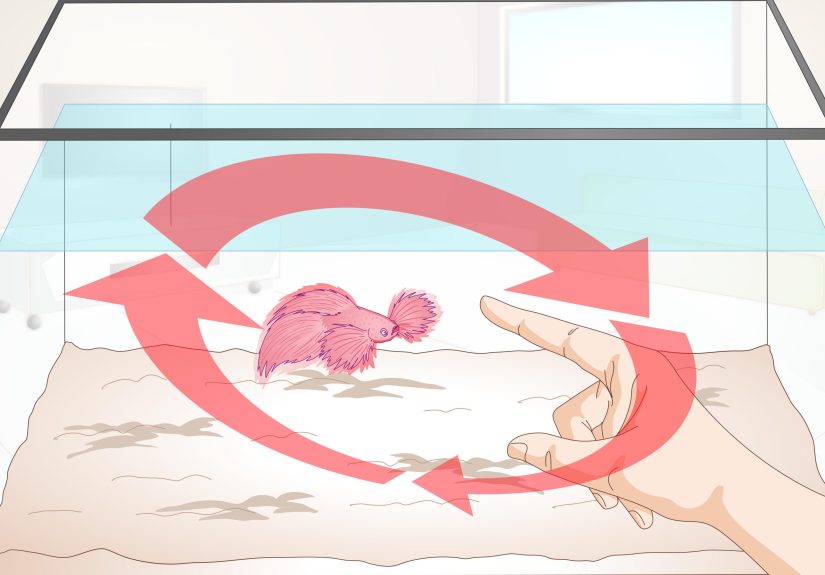
- Place your finger on the glass and wait for your betta to approach.
- Slowly slide your finger sideways along the glass.
- If your betta follows even a little, reward immediately with a treat.
- Repeat, gradually increasing the distance and changing directions.
Keep sessions short around five minutes so your betta doesn’t lose interest. After a week or so, many bettas will happily “chase” your finger around the tank like a tiny, floating puppy.
Step 4: Introduce a training target or pointer
Once your betta follows your finger, you can switch to a dedicated target like a small plastic stick, the end of a feeding tong, or even a colored straw (make sure it’s aquarium-safe and clean).
- Hold the target near the glass and wait for your betta to investigate.
- Reward any movement toward the target at first.
- Gradually require your betta to get closer or tap the target before giving a treat.
Using a separate target makes it easier to teach more complex tricks later, like swimming through hoops or following an obstacle course.
Step 5: Teach your betta to “come here” on cue
Now you can add a verbal cue, like “come” or even your betta’s name (yes, you should absolutely name your fish).
- Say your chosen cue, then immediately place your finger or target near the glass where you want your betta to go.
- When they swim to that spot, reward them.
- Repeat many times so your fish links the word + the visual cue + the treat.
After enough repetition, your betta may start responding to the word and movement together, swimming over whenever called. It’s like having a very tiny, very wet dog.
Step 6: Train your betta to eat from your hand
Hand-feeding is both adorable and practical. It helps you monitor how much your betta eats and makes training even easier.
- Wash your hands thoroughly with water only (no soap residue!).
- Hold a pellet or small treat between your fingers, just below the water’s surface.
- Use your other hand or a verbal cue to get your betta’s attention.
- When your betta swims up and takes the food, reward by praising (yes, praise your fish) and repeating the process.
Some bettas are bold and will grab food from your fingers right away. Others may need a few days to build up the confidence. Be patient no sudden movements, no tapping, and no teasing.
Step 7: Teach your betta to jump
Jumping is one of the most impressive tricks, but it must be done safely.
- Lower the water level slightly so your betta can’t accidentally launch out of the tank.
- Make sure you have a lid on the tank when you’re not actively training.
- Hold a treat just above the water’s surface not too high at first.
- Use your cue word or target to bring the betta under the treat.
- Wait. Most bettas will eventually give a little hop to reach the food.
- As soon as they jump, let them grab the treat and reward with a calm voice and another small bite.
As your betta gets more confident, you can raise the treat slightly higher but not so high that they might hurt themselves. Remember, the goal is a cute trick, not a gold medal in the Fish Olympics.
Step 8: Add a hoop or obstacle for your betta to swim through
There are betta training rings and hoops sold online, or you can DIY a small hoop from a clean, flexible plastic ring. Make sure there are no sharp edges.
- Start by holding the hoop in the water with your betta’s favorite treat just beyond it.
- Use your target or finger to guide your fish toward the hoop.
- At first, reward even if they only come close to the hoop.
- Gradually wait to reward until your betta at least partially swims through the ring.
Over time, your fish will figure out that swimming through the hoop equals snack time. Once the behavior is solid, you can combine it with jumping or following your finger for an underwater agility routine.
Step 9: Practice flaring and confidence-building tricks (gently)
Bettas naturally flare their gills and fins to look bigger, usually in response to another betta, a reflection, or something that piques their curiosity. Controlled flaring for short periods can act like exercise, helping strengthen their fins and muscles.
- Use a safe trigger like a betta training mirror or your target object.
- Expose your betta to the trigger for just a few minutes at a time.
- Stop if your betta seems overly stressed, hides, or shows stripes of fear rather than bold color.
The goal is gentle stimulation, not a constant showdown. Think “short workout” instead of “24/7 boxing match.”
Step 10: Keep sessions short, fun, and consistent
Fish have short attention spans. A few key rules make training more effective:
- 5–10 minutes per session: That’s usually enough for one fishy brain.
- Train once or twice a day: Consistency matters more than marathon sessions.
- End on a win: Finish after a successful trick so your betta associates training with positive experiences.
- Watch for signs of stress: If your betta hides, clamps its fins, loses interest in food, or acts lethargic, stop and give them a break.
If you’re patient, gentle, and generous with praise (and snacks), your betta will learn faster than you expect.
Extra Tips for Happy, Trainable Bettas
Provide enrichment beyond training
Your betta’s whole environment should encourage natural behavior and curiosity. Between training sessions, try:
- Floating toys or betta balls to nudge around
- Live or silk plants that create interesting spaces to explore
- Occasional live food to “hunt” in the tank
- Rotating decorations so the tank setup feels new and stimulating
A busy, enriched betta is more confident and easier to train than one that spends all day staring at a bare tank wall.
Know when not to train
Skip training if your betta is:
- Recovering from illness or injury
- Newly introduced to the tank and still adjusting
- Showing signs of stress, like rapid breathing, dull color, or constant hiding
Just like you probably don’t want to learn new skills with a fever, your fish needs to feel secure and healthy in order to learn.
Real-Life Experiences: What Betta Owners Learn Over Time
Seasoned betta keepers will tell you that every fish has a personality. Some are bold little extroverts who start following your finger on day one. Others are shy, suspicious, and take weeks to warm up. The magic is in paying attention to your individual fish and adjusting your approach.
Patience pays off
One common experience among owners is that the first couple of days feel like nothing is happening. The fish just stares, or swims away, or ignores the treat completely. Then, almost overnight, it seems to “click.” The betta suddenly starts racing toward your finger, jumping for food, or zipping through a hoop as if they’ve been doing it their whole life.
This isn’t random. Behind the scenes, your fish is slowly building associations: you appear, good things happen; the finger moves, snacks appear; that strange plastic ring means something tasty is on the other side. Once all those associations stack up, the behavior blossoms.
Each betta has a favorite trick
Some bettas are obsessed with jumping. Others would rather chase your finger around than swim through a hoop. Many love hand-feeding because it puts them right up front and center, where all the attention is.
Long-time betta owners often end up designing custom “training games” based on what their fish clearly enjoys. If your betta loves following a target, you might create a mini obstacle course. If they’re a jumper, you can vary height and direction, always staying within safe limits.
Training deepens the bond
Ask any betta hobbyist who trains regularly and they’ll tell you: the relationship feels different. Your fish doesn’t just sit in the background like living decor. Instead, they become an interactive part of your day. They rush to the glass when you walk in, “beg” at feeding time, and seem genuinely engaged when you pull out the training target.
That sense of connection is rewarding for you, but it’s also good for your betta’s well-being. Mental stimulation reduces boredom, and regular interaction makes it easier to catch signs of illness early, because you know what “normal” looks like for your fish.
What experienced keepers wish beginners knew
- Small bowls are out, proper tanks are in: Many people start with tiny bowls and later realize their betta becomes far more active and responsive in a heated, filtered tank.
- Water quality is everything: The fastest way to ruin a good training streak is cloudy water or high ammonia. Simple weekly water changes can make a huge difference.
- Short, fun sessions beat long, stressful ones: Five minutes of focused, positive training is better than twenty minutes of confusing, frustrating drills.
- Not every day has to be a “circus show”: Some days, your betta will be tired or moody. It’s okay to just feed, observe, and try again tomorrow.
Using pictures and props to inspire your routine
If you browse photos and videos of trained bettas online, you’ll see plenty of creative ideas: fish pushing tiny balls, weaving between posts, jumping through colored rings, or even “posing” near decorations for the perfect snapshot. Use those images as inspiration, not pressure.
Start simple: a finger to follow, a hoop to swim through, a jump to earn a treat. Take progress pictures as you go not just for social media, but as a reminder of how far your little fish has come from that first shy day in the tank.
Conclusion
Training your betta fish is more than a fun party trick; it’s a way to give a small, intelligent animal a richer, more interesting life. With the right tank setup, a calm and consistent routine, and a pocket of tasty treats, your betta can learn to follow your finger, eat from your hand, swim through hoops, and even jump on command.
Most importantly, the process turns a “pet in a tank” into a tiny companion with a personality you’ll get to know over time. Once you’ve seen your betta eagerly swim over the moment you walk into the room, you’ll never think of them as “just a fish” again.