Table of Contents >> Show >> Hide
- Why This Conversation Matters
- How to Tell Your Parents You Have an Eating Disorder: 14 Steps
- 1. Be honest with yourself first
- 2. Pick the safest parent or caregiver to start with
- 3. Choose a calm time, not a chaotic one
- 4. Decide on your main message in one or two sentences
- 5. Write it down if talking feels impossible
- 6. Use direct language instead of hints
- 7. Describe behaviors and feelings, not just appearance
- 8. Tell them what kind of help you want
- 9. Expect mixed reactions and do not panic
- 10. Bring information if you think they will minimize it
- 11. Use another trusted adult if home feels unsafe or unhelpful
- 12. Have a next-step plan ready before the conversation ends
- 13. Keep the conversation going after day one
- 14. Get urgent help right away if you are in immediate danger
- What to Say: Simple Scripts That Actually Help
- If Your Parents Say the Wrong Thing
- Common Mistakes to Avoid
- Experiences People Commonly Have When Telling Their Parents
- Final Thoughts
- SEO Tags
Telling your parents you have an eating disorder may feel harder than algebra, taxes, and assembling furniture without the instructions combined. It is deeply personal, scary, and easy to postpone. You might worry they will overreact, underreact, blame themselves, blame you, or say something so awkward it deserves its own reality show. But here is the truth: keeping silent usually makes eating disorder symptoms heavier, lonelier, and harder to treat.
If you are wondering how to tell your parents you have an eating disorder, this guide will help you do it with honesty, clarity, and a plan. Eating disorders are serious mental health conditions, not phases, attention-seeking, vanity, or “bad habits.” They can affect people of any size, gender, age, and background. That matters because many young people delay speaking up when they think they do not “look sick enough.” You do not need to hit some imaginary level of suffering before asking for help. Struggling is enough.
This article walks you through 14 practical steps, plus scripts, examples, and a longer section about common experiences people have when opening up to family. The goal is simple: help you start the conversation, survive the awkwardness, and move one step closer to real support.
Why This Conversation Matters
Eating disorders often thrive in secrecy. The less people know, the easier it is for harmful routines, obsessive thoughts, food rules, guilt, and body image distress to keep running the show. Many people also live with anxiety, depression, perfectionism, shame, or a need for control at the same time. That is one reason speaking up can feel so difficult. Another reason is that parents do not always notice the full picture. Some teens and young adults hide symptoms well. Others are struggling even though their body size has not changed much.
The good news is that early support can make a real difference. A conversation with your parents does not have to be perfect to be useful. It just has to happen. Think of it less as delivering a flawless speech and more as opening a door that has been stuck shut for way too long.
How to Tell Your Parents You Have an Eating Disorder: 14 Steps
1. Be honest with yourself first
Before you tell your parents, name what is happening as clearly as you can. Maybe you know you have been restricting food, binge eating, purging, obsessively exercising, hiding food, skipping meals, panicking around eating, or feeling consumed by your weight and body image. Maybe you do not have a diagnosis yet. That is okay. You do not need to arrive with a medical label taped to your forehead like a sad little name tag. You only need to say, “Something is wrong with my relationship with food, eating, or my body, and I need help.”
2. Pick the safest parent or caregiver to start with
If you have two parents, you do not necessarily need to tell both at the exact same moment. Start with the person who is most likely to listen, stay calm, and take action. That could be your mom, dad, stepparent, grandparent, guardian, or another trusted adult in the family. Sometimes the best first conversation is not with the loudest person in the house, but with the one most likely to hear what you are actually saying.
3. Choose a calm time, not a chaotic one
Timing matters. Try not to bring it up during a rushed morning, a family fight, a holiday dinner, or five minutes before someone has to leave for work. Pick a private moment when there is time to talk and breathe. A quiet evening, a drive, a walk, or a moment at home without distractions can help. The point is not to create a movie-perfect scene. It is to reduce the chances that stress hijacks the conversation before it begins.
4. Decide on your main message in one or two sentences
When people are anxious, they often either say too little or start explaining everything since the dawn of time. It helps to boil your message down to one clear opener. For example:
“I need to tell you something serious. I think I have an eating disorder, and I need help.”
Or:
“I’ve been struggling with food and my body in a way that feels out of control, and I don’t want to handle it alone anymore.”
That is enough to get the truth into the room.
5. Write it down if talking feels impossible
You do not have to say everything perfectly out loud. Many people start with a note, text message, email, or voice memo. Writing can help you say the hard part without bailing halfway through the sentence. If you want, hand your parent a letter and stay nearby while they read it. If that feels easier, write the note first and then talk afterward. Communication is communication; it does not only count if it comes out in a brave, steady voice with dramatic background music.
6. Use direct language instead of hints
Parents may miss vague clues like “I’ve been stressed” or “Eating has been weird.” If you want support, aim for clear language. Say “eating disorder,” “bingeing,” “purging,” “restricting,” “fear around food,” or “obsessive thoughts about weight and calories” if those words fit your experience. Being direct can feel terrifying, but it also reduces misunderstanding. Clarity is kind, especially when the subject is serious.
7. Describe behaviors and feelings, not just appearance
Many parents mistakenly think an eating disorder is only obvious if someone looks extremely thin. That is not true. Explain what has been happening on the inside and in daily life. You might mention that you feel anxious around meals, hide food wrappers, eat in secret, avoid eating with others, count calories constantly, feel guilty after eating, use exercise to “earn” food, or spend hours thinking about body shape. The more specific you are about behaviors and emotional distress, the easier it is for them to understand that this is not about vanity. It is affecting your health and your life.
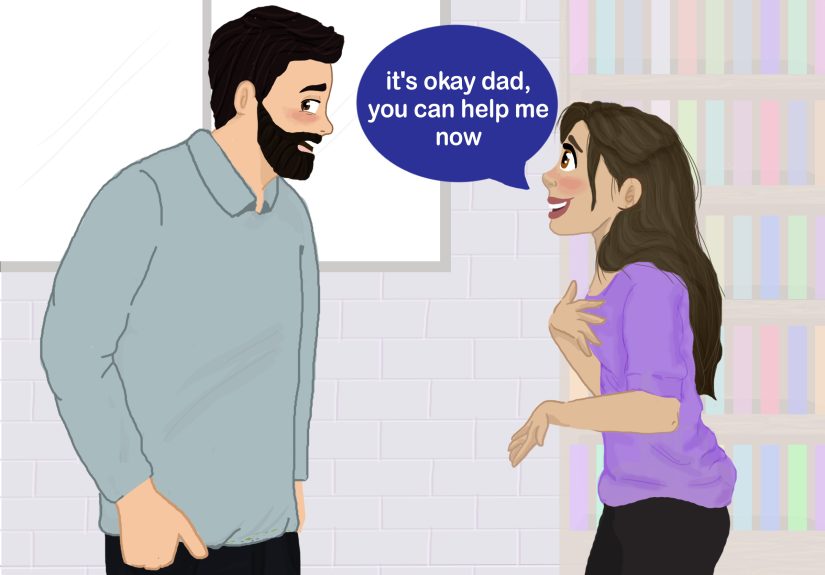
8. Tell them what kind of help you want
Parents often do better when they have a job to do. If possible, tell them what support would help right now. You might ask them to schedule a doctor’s appointment, help you find a therapist who understands eating disorders, sit with you during meals, remove triggering diet talk at home, or simply listen without lecturing. Specific requests give the conversation somewhere to go.
9. Expect mixed reactions and do not panic
Your parents might respond with concern, tears, denial, confusion, guilt, too many questions, or silence so long you start noticing the clock tick like it is auditioning for a thriller. A messy first reaction does not always mean a bad outcome. Sometimes parents react poorly in the moment because they are scared. If that happens, return to your point: “I’m telling you because I need support, not because I have everything figured out.” Try not to measure the future of your recovery by their first five minutes.
10. Bring information if you think they will minimize it
Some parents understand mental health quickly. Others need help getting there. If you are worried they will say, “You’re fine,” “Just eat normally,” or “Everyone feels weird about food sometimes,” bring a few facts from reputable health organizations or write down why this feels serious. You are not trying to win a debate trophy. You are helping them see that eating disorders are real medical and mental health conditions that deserve evaluation and care.
11. Use another trusted adult if home feels unsafe or unhelpful
If you genuinely cannot tell your parents first, tell someone else immediately: a school counselor, doctor, therapist, coach, relative, teacher, college advisor, clergy member, or close friend’s parent. Ask that adult to help you speak to your parents or connect you with care. Needing backup does not mean you are dramatic. It means you are being smart.
12. Have a next-step plan ready before the conversation ends
Do not let the talk become a sad, emotional cloud that floats away by tomorrow morning. Before it ends, agree on one concrete next step. That might be calling your pediatrician, family doctor, therapist, campus health center, or an eating disorder treatment provider. Write it down. Pick a day. If possible, schedule it while everyone is still sitting there. Momentum matters.
13. Keep the conversation going after day one
Telling your parents once is the beginning, not the finish line. You may need follow-up talks about meals, treatment, boundaries, school stress, comments about bodies, or what support feels helpful versus unhelpful. You are allowed to say, “Please don’t comment on my plate,” or “What helps most is asking how I’m feeling, not what I ate.” Recovery conversations are often repetitive. That is normal. Healing is rarely one dramatic speech and then instant peace, inner wisdom, and a glowing soundtrack.
14. Get urgent help right away if you are in immediate danger
If you are fainting, having chest pain, vomiting blood, feeling severely weak, thinking about suicide, or worried you may hurt yourself, this is an emergency. Tell an adult immediately, call emergency services, go to the nearest emergency room, or in the U.S. call or text 988 for urgent mental health support. You do not need to wait until your “real conversation” happens. Safety comes first.
What to Say: Simple Scripts That Actually Help
If your brain turns to mashed potatoes the second someone says, “What’s wrong?” try one of these:
Script 1: “I’m having a hard time with eating and my body image, and I think I need professional help.”
Script 2: “This is hard to say, but I think I may have an eating disorder. I don’t want to keep hiding it.”
Script 3: “I’ve been restricting and obsessing about food, and it’s affecting me mentally. I need you to take this seriously.”
Script 4: “I’m scared to tell you this because I don’t want to disappoint you, but I’ve been struggling and I need support.”
Script 5: “I don’t need you to fix everything tonight. I just need you to listen and help me find the right kind of help.”
If Your Parents Say the Wrong Thing
Sometimes parents love their kids and still say wildly unhelpful things on the first try. If they respond with denial, minimization, or panic, you can use calm, firm replies:
If they say: “You don’t look like you have an eating disorder.”
You can say: “Eating disorders don’t always look obvious from the outside. I’m telling you because I’m struggling.”
If they say: “Just eat more” or “Just stop doing that.”
You can say: “If it were that simple, I wouldn’t be asking for help. This is affecting my mental health too.”
If they say: “Why didn’t you tell us sooner?”
You can say: “I was ashamed and scared. I’m telling you now because I want support.”
If they start blaming themselves:
You can say: “I’m not telling you this to blame anyone. I’m telling you because I want help moving forward.”
Common Mistakes to Avoid
First, do not wait until things feel “bad enough.” Second, do not assume that because your symptoms look different from someone else’s, they are less serious. Third, do not turn the conversation into a debate about weight, appearance, or whether you are “really sick.” Fourth, do not disappear after telling them. Follow up. Ask for appointments. Keep going. Finally, do not let embarrassment make decisions for you. Shame is loud, but it is not wise.
Experiences People Commonly Have When Telling Their Parents
Many people imagine this conversation will unfold in one of two ways: either their parents will instantly understand and transform into perfectly calm support experts, or the whole thing will go so badly that everything gets worse forever. Real life is usually more awkward and more hopeful than either extreme.
One common experience is rehearsing the conversation for days or weeks and then saying only one sentence when the moment finally comes. Someone might plan a detailed explanation but end up blurting out, “I think I have a problem with eating.” That does not mean the conversation failed. In many cases, that single sentence is the turning point. The hard part is not sounding polished. The hard part is breaking secrecy.
Another common experience is feeling relief and embarrassment at the same time. A person may cry the second they start talking, or they may laugh nervously because their body is trying to survive the stress. Some feel weirdly guilty for “causing trouble” even though they are asking for the exact kind of help people deserve when they are sick. That emotional mix is normal. Relief does not cancel out fear, and fear does not mean you should stay silent.
Some parents respond better than expected. A teen may spend months convinced that a parent will be angry, only to hear, “Thank you for telling me.” Other parents react with confusion first and support later. They may ask clumsy questions, focus too much on food, or try to solve everything immediately. Often, what looks like control is actually fear in a bad outfit. Over time, many families get better at talking once they understand what the disorder is and what recovery really needs.
There are also people whose parents minimize the problem at first. That can feel crushing. But even then, the story does not have to end there. Many people go on to get help through another adult, a physician, a school counselor, a therapist, or a relative who takes the lead. In those cases, the first conversation with parents may not be the most successful one, but it still matters because it marks the moment the secret stops running the whole show.
A lot of people also discover that telling their parents is not one conversation but a series of conversations. The first talk may be about admitting there is a problem. The second may be about making an appointment. The third may be about what comments at home feel triggering. The fourth may be about setbacks, meal support, or treatment options. That is frustrating if you were hoping for one brave speech and then immediate emotional peace, but it is also realistic. Families learn in layers.
Perhaps the most important shared experience is this: many people look back later and say the conversation they dreaded most became the conversation that started recovery. Not because it was elegant. Not because no one cried. Not because every word landed perfectly. But because honesty made support possible. And that is often how healing begins: not with certainty, but with one truthful sentence spoken out loud.
Final Thoughts
If you have been searching for how to tell your parents you have an eating disorder, chances are you already know something is not right. Trust that instinct. You do not need to wait for the struggle to become more visible, more dramatic, or more dangerous before you deserve help. Start where you are. Pick one trusted person. Use clear words. Ask for one next step. And remember: telling the truth about your pain is not a burden. It is a brave move toward care, safety, and recovery.