Table of Contents >> Show >> Hide
- The Short Answer: Look for a Gentle Jiggle, Not a Full-On Wobble
- Three Reliable Ways to Tell if Cheesecake Is Done
- What a Done Cheesecake Looks Like
- What an Underdone Cheesecake Looks Like
- What an Overbaked Cheesecake Looks Like
- Why Cheesecake Keeps Setting After It Leaves the Oven
- Should You Use a Toothpick or Knife Test?
- Why Cooling Matters Almost as Much as Baking
- Common Mistakes That Make Doneness Harder to Judge
- What About Mini Cheesecakes, Basque Cheesecake, and No-Bake Cheesecake?
- What to Do If You Are Still Not Sure
- The Best Rule of Thumb for Cheesecake Doneness
- Kitchen Stories: What Bakers Learn After a Few Cheesecake Misadventures
- Final Thoughts
Cheesecake has a cruel little sense of humor. Pull it too early, and the middle is basically sweet cream cheese soup wearing a crust as a disguise. Leave it in too long, and it goes from luscious to dry, cracked, and vaguely offended. That is why so many bakers squint through the oven door like they are reading tea leaves, asking the eternal question: Is this thing done, or is it bluffing?
The good news is that baked cheesecake is not actually a mystery. It follows a few reliable doneness signs, and once you know what to look for, you can stop poking it like a science experiment. The best cheesecake does not bake until it is fully firm like a pound cake. It should be set around the edges, slightly soft in the center, and finished with patience rather than panic.
In this guide, we will break down exactly how to tell if your cheesecake is done, what visual cues matter most, when to use a thermometer, what overbaking looks like, and how to cool it without turning the top into the Grand Canyon. We will also get into the very real emotional journey of baking cheesecake, because no dessert inspires false confidence quite like this one.
The Short Answer: Look for a Gentle Jiggle, Not a Full-On Wobble
If you remember only one thing, remember this: a baked cheesecake should be set around the edges and slightly jiggly in the center. Not liquid. Not sloshy. Not rippling from edge to edge like a dairy earthquake. Just a small, soft movement in the middle.
That soft jiggle is a good sign because cheesecake is a custard-based dessert. Custards continue to set from residual heat after they come out of the oven. In other words, your cheesecake is still finishing the job while it cools. If you wait until the center is rock solid in the oven, congratulations, you may have just overbaked it.
This is the difference between a creamy cheesecake and one that tastes like it spent too long thinking about its life choices.
Three Reliable Ways to Tell if Cheesecake Is Done
1. The Jiggle Test
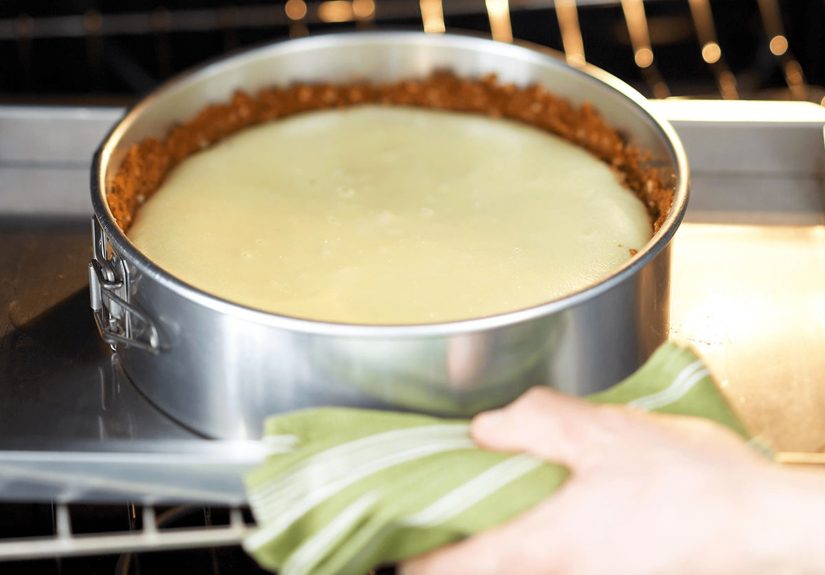
This is the classic method, and for good reason. Open the oven, put on oven mitts, and gently nudge the pan. You are not trying to audition it for a dance competition. Just give it a careful little shake.
If the outer ring looks set and only a small circle in the center moves slightly, your cheesecake is probably done. If the entire surface wobbles, ripples, or looks loose, it needs more baking time. Think of the center as softly trembling, not waving hello.
The jiggle test works especially well for traditional baked cheesecakes, including New York-style cheesecake. It is fast, easy, and does not leave a hole in the middle of your dessert. That last part matters more than you would think when you are trying to serve something elegant and not “rustic because I panicked.”
2. The Gentle Touch Test
If you want a second opinion, lightly touch the center of the cheesecake with a clean fingertip. It should feel mostly set with a little give. You do not want wet batter on your finger, and you do not want the center to cave in like a memory foam mattress.
This method is helpful when the surface looks glossy and you are not sure whether the jiggle is right. A done cheesecake still has some softness, but it should not feel raw.
3. The Temperature Test
If you like certainty, an instant-read thermometer is your best friend. For most standard baked cheesecakes, the center is generally done at around 150°F to 155°F. Some recipes and baking professionals give slightly different numbers depending on where the thermometer is inserted, especially nearer the edge versus the very center, but the low 150s in the middle is a strong rule of thumb.
The downside is simple: a thermometer leaves a small hole. The upside is that it saves you from turning your cheesecake into a guessing game. If you plan to top the cheesecake with whipped cream, berries, chocolate ganache, or caramel, that tiny hole will disappear faster than the first slice at a family gathering.
What a Done Cheesecake Looks Like
A properly baked cheesecake does not announce itself with fireworks. It is subtle. The edges usually look a little puffed, dry, or lightly set. The center may still look slightly shiny, but not wet. If you are baking a plain cheesecake, the top may stay pale. If you are baking a ricotta cheesecake or a Basque-style cheesecake, the color cues will be different, so do not rely on color alone.
Here is what you want to see:
- Edges that look set and stable
- A center that moves slightly when nudged
- No visible liquid on top
- A surface that looks smooth or just barely puffed
- A cheesecake that seems underdone only if you compare it to regular cake
That last point is important. Cheesecake is not a butter cake, and it should not bake like one. If you are waiting for it to behave like a birthday cake, you are about to make it sad.
What an Underdone Cheesecake Looks Like
An underbaked cheesecake usually tells on itself. The whole center may wobble broadly. The surface may ripple when the pan moves. When sliced after chilling, the middle may be loose, sticky, or unable to hold a clean edge. It can also look wet in the center even after hours in the refrigerator.
If your cheesecake still looks genuinely fluid in the middle, it needs more oven time. Give it a few more minutes, check again, and resist the urge to solve the problem with hope. Hope is not a baking method.
What an Overbaked Cheesecake Looks Like
Overbaked cheesecake usually gives you more obvious clues. The top may puff dramatically in the oven, then sink as it cools. Cracks often form across the center or around the edges. The texture can turn dry, grainy, or oddly dense instead of creamy and silky.
If your cheesecake looks completely firm before it even leaves the oven, that is often a warning sign. The center should not be fully rigid when hot. It should finish setting gradually as it cools to room temperature and then chills in the fridge.
Why Cheesecake Keeps Setting After It Leaves the Oven
This is the part that saves a lot of cheesecakes from disaster. Cheesecake is basically a rich custard, and custards continue to cook from retained heat. That means the center you remove from the oven at just the right moment will become smoother and firmer during cooling.
That is why experienced bakers pull cheesecake before it looks completely done. It is not underbaking. It is understanding carryover cooking. It is also the reason your aunt’s “I just bake it until it looks solid” method produces a cheesecake that could double as wall insulation.
Should You Use a Toothpick or Knife Test?
Usually, no. Cheesecake is not the place for the classic cake test. A toothpick or knife can leave a mark, cause cracking, and give confusing results because the filling is naturally creamy. Even a properly baked cheesecake may not give you the neat, dry toothpick you expect from a sponge cake.
If you want a low-mess doneness check, use the jiggle test. If you want precision, use a thermometer. If you want to stab the center and hope for clarity, cheesecake would respectfully prefer that you do not.
Why Cooling Matters Almost as Much as Baking
You can bake a cheesecake correctly and still ruin the top with bad cooling habits. Sudden temperature changes encourage cracking, sinking, and texture problems. That is why many bakers cool cheesecake gradually, sometimes with the oven turned off and the door cracked open, or by letting it rest in the turned-off oven for a while before moving it.
Once it is out, let it cool to room temperature before refrigerating. Then chill it thoroughly, ideally for several hours or overnight. Cheesecake is one of those desserts that rewards restraint. You can technically cut it too soon, but the result is often soft, messy, and not nearly as creamy as it should be.
This dessert believes in boundaries. It wants time alone in the fridge.
Common Mistakes That Make Doneness Harder to Judge
Using Cold Ingredients
Cold cream cheese does not mix well, and cold eggs can make the batter uneven. Lumpy batter bakes inconsistently, which makes doneness harder to read. Room temperature ingredients create a smoother batter and a more predictable bake.
Overmixing the Batter
Too much mixing whips air into the filling. That extra air can cause the cheesecake to puff, rise unevenly, then collapse or crack. Mix until smooth, then stop. Cheesecake likes calm energy.
Skipping the Water Bath When the Recipe Needs One
A water bath helps moderate heat and encourages even baking. It is especially useful for traditional baked cheesecakes that need a creamy, custardy texture. Without it, the edges can cook too quickly while the center lags behind, which makes doneness more difficult to judge and cracks more likely.
Trusting the Timer More Than the Cake
Recipes are guides, not prophecies. Ovens run hot, cool, uneven, and occasionally like they are keeping personal secrets. Start checking near the lower end of the baking time and rely on visual cues, touch, and temperature more than the clock alone.
What About Mini Cheesecakes, Basque Cheesecake, and No-Bake Cheesecake?
Not every cheesecake plays by exactly the same rules.
Mini Cheesecakes
These bake faster and usually need only a slight center jiggle. Because they are smaller, they set more quickly, and overbaking can happen fast.
Basque Cheesecake
This style is intentionally darker on top and softer in the middle. A deeply browned surface is not a problem here. In fact, it is part of the point. The center may look looser than a classic cheesecake, and that is normal.
Ricotta Cheesecake
Ricotta versions can look a little different from cream cheese-heavy cheesecakes. They may bake up lighter and sometimes firmer. Always follow the recipe’s texture cues first.
No-Bake Cheesecake
This one is not judged by oven doneness at all. It is done when it has fully chilled and set in the refrigerator. Different dessert, different drama.
What to Do If You Are Still Not Sure
If your cheesecake is almost there but not quite, give it another 3 to 5 minutes and recheck. If it is clearly sloshy in the center, keep baking in short intervals. If it looks set around the edges and just slightly soft in the center, pull it and let carryover cooking do the rest.
If it cracks anyway, do not spiral. Cheesecake is delicious even when it is cosmetically complicated. Cover the top with sour cream topping, berry sauce, whipped cream, crushed cookies, lemon curd, or salted caramel. Suddenly it is not a flaw. It is a design choice.
The Best Rule of Thumb for Cheesecake Doneness
Here is the practical, real-life version:
Your cheesecake is done when the edges are set, the center has a slight jiggle, and the whole thing looks almost finished but not quite fully firm.
That is the sweet spot. That is where creamy texture lives. That is where cheesecake becomes dessert instead of cautionary tale.
Kitchen Stories: What Bakers Learn After a Few Cheesecake Misadventures
There is a special kind of confidence that appears about 20 minutes after someone puts their first cheesecake in the oven. It usually sounds like this: “This is going great. I totally understand cheesecake now.” That confidence tends to disappear the moment the timer rings and the center still wiggles. Suddenly, even very rational adults begin bargaining with dairy.
One of the most common cheesecake experiences is mistaking “slightly jiggly” for “hopelessly raw.” A lot of home bakers expect the top to look fully firm before they pull it. So they give it ten more minutes. Then another five. Then a tiny bonus stretch “just to be safe.” The cheesecake comes out looking impressive, tall, and noble. An hour later it has a canyon down the middle and the texture of a very expensive sponge. That is usually the day people learn that cheesecake keeps setting after it leaves the oven.
Another very relatable moment happens during cooling. The cheesecake looks perfect, and excitement takes over. You think, “Why wait? It looks ready now.” So you slide a knife through it while it is still warm, and the slice leans sideways like it has had a long day. The center is too soft, the filling sticks to the knife, and suddenly the clean bakery-style wedge you imagined becomes a creamy landslide. It still tastes great, of course, because warm cheesecake is not exactly a tragedy. But it teaches patience in a very sticky way.
Then there is the panic-checking phase. You open the oven door three times in seven minutes. You tap the pan. You stare at the edges. You wonder if the top looks shiny or too shiny. You briefly consider texting a photo to someone who has never baked cheesecake in their life just to get a second opinion. This is normal cheesecake behavior. The trick is learning to trust the signs: set edges, slight center movement, no dramatic slosh.
Many bakers also discover, after one soggy crust, why people get so serious about wrapping springform pans for a water bath. The first time water sneaks in, you become the kind of person who uses extra foil, checks for leaks, and speaks about pan seams with the gravity usually reserved for home repairs. Cheesecake has a way of turning casual bakers into dessert engineers.
And then there are the cracks. Ah yes, the cracks. Almost everyone gets one eventually. Maybe the batter was overmixed. Maybe the oven ran hot. Maybe the cake cooled too fast. Maybe the universe simply wanted character development. The good news is that cracked cheesecake is still cheesecake. In fact, many experienced bakers become much calmer after the first cracked one because they realize two things: first, it still tastes fantastic; second, toppings exist for a reason.
The funny part is that after a few cheesecakes, people stop chasing perfection and start recognizing patterns. They learn what “done” looks like in their own oven. They notice how long their favorite recipe really takes. They understand that cheesecake is less about strict minute-counting and more about reading texture, movement, and timing together. Eventually, the oven door opens, the pan gets a tiny nudge, and they know. Not because of luck, but because they have seen the signs before.
That is the real test kitchen wisdom behind cheesecake. It is part science, part observation, and part learning not to overreact when dessert wiggles. Which, honestly, is a pretty useful life skill.
Final Thoughts
If you have been wondering how to tell if your cheesecake is done, the answer is simpler than it looks. Ignore the urge to bake it until completely firm. Watch for set edges, a slight jiggle in the center, and a texture that feels almost done rather than fully finished. Use a thermometer when you want precision. Cool it gradually. Chill it long enough. And do not let one crack convince you that dessert has failed.
Cheesecake is not difficult because it is impossible. It is difficult because it demands restraint. Once you understand that, you stop fighting the wobble and start trusting it. And that is when your cheesecake finally starts coming out creamy, smooth, and gloriously sliceable instead of looking like it needs emotional support.