Table of Contents >> Show >> Hide
- First, a Reality Check (Because We Like You)
- What You’re Actually Up Against in the Scene
- The Trash Compactor Survival Plan (Movie-Logic Edition)
- Step 1: Don’t Waste Your First 10 Seconds
- Step 2: Establish the “Don’t Get Pulled Under” Rule
- Step 3: Communicate Like You’re Paying Per Minute
- Step 4: Buy Time with Bracing (But Don’t Fall in Love with the Brace)
- Step 5: Manage the Blaster Problem (Yes, There Is a Blaster Problem)
- Step 6: Keep the Team Working (Even If You’re All Annoyed)
- Why the Dianoga Bails (And Why That Matters)
- “Garbage Masher” Logistics: Why the Death Star Even Has This Thing
- How to “Win” the Scene: The Three Golden Rules
- Conclusion: The Real Survival Trick Is Teamwork (Plus Droids)
- Real-World Experiences That Feel Like the Trash Compactor (In a Safe, Non-Crushing Way)
There are movie moments that live rent-free in our brains forever: the first lightsaber ignition, the first hyperspace jump, and the first time you realized
the Death Star apparently has… municipal waste management. Welcome to the trash compactor scene in Star Wars: Episode IV – A New Hope, where the heroes
escape a prison block only to land in a smelly metal box that tries to fold them like laundry.
This is a fun, fictional survival guide to getting out the way Luke, Leia, Han, and Chewie dowithout getting squished, slimed, or emotionally scarred by
the phrase “garbage masher.” (Yes, that’s really what they call it.) Think of it like a “how-to” manual written by someone who has watched the scene
approximately 37 times and now reflexively looks for an exit whenever an elevator takes too long.
First, a Reality Check (Because We Like You)
In real life, don’t try to “survive” any kind of industrial compactor. If you’re ever in a genuinely dangerous situation, the correct move is to get help
immediatelycall emergency services, follow trained staff instructions, and do not improvise a Star Wars solution with pipes you found in the corner.
The rest of this article is a playful breakdown of what works in the scene and why it’s such a smart piece of storytelling.
What You’re Actually Up Against in the Scene
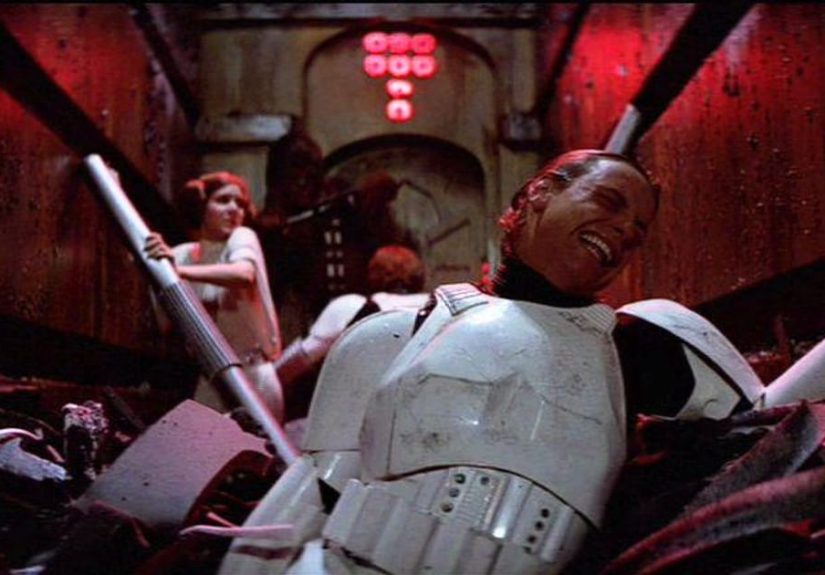
The trash compactor sequence works because it stacks three problems at once: physical confinement, environmental grossness, and a surprise creature encounter.
According to film plot documentation, the escape route drops the heroes into a garbage chute, where Luke is pulled underwater by a tentacled monster, and then
the compactor walls start moving in. The only way out is getting the system shut down from outsideby the droids. That’s the whole nightmare in one paragraph:
trap + monster + timer.
Threat #1: The Closing Walls
The walls are the true “boss fight.” They don’t negotiate. They don’t miss. They don’t care if you’re the main character. You can’t outswim them, outblaster
them, or talk them into stopping. The walls turn the room into a countdown clock with sound effects.
Threat #2: The Dianoga (AKA the Compactor’s Worst Roommate)
The creature is a dianoga, a tentacled carnivore that lurks in the muck and pops up an eyestalk like a gross little periscope. In the official Star Wars
databank description, it attacks and drags Luke under the surface, then disappears when it senses the compactor walls are about to movebecause even the
monster knows when it’s time to clock out.
Threat #3: Panic, Miscommunication, and the “Where?” Problem
The scene is also a stress test for teamwork. Everyone’s wet. Everyone’s annoyed. Everybody has a different plan. The banter stays funny while the danger ramps
upwhich is very Star Wars. One famous beat is Luke begging Han to shoot as he’s tangled with the dianoga, and Han basically going, “Uh… where?” It’s funny,
but it’s also a real tactical problem: in chaos, even your friends need clear instructions.
The Trash Compactor Survival Plan (Movie-Logic Edition)
Here’s the winning approach, distilled into steps that match what the scene teaches: stabilize, communicate, buy time, and get the system shut down.
Your goal isn’t to “defeat” the compactor. Your goal is to outlast it long enough for outside help to flip the right switch.
Step 1: Don’t Waste Your First 10 Seconds
When the hatch closes, you’ve got a short window where the compactor is still just a gross roomnot a crushing machine. Use those seconds to do three things:
(1) locate the walls and corners, (2) find anything sturdy floating nearby, and (3) get everyone’s attention.
- Scan for structure: corners, rails, ledges, grates, and any “maintenance-looking” spots.
- Grab a prop fast: pipes, poles, panelsanything long and rigid could buy time later.
- Get on one plan: one leader calling moves beats four people narrating their feelings.
Step 2: Establish the “Don’t Get Pulled Under” Rule
The dianoga attack works because the heroes are distracted and standing in murky water. The counter isn’t cinematic hero punching. It’s boring, practical stuff:
stay close, keep a handhold when possible, and don’t let anyone wander off for a dramatic solo moment.
- Buddy system: nobody moves alone in the muck.
- Keep your center of gravity low: if you slip, you don’t want to go face-first into mystery sludge.
- Watch for the eyestalk: if the “periscope” appears, assume something is about to grab.
Step 3: Communicate Like You’re Paying Per Minute
A big reason the heroes survive is that Luke radios C-3PO and gives orders that reach R2-D2. The scene reminds us that “help” isn’t helpful unless it knows
exactly what to do and where you are. Luke provides a compactor unit number, and he uses the term “garbage mashers,” whichconfusinglyis the in-universe
phrasing for the compactor system.
Translation for your survival brain: if you can contact anyone outside, give them three pieces of information in one breath:
location + problem + command. Example: “Detention level, compactor unit, walls closingshut it down now.”
Step 4: Buy Time with Bracing (But Don’t Fall in Love with the Brace)
Leia’s instinct to brace the walls is correct. It’s also doomedbecause the compactor is built to crush trash, not gently negotiate with scrap metal.
Bracing is still useful because it slows the closing just enough to extend the window for rescue.
The trick is to treat bracing like a temporary speed bump, not a permanent solution. Use the brace to gain seconds, then use those seconds to improve your odds:
reposition, communicate again, and keep everyone upright.
Step 5: Manage the Blaster Problem (Yes, There Is a Blaster Problem)
In the compactor, shooting is risky. A blaster bolt can ricochet in a confined metal chamber, turning “hero moment” into “friendly fire speedrun.” The smart move
is to use the blaster only when you have a clear target and a safe anglelike discouraging a tentacle that’s actively grabbing someonethen stop.
The funniest part of the scene is that it’s also realistic: panic makes people do weird things, and the laws of physics do not care about your franchise
merchandise.
Step 6: Keep the Team Working (Even If You’re All Annoyed)
The compactor scene is basically a group project, but with more slime and fewer PowerPoint transitions. Each character contributes something:
- Luke: communicates with the droids and recognizes the “shut it down” solution.
- Leia: takes initiative and pushes for action (bracing, moving, not freezing).
- Han: improvises, distracts, and keeps momentumeven while complaining (a valuable American tradition).
- Chewbacca: provides muscle, stability, and the emotional soundtrack of “this is disgusting.”
- R2-D2 & C-3PO: are the actual saviors because they can reach the controls.
Why the Dianoga Bails (And Why That Matters)
One of the most interesting details is that the monster doesn’t “lose” a fightit chooses to leave. In official material, the dianoga lets Luke go and
disappears right before the walls move, essentially sensing the danger of the compactor itself. That reinforces the biggest lesson of the scene:
the compactor is the true threat, and even the creature respects it.
Star Wars lore also gives the dianoga extra texture. StarWars.com has described behind-the-scenes and story evolution details: early drafts treated the creature
as a bigger encounter, but the final film scaled it down to a tentacle/eyestalk moment that still lands as iconic. The end result is a perfect horror appetizer:
you see just enough to imagine the rest.
“Garbage Masher” Logistics: Why the Death Star Even Has This Thing
From a storytelling standpoint, the compactor exists for pacing: it traps the heroes together, forces teamwork, and gives the droids a heroic job. From an
in-universe standpoint, it’s also not wild that a massive battle station would need a waste disposal system. One explanation (citing expanded-universe technical
descriptions) is that trash moves through disposal chutes to compactors and then to loading areas where it can be ejectedbecause even space fascists have to
take out the trash sometimes.
The scene also became so iconic that the compactor unit number turned into a Star Wars Easter egg. In Disney’s Galaxy’s Edge, for example, themed trash cans and
signage reference “3263827,” tying park design back to the moment Luke calls for help. It’s the franchise’s way of saying: “Yes, we know you remember the number.
Please stop proving it at parties.”
How to “Win” the Scene: The Three Golden Rules
- Stay together. The muck separates people fast. If you lose the group, you lose the plan.
- Buy time, then communicate. Bracing only matters if it gives the droids time to shut down the system.
- Don’t waste energy fighting the wrong enemy. The dianoga is scary, but the compactor walls are inevitable.
Conclusion: The Real Survival Trick Is Teamwork (Plus Droids)
The trash compactor scene endures because it’s not just actionit’s character. Leia’s leadership sharpens. Han’s sarcasm becomes a coping mechanism. Luke learns
that “hero” sometimes means “call for help and be specific.” And the droids, often treated like background bickering, prove they’re essential.
If you want the secret formula to survive the trash compactor scene in Star Wars, it’s this: keep your head, keep your friends close, keep buying seconds,
and make sure someone on your team is basically an astromech with access to the control panel.
Real-World Experiences That Feel Like the Trash Compactor (In a Safe, Non-Crushing Way)
Most of us won’t end up in a sci-fi garbage masher (thankfully), but the feeling of that scene shows up in real life more often than you’d thinkjust
with fewer tentacles and more awkward eye contact. If you’ve ever watched the trash compactor sequence and thought, “I know this stress,” you’re not alone.
Here are a few everyday experiences that echo the scene’s energy, and what they teach you about staying calm.
1) The Crowded Elevator That Stops for “No Reason”
You step in, the doors close, and suddenly the elevator pauses between floors. Nobody wants to be the first person to say, “So… we’re doing this now?”
That’s the trash compactor vibe: confined space, rising tension, and the sense that the room has its own agenda. The best move in that moment is the opposite
of panicbreathe slowly, check for the emergency button/intercom, and communicate clearly. It’s basically Luke calling out the compactor number, but with
nicer lighting and less slime.
2) Escape Rooms That Weaponize Time Pressure
Escape rooms love a closing-walls illusion, a ticking clock, and at least one puzzle that requires teamwork while everyone yells different ideas. Sound
familiar? The compactor scene is a masterclass in “group problem-solving under stress.” The winning teams do the same thing the Star Wars crew does: assign
roles fast (“you search, you solve, you keep track of time”), share information out loud, and don’t let one person spiral into “we’re doomed” monologues.
Also: if your escape room includes a fog machine, congratulationsyou’ve unlocked the “murky water” DLC.
3) The Public Pool “What Touched My Leg?” Moment
The dianoga’s whole brand is “mystery contact in gross water.” In real life, the pool version is usually a leaf, a floating toy, or your friend being a menace
behind you. But the instinct is the same: instant panic. The scene is funny because it captures how quickly your brain invents a monster when you can’t see
under the surface. The takeaway is simple: don’t let imagination outrun reality. Check your surroundings, stay steady, and remember that most “tentacle moments”
are just your nervous system being dramatic.
4) Theme Parks and Fan Exhibits That Turn Nostalgia Into “I’m Inside the Movie”
If you’ve ever wandered through a Star Wars-themed area, you’ve probably noticed how much the franchise loves sneaking in tiny detailsespecially from iconic
scenes like the compactor. Seeing those references can feel like a mini adrenaline spike: you’re transported right back into the moment. And that’s part of the
fun. You get the thrill of “we’re trapped!” with the comfort of knowing the worst thing that can happen is you drop your churro.
5) Any Group Project Where Everyone Thinks They’re Han Solo
The most accurate “trash compactor” experience might be the one nobody puts on a postcard: a chaotic group project where the deadline is crushing you, the
instructions are confusing, and somebody keeps saying “I’ve got a bad feeling about this.” The scene survives because the characters stop bickering long enough
to coordinate. That’s the real-world lesson, too. When time pressure rises, your best tool is clarity: decide what matters, communicate it simply, and do the
next right actionbefore the metaphorical walls move in.
So yes, the trash compactor scene is science-fiction. But the emotions are real: pressure, fear, gross-out humor, and the relief of escape. And maybe that’s
why we love it. It reminds us that even in the messiest moments, a little teamworkand one very determined droidcan get you out.