Table of Contents >> Show >> Hide
- First: Which “Angel Trumpet” Are We Talking About?
- Important Safety Note (Not a BuzzkillA Smart Move)
- What You’ll Need to Start Angel Trumpet Seeds
- Choosing Good Seeds (Because Not Every Seed Is a “Main Character”)
- Step-by-Step: How to Plant Angel Trumpet Seeds
- Step 1: Pre-soak the seeds (optional, but strongly recommended)
- Step 2: Optionalremove the corky coat (Brugmansia)
- Step 3: Prepare your containers and mix
- Step 4: Sow the seeds at the right depth
- Step 5: Add humidity (mini greenhouse vibes)
- Step 6: Give them warmth and patience
- Step 7: Watch for germination (timeline ranges are normal)
- Seedling Care After Sprouting
- Transplanting: Moving From “Baby Pot” to “Teen Pot”
- Hardening Off and Planting Outdoors
- Will My Seed-Grown Angel Trumpet Bloom This Year?
- Troubleshooting: Why Your Seeds Aren’t Germinating
- Extra Tips for Better Success
- Frequently Asked Questions
- Experience Notes: What Gardeners Commonly Learn the Hard Way (Extra 500+ Words)
- 1) The biggest mistake is treating Brugmansia like “normal” seeds
- 2) The “corky coat” debate is realand both sides are kind of right
- 3) Germination isn’t always synchronized (and that’s normal)
- 4) Light matters more the moment seedlings appear
- 5) Potting up at the right time is a growth accelerator
- 6) The first summer is about building a strong structure
- 7) The “where do I put this in winter?” question arrives fast
- Conclusion
Angel’s trumpet is the plant equivalent of a fireworks show: big, dramatic, impossible to ignore, and best enjoyed with a little caution. If you’ve ever seen those huge, dangling, trumpet-shaped blooms and thought, “I need that in my life,” you’re in the right place.
This guide walks you through how to plant angel trumpet seeds step by stepfrom choosing viable seed to getting sturdy seedlings ready for life outdoors. We’ll also cover common “why is nothing happening?!” seed-starting problems, plus a longer experience-based section at the end to help you avoid the most common rookie mistakes.
First: Which “Angel Trumpet” Are We Talking About?
Before you plant anything, it helps to know that the name “angel’s trumpet” gets used for two related (but different) plants:
- Brugmansia (most common for “angel’s trumpet”): woody shrub/small tree, flowers usually hang down, often grown as a tropical/perennial in warm areas or as a container plant elsewhere.
- Datura (sometimes called “devil’s trumpet”): more herbaceous, often grown as an annual, flowers often point up, and it sets seed readily.
This article focuses mostly on Brugmansia seed starting because that’s what most gardeners mean when they say “angel trumpet.” But many seed-starting basics apply to both.
Important Safety Note (Not a BuzzkillA Smart Move)
Angel’s trumpet is famous for its beauty…and also for being toxic if eaten. Handle seeds and plants responsibly:
- Wear gloves if you’re sensitive, and wash hands after handling seeds, sap, or plant parts.
- Keep seeds and seedlings away from small kids and pets.
- Label your pots. “Mystery seedlings” are fun until someone mistakes them for edible herbs. (Please don’t.)
What You’ll Need to Start Angel Trumpet Seeds
You don’t need a fancy greenhouse. You need a few basics and a little consistency (the true boss battle of seed starting).
Supplies
- Fresh angel trumpet seeds (Brugmansia)
- Seed-starting mix (light, well-draining) or a fine potting mix
- Small pots or seed trays with drainage holes
- A humidity dome or clear plastic wrap/bag (optional but helpful)
- Spray bottle or gentle watering can
- Warm spot or heat mat (highly recommended)
- Bright light source (sunny window or grow light)
- Plant labels (future-you will thank you)
Choosing Good Seeds (Because Not Every Seed Is a “Main Character”)
Seed quality matters a lot with Brugmansia. Some varieties/hybrids are more commonly propagated by cuttings, and seed-grown plants may not match the parent exactlyflower color and form can vary. If you’re okay with a little surprise (like a garden loot box), seeds are great.
What viable Brugmansia seeds often look like
Many Brugmansia seeds have a corky or papery outer layer. Some look like flat chips or odd little “seed wafers.” Don’t panic. They’re not broken; they’re just…dramatic.
Step-by-Step: How to Plant Angel Trumpet Seeds
Step 1: Pre-soak the seeds (optional, but strongly recommended)
Soaking helps rehydrate seeds and can speed germinationespecially for Brugmansia, which often has that corky outer layer.
- Place seeds in slightly warm water.
- Soak for 12–24 hours.
- If the water gets chilly, that’s finethis isn’t a spa appointment. Just don’t cook the seeds.
Step 2: Optionalremove the corky coat (Brugmansia)
Some gardeners gently peel off the corky coating after soaking to encourage faster, more uniform sprouting. This is optional. If you try it, be gentlethink “peeling a sticker,” not “whittling a canoe.” If the coating won’t budge easily, skip it.
Step 3: Prepare your containers and mix
Fill pots or trays with a moistened seed-starting mix. The ideal moisture level is like a wrung-out sponge: damp, but not dripping.
- Use a light mix so roots can breathe.
- Make sure containers have drainage holes (waterlogged soil is a seedling’s villain origin story).
Step 4: Sow the seeds at the right depth
Seed depth is where many people accidentally sabotage themselves. Brugmansia seeds often do best when they’re not buried too deeply.
- Press the seed into the surface and cover very lightly, or plant shallowly (roughly around the seed’s thinner dimension).
- If you cover, use a fine dusting of mixjust enough to anchor the seed.
Step 5: Add humidity (mini greenhouse vibes)
Cover the tray with a humidity dome or loosely with clear plastic to keep moisture steady. Vent daily or crack it slightly if condensation is excessive. You want humidnot swampy.
Step 6: Give them warmth and patience
Warmth is the secret handshake for tropical-ish seeds.
- Aim for warm soil (many gardeners use a heat mat).
- Keep the mix consistently moistnever bone-dry, never soggy.
- Place in bright light once sprouted (and even before, if your setup is bright but not scorching).
Step 7: Watch for germination (timeline ranges are normal)
Brugmansia germination can be irregular. Some seeds sprout quickly; others take their sweet time.
- Common sprouting window: 1–4 weeks
- It can take longer (sometimes several weeks) depending on seed freshness, temperature, and variety.
Seedling Care After Sprouting
Light: Bright, but not brutal
Once seedlings appear, increase light. A sunny window can work, but a grow light often produces sturdier seedlings. If they stretch tall and floppy, they need more light.
Water: Small sips, not cannon blasts
Water gently. The goal is evenly moist soil. If the surface stays soaked, fungus issues become more likely. Bottom watering can help once seedlings are established.
Airflow: The underrated hero
Good airflow discourages damping-off and mold. A small fan on low (not directly blasting seedlings) can help.
When to remove the humidity cover
As soon as most seeds have sprouted, start removing the cover gradually over 2–3 days so seedlings adapt without wilting.
Transplanting: Moving From “Baby Pot” to “Teen Pot”
When to pot up
Transplant seedlings when they have at least 2–3 sets of true leaves and roots begin filling the container.
How to transplant without drama
- Moisten the soil first (dry soil crumbles and rips roots).
- Hold seedlings by the leaves, not the stem (stems bruise easily).
- Use a richer potting mix than seed-starting mix, but still well-draining.
Hardening Off and Planting Outdoors
Angel’s trumpet hates frost. If you’re moving plants outside, do it after all danger of frost has passed.
Hardening off (7–10 days)
- Day 1–2: 1–2 hours outside in shade, protected from wind.
- Day 3–5: Gradually increase time and introduce gentle morning sun.
- Day 6–10: Longer exposure, then brighter light, then normal outdoor conditions.
In-ground vs container
Container growing is popular because you can move the plant indoors for winter. In warm climates, it may grow as a landscape shrub/small tree. Either way, aim for:
- Rich, well-draining soil with organic matter
- Strong light (full sun to partial shade depending on heat)
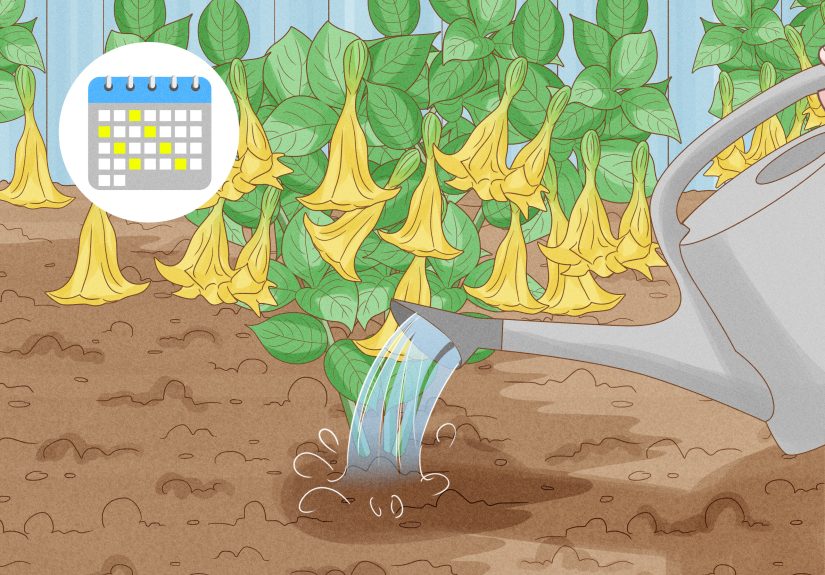
- Consistent wateringthese plants are thirsty when growing
Will My Seed-Grown Angel Trumpet Bloom This Year?
Maybebut don’t plan your entire personality around it. Many seed-grown Brugmansia need time to mature and often won’t bloom until they reach a certain growth stage (they typically bloom on new growth after forming their first main “fork”). In many cases, that can take a season or more, especially if conditions are less than ideal.
Troubleshooting: Why Your Seeds Aren’t Germinating
Problem: Nothing is happening
- Too cold: Warm the soil (heat mat helps).
- Too wet: Soggy mix can rot seedsimprove drainage and reduce watering.
- Too dry: Seeds can stall if they dry outuse a humidity cover.
- Old seed: Seed viability drops with agefresh seed matters.
Problem: Mold on the surface
- Increase airflow and vent the dome.
- Water less frequently, but don’t let it dry completely.
- Use a sterile seed-starting mix and clean containers.
Problem: Seedlings are tall and weak
- They need more light (or a closer grow light).
- Rotate pots if using a window so they don’t lean.
Extra Tips for Better Success
- Label everything. Especially if you’re starting multiple seeds/varieties.
- Don’t over-fertilize early. Once potted up, a diluted fertilizer can help, but seedlings don’t need a buffet on day one.
- Expect variation. Seed-grown plants can surprise yousometimes in a good way.
Frequently Asked Questions
Do angel trumpet seeds need light to germinate?
Many growers report better results when Brugmansia seeds are planted shallowly and not buried deeply. Pressing into the surface with a light cover is a common approach.
Can I direct-sow angel trumpet seeds outdoors?
You can in warm climates with a long growing season, but indoor starting is usually easier because you control temperature and moisturetwo things angel trumpet seeds care about a lot.
Is seed or cutting better?
Cuttings are faster to bloom and produce clones of a known plant. Seeds are great for experimentation and can be more affordablejust expect variation and a longer timeline.
Experience Notes: What Gardeners Commonly Learn the Hard Way (Extra 500+ Words)
Let’s talk about the “real life” side of planting angel trumpet seedsthe part that rarely fits on a seed packet. Think of this section as the collective wisdom of people who have stared at a seed tray like it owed them money.
1) The biggest mistake is treating Brugmansia like “normal” seeds
A lot of common garden seeds are basically plug-and-play: poke hole, drop seed, water, done. Brugmansia is more like a houseplant that insists on a specific oat milk brand. If the soil stays cold, germination slows way down. If the soil is too wet, seeds can rot. If the soil dries out even once, they can stall. The sweet spot is steady warmth and consistent moistureboring, yes, but boring is what wins here.
2) The “corky coat” debate is realand both sides are kind of right
Some gardeners swear peeling the corky layer boosts germination speed and prevents seedlings from getting “stuck” inside the seed covering. Others get great germination without peeling and prefer not to risk damaging the embryo. In practice, many people land in a middle ground: soak first, then peel only if the coating loosens easily. If you have lots of seed, you can even run a mini experiment: peel half, leave half intact, and compare results. Gardening is science…with more dirt under your nails.
3) Germination isn’t always synchronized (and that’s normal)
One of the most confusing moments is when two seeds sprout fast and the rest do absolutely nothing for weeks. That doesn’t always mean failure. Brugmansia can germinate unevenly, especially if seeds vary in freshness or if temperature swings in your growing area. Many growers learn to keep the tray going longer than they would for tomatoes or zinnias. The trick is to keep conditions stable while avoiding swamp mode. If you’re using a dome, vent it daily so you don’t accidentally cultivate a deluxe mold collection.
4) Light matters more the moment seedlings appear
Before sprouting, warmth and moisture are the main focus. After sprouting, light becomes the dealbreaker. A bright window can work, but seedlings often stretch toward the glass and end up thin and floppy. Grow lights tend to produce more compact, sturdy growthespecially in winter or early spring. Many gardeners who struggle with leggy seedlings later realize the problem wasn’t their soil or seed; it was simply not enough light for the amount of warmth they provided.
5) Potting up at the right time is a growth accelerator
Brugmansia can shift from “tiny seedling” to “wow, that’s a plant” surprisingly fast once the roots have space. When seedlings have multiple sets of true leaves and roots start filling the container, potting up into a slightly larger pot with richer mix often triggers stronger growth. The key is “slightly larger”jumping from a tiny cell to a huge pot can keep soil wet too long and stress roots. Many growers use a gradual pot-up strategy, which is slower in steps but faster overall in results.
6) The first summer is about building a strong structure
If you’re growing from seed, your first season may be less about blooms and more about building a sturdy framework. People often expect flowers quickly because photos online show massive plants with dozens of trumpets. Seed-grown plants frequently need time to reach maturity and form the growth pattern that supports flowering. If you get blooms in the first year, that’s a bonusnot a guarantee. Focusing on consistent watering, good feeding (once established), and plenty of light usually pays off in later seasons.
7) The “where do I put this in winter?” question arrives fast
Even small plants can grow quickly in warm weather. Many gardeners end up grateful they chose containers because overwintering is simpler: move the pot indoors before cold weather, reduce watering, and let the plant rest. The lesson is planning aheadchoose a pot you can realistically move, and decide early whether you’re growing it as a patio plant, a greenhouse plant, or a seasonal “tropical vacation” plant that comes inside for winter.
If all of that sounds a little fussygood news: once you dial in the conditions, angel trumpet seedlings can be surprisingly rewarding. They’re dramatic, fast-growing, and they make you feel like a gardening wizard when they finally take off.
Conclusion
Planting angel trumpet seeds is part gardening, part patience practice, and part learning to love the slow build. Start with warm, lightly moist seed-starting mix, sow shallowly, maintain humidity without drowning the tray, and give seedlings bright light as soon as they appear. Treat them kindly, keep them safe (they’re beautiful but toxic if eaten), and you’ll be on your way to growing a truly show-stopping plant.