Table of Contents >> Show >> Hide
- What You Need for the Minecraft Campfire Recipe
- How to Make a Soul Campfire
- Best Uses for a Minecraft Campfire
- Extra Campfire Tips You Should Know
- Common Mistakes Players Make with Campfires
- Why the Minecraft Campfire Is Worth Crafting Early
- Player Experience: What Using Campfires Actually Feels Like in a Real Survival World
- SEO Tags
If Minecraft had a hall of fame for “small blocks that quietly do a lot,” the campfire would be up there wearing a crown made of smoke particles. It looks cozy, cooks dinner, helps with bees, marks your base from a distance, and even has a spooky blue cousin for Nether adventures. Not bad for a block that is basically wood, sticks, and one very committed spark.
If you have been wondering how to make a Minecraft campfire, the good news is that the recipe is simple, beginner-friendly, and useful long after your starter house stops looking like a wooden shoebox. Whether you want a better early-game cooking setup, a prettier campsite, or a practical trick for collecting honey without getting turned into a human pincushion by angry bees, the campfire deserves a spot in your inventory.
In this guide, you will learn the exact Minecraft campfire recipe, how to make a soul campfire, and the best campfire uses in survival mode. We will also cover smart building ideas, survival tips, and a longer player-experience section at the end so you can see why this block is one of the most underrated multitaskers in the game.
What You Need for the Minecraft Campfire Recipe
To craft a regular campfire in Minecraft, you need just four ingredients:
- 3 sticks
- 1 coal or 1 charcoal
- 3 logs or 3 wood blocks
That recipe is part of what makes the campfire such an early-game favorite. You do not need iron. You do not need redstone. You do not need to go on some dramatic mountain expedition while sad violin music plays in the background. If you can punch a tree, make sticks, and get a piece of coal or charcoal, you are in business.
How to Craft It
Open a crafting table and place the items like this:
- Put 1 stick in the top-middle slot.
- Put 1 coal or charcoal in the center slot.
- Put 1 stick in the middle-left slot.
- Put 1 stick in the middle-right slot.
- Fill the entire bottom row with 3 logs or wood blocks.
That gives you 1 campfire. Place it on the ground, and you instantly have a useful light source and cooking station. In survival terms, that is a very nice return on investment.
Coal vs. Charcoal
You can use either coal or charcoal in the center slot. That matters because charcoal is often easier to get early on. If you have wood but have not found coal yet, smelt a log into charcoal and use that for the recipe. It is one of those Minecraft moments where the game basically says, “Relax, I’ll allow it.”
How to Make a Soul Campfire
If a regular campfire is the friendly backyard grill, a soul campfire is the dramatic goth cousin who lives in the Nether and owns entirely too much blue decor.
To craft a soul campfire, use the same pattern as a regular campfire, but replace the coal or charcoal with:
- 1 soul sand or
- 1 soul soil
You still need:
- 3 sticks
- 3 logs or wood blocks
The result is a blue-flamed campfire that looks fantastic in dark builds, creepy castles, Nether bases, ruined temples, and anywhere you want your design to whisper, “I absolutely sort my storage by emotional vibe.” Soul campfires also hit harder than regular campfires, which makes them useful for certain traps and mob-handling setups.
Best Uses for a Minecraft Campfire
Now for the fun part: what campfires actually do. And the answer is, honestly, more than most players expect.
1. Cook Food Without Fuel
One of the best Minecraft campfire uses is cooking. A lit campfire can cook up to four food items at once, and it does not require fuel while cooking. That makes it a terrific early-game alternative to a furnace when you are trying to stretch resources.
Just place raw food on the lit campfire, wait a bit, and the cooked food pops off when it is ready. It is slower than a smoker, but it saves coal, which matters when you are still scraping together your first decent tool set.
This is especially helpful when you have just survived your first night, hunted a few animals, or harvested some potatoes and need a quick meal without burning through your fuel stash. Instead of feeding your furnace like it is an endlessly hungry machine, you can let the campfire do the work for free.
2. Create a Smoke Signal
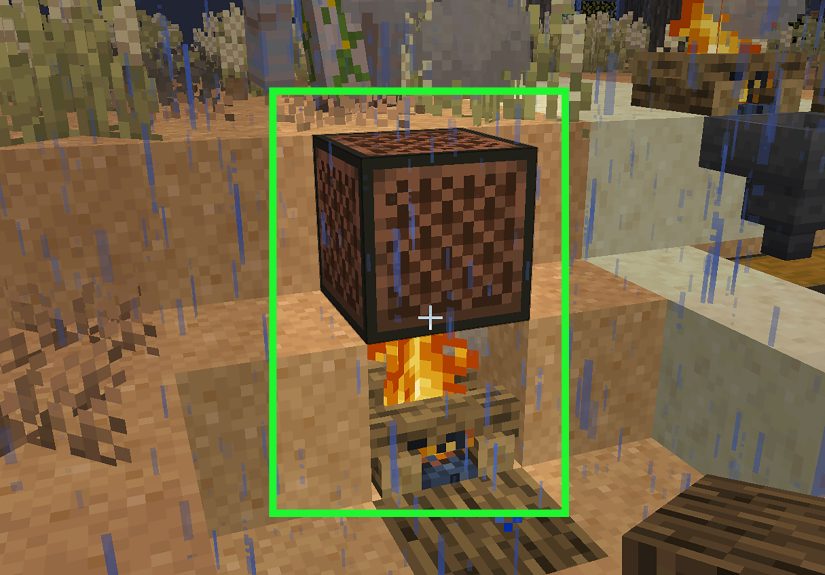
Campfires naturally produce a column of smoke, which already makes them useful for marking your home, a cave entrance, or a trail stop. But the real trick is this: place the campfire on top of a hay bale, and the smoke rises much higher.
That turns your campfire into a signal fire, which is perfect for navigation. If you are the kind of player who says, “I’ll remember where my base is,” and then immediately gets lost in a forest 90 seconds later, this is your fix.
A campfire-and-hay-bale setup works beautifully for:
- marking your starter base
- finding a village again
- highlighting a mining shaft
- making chimneys actually look alive
3. Collect Honey Without Angering Bees
This is one of the most practical campfire tricks in Minecraft. If you place a campfire under a bee nest or beehive so the smoke reaches it, the bees stay calm when you collect honey or honeycomb.
Without smoke, bees can go from adorable little pollinators to tiny airborne lawyers of vengeance. With smoke, they mind their own business while you gather your sweet loot.
If you are building a bee farm, a campfire is not optional fluff. It is a key part of the setup. This one mechanic alone gives the campfire real long-term value in survival worlds.
4. Add Light and Atmosphere
Campfires are useful, but they are also one of the best decorative blocks in the game. A plain torch says, “I do not want monsters here.” A campfire says, “Welcome to my beautifully rustic lodge where the potatoes are roasted and the vibes are immaculate.”
They work especially well in:
- cabins
- campgrounds
- village centers
- mountain homes
- blacksmith yards
- medieval taverns
- Nether-themed builds with soul campfires
Even an extinguished campfire can be useful for texture and visual detail. Builders often use it to create a more realistic fire pit or a recently used campsite.
5. Build Traps and Damage Zones
Campfires damage players and mobs that step on them, and soul campfires are even meaner. That means they can be used in simple traps, mob funnels, or controlled damage areas.
For example, you can hide campfires under trapdoors, carpets in certain designs, or decorative structures so the area still looks clean while the damage effect stays active. It is not the flashiest combat system in the world, but it gets the job done. Sometimes Minecraft strategy is less “heroic duel” and more “please walk onto this suspiciously warm floor.”
Extra Campfire Tips You Should Know
How to Put Out a Campfire
You can extinguish a campfire with a shovel. Water also works. This is handy when you want the look of a fire pit without the active flame, or when you need to stop smoke temporarily.
How to Relight a Campfire
Use flint and steel or a fire charge to light it again. So if you put it out for a design reason or by accident, you do not need to craft a whole new one.
Campfires and Chimneys
If you want your house to look more lived-in, build a chimney above a campfire. The smoke effect adds an incredible amount of realism with very little effort. Minecraft players love giant mega-builds, but sometimes one puff of smoke does more for immersion than a hundred polished blocks ever could.
Soul Campfires and Piglins
Soul campfires are especially useful in the Nether because piglins avoid soul fire. That makes a soul campfire more than just a pretty blue flame. It can be part of a defensive layout, a safer base perimeter, or a visual warning line in dangerous areas.
Common Mistakes Players Make with Campfires
- Forgetting the crafting table: the recipe needs a full 3×3 grid, so your inventory crafting menu will not cut it.
- Using the wrong middle ingredient: regular campfires need coal or charcoal; soul campfires need soul sand or soul soil.
- Ignoring the hay bale trick: if you want a real smoke signal, do not skip the hay bale.
- Trying to harvest honey without smoke: the bees will file a complaint directly into your face.
- Underusing campfires after the early game: many players treat campfires like temporary starter tools, but they stay useful for decoration, bee farms, navigation, and mob control.
Why the Minecraft Campfire Is Worth Crafting Early
The Minecraft campfire recipe is cheap, the uses are broad, and the block remains relevant from your first day to your late-game builds. That is rare. A lot of items feel important for about ten minutes and then get tossed into a chest labeled “misc.” The campfire keeps earning its place.
It helps you cook without fuel, improves your base design, supports bee farming, creates smoke signals, and opens up more creative build options. Add the soul campfire version for Nether utility and darker aesthetics, and suddenly this humble block starts looking like one of the smartest crafts in the game.
So yes, make the sword, mine the diamonds, and build the automatic farms. But also craft the campfire. Your base will look better, your food will cook, your bees will chill out, and your Minecraft life will feel just a little more civilized.
Player Experience: What Using Campfires Actually Feels Like in a Real Survival World
There is a difference between knowing the Minecraft campfire recipe and actually using campfires regularly in survival mode. On paper, the block sounds simple: place it, cook food, admire smoke, move on. In practice, campfires end up becoming one of those weirdly personal blocks that shape how your world feels.
In the early game, the first campfire often changes the mood of survival. Your world stops feeling like pure panic and starts feeling like a place you can actually live in. After a rough first night of dodging skeleton arrows, punching leaves for apples, and pretending three dirt blocks count as architecture, setting down a campfire feels like progress. It gives you light, dinner, and a visual center for your base. Suddenly the chaos has a camp kitchen.
It is also one of the first blocks that encourages players to slow down. A furnace feels transactional. Insert fuel, insert food, collect item, continue grinding. A campfire feels more physical. You place the food on the surface, watch it cook, and hang around for a moment. It sounds small, but it changes the rhythm of play. Many players end up organizing storage, planting crops, or fixing their roof while food cooks nearby. The campfire quietly creates those in-between moments that make a survival world feel lived in rather than speedrun.
Then there is the smoke signal effect, which becomes surprisingly emotional in bigger worlds. Once you travel farther from spawn, seeing your campfire smoke on the horizon can feel like seeing a lighthouse. It gives direction. It says, “Yep, home is over there, and no, you do not have to sleep in a hole again tonight.” If you put it over a hay bale and make a proper signal fire, it becomes even more useful during long exploring sessions.
Bee farming is where many players truly start appreciating campfires. The first time you try to collect honey without smoke, you usually learn a very energetic lesson. After that, placing a campfire beneath a hive feels less like a random mechanic and more like a clever bit of survival knowledge. It rewards attention and makes your world feel deeper. You are not just harvesting a resource; you are using the environment correctly.
Soul campfires create a different kind of experience. They are not as warm or friendly, but that is exactly why players love them. A soul campfire instantly changes the atmosphere of a build. One blue flame in a blackstone courtyard can do more than ten fancy decorations. In the Nether, that eerie light also gives players a psychological sense of control. Dangerous places feel slightly less chaotic when your base has deliberate, glowing boundaries.
Campfires also shine in multiplayer worlds. People gather around them. That sounds cheesy, but it is true. Whether players are sorting loot, planning a mine run, or just showing off a new build, a campfire naturally becomes a social focal point. It turns empty space into a campsite, a market square, a village center, or a tavern patio. It gives the scene a story.
That is probably the best way to describe the real experience of using campfires in Minecraft: they add story. They make your base look inhabited, your travel routes feel intentional, your farms feel smarter, and your builds feel warmer or moodier depending on the flame you choose. For a block with such a cheap recipe, that is an incredible payoff. In true Minecraft fashion, it is both practical and charming, which is really just a fancy way of saying it is hard not to love.