Table of Contents >> Show >> Hide
- Why Does Cheesecake Crack?
- How to Keep Cheesecake from Cracking: 12 Steps
- 1. Start with Room-Temperature Ingredients
- 2. Use Full-Fat Block Cream Cheese
- 3. Mix on Low or Medium-Low Speed
- 4. Add Eggs Gently and One at a Time
- 5. Grease the Sides of the Pan
- 6. Use a Water Bath for Gentle Heat
- 7. Try the Steam Pan Method if You Hate Water Baths
- 8. Bake Low and Slow
- 9. Do Not Open the Oven Door Too Often
- 10. Know When Cheesecake Is Done
- 11. Cool the Cheesecake Gradually
- 12. Chill Completely Before Slicing
- Common Cheesecake Mistakes That Lead to Cracks
- What to Do If Your Cheesecake Still Cracks
- Best Toppings for Covering Cheesecake Cracks
- Extra Tips for a Smooth, Creamy Cheesecake
- Personal Baking Experiences: Lessons from the Cheesecake Trenches
- Conclusion
Cheesecake is dramatic. It wants room-temperature ingredients, gentle mixing, a cozy oven, a spa-like water bath, and a slow cooldown. Ignore one of those little demands andbamyour creamy masterpiece may open a fault line wide enough to need a tiny dessert bridge.
The good news? A cracked cheesecake is not a baking tragedy. It is still delicious, still rich, still worthy of a fork, and still very capable of being rescued with berries, ganache, whipped cream, or strategic powdered sugar. But if your goal is that smooth, bakery-style top, this guide will show you exactly how to keep cheesecake from cracking using 12 practical, beginner-friendly steps.
Cheesecake cracks usually happen because of sudden temperature changes, overmixing, overbaking, dry oven heat, or batter that clings to the pan as it cools. Think of cheesecake less like cake and more like custard wearing a graham cracker jacket. Treat it gently, and it rewards you with a silky texture and a beautiful surface.
Why Does Cheesecake Crack?
Before we get into the steps, it helps to understand the science. Cheesecake is made with cream cheese, sugar, eggs, and often sour cream or heavy cream. Eggs give structure, but they are also sensitive to heat. When cheesecake bakes too hot or too long, the proteins tighten, moisture evaporates, and the surface dries out. As the cheesecake cools, it contracts. If the top has already become dry or the edges are stuck to the pan, the center can split.
In plain English: cheesecake cracks when it gets stressed. Same, cheesecake. Same.
How to Keep Cheesecake from Cracking: 12 Steps
1. Start with Room-Temperature Ingredients
Cold cream cheese is one of the sneakiest causes of lumpy batter and uneven baking. When cream cheese is too firm, it does not blend smoothly with sugar, eggs, and dairy. You may end up mixing longer than necessary, which adds extra air to the batter. That air expands in the oven, then collapses as the cheesecake cools, increasing the chance of cracks.
For best results, take the cream cheese, eggs, sour cream, and any other refrigerated ingredients out of the refrigerator about 1 to 2 hours before baking. They should feel cool but soft, not melted or greasy. If you press a finger gently into the cream cheese, it should leave an easy dent.
2. Use Full-Fat Block Cream Cheese
For classic baked cheesecake, use full-fat block-style cream cheese instead of whipped cream cheese or spreadable cream cheese from a tub. Whipped and spreadable versions often contain extra air or stabilizers that can affect texture. Full-fat block cream cheese gives cheesecake its dense, creamy structure and helps the batter bake more evenly.
Low-fat cream cheese can work in some recipes, but it may create a softer, wetter filling. If your mission is a smooth, sturdy cheesecake that does not crack, full-fat is the reliable choice. Cheesecake is not exactly pretending to be a salad, so let it live its richest life.
3. Mix on Low or Medium-Low Speed
Overmixing is a major reason cheesecake cracks. Unlike a fluffy layer cake, cheesecake does not need lots of air. Too much air makes the batter rise dramatically in the oven, then sink later. That rise-and-fall movement can tear the surface.
Use a paddle attachment if you have a stand mixer, or use a hand mixer on low speed. Beat the cream cheese and sugar until smooth, then add eggs one at a time and mix just until incorporated. Scrape the bowl often so you do not have hidden lumps at the bottom. Once the batter looks creamy and uniform, stop mixing. This is not a workout video. The batter does not need one more rep.
4. Add Eggs Gently and One at a Time
Eggs are essential for structure, but they are also where many bakers accidentally overmix. Add eggs one at a time, mixing briefly after each addition. The goal is to combine, not whip.
If you want an extra-smooth batter, lightly beat the eggs in a small bowl before adding them. This helps them blend faster and reduces the need for aggressive mixing. Gentle egg incorporation is one of the easiest ways to prevent cheesecake cracks and keep the texture creamy instead of spongy.
5. Grease the Sides of the Pan
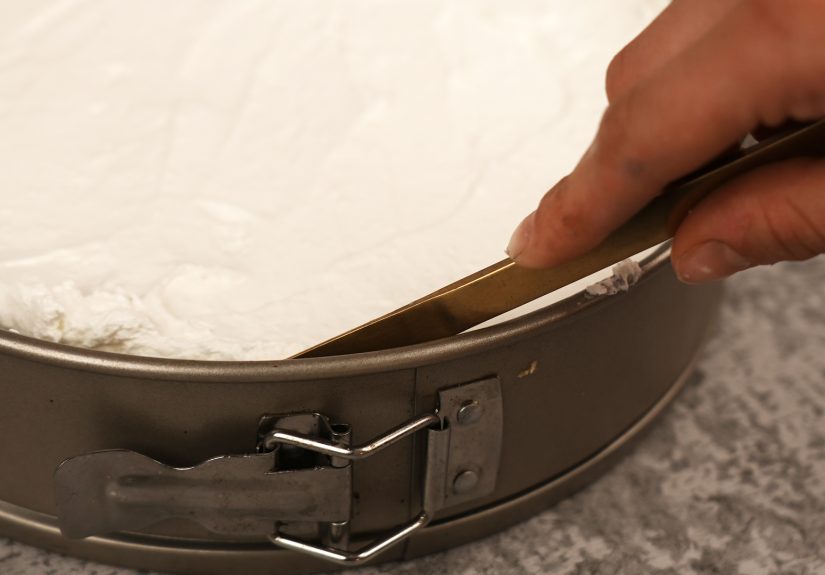
As cheesecake cools, it naturally shrinks a little. If the sides are stuck to the springform pan, the center may pull against the edges and crack. Greasing the sides allows the cheesecake to release more easily as it contracts.
Use a light coating of butter, baking spray, or neutral oil on the inside wall of the pan. You can also line the sides with parchment paper for extra insurance. After baking, many bakers run a thin knife or offset spatula around the edge of the cheesecake while it is still warm. This helps separate the cake from the pan before cooling finishes.
6. Use a Water Bath for Gentle Heat
A water bath, also called a bain-marie, is one of the most effective ways to keep cheesecake from cracking. It surrounds the pan with moist, even heat so the edges do not bake much faster than the center. It also helps prevent the surface from drying out.
To make a water bath, wrap the outside of your springform pan tightly with heavy-duty foil, place it in a larger roasting pan, and pour hot water into the roasting pan until it reaches about halfway up the cheesecake pan. The water should be hot when it goes into the oven so the cheesecake starts baking gently right away.
If you are worried about leaks, place the springform pan inside a slightly larger cake pan first, then set that pan in the water bath. This “pan inside a pan” method gives you the benefit of steam and insulation without risking a soggy crust.
7. Try the Steam Pan Method if You Hate Water Baths
Some bakers hear “water bath” and immediately picture a kitchen disaster starring wet graham crackers. If that is you, use a steam pan instead. Place a large oven-safe skillet or baking dish filled with hot water on the rack below the cheesecake. Then bake the cheesecake on the rack above it.
This method does not insulate the pan as directly as a true water bath, but it adds moisture to the oven and helps reduce surface drying. It is a great compromise for beginners, especially if your springform pan is older, suspiciously leaky, or has betrayed you before.
8. Bake Low and Slow
High heat can cause cheesecake to puff, brown too quickly, and crack. A moderate oven temperature, often around 300°F to 325°F depending on the recipe, gives the filling time to set gently. Cheesecake does not need a dramatic oven entrance. It needs a calm, steady environment.
Avoid increasing the oven temperature to “speed things up.” Cheesecake is not a microwave burrito. Rushing it may set the outside while the center remains loose, or it may overcook the whole dessert. Slow baking helps create a smooth top, creamy center, and even texture from edge to middle.
9. Do Not Open the Oven Door Too Often
Every time you open the oven door, heat escapes and the oven temperature drops. That sudden change can shock the cheesecake, especially near the end of baking when the custard is setting. Temperature swings can contribute to cracking.
Use the oven light instead of opening the door repeatedly. If you must check doneness, do it near the end of the recommended baking time. Open the door gently, check quickly, and close it without turning the whole moment into a dramatic dessert inspection ceremony.
10. Know When Cheesecake Is Done
Overbaking is probably the most common cause of cracked cheesecake. The tricky part is that cheesecake does not look fully done when it is ready. A properly baked cheesecake should have set edges and a slightly wobbly center. The middle 2 to 3 inches may jiggle softly when you nudge the pan. That is not failure; that is future creaminess.
Do not use a toothpick test like you would for a regular cake. Poking the center can create a weak spot and may lead to cracking. If you use a thermometer, insert it carefully near the center or slightly off-center. Many baked cheesecakes are done when the center reaches roughly 150°F to 155°F, though recipes vary. The residual heat will continue setting the custard as it cools.
11. Cool the Cheesecake Gradually
Sudden cooling can cause the cheesecake to shrink too quickly and split. Once the cheesecake is done, turn off the oven and crack the door open. Let the cheesecake rest inside for 30 minutes to 1 hour, depending on your recipe. This gradual cooldown helps the custard settle without panic.
After that, remove the cheesecake from the oven and water bath, then place it on a wire rack. Run a thin knife around the edge if you have not already done so. Let it cool at room temperature until it is no longer warm before refrigerating. Going straight from hot oven to cold refrigerator can cause condensation, texture issues, and cracks.
12. Chill Completely Before Slicing
Cheesecake needs time in the refrigerator to fully set. Chill it for at least 4 hours, though overnight is better. During chilling, the texture firms up, the flavors deepen, and the filling becomes easier to slice cleanly.
For neat slices, use a sharp knife dipped in hot water, then wipe it clean between cuts. This little step makes a big difference. It turns “I attacked this cheesecake” into “I definitely know what I am doing.”
Common Cheesecake Mistakes That Lead to Cracks
Using Cold Ingredients
Cold ingredients do not blend smoothly. They encourage overmixing, which adds excess air and raises the risk of cracking.
Overbeating the Batter
Cheesecake batter should be smooth, not fluffy. Too much air makes the cheesecake rise and fall like a tiny edible trampoline.
Baking Too Long
If the center looks fully firm in the oven, the cheesecake is probably overbaked. Remember, the center should still wobble slightly.
Skipping Moisture
A dry oven can dry the surface before the inside is done. A water bath or steam pan helps keep the texture creamy and the top smooth.
Cooling Too Fast
Cheesecake likes gentle transitions. Fast temperature changes can cause the filling to contract suddenly and crack.
What to Do If Your Cheesecake Still Cracks
First, breathe. A crack does not mean your cheesecake is ruined. In fact, some of the best cheesecakes in history have worn a crack like a badge of honor. The flavor is usually unaffected, and the texture can still be wonderful.
If presentation matters, cover the crack with a topping. Fresh strawberries, blueberry compote, lemon curd, chocolate ganache, caramel sauce, whipped cream, toasted nuts, or crushed cookies can hide imperfections beautifully. Nobody at the table needs to know there was a crack. This is between you, the cheesecake, and possibly the oven light.
You can also use a warm offset spatula to gently smooth small cracks while the cheesecake is still slightly warm. Dip the spatula in hot water, wipe it dry, and carefully press the surface together. This works best for shallow cracks, not Grand Canyon situations.
Best Toppings for Covering Cheesecake Cracks
If your cheesecake cracks, toppings are not a cover-up; they are a glow-up. Try these easy ideas:
- Fresh berries: Strawberries, blueberries, raspberries, and blackberries add color and freshness.
- Fruit compote: A spoonable cherry or blueberry sauce looks intentional and tastes fantastic.
- Chocolate ganache: Smooth, glossy, and very good at keeping secrets.
- Whipped cream: Pipe it around the edges or across the center for a bakery-style finish.
- Caramel and pecans: Perfect for a turtle cheesecake effect.
- Lemon curd: Bright, tangy, and great for balancing rich cream cheese.
Extra Tips for a Smooth, Creamy Cheesecake
Use a Reliable Springform Pan
A sturdy springform pan helps the cheesecake bake evenly and release cleanly. If your pan leaks, wrap it with foil or use the pan-inside-pan method.
Scrape the Bowl Often
Cream cheese loves hiding in corners. Scrape the sides and bottom of the mixing bowl several times so the batter stays smooth.
Follow the Recipe Closely
Cheesecake recipes are balanced carefully. Changing the amount of eggs, sugar, cream, or baking time can affect structure and increase cracking.
Let the Crust Cool Before Adding Filling
If you prebake the crust, let it cool slightly before pouring in the filling. A hot crust can affect how the bottom layer of filling sets.
Personal Baking Experiences: Lessons from the Cheesecake Trenches
Anyone who has baked cheesecake more than once probably has a story. My first memorable cheesecake looked gorgeous in the oven. It was puffed, golden, and majesticbasically the dessert version of a parade float. Then I took it out too quickly, set it on the counter, and watched a crack appear right down the middle. It was not subtle. It looked like the cheesecake had just received shocking family news.
The mistake was simple: I rushed the cooling process. I treated cheesecake like a regular cake, but cheesecake is closer to custard. It needs patience. After that, I learned to turn off the oven, crack the door, and let the cheesecake cool gradually. That one habit changed everything. The texture became creamier, the top stayed smoother, and I stopped having to create emergency berry camouflage every time.
Another lesson came from overmixing. In the beginning, I thought a longer mixing time meant a smoother filling. Logical, right? Unfortunately, cheesecake does not reward enthusiasm in the same way bread dough does. I whipped too much air into the batter, and the cheesecake rose beautifully before sinking like a sad balloon. The flavor was great, but the top looked like it had survived a minor earthquake. Now I mix only until the ingredients are combined, scrape the bowl, and leave the batter alone once it looks smooth.
The water bath was another turning point. I avoided it for years because I was convinced water would leak into the crust. Then I learned the pan-inside-pan trick: place the springform pan inside a slightly larger cake pan, then set that cake pan in the roasting pan with hot water. No soggy crust. No foil anxiety. No dramatic kitchen betrayal. The cheesecake baked gently, the edges stayed creamy, and the top came out smooth enough to make me briefly consider opening a bakery. Very briefly. Then I remembered dishes exist.
One of the most useful experiences is learning what “done” actually looks like. A finished cheesecake should not look completely firm in the oven. If it does, it may already be overbaked. The center should wobble slightly, like set gelatin, while the edges look stable. The first time you pull a jiggly cheesecake from the oven, it feels wrong. Trust the process. After cooling and chilling, that soft center becomes silky and sliceable.
I have also learned that cracks are not the enemy. They are annoying, yes, especially when you want a picture-perfect dessert. But they are also fixable. A cracked cheesecake with homemade strawberry sauce will still disappear from the table. A cheesecake with ganache on top will receive compliments, not complaints. Most people are too busy enjoying the creamy filling and buttery crust to conduct a forensic analysis of the surface.
The biggest secret is consistency. Use room-temperature ingredients, mix gently, bake with moisture, avoid overbaking, and cool slowly. Do those things every time, and your odds of a crack-free cheesecake improve dramatically. Cheesecake may seem fussy, but once you understand what it wants, it becomes predictable. It wants softness, patience, and a little steam. Honestly, that sounds like a good weekend plan for all of us.
Conclusion
Learning how to keep cheesecake from cracking is mostly about controlling temperature, moisture, and movement. Start with room-temperature ingredients, avoid overmixing, use a water bath or steam pan, bake low and slow, and cool the cheesecake gradually. These simple steps help protect the surface while giving the filling time to set into that dreamy, creamy texture cheesecake lovers crave.
And remember: even if your cheesecake cracks, dessert is not canceled. Add fruit, ganache, whipped cream, or caramel, and call it rustic elegance. A smooth cheesecake is beautiful, but a delicious cheesecake is the real victory.
Note: This article is based on widely accepted baking techniques and food-safety principles from reputable U.S. cooking, baking, and culinary education resources. It is written for web publishing in original, reader-friendly American English.