Table of Contents >> Show >> Hide
- Why Cats Try to Bolt in the First Place
- 8 Steps to Keep a Cat from Running out the Door
- 1. Identify what triggers the door-dashing
- 2. Make indoors more interesting than the hallway
- 3. Create a buffer zone near the door
- 4. Teach an alternative behavior with rewards
- 5. Change the door routine itself
- 6. Offer safe outdoor alternatives
- 7. Lock down high-risk moments
- 8. Build a safety net in case your cat still slips out
- Common Mistakes That Make Door-Dashing Worse
- Final Thoughts
- Real-Life Experiences: What This Looks Like in an Actual Cat Household
- SEO Tags
If your cat treats the front door like it’s the gateway to Narnia, you are not alone. Some cats hear a delivery notification, spot a fluttering leaf, or notice one inch of daylight at the threshold and suddenly become tiny furry escape consultants. The good news is that door-darting is usually a solvable problem. The even better news is that you do not need to become a full-time nightclub bouncer for your own hallway.
The trick is to understand why cats run out the door and then build a plan that combines behavior training, home setup, and smart safety backups. In other words: fewer dramatic sprints, more peaceful exits, and a cat who stays safely inside unless you decide otherwise.
Why Cats Try to Bolt in the First Place
Most cats are not being “bad.” They are being very cat-like. The door is interesting because it leads to smells, movement, birds, bugs, neighbors, and mystery. For a bored or under-stimulated cat, the outside world looks like an all-you-can-sniff buffet. For a confident cat, the door becomes a challenge. For a nervous cat, an open doorway during a loud moment may feel like an escape route.
That is why the best answer to how to stop a cat from escaping is not just “close the door faster.” You need a system. Here is an eight-step plan that actually helps.
8 Steps to Keep a Cat from Running out the Door
1. Identify what triggers the door-dashing
Start by noticing patterns. Does your cat rush the door when the mail arrives? When kids come home from school? When you grab your shoes? When food is late and your cat decides society has failed? A trigger tells you what the cat has learned to expect.
Common triggers include:
- Deliveries, guests, and repeated knocking
- Morning routines when everyone is distracted
- Coming home from work, when your cat is excited to greet you
- Previous outdoor access, which taught the cat that the door leads to adventure
- Boredom, pent-up energy, or a lack of indoor enrichment
When you know the trigger, you can plan ahead instead of reacting one whisker too late.
2. Make indoors more interesting than the hallway
If your cat thinks the only exciting thing in life happens on the other side of the front door, that is your first home-design clue. A cat with climbing options, play sessions, puzzle feeding, hiding spots, window views, and scratching areas is less likely to fixate on the doorway like it is a red carpet event.
Try adding:
- A tall cat tree or perch away from the entry
- Window seats for bird-watching
- Food puzzles or treat-dispensing toys
- Short interactive play sessions once or twice a day
- Scratching posts in useful places, not random decorative corners your cat ignores
This step matters because indoor cat enrichment is not a luxury. It is often the difference between a cat who lounges like a tiny landlord and one who spends every afternoon plotting a prison break.
3. Create a buffer zone near the door
One of the simplest fixes is changing the layout around the entry. Cats love clean launch paths. If your front door opens and your cat has a straight runway, you have basically built a feline airport.
Instead, create friction:
- Place a tall cat tree, shelf, or bench away from the door to draw attention elsewhere
- Use a baby gate or interior screen door if your home setup allows it
- Keep shoes, bags, and clutter from turning the area into an exciting scent station
- Use an entry mat or rug as part of a training station, not as a launchpad
If you have a mudroom, foyer, or second interior door, even better. A two-door setup is the gold standard for preventing cat door darting.
4. Teach an alternative behavior with rewards
This is where things get powerful. Instead of only telling your cat what not to do, teach what to do instead. A reliable “go to mat,” “go to tree,” or “place” behavior gives your cat a job during door activity.
Here is a simple training flow:
- Pick a mat, bed, or perch several feet away from the door.
- Guide your cat to it with a treat.
- Reward the moment your cat steps onto it.
- Add a cue such as “mat” or “spot.”
- Repeat in very short sessions until your cat starts going there on purpose.
- Gradually practice while touching the doorknob, opening the door a crack, and stepping through briefly.
Use tiny treats, praise, or a favorite toy. Keep sessions short and upbeat. Cats are absolutely trainable, but they appreciate efficiency. They are not interested in motivational speeches.
Do not punish rushing the door. Yelling, spraying, or startling can make some cats more anxious and more unpredictable. Rewarding calm behavior works better and protects your relationship with your cat.
5. Change the door routine itself
Sometimes the problem is not the cat. It is the ritual. If every exit looks the same, your cat learns the sequence: shoes on, keys in hand, door opens, jackpot. So change the script.
Helpful tactics include:
- Pick up keys or put on shoes at random times without leaving
- Toss a treat away from the door before opening it
- Open the door only when your cat is behind you or on the trained station
- Pause and close the door if your cat starts approaching
- Have family members use the same rules so the cat does not learn which human is the weak link
If your cat gets supervised outdoor time, avoid letting them walk themselves out through the front door whenever they please. That can strengthen the idea that the doorway is the route to fun. A better routine is to place your cat in a carrier or pick them up and carry them outside for leash time or catio access.
6. Offer safe outdoor alternatives
Some cats are not trying to “escape” because they hate your home. They just genuinely want more sensory stimulation. Fair enough. The solution is to give them outdoor access in a safer way.
Good options include:
- A catio: an enclosed outdoor space where a cat can enjoy fresh air without roaming
- A screened porch or secure enclosed patio
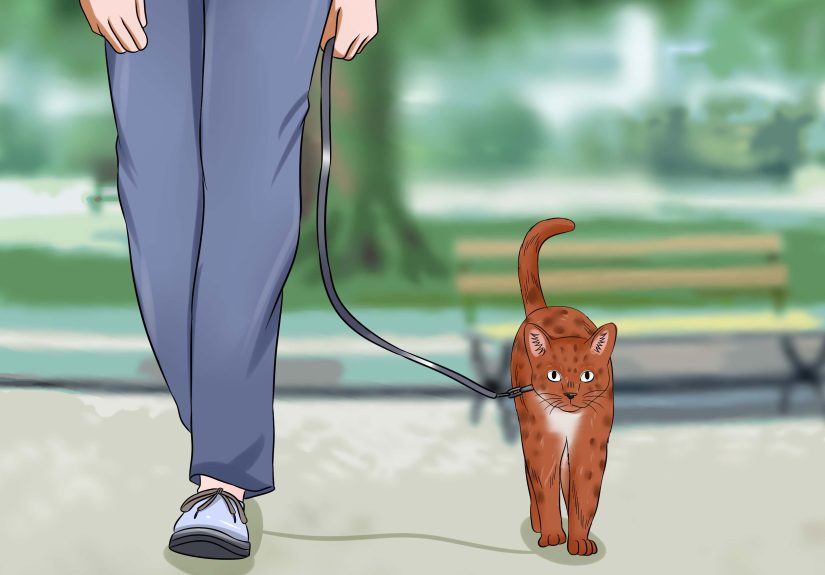
- Harness and leash training: only with a well-fitted cat harness, never a neck collar alone
- Window enrichment: bird feeders positioned for viewing, sturdy perches, and shaded lookout spots
For many households, this is the breakthrough. Once a cat has legal outdoor fun, the front-door obsession often cools down. Not always overnight, but enough that life gets much less dramatic.
7. Lock down high-risk moments
Every cat owner has danger zones. Halloween. Movers. Repair crews. The friend who keeps saying, “Oops, I didn’t see him there!” while your cat is already halfway to the porch. These are not training moments. These are management moments.
During high-risk times:
- Place your cat in a bedroom, office, or bathroom with the door shut
- Use a carrier if workers will be coming in and out repeatedly
- Put a sign on the door that says “Do not opencat inside”
- Give your cat water, a litter box, a bed, and a toy in the safe room
- Do not assume guests will remember your instructions after one sentence and half a cookie
This step is not overkill. It is smart prevention. The best time to manage risk is before the door starts swinging open every thirty seconds.
8. Build a safety net in case your cat still slips out
Even the best plan needs backup. That means every cat, including indoor-only cats, should have a layer of identification and recovery prep.
Your safety checklist:
- Microchip your cat and keep the registration current
- Use a breakaway collar with an ID tag if your cat tolerates it
- Keep recent photos of your cat on your phone
- Make sure window screens and doors latch securely
- Know your cat’s favorite hiding spots in case of a quick dash and retreat
If your cat does get out, act quickly and calmly. Many indoor cats do not travel far at first. They often hide close to the house, under porches, behind shrubs, or in garages. Panic helps no one, least of all the cat who is currently pretending to be a leaf.
Common Mistakes That Make Door-Dashing Worse
- Accidentally rewarding the rush: Opening the door while your cat is crowding it teaches that crowding works.
- Inconsistent rules: If one person trains and three people improvise, the cat will follow the improv people.
- Not enough enrichment: A bored cat can turn the doorway into a hobby.
- Punishment: Fear may stop a behavior in the moment but often creates stress, hiding, or sneakier behavior later.
- Skipping backup safety: Hoping your cat never gets out is not the same thing as being prepared.
Final Thoughts
If you are wondering how to keep a cat from running out the door, think in layers: manage the environment, train an alternate behavior, reduce boredom, provide safe outdoor options, and prepare for the occasional “well, that was chaotic” moment. Most cats can improve a lot when the plan is consistent.
Your goal is not to win an argument with a cat. That is a terrible business model. Your goal is to make staying inside easier, safer, and more rewarding than making a dramatic break for freedom. Once you do that, the front door becomes just a door again instead of the star of your cat’s personal action movie.
Real-Life Experiences: What This Looks Like in an Actual Cat Household
In real homes, progress usually happens in a slightly messy, very human way. One family may start because their orange tabby has turned every grocery run into a hostage negotiation. Another may have a newly adopted former outdoor cat who sits by the door every evening like a tiny union rep demanding yard access. The details differ, but the pattern is often the same: people first try to move faster, then realize the cat is even faster, and finally learn that management plus training beats panic every time.
A common experience is discovering that the cat is not obsessed with the door all day long. The cat is obsessed with specific moments. Maybe it is when someone jingles keys. Maybe it is right before dinner. Maybe it is when the dog goes out and the cat thinks, “Excuse me, I also have travel plans.” Once owners notice the trigger, life gets easier. They start tossing treats toward a perch before opening the door, or they ask the cat to go to a mat, and suddenly the sprinting decreases. Not because the cat had a personality transplant, but because the routine changed.
Another real-world lesson is that enrichment works better than many people expect. A cat tree placed near a sunny window can steal attention away from the entryway. A puzzle feeder can turn five minutes of boredom into twenty minutes of focused work. A feather wand session before the evening rush can reduce the “I must conquer the threshold” energy. People are often surprised that the front-door issue improves when the rest of the cat’s day gets richer and more structured.
Safe outdoor options can also make a huge difference. Some cats become far less determined to bolt once they have a predictable routine for catio time or harness walks. The key is consistency. If outside time happens in a carrier or by being carried through the door, the cat learns that access is controlled by you, not by ambushing the foyer. Many owners say this is the turning point: the door stops being a slot machine and starts being just part of a schedule.
There are also plenty of stories about setbacks. Guests forget the rules. A plumber leaves the door open. A holiday brings a parade of deliveries. That does not mean the training failed. It means management matters. Experienced cat owners often become shameless about using signs, safe rooms, and carriers during busy times. They learn that preventing one bad escape is easier than spending six terrified hours searching under cars with a flashlight and a bag of treats.
Perhaps the most reassuring experience people report is that improvement does not require a “perfect” cat. Bold cats can learn. Former outdoor cats can adjust. Kittens can be taught early, and adult cats can absolutely pick up new habits. The biggest difference is not magic. It is repetition. Calm repetition, boring repetition, reward-heavy repetition. Not glamorous, but extremely effective.
So if your cat currently acts like the front door is a portal to fame, fortune, and free tuna, do not give up. Plenty of owners have been there. With a better setup, smarter routines, and a little patience, many of those same cats eventually watch the door open, glance at their mat, and choose the treat station instead. That is not just progress. That is peace, with whiskers.