Table of Contents >> Show >> Hide
- Before You Start: Quick Safety & Comfort Checklist
- The Best Technique Basics (So It Feels Amazing, Not Annoying)
- How to Give a Head Massage: 12 Steps
- Step 1: Ask about comfort and preferences
- Step 2: Set the position (neck supported = instant upgrade)
- Step 3: Warm up your hands
- Step 4: Begin with gentle “still touch”
- Step 5: Massage the temples and hairline in small circles
- Step 6: Work across the scalp in sections (like mowing a lawn, but calmer)
- Step 7: Focus on the crown (the “stress hat” zone)
- Step 8: Glide to the back of the head and base of the skull
- Step 9: Add a gentle scalp “lift” (no yanking)
- Step 10: Massage around the ears and jaw hinge
- Step 11: Finish with neck and upper-shoulder release (optional but elite)
- Step 12: Cool-down: slow strokes and still touch
- Optional Enhancements (That Don’t Make It Weird)
- Common Mistakes to Avoid
- Example Routines (So You Don’t Overthink It)
- Aftercare Tips
- Real Experiences: What a Great Head Massage Feels Like (and What I’ve Learned Watching People React)
- Conclusion
A good head massage is one of those small kindnesses that feels way more luxurious than it has any right to.
Done right, it can help melt stress, ease tension around the scalp and neck, and leave someone looking like they
just took a mini-vacation… without ever leaving the couch.
This guide walks you through how to give a head massage in 12 simple stepswith practical tips
on pressure, hand placement, common mistakes, and when to skip massage altogether. You don’t need fancy tools,
spa music, or wizard certification. You just need clean hands, a little patience, and the ability to resist
turning the massage into aggressive shampooing.
Before You Start: Quick Safety & Comfort Checklist
Head and scalp massage is generally gentle and low-risk, but there are times when it’s smart to pause.
Skip the massage (or keep it extremely light and away from sensitive areas) if the person has:
a fever, a contagious scalp condition (like lice), an active infection or open sores on the scalp, recent surgery
or injury around the head/neck, or unexplained severe headache, dizziness, or numbness. When in doubt, choose
comfort over heroics and encourage them to check with a healthcare professional.
What you’ll need
- Clean hands (short nails are your best friend)
- A chair or couch with head/neck support
- Optional: a towel (especially if using oil), a small amount of lightweight oil, or a scalp serum
- Optional: a silicone scalp massager (gentle, not scratchy)
How long should a head massage last?
A satisfying head massage can be 5 to 15 minutes. If you’re adding neck and shoulder work,
it can stretch to 20 minutes. Short and consistent often beats long and once-in-a-blue-moon.
The Best Technique Basics (So It Feels Amazing, Not Annoying)
- Use fingertips, not fingernails. Nails feel like tiny rakes. Cute on autumn leaves. Not on scalps.
- Move the skin, not the hair. Think “gentle scalp shift,” not “tugging a rope.”
- Keep pressure light-to-medium. Increase slowly only if the person asks for more.
- Stay steady. Smooth, consistent rhythm is relaxing; random poking is… confusing.
How to Give a Head Massage: 12 Steps
-
Step 1: Ask about comfort and preferences
Start with the easiest win: ask what they like. “Light pressure or more firm?” “Oil or no oil?”
“Any sore spots?” If they have extensions, braids, or a sensitive scalp, you’ll adjust your approach.
This 10-second check-in prevents 10 minutes of accidental annoyance. -
Step 2: Set the position (neck supported = instant upgrade)
Have them sit in a chair with their head supported (or recline slightly on a couch).
If their neck is floating in midair, the “relaxing” head massage may turn into a neck workout.
A pillow or rolled towel behind the neck can help. -
Step 3: Warm up your hands
Rub your palms together for 5–10 seconds. Warm hands feel more soothing and help you ease into pressure.
Cold hands can be… memorable. Not always in a good way. -
Step 4: Begin with gentle “still touch”
Place both hands on either side of the head (above the ears) and hold for a few slow breaths.
This isn’t just “being dramatic”it signals safety and helps the nervous system downshift.
Think of it as the massage’s opening credits. -
Step 5: Massage the temples and hairline in small circles
Using the pads of your fingertips, make small circles at the temples, then move along the front hairline.
Keep the movement slow and even. If they’re prone to tension headaches, this area often feels like a
“finally” momentgentle is key.Pro tip: Try 3 circles in one direction, then 3 in the other. Your hands shouldn’t sprint.
-
Step 6: Work across the scalp in sections (like mowing a lawn, but calmer)
Move from the front hairline toward the crown in small circles, covering the scalp in a methodical pattern.
Aim to move the scalp skin slightly over the skull without pulling hair. This classic scalp massage technique
is simple and consistently effective. -
Step 7: Focus on the crown (the “stress hat” zone)
The crown can hold tensionespecially for people who spend hours at screens.
Use gentle circular motions and pause on any spot that feels tight (they’ll usually sigh or say, “Right there.”).
Hold light pressure for 5–10 seconds, then keep moving. -
Step 8: Glide to the back of the head and base of the skull
Move your fingertips to the occipital area (the ridge at the base of the skull).
Use small circles and gentle sustained pressure. Many people feel tension here from posture,
jaw clenching, and “I’ll fix my posture tomorrow” energy.Keep pressure moderate and avoid digging into the neck. If anything feels sharp or dizzying, back off.
-
Step 9: Add a gentle scalp “lift” (no yanking)
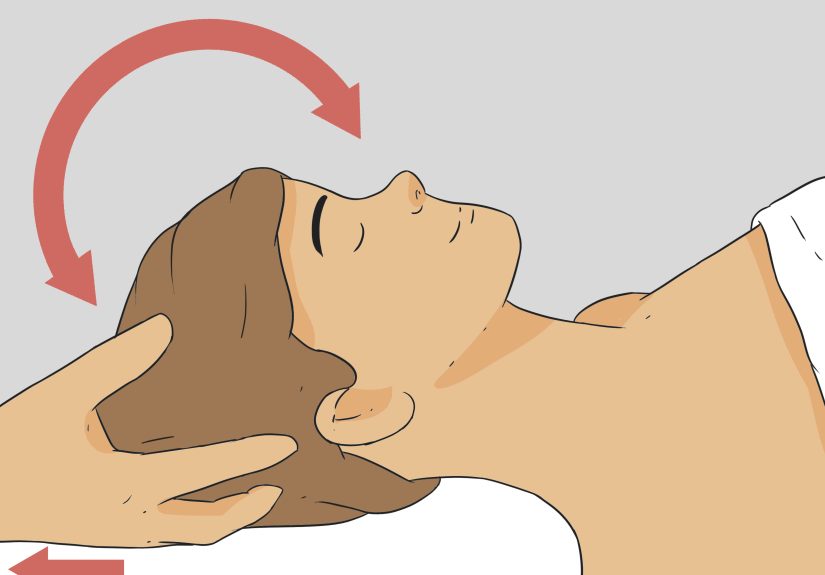
Place your fingertips on the scalp near the crown and gently lift the scalp skin upward in tiny pulses
(almost like a subtle wave), then release. This can feel incredibly relaxingwhen done gently.
If hair pulls, you’re lifting hair, not scalp. Reset and lighten up. -
Step 10: Massage around the ears and jaw hinge
Many people carry stress around the ears and where the jaw meets the skull.
Use your fingertips to circle behind the ears, then lightly press and release at the jaw hinge area
(just in front of the ear). If the person clenches their jaw or grinds teeth, this can feel like
unlocking a stuck door. -
Step 11: Finish with neck and upper-shoulder release (optional but elite)
A head massage becomes “wow” when you add 1–2 minutes on the neck and upper shoulders.
Use your fingertips or thumbs (gently) to knead the tops of the shoulders.
For the neck, use light strokes downward from the base of the skull toward the shoulders.
Avoid strong pressure on the front/side of the neck. -
Step 12: Cool-down: slow strokes and still touch
End with slow, smoothing strokes across the scalp and a final still hand placement (like Step 4).
Let them sit quietly for a few breaths before they pop up.
If you used oil, offer a towel and suggest shampooing later if they prefer.
Optional Enhancements (That Don’t Make It Weird)
Should you use oil for a scalp massage?
Oil can reduce friction and feel luxurious, but it’s optional. If you use oil, choose a tiny amount of a
lightweight option (a few drops), and avoid essential oils unless the person is sure they tolerate them.
For acne-prone scalps or sensitive skin, skipping oil can be smarter.
Can head massage help hair growth?
You’ll hear plenty of claims online. Here’s the grounded version: scalp massage may support scalp comfort,
relaxation, and circulation, and some research suggests it could influence hair thickness in certain contexts.
But it’s not a guaranteed “grow hair fast” button, and evidence is still developing. It’s best viewed as a
helpful habit for scalp health and stress reliefnot a replacement for medical evaluation or proven treatments
when hair loss is a concern.
Tools: scalp massagers
Silicone scalp massagers can feel great during shampooing or dry massage, but they’re not mandatory.
If someone has scalp irritation, dandruff flare-ups, psoriasis, eczema, or breaks in the skin, go extra gentle
or avoid tools entirely until things calm down.
Common Mistakes to Avoid
- Using nails: even “a little” can scratch and irritate.
- Too much pressure too soon: start light; let them request more.
- Fast random circles: slow rhythm wins every time.
- Hair pulling: move the scalp skin; don’t tug strands.
- Ignoring red flags: fever, infection, lice, open wounds, recent injury/surgery = skip.
Example Routines (So You Don’t Overthink It)
5-minute “reset” routine
- 30 seconds: still touch + breathing
- 90 seconds: temples + hairline circles
- 2 minutes: scalp sections front to crown
- 1 minute: base of skull circles
- 30 seconds: slow finishing strokes
15-minute “mini spa” routine
- 1 minute: still touch + comfort check
- 4 minutes: scalp sections (front, sides, crown)
- 3 minutes: back of head + base of skull
- 2 minutes: scalp lift + crown holds
- 3 minutes: ears/jaw hinge + neck strokes
- 2 minutes: shoulders + slow finish
Aftercare Tips
After a head massage, some people feel sleepy, extra calm, or mildly lightheadedespecially if they were holding
tension. Encourage them to take a moment before standing up quickly. Water can be helpful, and if oil was used,
a gentle shampoo later may keep hair from feeling heavy.
Real Experiences: What a Great Head Massage Feels Like (and What I’ve Learned Watching People React)
Head massage is one of those rare techniques where the feedback is immediate and honest. People don’t politely
pretend it’s relaxingyour hands will know within 30 seconds. When it’s good, shoulders drop, eyebrows soften,
and breathing slows down like someone finally found the “off” switch for their thoughts. When it’s not so good,
you’ll see the opposite: a subtle flinch, a micro-lean away, or that polite smile that says, “This is fine,”
while their scalp sends a formal complaint to HR.
One of the biggest “aha” moments is realizing that the scalp doesn’t want chaos. New massage-givers
often think more movement equals more relaxationbigger circles, faster circles, surprise circles. But the scalp
seems to prefer a steady rhythm that feels predictable. If you keep your pace slow and consistent, people often
relax even if your technique is basic. It’s like lullabies: nobody demands complicated jazz chords; they want a
calm beat that tells the nervous system it can stop pacing.
Another real-world lesson: pressure is personal. Some people love a firm scalp massage, especially
at the base of the skull where posture tension builds. Others have sensitive scalps and can only handle feather-light
touch. A friend who wears tight ponytails all day might feel tender at the hairline, while someone with short hair
might enjoy a bit more pressure without tugging. The trick is to start lighter than you think you need, then slowly
increase. If they say, “You can go harder,” you’re golden. If they don’t, light-to-medium is the safe sweet spot.
The funniest (and most useful) reaction you’ll see is the involuntary “head follow.” When you find a great spot,
people unconsciously lean into your fingertips like a cat finding the sunny patch on the carpet. That’s your
cue to pause and hold gentle pressure for a few seconds. You don’t have to chase new areas constantly. Sometimes
the most luxurious part of the massage is simply staying with what feels goodespecially around the temples,
crown, and occipital ridge.
On the flip side, I’ve seen how a head massage can go sideways when hair gets involved. If someone has thick curls,
a protective style, extensions, or just a “please don’t mess up my hair” plan, you’ll want to massage more with
press-and-release and small scalp shifts rather than full circles that drag hair. You can still
deliver relaxation without turning it into an accidental detangling session. In fact, adapting to hair type and
styling preferences is one of the easiest ways to make your massage feel thoughtful and professional.
The most surprising experience-based tip: the ending matters more than you think. If you stop
abruptlyhands off, “Okay we’re done!”it can snap someone right out of relaxation. A slow cool-down (light strokes,
then still touch) helps the brain stay in that calm, floaty state for an extra minute or two. It’s the difference
between gently waking up and being startled by a fire drill. And that calm “afterglow” is often what people remember
most about the massage.
Finally, the most consistent takeaway: head massage isn’t about perfection; it’s about presence.
When you’re relaxed, your hands feel steady. When you’re rushed, the massage feels choppy. If you treat it like a
small ritualwarm hands, slow rhythm, checking in, ending gentlyyou’ll give a head massage that feels genuinely
restorative. And yes, you’ll probably hear some version of “Can you do that again?” which is basically the
highest honor in the kingdom of cozy.
Conclusion
Learning how to give a head massage is a simple skill with big payoff. With clean hands, a calm rhythm,
and a light-to-medium touch, you can help someone relax, release tension, and feel cared for in just a few minutes.
Follow the 12 steps, adjust for comfort and hair type, and keep safety in mind when symptoms or scalp issues suggest
you should skip massage. The best part? The more you practice, the more intuitive it becomeslike cooking, but with
fewer dishes and more sighs of relief.