Table of Contents >> Show >> Hide
- What Backlinks Really Are, and Why They Still Matter
- The New Rule of Link Building: Earn, Don’t Manufacture
- How to Get Backlinks: 10 Strategies That Still Work
- 1. Create a Linkable Asset
- 2. Use Competitor Backlink Analysis
- 3. Publish Original Data
- 4. Try Digital PR Instead of Mass Outreach
- 5. Reclaim Unlinked Brand Mentions
- 6. Use Broken Link Building Carefully
- 7. Build Resource Pages Worth Being Listed On
- 8. Write Guest Content Selectively
- 9. Become Quotable
- 10. Improve Internal Linking While You Build External Links
- What Makes a Backlink High Quality?
- Backlink Outreach That Does Not Sound Like a Robot Wrote It
- Backlink Mistakes to Avoid
- A Simple Backlink Workflow You Can Actually Use
- Final Thoughts
- Experience Notes: What Actually Happens When You Try to Earn Backlinks
- SEO Tags
If SEO had a school cafeteria, backlinks would be that mysterious kid everyone talks about. Some people swear they are the whole game. Others act like they are overrated. The truth, as usual, sits in the middle with a tray of lukewarm fries: backlinks still matter, but only when they are earned the right way.
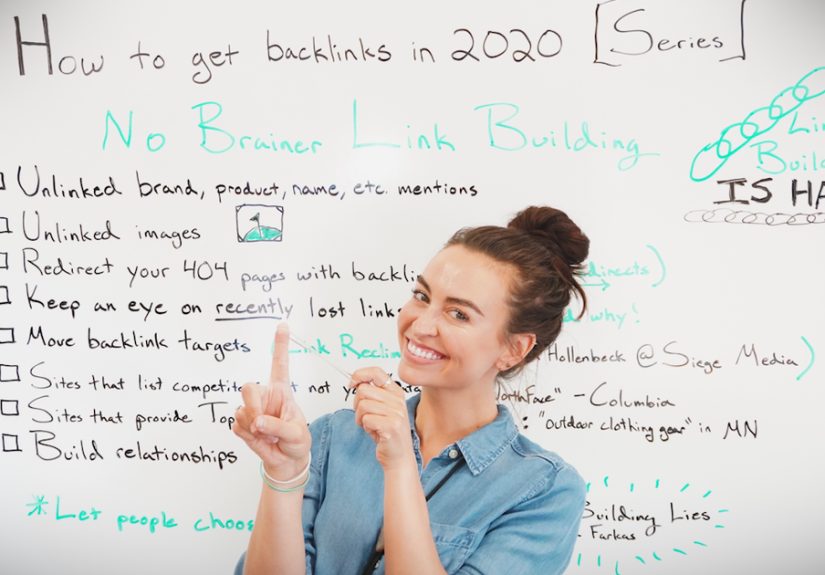
This Whiteboard Friday-style guide breaks down how to get backlinks without wandering into the swamp of spammy tactics, awkward outreach, or “totally natural” paid placements that are about as natural as a spray-tanned snowman. If you want links that help rankings, strengthen authority, and bring real referral traffic, you need a process built on relevance, usefulness, and trust.
So let’s skip the gimmicks and get into the smart, modern, white-hat link building strategies that actually make sense.
What Backlinks Really Are, and Why They Still Matter
A backlink is simply a link from another website to your site. In SEO, that link acts like a signal. It can help search engines understand that your content is worth referencing, and it can also send actual humans to your page, which is the kind of traffic nobody complains about.
But not all backlinks are equal. A random link from a weak, irrelevant site is not the same as an editorial mention from a respected publication, industry blog, local news outlet, university resource page, or niche expert website. Quality beats quantity. Relevance beats volume. A few trustworthy backlinks can do more for your SEO than a truckload of junk links that look like they were collected from the internet’s basement.
The goal is not to “build links” in the old-school, sketchy sense. The goal is to earn backlinks by creating something worth citing and then putting it in front of the right people.
The New Rule of Link Building: Earn, Don’t Manufacture
If you remember the old days of SEO, link building used to sound like a weird underground hobby. People bought links, traded links, dropped links in comments, spun articles, and acted shocked when rankings disappeared. Search engines have gotten a lot better at spotting manipulation, and modern backlink strategies have shifted toward editorial value.
That means the safest and strongest backlinks tend to come from:
- Original research and data
- Helpful, in-depth guides
- Digital PR campaigns
- Useful tools and calculators
- Expert commentary and quotable insights
- Broken link replacement opportunities
- Unlinked brand mention reclamation
In plain English: stop asking, “Where can I place a link?” and start asking, “Why would someone be glad to link to this?” That one question saves a lot of bad decisions.
How to Get Backlinks: 10 Strategies That Still Work
1. Create a Linkable Asset
If your page looks like every other page in the search results, it gives publishers no reason to choose you. A linkable asset is content built specifically to attract references. It might be a study, a survey, an industry benchmark, a calculator, a template, a checklist, or the best beginner guide in your niche.
For example, if you run a home improvement site, don’t publish another generic “paint colors for kitchens” post and hope for magic. Publish a cost comparison by region, a downloadable renovation checklist, or an original survey on what homeowners actually regret after remodeling. Data and utility attract backlinks because they save other writers time.
2. Use Competitor Backlink Analysis
This is one of the least glamorous and most effective tactics in SEO. Look at which pages in your niche already attract high-quality backlinks. Then ask why. Are they getting links because they have better data, better visuals, stronger statistics, clearer explanations, or simply because they reached out better than everyone else?
Competitor backlink analysis helps you find patterns. Maybe roundup posts in your niche attract links. Maybe statistics pages pull in journalists. Maybe resource pages on universities or nonprofits link to practical guides. Once you know what already earns links, you can build a stronger version instead of throwing content into the void and hoping it learns to swim.
3. Publish Original Data
Writers, bloggers, and journalists love citing statistics. If you become the source of a useful stat, you increase your chance of earning natural backlinks. This does not mean you need a Fortune 500 research budget. A small poll, internal trend report, curated industry dataset, or year-over-year comparison can work.
Let’s say you own a pet website. You could publish a report on average annual dog ownership costs by state, based on publicly available pricing data and your own analysis. That type of content can attract links from blogs, local publications, and finance sites because it gives them something specific to reference.
4. Try Digital PR Instead of Mass Outreach
Digital PR is link building with better clothes and better manners. Instead of emailing 400 strangers with “Dear webmaster,” you pitch a story, insight, trend, or data point that fits what publishers actually cover.
Good digital PR angles include:
- New research with surprising findings
- Seasonal trend data
- Expert commentary on breaking industry topics
- Local stories with regional relevance
- Useful visualizations or maps
This approach works because editors are not looking for your backlink. They are looking for a story. If your content makes their job easier, the link often follows naturally.
5. Reclaim Unlinked Brand Mentions
Sometimes people mention your brand, product, founder, or study without linking to you. That is close enough to count as a warm lead. Instead of cold outreach, you are contacting someone who already knows you exist and thought you were worth mentioning.
A simple message can work: thank them for the mention, point out the specific page where your audience can learn more, and ask whether they would consider adding a link for readers. This tactic is polite, efficient, and refreshingly low on desperation.
6. Use Broken Link Building Carefully
Broken link building still works, but only when done well. The basic idea is simple: find a broken page on another site, identify websites still linking to it, and offer your relevant content as a replacement. The catch is that your replacement needs to be genuinely useful. Nobody wants to swap a dead resource for a mediocre one just because you asked nicely.
This strategy works best when your page closely matches the original intent. If the broken page was a beginner guide, send a beginner guide. If it was a stats page, offer a stats page. If you pitch a product page instead, expect silence so loud you can hear it.
7. Build Resource Pages Worth Being Listed On
Many organizations, schools, associations, and niche publishers maintain resource pages. These are curated collections of useful links for a topic. If your content genuinely helps their audience, you can earn backlinks by suggesting your page as an addition.
This tactic tends to work best for educational, nonprofit, public-interest, or highly practical content. Think guides, calculators, glossaries, safety checklists, printable templates, and how-to resources. A sales-heavy landing page usually will not make the cut.
8. Write Guest Content Selectively
Guest posting is not dead. Bad guest posting should be. A thoughtful article on a relevant, reputable site can still help with visibility, referral traffic, authority, and backlinks. The problem starts when marketers treat guest posting like a factory line and publish thin content on any website willing to say yes.
Good guest content should do three things: match the publication’s audience, bring an original point of view, and fit naturally with your brand expertise. If the only reason for the article is to smuggle in anchor text, it is probably not a great strategy.
9. Become Quotable
One of the fastest ways to earn high-quality backlinks is to become the expert people cite. That means publishing opinions, frameworks, commentary, and concise explanations people can quote in articles, newsletters, and industry roundups.
For example, if you work in cybersecurity, don’t just publish generic tips. Comment on new threats, explain what the news means for small businesses, and offer clear, usable takeaways. If writers trust your perspective, backlinks can become a side effect of your expertise.
10. Improve Internal Linking While You Build External Links
This is the part many people forget while daydreaming about prestigious backlinks. If your internal linking is messy, some of the value from external backlinks may not flow efficiently through your site. Strong internal links help search engines and users discover related content, spread authority, and understand which pages matter most.
Think of backlinks as water coming into the house and internal links as the plumbing. You need both. Otherwise, you are just standing in the kitchen wondering why the bathroom sink is still dry.
What Makes a Backlink High Quality?
Marketers love metrics, and tools can be useful, but a good backlink is not just a number on a dashboard. In practical terms, high-quality backlinks usually share a few traits:
- Relevance: The linking page is topically related to your content.
- Authority: The site has credibility, trust, and real readership.
- Editorial placement: The link appears naturally in the main content.
- Context: The anchor text and surrounding copy make sense.
- Traffic potential: Real humans might click it.
A great backlink is not just good for rankings. It also makes sense for readers. That is usually a strong clue you are on the right path.
Backlink Outreach That Does Not Sound Like a Robot Wrote It
Outreach is where many link building campaigns go from promising to painful. The biggest mistake is sending a generic email that clearly went to 800 other people before breakfast.
A better outreach email is short, personal, and specific. It references the page you are contacting them about, explains why your resource is relevant, and respects the recipient’s time.
Simple structure:
- Open with a real observation.
- Mention the exact page or article.
- Explain why your resource adds value.
- Keep the ask small and clear.
Example:
Hi Jenna, I was reading your guide on first-time vegetable gardening and noticed you included a section on planting calendars. We recently published a state-by-state frost date chart with printable timing windows that may be useful for your readers. Thought I’d share it in case you update the resource page.
That is cleaner than writing a novella about your “amazing content” and “mutually beneficial partnership opportunities,” which is usually code for “please do me a favor for free.”
Backlink Mistakes to Avoid
- Buying links that pass SEO value
- Over-optimizing anchor text with exact-match keywords
- Sending mass outreach without relevance
- Chasing any link instead of the right links
- Publishing thin guest posts just for anchor text
- Ignoring nofollow, sponsored, and UGC considerations
- Building links to weak pages nobody wants to cite
If a tactic feels like something you would need to explain nervously in a reconsideration request, it is probably not your best move.
A Simple Backlink Workflow You Can Actually Use
- Choose one page worth promoting.
- Upgrade it into a genuinely useful asset.
- Study competitor backlinks to similar pages.
- Build a list of relevant prospects.
- Segment prospects by type: journalists, bloggers, resource pages, partners, local sites.
- Send personalized outreach.
- Track responses, links earned, and referral traffic.
- Refresh the asset and repeat.
This approach is not flashy, but it works. Good backlink building is usually more process than magic.
Final Thoughts
If you want to know how to get backlinks in today’s SEO world, here is the short answer: publish something worth citing, find the people who would genuinely care, and reach out like a helpful professional instead of a coupon flyer with Wi-Fi.
The strongest backlink strategies are built on trust, relevance, and usefulness. That is why digital PR, original research, broken link replacement, competitor analysis, resource page outreach, and expert-led content continue to outperform lazy shortcuts. White-hat link building may take more effort, but it produces the kind of backlinks that do more than move a ranking. They build reputation.
And in SEO, reputation is a lot more fun than penalties.
Experience Notes: What Actually Happens When You Try to Earn Backlinks
In real SEO work, backlink campaigns rarely look as neat as blog posts make them sound. On paper, the workflow is simple: publish a great resource, email the right people, and collect glorious editorial links while sipping coffee and admiring your spreadsheet. In practice, it is messier, slower, and far more human.
One common experience is realizing that “great content” is not always enough. Many site owners publish a solid article and wait for backlinks to appear like woodland creatures in a cartoon. Usually, nothing happens. Not because the content is bad, but because nobody has seen it yet. Promotion matters. Outreach matters. Packaging matters. A good page with a weak angle often loses to a slightly less impressive page with a stronger story.
Another familiar lesson is that relevance beats raw authority more often than beginners expect. People get obsessed with landing links from giant websites, but a smaller niche site can be a far better backlink if its audience overlaps with yours. A gardening tool brand may get more value from five respected gardening blogs than one mention on a broad news site where the link sits in a throwaway paragraph and never gets clicked.
There is also the outreach reality check. Personalized emails work better, but they take time. And yes, many people will still ignore you. That is normal. A low reply rate does not automatically mean your campaign failed. Sometimes the winners come from a small handful of positive responses, especially if those links land on pages that continue earning links over time.
Broken link building teaches patience. Unlinked mention reclamation teaches diplomacy. Digital PR teaches you that headlines matter almost as much as research. Guest posting teaches you that the best opportunities usually come from real relationships, not giant databases of “accepting guest posts” pages. If anything surprises people most, it is that successful link building starts feeling less like technical SEO and more like marketing, PR, and audience psychology working together.
Over time, the strongest backlink experience usually comes from building assets that stay useful. A statistics page, a benchmark report, a calculator, a map, a glossary, or a truly excellent guide can keep attracting backlinks long after the outreach campaign ends. That is the difference between chasing links one by one and creating a page that naturally earns them. In the long run, the second approach is usually more scalable, less stressful, and much better for your brand.
So if your early backlink attempts feel clunky, awkward, or slower than expected, congratulations: you are having a very authentic SEO experience. Keep improving the asset, refine your outreach, and focus on earning links you would actually be proud to show on a whiteboard.