Table of Contents >> Show >> Hide
- When the World Got Weird, the Internet Got Weirder
- Why COVID-19 Memes Became So Popular
- The Funniest COVID-19 Meme Themes People Still Remember
- 1. The Toilet Paper Treasure Hunt
- 2. Zoom Meetings and the Rise of the Accidental Comedy Show
- 3. Sourdough Starters, Banana Bread, and Kitchen Ambition
- 4. “My Plans vs. 2020”
- 5. Introverts, Extroverts, and the Social Battery Wars
- 6. The Mask Era: Foggy Glasses and Facial Guessing Games
- 7. Pets as Coworkers
- What Makes a COVID-19 Meme Actually Good?
- COVID-19 Memes as Digital Folklore
- How to Share Favorite COVID-19 Memes Respectfully
- Why We Still Laugh at Pandemic Memes
- Experiences Related to Favorite COVID-19 Memes
- Conclusion
Note: This article is based on real public-health history, digital culture research, and pandemic-era social behavior. No source links are inserted in the body so the HTML stays clean for web publishing.
When the World Got Weird, the Internet Got Weirder
There are moments in history that feel too strange to explain with normal sentences. The COVID-19 pandemic was one of them. Suddenly, people were disinfecting groceries like they were suspicious crime-scene evidence, attending school or work in pajama pants, learning the emotional range of the phrase “You’re on mute,” and treating toilet paper like a rare collectible. In that confusing, anxious, and socially distant world, COVID-19 memes became a kind of unofficial group therapy.
The title “Hey Pandas, Share Some Of Your Favorite COVID-19 Memes” captures a very specific internet mood: people gathering online not to pretend everything was fine, but to laugh at the absurd little details that made pandemic life so unforgettable. Memes did not erase the fear, loss, frustration, or loneliness of that period. But they did give people a way to say, “Yes, this is ridiculous, and yes, I am also wearing slippers to a staff meeting.”
COVID-19 memes spread because they were fast, relatable, and oddly comforting. A good meme took a shared experiencelockdown boredom, Zoom fatigue, sourdough obsession, mask confusion, hand sanitizer hoardingand turned it into a joke everyone could understand in three seconds. That is the magic of internet humor: it compresses a complicated feeling into one image and a caption that hits like a tiny emotional sneeze.
Why COVID-19 Memes Became So Popular
COVID-19 memes became popular because millions of people were living through similar disruptions at the same time. Schools closed, offices went remote, travel paused, restaurants changed service models, and social plans vanished from calendars like socks in a dryer. People were separated physically, but online platforms became crowded digital living rooms.
Memes helped people process uncertainty. When news changed quickly and routines disappeared, humor gave everyday life a structure. A meme about forgetting what day it was worked because, for many people, Tuesday and Saturday had become the same beige soup of sweatpants, snacks, and unread emails. A joke about Zoom meetings worked because almost everyone had either frozen mid-sentence, watched a coworker fight with a microphone, or seen someone’s cat become an accidental project manager.
There was also a deeper reason COVID memes mattered: they created a sense of shared survival. The best pandemic memes were not just funny; they were social signals. Posting one said, “I am tired too.” Sharing one said, “This made me think of you.” Commenting on one said, “We are still connected, even if we have not left the house since approximately the invention of bread.”
The Funniest COVID-19 Meme Themes People Still Remember
1. The Toilet Paper Treasure Hunt
Few pandemic meme topics were as instantly recognizable as toilet paper shortages. In early 2020, toilet paper became a strange symbol of panic buying. Memes compared it to gold, luxury jewelry, and emergency currency. The joke worked because it was absurdly specific. People expected shortages of medical supplies or groceries, but nobody expected bathroom tissue to become the main character of the apocalypse.
These memes often showed people guarding toilet paper like dragon treasure or gifting a roll as if it were a diamond ring. The humor was not really about paper products. It was about how quickly ordinary life can become bizarre when fear spreads faster than common sense.
2. Zoom Meetings and the Rise of the Accidental Comedy Show
Remote work and online school created one of the richest meme categories of the pandemic: video call disasters. “You’re on mute” became the unofficial slogan of digital life. People joked about pretending to have technical issues, wearing professional shirts with pajama bottoms, and staring at their own faces with the intensity of a museum curator examining a haunted painting.
Zoom memes were popular because they captured the awkwardness of blending public and private life. Suddenly, bosses, teachers, classmates, and clients were peeking into bedrooms, kitchens, and living rooms. Pets walked across keyboards. Children interrupted presentations. Internet connections surrendered at dramatic moments. The modern workplace had become a sitcom, and everyone was both cast and audience.
3. Sourdough Starters, Banana Bread, and Kitchen Ambition
At some point during lockdown, many people looked at flour and thought, “This is my destiny.” Baking memes became everywhere. Sourdough starters got names, personalities, and possibly more attention than houseplants. Banana bread became a personality trait. People who had never baked anything more complicated than frozen pizza suddenly spoke about hydration ratios like tiny flour scientists.
The humor came from the gap between fantasy and reality. The fantasy was becoming a calm, rustic home baker. The reality was a sticky counter, a loaf shaped like a confused brick, and a kitchen that looked as if a flour bag had exploded out of spite. Still, those baking memes were warm and oddly hopeful. They reminded people that making somethinganythingcould feel grounding when the outside world felt out of control.
4. “My Plans vs. 2020”
The “My Plans vs. 2020” meme became one of the defining formats of the pandemic era. It worked because it summed up the year with brutal efficiency. On one side: ambition, travel, career goals, social life, weddings, concerts, graduations, and gym memberships. On the other side: 2020, entering the room like a villain with a fog machine.
This meme was funny because it made disappointment communal. Everyone had plans that changed. Some changes were minor; others were deeply painful. The meme gave people a way to acknowledge disruption without writing a full emotional essay. It was a tiny digital shrug in the face of a very large mess.
5. Introverts, Extroverts, and the Social Battery Wars
COVID-19 memes also loved comparing introverts and extroverts. Introvert memes joked that staying home was their Olympic event. Extrovert memes showed people dramatically wilting without parties, brunches, or random conversations with strangers in line for coffee.
Of course, reality was more complicated. Even people who enjoyed solitude could feel lonely during long periods of isolation. And many extroverts found creative ways to connect online. But the meme format worked because it exaggerated personality differences in a harmless, recognizable way. It turned social distancing into a personality test nobody asked to take.
6. The Mask Era: Foggy Glasses and Facial Guessing Games
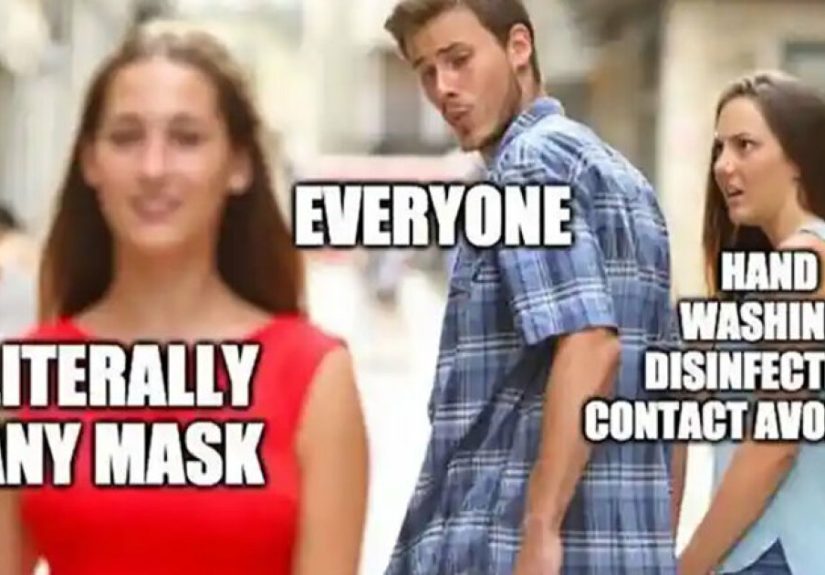
Mask memes became another major pandemic category. People joked about fogged-up glasses, forgetting they were wearing a mask, recognizing friends only by eyebrows, and accidentally making facial expressions nobody could see. For glasses wearers, every grocery trip became a low-budget submarine mission.
Mask humor also reflected how quickly new habits became normal. At first, masks felt unfamiliar to many Americans. Later, people joked about feeling underdressed without one. The memes captured that cultural adjustment in real time, one fogged lens at a time.
7. Pets as Coworkers
During lockdown, pets became emotional support staff, office supervisors, and meeting crashers. Cats sat on laptops with the confidence of executives. Dogs appeared in video calls looking deeply concerned about quarterly reports. Birds, hamsters, and other pets accidentally became internet celebrities in family group chats.
Pet memes were popular because they softened the mood. In a period filled with serious news, a dog interrupting a meeting was a small reminder that life still contained chaos of the adorable variety. Many people spent more time with their pets than ever before, and the memes turned that companionship into comedy.
What Makes a COVID-19 Meme Actually Good?
A good COVID-19 meme does three things well: it is relatable, it is specific, and it punches up at the situation rather than down at vulnerable people. The funniest pandemic memes usually focused on shared frustrations: bad Wi-Fi, strange routines, empty calendars, overambitious hobbies, or the emotional mystery of wearing jeans after months of elastic waistbands.
The weakest memes often crossed into cruelty, misinformation, or tired stereotypes. Jokes about illness, grief, body changes, or personal hardship could easily become hurtful. A strong meme does not need to mock someone’s pain to be funny. The best pandemic humor laughed at circumstances, not at people who were struggling.
That is why many favorite COVID memes still feel memorable years later. They captured details without being mean. They said, “This is hard,” then added, “Also, my sourdough starter has become my roommate.” That balance made the humor feel human.
COVID-19 Memes as Digital Folklore
COVID-19 memes were not just throwaway jokes. They were a form of digital folklore. Like old songs, cartoons, sayings, and newspaper jokes from past crises, memes documented how ordinary people reacted to extraordinary events. They preserved small emotional snapshots: the boredom of lockdown, the awkwardness of remote life, the stress of uncertainty, and the creativity people used to stay connected.
Memes also traveled quickly across communities. A joke could begin on one platform, move to another, get remixed, translated, personalized, and reposted until nobody knew where it started. That remix culture made memes feel participatory. People were not just consuming pandemic humor; they were editing, captioning, sharing, and adapting it to their own lives.
In a strange way, COVID memes created a public diary written by millions of anonymous comedians. Some entries were silly. Some were dark. Some were oddly poetic. Together, they showed how people used humor to make sense of a period that often made no sense at all.
How to Share Favorite COVID-19 Memes Respectfully
If someone says, “Hey Pandas, share some of your favorite COVID-19 memes,” the best response is to choose humor that feels thoughtful as well as funny. A meme about forgetting the day of the week? Usually safe. A meme about turning every meeting into a mute-button disaster? Excellent. A meme about buying too many snacks during lockdown? Relatable, though it is better when the joke is about habits rather than bodies.
It is wise to avoid memes that spread false health claims, mock people who were sick, or make light of personal loss. The pandemic affected people differently. Some remember boredom and banana bread. Others remember grief, job loss, burnout, or fear. Good humor leaves room for that reality.
When sharing pandemic memes today, context matters. A funny caption in a close friend group may land differently on a public page. The safest and strongest COVID-19 memes focus on shared absurdity: the confused calendar, the dramatic handwashing era, the pet coworker, the Zoom freeze face, the suspiciously ambitious home workout plan that became a snack schedule by Wednesday.
Why We Still Laugh at Pandemic Memes
Years later, COVID-19 memes remain memorable because they belong to a very specific emotional time capsule. They remind people of when the world shrank to living rooms, grocery lists, phone screens, and daily routines that felt both boring and historically enormous.
Laughter after a difficult period can be complicated, but it can also be healing. People do not laugh because everything was fine. They laugh because humor helps organize memories that are too messy to hold all at once. A meme can turn a difficult chapter into something easier to discuss. It gives people an opening: “Remember when we all thought two weeks at home would be simple?” That sentence alone contains enough irony to power a small city.
The best COVID memes survived because they were honest. They did not pretend the pandemic was easy. They admitted it was strange, stressful, boring, scary, and occasionally so absurd that the only reasonable response was to make a joke about sweatpants becoming formalwear.
Experiences Related to Favorite COVID-19 Memes
Many people’s strongest pandemic memories are attached to tiny, ordinary moments that later became meme material. The first experience was often the sudden transformation of home into everything: office, classroom, gym, cafeteria, movie theater, and emotional weather station. A dining table became a workstation. A bedroom became a classroom. A couch became a conference room, a lunch spot, and occasionally a place to stare into space while pretending to “process emails.” Memes about home life felt funny because they were barely exaggerations.
Another common experience was the strange relationship with time. During lockdowns and restrictions, days blended together. People joked about March lasting forever, weekends losing meaning, and calendars becoming decorative wall art. These memes captured a real feeling: without normal routines, time became slippery. Breakfast could happen at noon. Work could stretch into evening. A person could ask, “What day is it?” and receive “Yes” as a reasonable answer.
Food memories also became meme fuel. Some people cooked more than ever, while others developed a loyal relationship with cereal, instant noodles, frozen meals, or whatever snack was closest. The internet joked about sourdough, banana bread, whipped coffee, and the dangerous power of having the refrigerator within walking distance all day. These jokes were funny because they showed people trying to create comfort in small ways. A loaf of bread was not just bread; it was a project, a distraction, and sometimes a comedy of errors with yeast.
Video calls created another huge category of shared experience. Students, teachers, coworkers, and families all learned the weird choreography of digital communication. Someone always had background noise. Someone always forgot to unmute. Someone’s camera angle always suggested they were broadcasting from the bottom of a well. These moments became memes because they were harmlessly awkward and nearly universal. They turned frustration into a group laugh.
Then there were the emotional experiences behind the jokes. People missed friends, routines, celebrations, and everyday freedom. A meme about talking to houseplants or giving a pet a job title was funny, but it also hinted at loneliness. A meme about dressing up just to take out the trash was silly, but it revealed how much people missed ordinary public life. The humor carried a little sadness inside it, which made it feel more honest.
Looking back, favorite COVID-19 memes were not just about being funny online. They were about connection. They helped people say, “This is happening to me too,” without needing a long speech. They turned isolation into conversation and confusion into comedy. For many, those memes became small souvenirs from a difficult era: not perfect, not always polished, but deeply human. And sometimes, when history gets heavy, a meme about foggy glasses or a cat attending a budget meeting is exactly the tiny laugh people need.
Conclusion
COVID-19 memes became one of the most recognizable forms of pandemic-era internet culture because they turned shared disruption into shared laughter. From toilet paper jokes and Zoom disasters to sourdough starters and “My Plans vs. 2020,” these memes helped people describe a strange chapter in simple, funny, instantly relatable ways.
The best pandemic memes were not careless. They were clever, specific, and emotionally aware. They gave people permission to laugh without ignoring the seriousness of the moment. In the end, favorite COVID-19 memes remind us that humor is not just entertainment. Sometimes, it is how people wave at each other across distance and say, “I’m still here. Also, my cat has joined the meeting.”