Table of Contents >> Show >> Hide
- Why Fisher Blacksmithing Stands Out in a Garden Shed Full of Mediocrity
- What Makes Hand-Forged Garden Tools Different?
- The Best Fisher Blacksmithing Tools for Everyday Garden Work
- How Fisher Tools Fit Into a Complete Gardener’s Toolkit
- Choosing the Right Fisher Tool for Your Garden Style
- How to Care for Hand-Forged Garden Tools
- Are Fisher Blacksmithing Tools Worth the Price?
- Garden Experiences: What It Feels Like to Work With Fisher Blacksmithing Tools
- Final Thoughts
Some garden tools are bought with optimism. Others are bought because the old one bent like a spaghetti noodle while you were trying to dig a stubborn dandelion out of clay. Fisher Blacksmithing tools belong to a third category entirely: the kind you buy because you are tired of disposable gear and ready for something that feels like it belongs in both a working garden and a small museum of good decisions.
Hand-forged garden tools have a different personality from mass-market tools. They tend to feel denser, steadier, and more intentional in the hand. Fisher Blacksmithing, a Montana maker known for handcrafted garden tools, leans hard into that old-school appeal with forged steel heads, black walnut handles, and designs that look elegant without becoming precious. In other words, these are not “look but don’t touch” tools. They are built for weeding, transplanting, edging, loosening soil, and dealing with whatever chaos your flower bed cooked up while you were inside pretending five minutes on the couch wouldn’t turn into forty-five.
This guide takes a practical look at Fisher Blacksmithing tools for gardeners: what makes them different, which tools are most useful, how they fit into a real gardening routine, and whether heirloom-quality tools actually earn their keep in the dirt.
Why Fisher Blacksmithing Stands Out in a Garden Shed Full of Mediocrity
Fisher Blacksmithing sits in a niche that many gardeners love but few brands occupy well: functional, handcrafted, American-made garden tools that still look good enough to gift. The appeal is not only aesthetic. Much of the value comes from how the tools are constructed. The forged steel components, solid riveted joinery, and hand-turned black walnut handles give the tools a sturdy, balanced feel that mass-produced stamped tools often lack.
For gardeners, that matters more than it may seem. The best hand tools are the ones you reach for again and again without thinking. They do not twist when you pry. They do not flex when you meet resistance. They do not leave your wrist asking legal questions after twenty minutes in a raised bed. A strong connection between handle and blade is one of the defining traits of a dependable trowel or hoe, and that principle carries across nearly every hand tool in the garden.
Fisher’s lineup also reflects real gardening tasks instead of a random “tool set” assembled by someone who may never have met a weed. The collection includes hoes for weeding and row-making, trowels for transplanting and bulbs, a dandelion digger for taproots, hand cultivators and forks for loosening soil, and crevice-style tools for tight spaces around stone, brick, and raised beds. That kind of specialization is exactly what serious gardeners appreciate: the right tool for the right job, not one vaguely shovel-ish object expected to solve every problem in the landscape.
What Makes Hand-Forged Garden Tools Different?
1. Better Balance and Heft
A hand-forged tool often feels more balanced than a cheap, lightweight alternative. That does not automatically make it “better” for everyone, but many gardeners find that a little more heft improves control. A pointed hoe with carefully balanced weight can glide through repetitive weeding motions more naturally than a flimsy tool that chatters through the soil like it drank too much espresso.
2. Tougher Construction
Fisher’s tools are notable for single-piece steel construction in several designs and riveted assembly rather than weak weld points. For gardeners, that matters when prying out roots, cutting into compacted soil, or levering bulbs from a crowded bed. The dandelion digger, for example, is built for exactly the sort of unapologetic prying that would make cheaper tools wave a white flag.
3. Materials That Age Well
Black walnut handles are not just attractive. Wood handles, when well-shaped and maintained, can feel warmer and more comfortable in the hand than hard plastic. They also age beautifully. Of course, wood needs care. If you ignore it for years in a damp shed, it will not send you a thank-you card. But with occasional oiling and dry storage, a quality wooden handle can remain durable and handsome for a long time.
4. A Tool You Actually Want to Maintain
Here is a weirdly important point: gardeners are more likely to clean and maintain tools they value. Extension guidance consistently recommends removing soil and sap, drying tools before storage, disinfecting cutting tools when disease is a concern, protecting metal from rust, and maintaining wood handles with oil. Expensive or heirloom tools do not magically avoid maintenance, but they do inspire better habits. Funny how that works.
The Best Fisher Blacksmithing Tools for Everyday Garden Work
Pointed Garden Hoe
If you only know one Fisher tool, make it the pointed garden hoe. This is the kind of compact hand hoe that earns its spot fast. The pointed tip helps break up soil, open narrow planting furrows, dig transplant holes, and weed around flowers and vegetables without bulldozing everything nearby. That makes it especially useful in mixed beds, kitchen gardens, and tight planting schemes where a full-size hoe feels like using a snowplow in a parking garage.
For gardeners who direct sow, the pointed shape is especially handy for drawing rows. For gardeners who battle weeds weekly, the controlled swing and balanced arc make repeated hoeing less awkward. It is a practical tool with just enough elegance to make routine weeding feel mildly aristocratic.
Perennial Trowel, Also Called a Tulip Trowel
The perennial trowel is one of the smartest designs in the Fisher collection. Its slim profile is useful for urban gardeners, raised-bed growers, and anyone working in crowded borders where a wide blade disturbs too much soil. The narrow shape slides into tight planting spaces, while the serrated edge helps cut through roots or tougher ground. It is ideal for dividing bulbs, transplanting perennials, edging, and reaching taproots that are annoyingly committed to the concept of staying put.
A good trowel is the most frequently used hand tool in many gardens, so durability matters. Gardeners regularly replace bargain trowels because the blade loosens, bends, or separates from the handle. Investing in a sturdier version makes sense if you garden often enough to know exactly where your favorite trowel is at all times.
Dandelion Digger
Every gardener eventually meets a weed that laughs at ordinary hand-pulling. That is where a dedicated digger shines. Fisher’s dandelion digger is designed for taproots and prying, which makes it useful not only for dandelions but also for loosening root balls, teasing out compacted roots, and lifting stubborn invaders from ornamental beds. It is one of those niche tools that stops feeling niche the moment you use it correctly.
If your garden has compact soil or perennial weeds with long roots, a stout digger can save both time and patience. That alone may justify the purchase. Peace of mind is valuable. So is not having to crawl around muttering at a weed you only half-removed.
Garden Fork, Hand Rake, and Crevice Tool
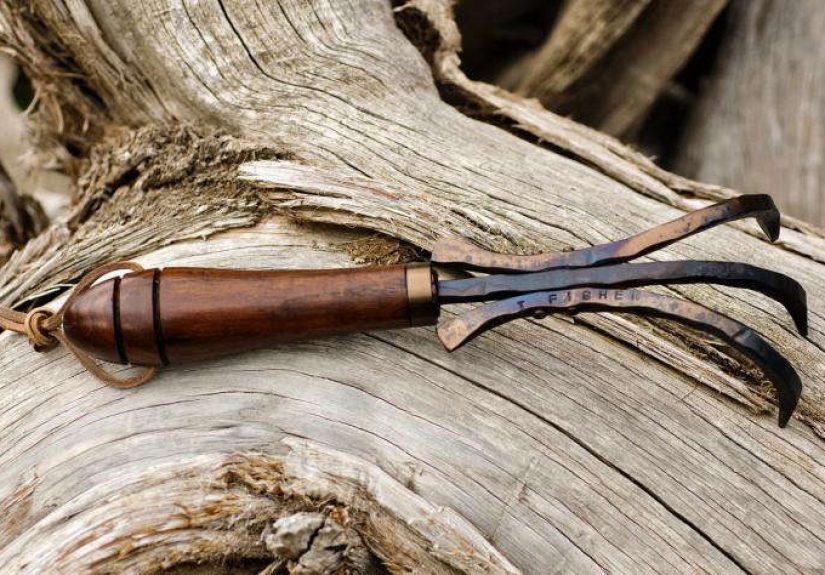
These tools are excellent examples of why blacksmith-made gear appeals to serious gardeners. A strong hand fork loosens soil without overworking it. A hand rake or cultivator is useful for shallow rhizomatous weeds and surface cultivation. A crevice tool makes detail work easier around rocks, masonry, bed edges, and raised beds. In other words, these are detail tools for gardeners who no longer enjoy using their fingers as emergency equipment.
How Fisher Tools Fit Into a Complete Gardener’s Toolkit
Even the nicest forged hand tools do not replace everything. A well-rounded garden kit still needs a few basics beyond the Fisher lineup.
- Bypass pruners: Best for live stems and green growth because they make cleaner cuts than anvil-style pruners.
- Loppers: Useful for thicker branches that exceed hand-pruner capacity.
- Pruning saw: Essential for larger woody stems.
- A soil knife or hori-hori style tool: Great for cutting roots, planting small transplants, and light digging.
- A larger spade or shovel: Necessary for shrubs, trees, and major digging jobs.
Think of Fisher Blacksmithing tools as the precision end of the toolkit. They excel at the close, repetitive, hand-level work that defines real gardening: transplanting, cultivating, weeding, dividing, edging, and harvesting. They are less about brute force and more about daily usefulness.
Choosing the Right Fisher Tool for Your Garden Style
For Raised Beds and Small-Space Gardens
Go with the perennial trowel, crevice tool, and pointed hoe. These tools shine where precision matters and elbow room is limited.
For Flower Borders and Perennial Beds
The perennial trowel and garden fork are especially useful. Add the dandelion digger if you deal with taproots or frequent transplanting.
For Vegetable Gardens
The pointed hoe may be the standout. It can weed around rows, draw seed furrows, and help with light soil preparation. A hand rake or cultivator is also valuable for loosening surface soil and managing shallow weeds.
For Gardeners Who Love Beautiful Objects
Yes, these are practical tools. But let’s not pretend beauty is irrelevant. A well-made forged tool has gift appeal, display appeal, and the rare ability to make even a muddy potting bench feel a little more civilized.
How to Care for Hand-Forged Garden Tools
Quality tools deserve quality maintenance, and fortunately, the routine is not complicated.
Clean After Use
Remove soil, rinse if needed, wipe off sap, and dry the tool before putting it away. Dirt and moisture are a tag team you do not want working overtime on steel.
Disinfect When Needed
For pruning tools or blades that may contact diseased plant material, sanitation matters. Garden guidance commonly recommends rubbing alcohol or other appropriate disinfectants between cuts or between plants when disease transfer is a concern. Do not skip this step if you are moving from one infected plant to another. Pathogens love free transportation.
Protect the Metal
Light oil on metal surfaces helps prevent rust. If rust appears, address it early with steel wool, a wire brush, or sandpaper. Small problems are easy. Big rust is basically metal’s passive-aggressive way of asking why you abandoned it in a humid shed.
Care for the Wood Handle
Sand away rough spots if needed and apply a protective coat of linseed or mineral oil from time to time. Wood handles should be stored dry and off the ground. A nice walnut handle is not meant to marinate in damp concrete air for six months.
Store Smart
Hang tools or keep them on shelves in a clean, dry place. Good storage extends the life of any garden tool, but it matters especially with forged steel and wood-handled pieces.
Are Fisher Blacksmithing Tools Worth the Price?
For casual gardeners who buy one tomato plant in May and forget about it by July, maybe not. But for active gardeners, gift buyers, collectors of American craft, or anyone tired of replacing mediocre tools, Fisher Blacksmithing tools make a strong case for themselves.
You are paying for craftsmanship, materials, and durability, not just utility. The value is partly practical and partly emotional. A good forged trowel can absolutely help you plant better, but it also changes how the work feels. Better grip, better balance, better control, and a stronger sense that the tool is helping rather than negotiating.
These tools are especially worth considering if you care about heirloom-quality garden tools, hand-forged steel, sustainable buying habits, or the simple pleasure of using objects that were made by an actual human with skill instead of a machine with no appreciation for your peonies.
Garden Experiences: What It Feels Like to Work With Fisher Blacksmithing Tools
The most noticeable difference often appears in the first ten minutes of use. A Fisher tool does not feel flimsy or disposable. It feels grounded. When a gardener takes the pointed hoe into a vegetable bed, the weight tends to settle the motion. Instead of scratching unpredictably across the surface, the blade bites where you intend, especially when shaping seed rows or cutting shallow weeds. That kind of control becomes more obvious over time, because repetitive tasks are where bad tools reveal their personality defects.
In perennial beds, the narrow tulip-style trowel tends to earn quick loyalty. Gardeners working among tightly packed roots, bulbs, and established crowns often find that a slim forged blade is less disruptive than a broad, cheap trowel. It slips into the soil with more precision, which matters when you are dividing a clump, transplanting a small perennial, or working around plants you actually want to keep alive. That last point sounds obvious, but every gardener has accidentally uprooted a prized plant while trying to remove something much less lovable.
The dandelion digger creates a different kind of satisfaction. Taproot weeds are psychological warfare. You pull, the leaves snap, and the root remains underground plotting a comeback tour. A stout digger changes that relationship. Gardeners often describe the experience as more controlled and less frustrating because the tool gives leverage instead of demanding brute force. It is the difference between persuading the weed to leave and trying to yank it out by hope alone.
Another common experience with hand-forged tools is that gardeners slow down just enough to work more accurately. That may sound sentimental, but it is practical. Better-made tools encourage a cleaner rhythm: dig, lift, slice, cultivate, repeat. The work feels deliberate rather than frantic. In a raised bed or cut-flower patch, that can mean straighter planting lines, neater edges, and less accidental damage to neighboring plants.
There is also the maintenance factor. Gardeners who invest in handcrafted tools usually become more attentive caretakers. They wipe the blade down. They notice sap buildup. They oil the handle before winter. They store the tool where it belongs instead of leaving it outside to rust under a hose reel. Over a season, that attention adds up. The tool stays sharper, cleaner, and more pleasant to use, which then reinforces the habit. Good tools create better behavior. It is one of the few positive peer-pressure systems available in a shed.
And yes, there is a social experience too. Fisher tools tend to attract comments. Friends notice them. Visitors pick them up. Gift recipients remember them. In a world full of forgettable garden gadgets, a forged walnut-handled hoe or digger feels personal. It has presence. That does not make tomatoes taste better, unfortunately, but it does make routine work a little more satisfying. For many gardeners, that blend of beauty, function, and durability is exactly the point.
Final Thoughts
Fisher Blacksmithing tools are not about novelty. They are about refinement. They take familiar gardening jobs such as weeding, transplanting, edging, digging, and cultivating and give those tasks better tools, better balance, and better durability. The result is a collection that suits gardeners who want useful hand-forged tools, appreciate American craftsmanship, and prefer buying once over buying repeatedly.
If you want a practical starting point, begin with the pointed garden hoe or perennial trowel. If weeds with taproots are your sworn enemies, add the dandelion digger. Build from there. Maintain them well. Use them often. And when someone asks why your garden tools look nicer than their living room decor, you can smile politely and keep weeding.