Table of Contents >> Show >> Hide
- What Exactly Is Plan B?
- What Did the FDA Actually Say?
- Plan B vs. the “Abortion Pill”: Two Different Medications
- What the Science Shows About Emergency Contraception
- When and How to Use Plan B Safely
- Access, Myths, and Real-World Impact
- Talking About Plan B Without the Drama
- Experiences and Practical Lessons Around “Plan B Isn’t an Abortion Pill”
- The Bottom Line
Few medications are surrounded by as much confusion as Plan B One-Step, better known as the “morning-after pill.”
Depending on which headline or social media post you read, it’s either basic birth control, an “abortion pill,” or some mysterious thing no
one quite understands. The U.S. Food and Drug Administration (FDA) has now said clearly: Plan B is not an abortion pill.
That clarification mattersnot just for politics and headlines, but for real people trying to make quick, informed decisions after
unprotected sex or a contraception fail. So let’s walk through, in plain English, what Plan B is, what the FDA actually said, how the
medication works, and why it’s different from abortion pills.
What Exactly Is Plan B?
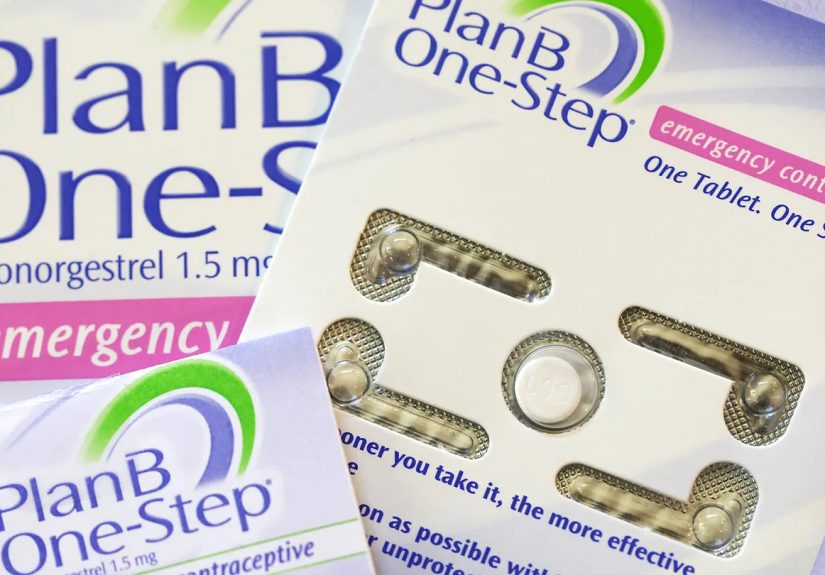
Plan B One-Step is an emergency contraceptive pill. It’s a backup method of birth control used after unprotected sex or
when your regular method didn’t go as plannedthink a broken condom, missed pills, or “we didn’t plan this at all.” It’s sold over the
counter in pharmacies and many big-box stores in the United States, without a prescription or age restriction.
The active ingredient is levonorgestrel, a synthetic version of the hormone progesterone that has been used in regular
birth control pills for decades. Plan B is essentially a single, higher dose of the same hormone many people already take for
everyday contraception.
Plan B is designed to be taken as soon as possible within 72 hours (3 days) after unprotected sex. The sooner it’s taken,
the better it works. It can still reduce the risk of pregnancy later in that 72-hour window, but it’s not a magic reset buttonits job
is to reduce the chance of pregnancy, not guarantee that pregnancy won’t happen.
What Did the FDA Actually Say?
For years, the package information for Plan B left the door open to a controversial idea: that it might prevent a fertilized egg
from implanting in the uterus. That’s important, because some people and some laws define pregnancy as starting at fertilization,
while others define it as starting at implantation. The implantation line made Plan B a target in abortion debates.
In 2022, after reviewing the best available scientific evidence, the FDA updated Plan B’s labeling and its own public Q&A. The revised
information now states that Plan B works by delaying ovulationthe release of an egg from the ovaryand that
evidence does not support any effect on implantation or an existing pregnancy.
The FDA explicitly answers the question, “Is Plan B One-Step an abortifacient (causing abortion)?” with a short, clear response:
No. Plan B will not work if someone is already pregnant, and it does not terminate a pregnancy.
Plan B vs. the “Abortion Pill”: Two Different Medications
How Plan B Works
Emergency contraception like Plan B is designed to prevent a pregnancy from starting. The primary way it does this is by
delaying or blocking ovulation, so there’s no egg available for sperm to fertilize. If there’s no egg, there’s no
pregnancy.
Medical groups, including the American College of Obstetricians and Gynecologists (ACOG), emphasize that emergency contraception
does not cause an abortion. An abortion ends an existing pregnancy. Emergency contraception prevents a pregnancy from
occurring in the first place.
How Medication Abortion Works
The medication commonly called “the abortion pill” is a different treatment entirely. Medication abortion usually involves
two drugs: mifepristone followed by misoprostol. These medicines are used together to end an established early
pregnancytypically up to 10–12 weeks, depending on local regulations and clinical guidelines.
Mifepristone blocks progesterone, a hormone needed to maintain pregnancy. Misoprostol then causes the uterus to contract and empty,
which results in ending the pregnancy. Because this process ends an existing pregnancy, it is, by definition, an abortion.
In other words:
- Plan B (levonorgestrel) – Prevents or delays ovulation to help prevent pregnancy.
- Abortion pills (mifepristone + misoprostol) – Used to end an already established pregnancy.
Why the Two Get Confused
So how did Plan B end up lumped in with abortion pills in so many conversations?
- Timing overlap: Both emergency contraception and medication abortion are used in the earliest days after sex or a missed period, so people assume they’re doing the same thing.
- Scary or misleading language: Terms like “abortifacient” and “chemical abortion” get thrown around without clear definitions.
- Knowledge gaps: Surveys from KFF (Kaiser Family Foundation) show that while many people know emergency contraception is available over the counter, fewer people realize it cannot end an existing pregnancy.
- Social media sound bites: “Abortion pill” makes for a catchyif inaccurateheadline, and nuance doesn’t always go viral.
Even some news coverage has blurred the lines over the years, prompting the FDA and major medical organizations to repeatedly
emphasize: Plan B is not the same thing as an abortion pill.
What the Science Shows About Emergency Contraception
Beyond labels and politics, the key question is what the science actually says about how levonorgestrel emergency contraception works.
Primary Mechanism: Delaying Ovulation
Multiple studies and clinical reviews have found that levonorgestrel emergency contraception works mainly by
delaying or inhibiting ovulation. If the egg is never released, fertilization can’t happen.
When researchers looked at whether levonorgestrel affects implantation of a fertilized egg, they did not find solid evidence that it
changes the uterine lining in a way that would prevent implantation. As a result, major medical organizations and the FDA no longer
list implantation interference as a mechanism of action.
Effectiveness and Limits
Emergency contraception reduces the risk of pregnancy; it doesn’t erase it completely. Levonorgestrel emergency contraceptive pills
are estimated to reduce pregnancy risk by roughly 57–93%, depending on how soon they are taken after unprotected sex and other factors.
There are also important limitations:
- If ovulation has already happened when you take Plan B, it’s much less effective or may not work at all. In that case, sperm and egg may have already met, and the medication can’t rewind the process.
- If someone is already pregnant, emergency contraception does not disrupt that pregnancy and has not been shown to harm the fetus.
When and How to Use Plan B Safely
Timing Is Everything
Plan B is most effective when taken as soon as possible after unprotected intercourseideally within 24 hours, and
still within 72 hours. Some sources note that levonorgestrel may have limited effectiveness up to 120 hours (5 days), but the
success rate drops the longer you wait.
This is why many clinicians recommend keeping a dose of emergency contraception on hand “just in case,” rather than scrambling to find
a pharmacy when you’re already stressed out.
Common Side Effects
Like most medications, Plan B can come with side effects, but they’re usually short-lived. Common ones include:
- Nausea or mild stomach upset
- Fatigue
- Headache
- Breast tenderness
- Changes in your next periodearlier, later, lighter, or heavier than usual
These symptoms typically resolve on their own. If someone has severe pain, heavy bleeding, or ongoing symptoms, that’s a cue to talk
to a healthcare professional.
Effectiveness and Body Weight
Research suggests that levonorgestrel emergency contraception may be less effective at higher body weights or BMIs, although it is
still considered safe to use. In those cases, another emergency contraception optionsuch as a copper IUD or ulipristal acetate
(Ella)may be discussed with a clinician.
What Plan B Does Not Do
- It does not protect against sexually transmitted infections (STIs).
- It is not meant for routine, long-term contraception.
- It does not terminate an existing pregnancy or cause miscarriage.
For ongoing birth control and STI protection, methods like condoms plus a regular contraceptive (pill, IUD, implant, etc.) are more
reliable long-term solutions.
Access, Myths, and Real-World Impact
Plan B has taken a long, winding path to its current over-the-counter status. Initially, it was prescription-only and restricted by
age. Over the years, legal challenges and advocacy led to broader access. Today, levonorgestrel emergency contraception is available
without a prescription and without age limits in the United States.
At the same time, debates about abortion laws and reproductive rights have pushed emergency contraception into the spotlight. In some
states with strict abortion bans, officials have incorrectly suggested that emergency contraception is basically an “abortion pill,”
or that it could replace exceptions for rape or incestpositions that do not match medical reality or survivors’ experiences.
Surveys show that while many people know emergency contraception is different from abortion pills, a significant portion of the public
is uncertain about whether it can end a pregnancy. This confusion can translate into hesitation at the
pharmacy counter, delays in taking the pill, or even avoiding it altogether.
Talking About Plan B Without the Drama
Conversations about sex, pregnancy, and abortion can get heated quickly, especially online. But at the personal level, most people are
just trying to make responsible decisions with good information. A few practical tips:
-
Use clear language. Instead of “abortion pill,” specify whether you’re talking about emergency contraception (Plan B)
or medication abortion (mifepristone + misoprostol). -
Respect different beliefs. People define pregnancy and personhood differently. You don’t have to agree to communicate
accurately about what the medication does biologically. -
Ask professionals. Pharmacists, doctors, nurse practitioners, and other clinicians can clarify how Plan B works and
help explore other options if needed. -
Plan ahead when possible. Keeping emergency contraception on hand reduces the stress of tracking it down under a tight
time window.
And as always, information onlineincluding this articleis not a substitute for personalized medical advice from a qualified
professional who knows your health history.
Experiences and Practical Lessons Around “Plan B Isn’t an Abortion Pill”
To understand why the FDA’s clarification matters, it helps to look at real-world experiencesthose quiet, messy, very human moments
that never make it into official policy statements.
Picture a college student who had a condom break on a Saturday night. She’d heard of Plan B but thought, “Isn’t that the same as an
abortion pill? What if I’m against abortion?” When she searched online, she found conflicting information and opinion pieces written
in all caps. At the pharmacy, the pharmacist calmly explained that Plan B works by delaying ovulation and will not end a pregnancy
that already exists. She decided to take it, not because her values changed, but because she realized the medication didn’t conflict
with what she believed about abortionit was closer to a backup birth control pill than anything else.
In another scenario, a couple in their 30s is using condoms while deciding whether they want children yet. One night, they realize
too late that the condom slipped. They both have demanding jobs, and the idea of an unexpected pregnancy feels overwhelming. They’ve
heard rumors that Plan B is dangerous or that it might affect future fertility. A quick conversation with their clinician and a look
at evidence-based resources reassures them: Plan B does not harm fertility and has been used safely for years.
Pharmacists often find themselves on the front lines of this confusion. Some report patients whispering at the counter, asking if
they’re “doing something illegal” by buying Plan B, or apologizing for needing it. When pharmacists can clearly say, “The FDA has
confirmed this is emergency contraception, not an abortion pill,” it shifts the whole tone of the interaction. The conversation moves
from shame and fear to straightforward health care.
Clinicians, too, see the ripple effects of confusion. A family medicine doctor might encounter patients who waited several days before
taking Plan B because they were scared, decreasing its effectiveness. Others may have avoided it entirely and now face decisions
around an unplanned pregnancy. That delay can turn what could have been a simple preventive step into a much more complex situation.
On the flip side, there are also people who are strongly opposed to abortion but feel comfortable using Plan B once they understand
that it prevents pregnancy rather than ending one. They might choose it precisely because it aligns better with how they define the
beginning of pregnancy. Clear, fact-based information allows them to act in a way that matches both their values and the science.
These stories aren’t about telling anyone what they “should” believe. They’re about showing how crucial accurate information is when
seconds and minutes matter. When the FDA states clearly that Plan B is not an abortion pill, it doesn’t settle every ethical or
political argumentbut it does give patients, partners, and providers a firmer foundation for decisions in real life. Instead of
navigating a fog of rumors, people can weigh their options knowing what the medication does and doesn’t do.
At the end of the day, emergency contraception is a tool. Some people will choose to use it; others won’t. But making that choice
based on myths is like driving with the headlights off. The FDA’s clarification flips the lights on: Plan B is emergency contraception,
not an abortion pill. From there, each person can decide what’s right for them in an informed, thoughtful way.
The Bottom Line
Plan B One-Step is a levonorgestrel emergency contraceptive that works mainly by delaying ovulation. It is taken
after unprotected sex or contraceptive failure to reduce the chance of pregnancy. The FDA and major medical organizations agree:
Plan B does not terminate an existing pregnancy and is not an abortion pill.
Understanding this distinction helps people make faster, more confident decisions during an already stressful moment. If you have
questions about which emergency contraception method is best for you, or how it fits with your health history and values, a
conversation with a healthcare professional is always a good next step.