Table of Contents >> Show >> Hide
- What the FCRA Has to Do With Employment Background Checks
- Why the FCRA Matters So Much
- What Employers Must Do Before Running a Background Check
- What Happens if the Report Raises a Red Flag
- How Long Information Can Stay on a Background Report
- Errors, Disputes, and the Candidate’s Right to Fight Back
- The EEOC, Title VII, and Why FCRA Compliance Alone Is Not Enough
- State and Local Laws Make This Even More Interesting
- Common Employer Mistakes Under the FCRA
- Best Practices for Employers
- What Job Seekers Should Do Before a Background Check
- Conclusion
- Real-World Experiences Related to FCRA and Background Checks
Background checks have a reputation problem. To many job seekers, they feel like a mysterious black box where a stranger types your name into a computer and, poof, your future hangs in the balance. In reality, the process is far less magical and far more regulated. When an employer uses a third-party background screening company to gather information about an applicant or employee, the Fair Credit Reporting Act (FCRA) steps in like the referee with a whistle and a very detailed rulebook.
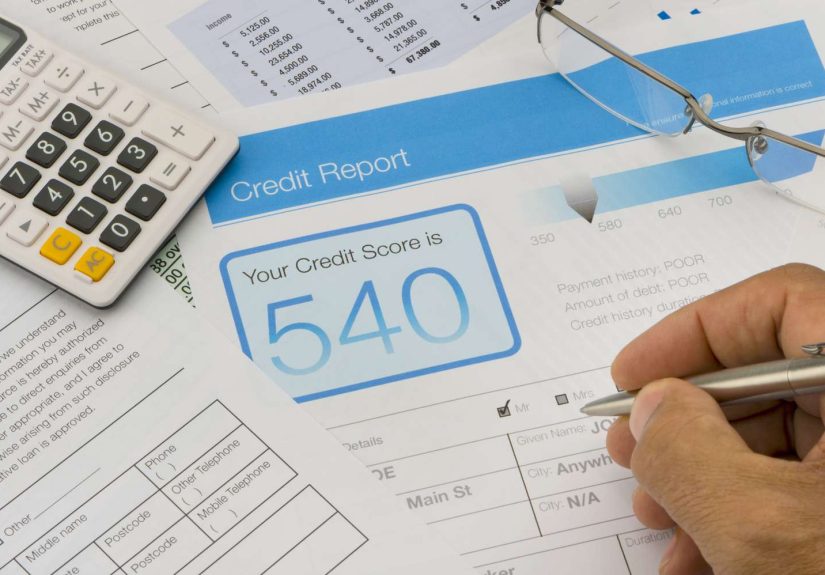
The FCRA is not just about credit cards and credit scores. In the employment world, it also governs many background checks obtained from consumer reporting agencies. That can include criminal history reports, credit reports, driving records, employment verification, education checks, and more. Its main job is simple in theory but crucial in practice: promote accuracy, fairness, and privacy when employers use consumer reports to make decisions about hiring, promotion, retention, reassignment, or firing.
Here is the practical takeaway: a background check is not supposed to be a legal ambush. The FCRA gives candidates rights, imposes duties on employers, and creates standards for the screening companies in the middle. If you are an employer, it is a compliance issue. If you are a job seeker, it is a protection. If you are both, welcome to modern hiring, where paperwork has paperwork.
What the FCRA Has to Do With Employment Background Checks
The phrase “consumer report” sounds like something you would read before buying a blender. Under the FCRA, though, it has a broader meaning. In hiring, a consumer report can include information bearing on a person’s creditworthiness, character, general reputation, personal characteristics, or mode of living when that information is gathered by a consumer reporting agency for employment purposes.
That means many common hiring screens may fall under the law, including:
- criminal history searches
- credit history checks
- employment verification
- education verification
- professional license checks
- motor vehicle records
- reference-based reports in some situations
One important detail often gets lost in the shuffle: the FCRA generally applies when the employer uses a third-party screening company. If an employer gathers public records on its own, the FCRA’s consumer-report procedures may not apply in the same way. But that does not mean the employer gets a free pass. Federal anti-discrimination laws, state laws, local fair-chance rules, privacy rules, and plain old bad judgment can still create serious risk.
Why the FCRA Matters So Much
Hiring decisions move fast. Accuracy does not always move at the same speed. That is exactly why the FCRA matters.
Background reports can contain outdated, incomplete, duplicated, sealed, expunged, or just plain wrong information. A report might pull a record for the wrong person with a similar name. It might list an arrest but not the dismissal that came later. It might include a case that should no longer be reported at all. When that happens, a candidate can lose a job opportunity not because they were unqualified, but because a database had a bad day.
The FCRA was designed to reduce that risk. It requires disclosure and permission before a report is ordered. It requires notices before and after an adverse action. It gives consumers the right to dispute inaccurate or incomplete information. And it obligates screening companies to use reasonable procedures to assure maximum possible accuracy. In short, the law tries to keep hiring from turning into a paperwork-driven version of roulette.
What Employers Must Do Before Running a Background Check
1. Give a clear, standalone disclosure
Before obtaining a background report, the employer must provide a clear and conspicuous written disclosure stating that a consumer report may be obtained for employment purposes. This disclosure should be in a standalone document. That sounds simple because it is supposed to be simple. It is not meant to be buried in a job application, wrapped in legal confetti, or padded with unrelated waivers.
Why is that a big deal? Because employers have landed in hot water for stuffing the disclosure form with liability releases, extra acknowledgments, and unrelated policy language. In FCRA land, “standalone” is not a suggestion. It is a warning label with a tie on.
2. Get written authorization
The employer also must obtain the candidate’s written permission before ordering the report. In many workplaces, the authorization appears with the disclosure form. A candidate can refuse, but that may mean the employer does not move forward with the application.
3. Certify compliance to the screening company
Employers must certify to the consumer reporting agency that they complied with the FCRA’s disclosure and authorization requirements and that they will not misuse the report or discriminate in violation of applicable laws. So yes, even the vendor relationship comes with legal homework.
What Happens if the Report Raises a Red Flag
This is where many employers make mistakes and many applicants first learn the term “adverse action.” Under the FCRA, an employer cannot simply glance at a report, gasp dramatically, and hit reject.
Step one: pre-adverse action notice
If the employer is considering taking a negative action based in whole or in part on the report, it generally must first send a pre-adverse action notice. That package should include:
- a copy of the background report
- a copy of the document called A Summary of Your Rights Under the Fair Credit Reporting Act
This gives the candidate a chance to review the report and speak up before the decision becomes final. That matters because errors are not rare enough to shrug off.
Step two: wait a reasonable amount of time
The FCRA does not set a universal magic number of waiting days, but employers generally should allow a reasonable opportunity for the candidate to dispute or explain the information. Many employers use around five business days, though applicable state or local law may require more.
Step three: final adverse action notice
If the employer still decides not to hire, promote, retain, or reassign the person based on the report, it must send a final adverse action notice. That notice must tell the candidate:
- the name, address, and phone number of the screening company that supplied the report
- that the screening company did not make the employment decision
- that the candidate has the right to dispute the accuracy or completeness of the report
- that the candidate can request an additional free copy of the report within the required period
The screening company is the messenger, not the hiring manager. The employer is the one making the employment decision.
How Long Information Can Stay on a Background Report
This is one of the most misunderstood parts of the FCRA. People often hear about a “seven-year rule” and assume everything disappears after seven years like a disappearing ink trick. That is not how it works.
Under federal law, many types of adverse information have reporting limits. Certain arrests, civil suits, civil judgments, collection accounts, and other adverse items generally cannot be reported after seven years. Bankruptcies usually have a longer reporting period. But criminal convictions generally are not subject to the federal seven-year cap in the same way.
Also, there are exceptions tied to higher-salary positions, and state laws may be stricter than federal law. Some states and localities limit what can be reported, restrict non-conviction information, or impose tighter lookback periods for certain jobs. Translation: anyone claiming there is one simple national rule for all background checks is probably selling oversimplification by the pound.
Errors, Disputes, and the Candidate’s Right to Fight Back
If there is one theme running through modern FCRA enforcement, it is this: bad data can do real damage. A background report that is incomplete or inaccurate can cost someone a paycheck, health insurance, or a career opportunity. That is why dispute rights matter.
If a candidate sees a mistake, they can dispute the information with the consumer reporting agency that produced the report. The agency generally must investigate, review the information submitted, and respond within the timeframe the law allows. If the information is inaccurate, incomplete, unverifiable, expunged, sealed, or legally restricted, it should be corrected or removed.
This is especially important in criminal history reporting. A record without a final disposition can be misleading. An arrest without the dismissal that followed tells only half the story, and half the story is often the dangerous half. Recent regulatory attention has pushed screening companies to avoid reporting old, duplicative, or legally restricted records and to improve the completeness of public-record reporting.
For job seekers, the smartest move is often proactive: request your own relevant reports before a major job search if possible. It is better to discover a problem yourself than to let a recruiter introduce you to it at the least relaxing moment possible.
The EEOC, Title VII, and Why FCRA Compliance Alone Is Not Enough
Here is the trap some employers fall into: they assume that if they followed the FCRA steps, they are legally safe. Not quite.
The Equal Employment Opportunity Commission (EEOC) enforces federal anti-discrimination laws, and its guidance on arrest and conviction records matters a lot. Under Title VII, an employer’s use of criminal history can create disparate impact concerns if a policy disproportionately excludes people in protected groups and is not job-related and consistent with business necessity.
That means employers should avoid lazy, blanket rules such as “any conviction equals no job.” Arrests are not convictions. Old offenses may have little bearing on a present-day role. And the same record may matter very differently for a childcare job, a bank position, a delivery role, or a back-office analyst who never touches money or vulnerable populations.
A more defensible approach often includes an individualized assessment that considers:
- the nature and gravity of the offense
- the time that has passed
- the nature of the job sought or held
In other words, context matters. A background check is supposed to inform judgment, not replace it.
State and Local Laws Make This Even More Interesting
And by “interesting,” we mean “a compliance spreadsheet is now sweating.”
Beyond the FCRA, many states and cities impose additional restrictions on background checks. These rules may govern:
- when criminal history can be considered
- whether questions about convictions can appear on the initial application
- whether employers must wait until after a first interview or conditional offer
- what credit information may be used for employment purposes
- what notices and waiting periods are required
- whether individualized assessments must be documented
Ban-the-box and broader fair-chance hiring laws are especially important. These laws usually do not prohibit all criminal background checks. Instead, they often regulate timing and process so that applicants are evaluated first on qualifications, not just on the scariest line in a report.
For multistate employers, this is where things get complicated fast. A policy that works in one state can be risky in another. A process that seems FCRA-compliant at the federal level may still fail under a city ordinance with extra notice and assessment requirements.
Common Employer Mistakes Under the FCRA
Some mistakes are complicated. Others are so avoidable they almost deserve their own training video with dramatic music. Here are the big ones:
Using a messy disclosure form
If the disclosure includes liability waivers, broad releases, or unrelated policy text, the employer may be creating unnecessary exposure.
Skipping the pre-adverse action step
Going straight from “report received” to “offer revoked” is one of the fastest ways to turn a routine hiring decision into a legal problem.
Ignoring disputes or explanations
If the candidate says the record is wrong, or says it belongs to a different person, that is not the moment to become allergic to email.
Over-screening for the role
A job-related, tailored screening policy is usually smarter than pulling every report imaginable for every role. Not every warehouse associate needs the same review as a CFO.
Treating arrests like convictions
That can create both accuracy and discrimination concerns.
Forgetting state and local laws
Federal compliance is the floor, not the ceiling.
Failing to securely dispose of reports
Once the report has served its lawful purpose, employers must protect and properly dispose of it. Old background files should not be floating around the office like haunted paperwork.
Best Practices for Employers
Employers that want a practical, lower-risk approach should focus on a few habits:
- use clean, standalone disclosure and authorization forms
- screen only for information relevant to the position
- partner with reputable screening vendors that understand FCRA and state law
- train HR and recruiting teams on pre-adverse and adverse action procedures
- build consistent, written adjudication standards
- allow meaningful time for disputes and explanations
- document individualized assessments when appropriate
- monitor changing state and local requirements
A good background-check process should protect the company and treat people fairly. Those goals are not enemies. They are actually pretty good coworkers.
What Job Seekers Should Do Before a Background Check
Candidates are not powerless here. A few smart steps can prevent major headaches:
- review your resume for date, title, and degree accuracy
- be honest about issues likely to appear
- ask what screening company will be used
- request a copy of your report if a problem comes up
- dispute errors quickly and in writing when possible
- keep supporting documents handy, such as court records, pay stubs, W-2s, or degree confirmations
Honesty matters here, but so does self-defense. A truthful candidate can still get tripped up by an inaccurate report. The best approach is transparency plus vigilance.
Conclusion
The relationship between the Fair Credit Reporting Act (FCRA) and background checks is not just a technical legal issue. It shapes how employers gather information, how candidates protect themselves, and how hiring decisions stay grounded in fairness instead of chaos. At its best, the FCRA keeps background screening from becoming sloppy, secretive, or one-sided.
For employers, the law requires a disciplined process: clear disclosure, written consent, careful use of information, proper adverse action notices, and attention to state and local rules. For job seekers, it provides meaningful rights: notice, access, dispute opportunities, and protection from many forms of outdated or inaccurate reporting.
The smartest way to think about the FCRA is this: background checks are legal tools, not crystal balls. They should be accurate, relevant, and fair. Once they stop being those things, trouble follows wearing a suit and carrying a complaint letter.
Real-World Experiences Related to FCRA and Background Checks
In real hiring situations, FCRA and background checks become more than legal vocabulary. They become emotional very quickly. For candidates, a background check often happens after interviews, reference calls, and maybe even a verbal offer. That timing matters. By then, people are already picturing their first day, calculating the commute, or quietly celebrating with takeout they probably could not afford yet. So when a recruiter says, “Everything looks good, pending the background check,” it can sound simple on paper and nerve-racking in real life.
One common experience is the surprise error. A candidate may discover that a report contains someone else’s record, an old charge with no disposition, or a case that was dismissed years ago. The candidate knows the information is wrong, but now they have to prove it while the hiring clock keeps ticking. That experience is frustrating because the person is not arguing about job performance or qualifications. They are arguing with a file. And files, unlike humans, never apologize.
Another common experience comes from applicants with past issues that are real but no longer reflect who they are. Maybe a conviction happened many years ago, followed by a clean record, stable work, and strong references. When that person sees a pre-adverse action notice, it can feel like their worst day has suddenly shown up to a job interview uninvited. This is where fair process matters. The opportunity to explain, provide context, or correct inaccuracies can make the difference between a rigid rejection and a thoughtful decision.
Employers have their own version of stress. HR teams are often trying to balance safety, compliance, speed, consistency, and fairness all at once. A recruiter may be under pressure to fill a role fast, while legal wants perfect documentation, the hiring manager wants a yes-or-no answer immediately, and state laws insist the process in one city cannot match the process in another. In multistate hiring, background screening can feel like assembling furniture with instructions from five different boxes.
There is also the experience of delay, which almost everyone in the process hates. Maybe an old courthouse record needs manual verification. Maybe a past employer is slow to respond. Maybe a motor vehicle report comes in quickly, but an education verification drags on because the school uses a third-party clearinghouse. Candidates often interpret silence as bad news, while employers may simply be waiting for the report to be complete and accurate. The result is the same: everyone refreshes their inbox too often.
Then there are the employers that learn the hard way that process mistakes matter. A company may think it is being efficient by rescinding an offer immediately after seeing a concerning record, only to discover later that it skipped the pre-adverse action step. In that moment, the issue is no longer just whether the candidate was right for the job. It becomes whether the employer followed the law. That shift can be expensive.
The best experiences usually happen when the process is transparent. Candidates know what is being checked, employers use job-related standards, vendors provide accurate reports, and any issues are handled with notice and time to respond. Nobody loves background checks, but they become much less intimidating when the rules are followed and the people involved are treated like humans instead of entries in a database.