Table of Contents >> Show >> Hide
- What Is Pit Trading in Futures Markets?
- What Is Electronic Trading in Futures Markets?
- How the Shift Happened
- Electronic Trading vs. Pit Trading: The Core Differences
- Did Electronic Trading Improve Futures Markets?
- Why Pit Trading Still Mattered for So Long
- Who Benefits More From Each Model?
- The Current Reality of Futures Trading
- Experience on the Ground: What This Shift Felt Like for Traders
- Final Thoughts
- SEO Tags
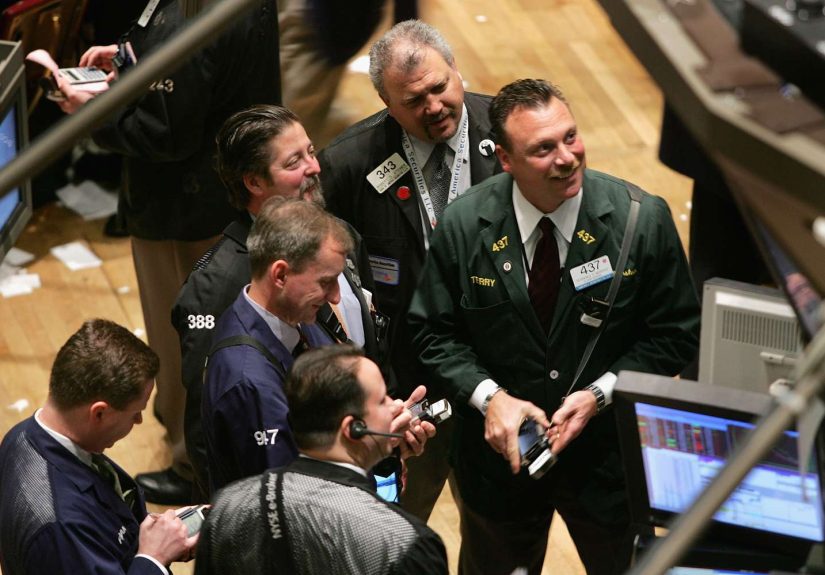
Futures trading used to look like a scene from a movie where everyone had too much coffee and not enough indoor voices. Traders in brightly colored jackets shouted bids, flashed hand signals, and fought for position in the pit like it was both a marketplace and a contact sport. Today, that world has mostly been replaced by glowing screens, matching engines, and order books moving at speeds that make human blinking feel a little lazy.
That shift from pit trading to electronic trading did not just change the look of futures markets. It changed who could participate, how quickly prices moved, what liquidity looked like, how risk was managed, and what kind of edge mattered. In other words, the futures market did not simply go digital. It changed its personality.
This matters for anyone trying to understand how modern derivatives markets work. Whether you trade equity index futures, energy contracts, agricultural products, interest rate futures, or just want to sound very smart at lunch, the battle between electronic trading and open outcry reveals a bigger story about efficiency, access, and the never-ending tug-of-war between speed and human judgment.
What Is Pit Trading in Futures Markets?
Pit trading, often called open outcry, is the old-school method of trading futures contracts on a physical exchange floor. Traders and brokers gather in a designated pit, call out bids and offers, and use standardized hand signals to communicate price, quantity, and whether they want to buy or sell. It is loud, fast, messy, and surprisingly organized once you know the language.
For decades, this was the heartbeat of U.S. futures markets. The pit was where price discovery happened in real time. Orders came in by phone from customers, brokers represented them on the floor, locals and market makers stepped in with liquidity, and trades were matched face-to-face. If markets were theaters, the pit was Broadway. Dramatic, expensive, crowded, and full of people convinced they were the main character.
Pit trading had real strengths. Skilled floor brokers could read tone, urgency, body language, and crowd behavior. They were often effective at handling large, complex, or sensitive orders, especially when showing the full order on a screen might move the market too much. In active pits, human interaction sometimes improved negotiation and produced better fills for difficult trades.
What Is Electronic Trading in Futures Markets?
Electronic trading replaces the physical pit with a digital matching system. Instead of shouting into a trading crowd, participants submit orders into an electronic platform where a matching engine pairs buyers and sellers according to price and time priority. In practical terms, the market becomes a central limit order book running on code rather than on adrenaline.
Electronic futures trading opened the doors to wider access. Instead of being physically present on an exchange floor or relying entirely on a floor broker, traders could connect through terminals, broker platforms, APIs, and professional trading software. That meant more geographic reach, longer trading hours, faster order submission, and broader participation from institutions, hedge funds, proprietary firms, commercial hedgers, and retail traders.
The rise of electronic systems also changed the product mix. Smaller, screen-friendly contracts became especially important. A classic example is the E-mini S&P 500, which helped accelerate the migration toward electronic futures trading by making index exposure more accessible and more practical for a larger pool of participants.
How the Shift Happened
The move from pit trading to electronic trading was not a dramatic overnight coup. It was more like a slow-motion takeover with very fast computers. For years, exchanges ran side-by-side markets where some contracts traded both in the pit and on the screen. Eventually, liquidity migrated to where execution was easier, access was wider, and costs were lower. The screen won because the screen was available to more people, more often, in more places.
Several forces drove that transition:
1. Global access
Futures markets increasingly served participants outside Chicago or New York. Electronic platforms made it possible to trade across time zones without standing shoulder-to-shoulder in a pit at the exchange. That alone was a giant structural advantage.
2. Longer trading hours
Electronic systems made near round-the-clock futures trading practical. For markets tied to global macro events, currency moves, central bank decisions, and overseas risk sentiment, that flexibility was a game changer.
3. Lower friction
Routing an order electronically is cheaper and faster than sending it through layers of human intermediation. Less phone time, less clerical processing, less floor dependency, and fewer opportunities for messages to get mangled along the way.
4. Better automation
Once markets went electronic, algorithmic trading, spread engines, smart order routing, and risk controls became far easier to scale. Human beings are many wonderful things, but they are not millisecond devices.
5. Liquidity migration
Liquidity tends to gather where participants can find it most easily. Once enough volume moved to the screen, the screen became even more attractive. This is the market-structure version of “everyone is already there, so let’s go there too.”
Electronic Trading vs. Pit Trading: The Core Differences
Speed
Electronic trading is incomparably faster. Orders can be submitted, matched, modified, or canceled in fractions of a second. That speed benefits active traders, spread traders, and institutions that need immediate execution.
Pit trading was fast in human terms, but not machine terms. It relied on physical presence, verbal confirmation, hand signaling, and manual reporting. For its era, it worked. For today’s data-driven, globally connected markets, it is the financial equivalent of comparing a bullet train to a really motivated horse.
Access
Electronic markets dramatically broaden participation. A trader in Texas, London, Singapore, or São Paulo can access the same futures market without renting chest space in a pit.
Pit trading restricted direct access because the trading process was literally constrained by physical space, exchange membership, and floor infrastructure. The pit had room for only so many people. Servers do not complain about elbow room.
Transparency
Electronic order books offer more visible market data, clearer time stamps, automated audit trails, and more systematic surveillance. That makes compliance, recordkeeping, and post-trade analysis easier.
Pit trading relied more on human observation and after-the-fact documentation. Experienced traders could “read the crowd,” but that kind of information was unevenly distributed and harder for outsiders to verify.
Costs
Electronic trading generally reduces operating costs for exchanges and often lowers trading friction for participants. Once infrastructure is built, scaling volume through a platform is typically more efficient than maintaining large physical floors.
Pit trading carried higher overhead. It required physical buildings, floor personnel, brokers, clerks, communication networks, and a whole ecosystem of support roles. Great for downtown sandwich shops. Less ideal for modern efficiency.
Handling complex orders
This is where pit trading historically kept an edge. In some products, especially complex options strategies or size-sensitive trades, human brokers could negotiate and work orders in ways that a displayed screen market did not always replicate cleanly. Even after most futures pits faded, open outcry remained relevant in some niche areas because human discretion still added value.
Market feel
Pit markets were tactile and social. Traders often relied on instinct, relationships, and a physical read of the room.
Electronic markets are quieter but more data-rich. Instead of reading faces, traders read depth, order flow, latency, queue position, volatility metrics, and execution analytics. The market still speaks. It just does so in numbers instead of shouting.
Did Electronic Trading Improve Futures Markets?
On balance, yes. Electronic trading made futures markets more scalable, more accessible, more measurable, and more globally connected. It supported deeper participation, faster execution, and broader liquidity in many of the world’s most actively traded contracts. For benchmark products, that was a major improvement.
But “better” does not mean “perfect.” Electronic markets also introduced new problems:
- Speed races: Faster systems rewarded firms that could invest in technology, connectivity, and automation.
- Algorithmic complexity: More of the market became machine-mediated, which made behavior harder for many humans to interpret in real time.
- Operational risk: Software errors, runaway algorithms, and market disruptions can spread quickly in a high-speed environment.
- Fragmented trader intuition: Some of the informal information embedded in a physical pit disappeared when trading moved to screens.
So yes, electronic futures trading improved market efficiency. It also shifted the source of competitive advantage. Instead of having the best lungs, the best seat, and the best floor relationships, traders increasingly needed better models, better execution logic, better connectivity, and better risk controls.
Why Pit Trading Still Mattered for So Long
If electronic trading was so efficient, why did pit trading survive for years after screens were available? Because markets are not only about speed. They are also about confidence, liquidity quality, and the ability to manage hard-to-execute trades.
Many professional traders believed the pit still worked well for certain situations, especially when order size, strategy complexity, or limited displayed liquidity made negotiation valuable. In those settings, a floor broker could often feel out interest and complete trades with less visible market impact than a screen might suggest.
There was also a trust and relationship element. Longtime participants knew one another, understood who could take size, and developed a feel for how the market behaved during stress. That culture was not easily replaced by an order book, no matter how elegant the software looked.
Who Benefits More From Each Model?
Electronic trading benefits:
- High-volume benchmark futures traders
- Global institutions needing long trading hours
- Algorithmic and systematic trading firms
- Retail traders seeking easy access and lower friction
- Risk managers who need precise time stamps and data
Pit trading historically benefited:
- Participants working large orders
- Traders handling nuanced or complex strategies
- Brokers relying on human negotiation
- Products where displayed screen liquidity was thin
In short, electronic markets favor scale, speed, and standardization. Pit markets favored discretion, interpersonal skill, and human judgment in difficult execution environments.
The Current Reality of Futures Trading
Today, electronic trading dominates futures markets. The numbers have made that clear for years. Exchange data and regulatory research show that the vast majority of futures volume migrated to electronic venues, while traditional floor activity became a small slice of the whole. In major benchmark contracts, the screen is not merely important. It is the market.
That does not mean the legacy of pit trading vanished. Quite the opposite. Many conventions of modern market structure grew out of the floor era: competitive quoting, liquidity provision, broker intermediation, and the idea that the market is ultimately an auction. Electronic systems did not erase those principles. They industrialized them.
So the real story is not “pit bad, electronic good.” It is that the futures market evolved from a human-centered auction into a machine-assisted global auction. The goal remained the same: match buyers and sellers, discover prices, transfer risk, and keep markets functioning when people most need them.
Experience on the Ground: What This Shift Felt Like for Traders
To understand the difference between electronic and pit trading, it helps to think beyond structure and into lived experience. Ask veterans of the floor era what pit trading felt like, and you will hear versions of the same answer: intense, physical, exhausting, intuitive, and deeply social. The market was not something you watched from a chair. It was something you stood inside. You heard urgency before you saw it. You sensed fear in the pitch of a broker’s voice. You learned who stepped up when size hit the market and who disappeared when volatility got ugly. Traders often describe the pit as a place where information traveled through sound, eye contact, timing, and instinct as much as through price.
Electronic trading feels completely different. The modern trader’s battlefield is a screen filled with depth ladders, time-and-sales prints, charts, spreads, volatility measures, queue positions, and alerts. Instead of reading shoulders and hand signals, traders read liquidity, microstructure, and speed. The emotional atmosphere is quieter, but the cognitive pressure can be even greater. In a pit, chaos was visible and shared. On a screen, chaos can be silent and individual. A market can move sharply without anyone yelling. One moment you are analyzing a clean order book, and the next moment the book is gone, the spread widens, and the market jumps because some macro headline or automated reaction ripped through the stack.
There is also a difference in professional identity. Pit traders often built careers around physical presence, local reputation, and relationship capital. Electronic traders build around technology, process, and repeatability. The floor rewarded nerve and fast judgment under public pressure. The screen rewards discipline, system design, and the ability to manage risk without drama. One environment made you feel the market in your chest. The other makes you see it in data first and emotion second.
That said, many seasoned participants would tell you both systems demanded the same core virtues: humility, adaptability, and respect for liquidity. Markets punish overconfidence whether you are wearing a loud jacket in a grain pit or staring at six monitors in a quiet office. The tools changed. The consequences did not.
In that sense, the shift from pit trading to electronic trading was not just a technological upgrade. It was a cultural reset. Futures markets became less theatrical, more scalable, less local, and far more global. Yet the underlying human challenge stayed familiar: make decisions under uncertainty, manage risk when conditions change fast, and avoid doing anything spectacularly foolish when the market invites you to believe you are smarter than it is. Historically, that invitation has been very persuasive. The market, meanwhile, has remained undefeated.
Final Thoughts
Electronic trading beat pit trading in futures markets because it solved the biggest structural problems of the old model. It made access broader, execution faster, hours longer, and scaling easier. It turned futures trading from a physically constrained local auction into a global digital marketplace.
But pit trading deserves more than a nostalgic footnote. It was not simply noisy history. It was the training ground where modern price discovery, liquidity behavior, and execution culture were forged. The screen may have taken over, but the DNA of the pit still lives inside the way futures markets function today.
If pit trading was the age of shouting, electronic trading is the age of speed. Both were built to answer the same market question: who wants to buy, who wants to sell, and at what price? The difference is that now the answer arrives faster, travels farther, and leaves a cleaner digital footprint behind.
: