Table of Contents >> Show >> Hide
- Who Is Deadshot, Really?
- Ranking Deadshot Among DC’s Deadliest Assassins
- Deadshot’s Best Comic Book Storylines, Ranked
- How Fans Rank Deadshot’s Different Versions
- How Deadshot Is Viewed Morally: Villain, Antihero, or Something Else?
- Deadshot vs. Other DC Assassins: Where Does He Land?
- Extra Deep Dive: Lived Experiences and Fandom Around “Deadshot Rankings And Opinions”
- Conclusion: Why Deadshot Keeps Hitting the Top of the Charts
If DC Comics had a leaderboard for “people you absolutely don’t want aiming at you,” Deadshot would live near the top, highlighted, bookmarked, and probably underlined in red. Floyd Lawton, the man behind the monocle-style targeting scope, has been everything from a tuxedo-wearing Batman villain to the grim heart of the Suicide Squad. Over decades of comics, animation, TV, and film, fans and critics have quietly built their own personal Deadshot rankings – best stories, best versions, and where he sits among DC’s most dangerous assassins.
In this in-depth look at Deadshot rankings and opinions, we’ll break down how he stacks up against other DC hitmen, which storylines define him, how different portrayals have reshaped his reputation, and why he keeps showing up so high on “deadliest assassins” lists even though he technically has no superpowers. Grab your wrist guns, line up your scope, and let’s talk about DC’s most famously miserable marksman.
Who Is Deadshot, Really?
Deadshot is the alias of Floyd Lawton, a mercenary and assassin known for one terrifying claim: he never misses. DC’s official character bio describes him as “the ultimate killer for hire” and a founding member of the Suicide Squad – a government-sponsored black-ops team made up of expendable villains sent on nearly impossible missions.1 Despite lacking traditional superpowers, Deadshot’s almost superhuman accuracy, tactical brain, and ruthlessness have made him one of the deadliest characters in the DC Universe.
His backstory has gone through several revisions, but the core elements stay consistent. In many versions, Lawton comes from a deeply dysfunctional family scarred by abuse and tragedy. A childhood accident involving a rifle and his brother Eddie changes his life forever, pushing him toward an adulthood built around violence, guilt, and an almost casual relationship with death. Some modern stories add a daughter, Zoe, who becomes both his emotional anchor and his biggest weakness, revealing that underneath the armor and the crosshair emblem is a man who cares about at least one person more than he cares about money or his own life.
That mix – elite killer, broken family trauma, soft spot for his kid, and a very intentional death wish – is why fans rank Deadshot as more than just “guy with guns.” He’s one of DC’s most layered antiheroes.
Ranking Deadshot Among DC’s Deadliest Assassins
When comic sites and fan communities rank DC assassins, Deadshot almost always lands in the top tier, often right behind characters like Deathstroke and Lady Shiva. Lists that break down DC’s deadliest killers highlight his otherworldly precision, his ability to take on superheroes like Batman and Green Arrow, and the fact that he’s trusted (or coerced) to lead missions for Task Force X because he keeps his cool when everything explodes around him.2,3
Why Deadshot Ranks So High
- Uncanny aim: Comics repeatedly show him making shots that should be mathematically impossible – bullets that ricochet off walls, curve around corners, or hit multiple targets with a single volley.4
- Battlefield IQ: He isn’t just a sharpshooter; he’s a tactician. He calculates angles, cover, and collateral damage in seconds.
- Fearless (sometimes too fearless): Deadshot’s well-documented death wish means he’ll walk into situations that would send other mercenaries running. That makes him terrifying in combat.
- Versatility: He’s operated as a solo assassin, a Batman rogue, a Suicide Squad field leader, and a reluctant protector for his daughter’s neighborhood.
In many rankings, Deathstroke edges him out because Slade Wilson is physically enhanced and trained to superhuman levels, but Deadshot is often framed as the “pure skill” counter-example: no serum, no healing factor, just brutal practice and precision. Among non-enhanced marksmen, he’s usually considered DC’s gold standard.
Deadshot’s Best Comic Book Storylines, Ranked
If you want to understand why readers hold such strong opinions about Deadshot, you need to look at his most acclaimed stories. Critics and longtime fans often circle around a similar set of comics as “must-reads” for Floyd Lawton.5
1. Deadshot (1988–1989 Miniseries)
This four-issue series by John Ostrander and Kim Yale is widely considered the definitive Deadshot character study. It digs deep into his traumatic childhood, his fractured relationship with his parents, and the tragic accident that shaped his obsession with death and precision. The miniseries is brutal, psychological, and surprisingly intimate. For ranking purposes, this is the story that cements Deadshot as more than a cool visual – it gives him a disturbingly human center.
2. Deadshot: Bulletproof (2005 Miniseries)
In this later miniseries, Deadshot tries to clean up the crime-ridden neighborhood where his daughter Zoe lives. His idea of “community service” is, of course, gunning down gang leaders and violently discouraging anyone who threatens her. The story balances dark humor with heartbreaking moments as Floyd realizes he can’t ever really be a normal father. Many fans rank this arc highly because it shows his one true vulnerability: his love for Zoe, which breaks through his death wish long enough for him to try – in his own chaotic way – to do something good.6
3. Ostrander’s Suicide Squad Run (Late 1980s–Early 1990s)
John Ostrander’s classic Suicide Squad run is where Deadshot became a superstar. As part of a rotating cast of villains forced onto impossible missions, Floyd often serves as the team’s cold realist – the guy who points out the odds, pulls the trigger, and tells everyone the truth they don’t want to hear. These issues showcase his gallows humor, his willingness to sacrifice himself, and his complicated relationships with teammates. Many readers say this is the era that made them fall in love with the character.
4. Secret Six
In Gail Simone’s Secret Six, Deadshot joins a team of misfit villains and antiheroes, and somehow ends up being the oddly stabilizing presence in a group of people who really need therapy and not more guns. The series leans into his dry sarcasm and “I’m not a good person, but I’ll help anyway” energy. If you like your Deadshot with extra black comedy and messy relationships, this run ranks high on the list.
5. “The War of Jokes and Riddles” (Batman Vol. 3 #25–32)
Tom King’s storyline flashes back to an early period in Batman’s career, when Gotham turned into a battleground for the Joker and the Riddler. Deadshot appears as one of several hired killers, and his involvement showcases how casually he can rack up a massive body count when given free rein. While not a Deadshot-centric arc, it often shows up in rankings of memorable appearances because it underlines how frightening he is when nobody’s holding his leash.
How Fans Rank Deadshot’s Different Versions
Deadshot’s reputation doesn’t just come from the comics. He’s appeared in animation, live-action TV, and film, each version putting its spin on the grumpy gun-for-hire.
Comics Deadshot: The “True” Version
For hardcore readers, the comic book Deadshot – especially the modern version redesigned in the 1970s – is still the “canonical” ranking champion. This Deadshot wears the red-and-silver suit with the iconic monocle scope, cracks dry jokes in the face of death, and carries a heavy emotional history. When fans on forums recommend where to start, they almost always point people to Ostrander’s Suicide Squad and the solo miniseries before anything else.
Animated Deadshot
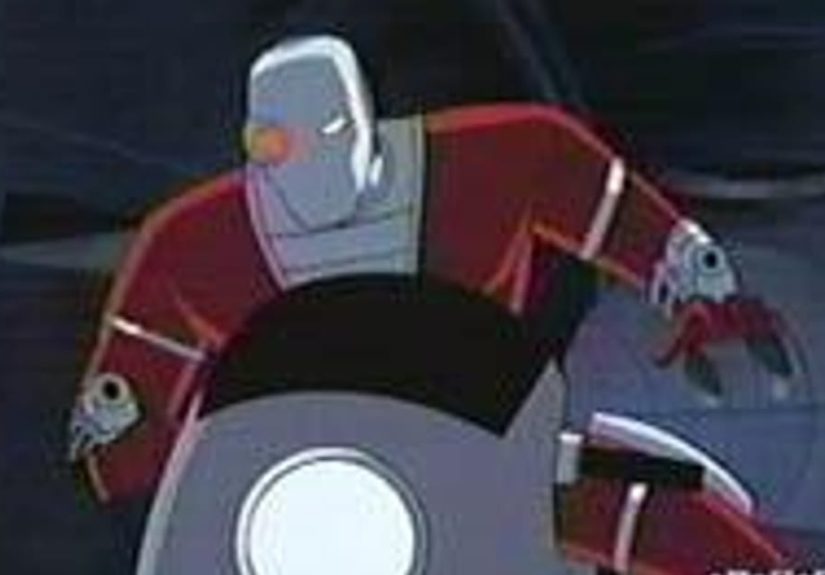
Deadshot has popped up in multiple animated projects, including Justice League, Batman: Gotham Knight, and DC’s direct-to-video movies. These versions tend to emphasize his professionalism and uncanny aim. While they usually don’t get as deep into his personal life, animation helps cement his visual identity – the mask, the scope, and the wrist guns – and keeps him on fans’ mental tier lists of “cool but terrifying villains.”
Will Smith’s Deadshot in Suicide Squad (2016)
We can’t talk “Deadshot rankings” without mentioning Will Smith’s live-action portrayal in the 2016 film. That version leans hard into the “reluctant dad” angle, focusing on Floyd’s relationship with his daughter and his desire to do right by her even while he’s still very, very good at killing people.
Opinions are mixed. Some fans loved the emotional warmth and charisma Smith brought to the role, ranking his Deadshot as one of the highlights of the movie. Others argue that the performance was more “Will Smith in a tactical suit” than the grim, death-obsessed mercenary from the comics. Still, when casual viewers think of Deadshot today, the 2016 film is often their primary reference.
TV Versions: Arrow and Beyond
On the small screen, Michael Rowe’s Deadshot in Arrow quickly gained a fanbase. This version blends the cold killer persona with a tragic backstory and occasional flashes of conscience. While budgets limit how many insane trick shots he can pull off, his moral arc – from ruthless assassin to someone who tries, in small ways, to be better – helps push him higher in “best live-action Deadshot” rankings among TV fans.
How Deadshot Is Viewed Morally: Villain, Antihero, or Something Else?
Part of what makes rankings and opinions about Deadshot so fun (and so chaotic) is that no one fully agrees on his moral status. Is he a villain? An antihero? A tragic figure? All three?
Why Some Fans Still See Him as a Straight-Up Villain
In his earliest appearances, Deadshot is a flashy Gotham rogue who eventually upgrades from tuxedo-and-top-hat to full tactical armor. He tries to kill Batman. He takes assassination contracts with minimal hesitation. His body count is enormous. If you focus on that era, he’s easy to rank as “high-tier villain who just happens to be really good at his job.”
Why Many Rank Him as an Antihero
Modern storylines push him toward antihero territory. His willingness to sacrifice himself on Suicide Squad missions, his attempts to protect Zoe and her neighborhood, and his occasional refusal to kill children or innocents all complicate the “pure villain” label. Even when he pulls the trigger, there’s often a sense that he’s doing it for a twisted code – not because he enjoys random cruelty, but because this is the only thing he believes he’s good for.
For that reason, a lot of fans place him somewhere between Punisher-style vigilante and classic hired gun. He’s not someone you’d invite to a Justice League potluck… but he’s also not the Joker.
Deadshot vs. Other DC Assassins: Where Does He Land?
Any rankings-and-opinions piece about Deadshot eventually becomes a comparison game. If you line up DC’s famous killers – Deathstroke, Lady Shiva, David Cain, Cheshire, and so on – where does Floyd Lawton land?
- Versus Deathstroke: Deathstroke is usually ranked as the overall deadliest assassin, thanks to his physical enhancements, tactical genius, and long history as a meta-level threat. Deadshot, on the other hand, often wins in categories like pure marksmanship and willingness to die to complete the mission.
- Versus Lady Shiva: Shiva dominates hand-to-hand combat rankings. She’s a living martial-arts final boss. Deadshot, by contrast, rules the battlefield at range.
- Versus other marksmen (e.g., Merlyn, Green Arrow): Most lists treat Green Arrow as the heroic counterpart and Merlyn as another villainous archer, but Deadshot’s guns, tech, and ruthlessness often push him slightly ahead in terms of lethality.
If you boil it down, most fan and critic rankings put Deadshot in the “top three or four” assassins in DC, and almost always number one in the “normal human with firearms” category.
Extra Deep Dive: Lived Experiences and Fandom Around “Deadshot Rankings And Opinions”
Beyond formal lists and critic write-ups, there’s a whole ecosystem of fan experiences shaping how Deadshot is ranked and remembered. Spend any time in comic forums, convention panels, or late-night group chats, and you’ll see a few consistent themes in how people talk about him.
The First Time Readers “Get” Deadshot
Many fans describe a similar experience: Deadshot is just “the guy with the guns” in the background for a while. Then they read one specific story – often Ostrander’s Suicide Squad or the 1988 miniseries – and suddenly everything clicks. The moment he casually jokes about dying, or reveals his tragic family history, or steps between a child and a bullet, readers realize this isn’t a one-note villain. That moment of recognition tends to permanently move him up their personal rankings.
It’s not just about cool panels or trick shots; it’s the way writers lean into his contradictions. Deadshot is both deeply selfish and quietly sacrificial. He’ll complain about missions while still being the guy who pulls off the impossible shot so the rest of the team can live. Once a reader sees that pattern, they often start hunting for more of his appearances, climbing through reading orders and back issues to find every scrap of Deadshot characterization they can.
Conventions, Cosplay, and the Cool Factor
Another layer in the “Deadshot rankings and opinions” conversation comes from real-world fandom. Cosplayers are drawn to him because his costume sits at a sweet spot between tactical gear and comic-book flair: armor plating, the red-and-gray color scheme, the targeting monocle, and that unmistakable crosshair emblem. At conventions, Deadshot cosplayers often rank high in fan photo ops because the character is visually striking and instantly recognizable, especially after the 2016 movie pushed him into mainstream awareness.
When people talk about which DC characters “look the coolest,” Deadshot frequently shows up alongside Deathstroke, Batman, and Red Hood. Visual impact may not appear on official “deadliest assassin” lists, but it absolutely shapes how fans feel about him and whether they want more stories featuring him.
Debating the Best Version: Comics vs. Screen
Fandom debates about Deadshot often center on one big question: which version is the “real” one? Some readers strongly prefer the bleak, morally gray comics Deadshot who genuinely might die on the next mission and wouldn’t necessarily mind. Others rank Will Smith’s more sympathetic take higher because it adds charm and warmth, making Floyd easier to root for.
These debates rarely end with a clear winner, but they do keep Deadshot alive in the cultural conversation. Every new appearance – another animated movie, another Suicide Squad-related project, another comic soft reboot – resets the rankings a little, forcing fans to reconsider where he sits in their personal top tens.
Reading Order as an Experience
For newer readers diving into Deadshot’s world, the process of building a reading order becomes part of the experience. You start with a recommended list – the miniseries, the key Suicide Squad arcs, a handful of modern tie-ins – and as you read, your own rankings emerge. Maybe you discover that a lesser-known one-off issue hits you harder than the “officially” famous stories. Maybe a brief crossover or backup story reveals a side of Floyd you hadn’t seen before.
In that sense, “Deadshot Rankings And Opinions” isn’t just a headline. It’s an ongoing project that each reader participates in. Every time DC publishes a new Suicide Squad run, every time Floyd shows up in a Batman arc, every time a new adaptation tweaks his personality or costume, fans quietly adjust their mental scorecards.
The result? Deadshot remains one of those characters who might never be the absolute top name on the DC brand, but he’s almost always lurking very high on the lists that matter most: the internal rankings of the readers who keep coming back to see what he does next.
Conclusion: Why Deadshot Keeps Hitting the Top of the Charts
So where does Deadshot ultimately land in the big picture? On most objective scales – lethality, skill, impact on stories – he ranks near the top of DC’s assassins. On more subjective scales – emotional depth, tragic backstory, antihero appeal – he’s often a fan favorite, especially among readers who appreciate morally messy characters who aren’t easily sorted into “hero” or “villain.”
He’s the hitman who wants to die but keeps surviving. The father who insists he’s a monster but still risks everything for his daughter. The gun-for-hire who jokes about his own doom while saving the day for people who barely tolerate him. That combination virtually guarantees that, no matter how many rankings we write or how many opinions we argue over, Deadshot will keep landing on the board.