Table of Contents >> Show >> Hide
- Who Is David Mellor, and Why His Knife Block Matters
- Meet the David Mellor Small Knife Block
- Why Choose a Small Knife Block in the First Place?
- How the David Mellor Small Knife Block Compares to Other Storage Options
- Choosing Knives for Your David Mellor Small Knife Block
- Care and Maintenance: Keeping Your Knife Block Looking Sharp
- Is the David Mellor Small Knife Block Worth It?
- How to Get the Most Out of a Small Knife Block
- Real-Life Experiences with the David Mellor Knife Block : Small
If you’re the kind of person who loves beautiful knives but hates cluttered countertops, the David Mellor Knife Block : Small is basically your spirit animal in wood form. It’s compact, minimalist, and designed to make your kitchen look like you know exactly what you’re doingeven on the nights you’re eating cereal for dinner.
In this guide, we’ll dig into what makes the David Mellor small knife block special, how it compares to other knife storage options, who it’s best for, and how to get the most out of it. Think of it as a mix of design appreciation, practical kitchen advice, and a little gentle enabling for your knife obsession.
Who Is David Mellor, and Why His Knife Block Matters
Before we talk about the knife block itself, it helps to know the name on the label. David Mellor was a British designer and Royal Designer for Industry, renowned for his cutlery and metalwork. His work is featured in museum collections around the world, and he built a reputation for combining clean modern design with everyday functionality, especially in cutlery made in Sheffield, Englanda historic center of knife and steel production.
His company, David Mellor Design, continues that legacy today, producing kitchen knives and accessories that are meant to be used daily, not just admired from a distance. The knife blocks, designed by his son and current creative director, Corin Mellor, follow the same philosophy: simple, precise, and quietly beautiful rather than flashy or trend-driven.
Meet the David Mellor Small Knife Block
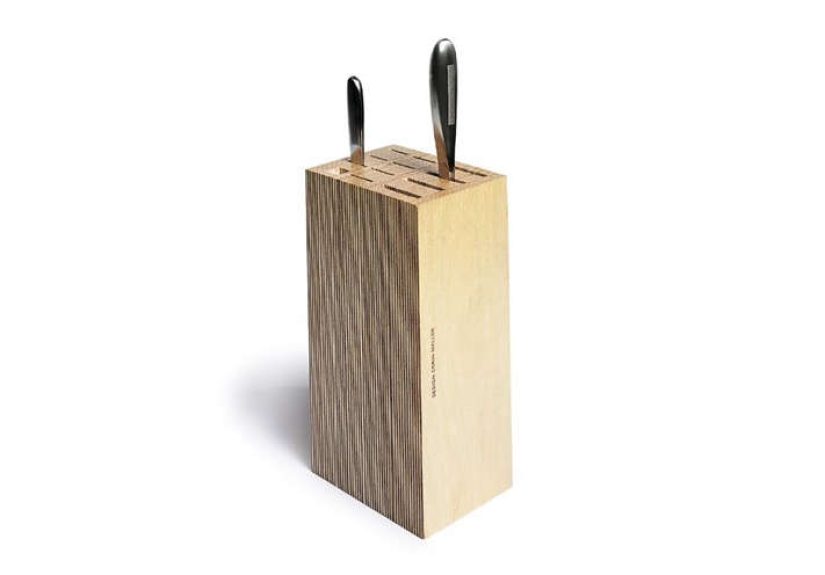
The David Mellor small knife block is a compact, vertical knife block designed to hold a well-curated collection of kitchen knives. Instead of a massive, oversized block with a dozen random slots you’ll never fill, this one is deliberately streamlined.
You’ll commonly see two main material versions associated with this design:
- Birch plywood version with a satin lacquer finish, usually around 10.25" H x 4" W x 5.5" D, designed and made in Sheffield, England. It includes sections for up to 11 knives plus a sharpening steel.
- Oak version in oiled North American oak, with dimensions roughly 140mm (W) x 260mm (H) x 100mm (D), also holding up to 11 knives and a sharpening steel.
Knives are sold separately, which is actually an advantage: you’re not forced into a pre-selected set. You can build your knife lineup over time, choosing pieces that match how you cook.
Designed for Compact Kitchens
The clue is in the name: small. This knife block is tall and narrow instead of wide and bulky, which makes it perfect for:
- Apartment kitchens with limited counter space
- Minimalist layouts where you want just a few essentials on display
- People who like to keep their main prep area as open as possible
Because it has a small footprint, you can tuck it against the wall, near your cutting board, or in that awkward little bit of space between your stove and fridge that usually just collects crumbs.
Slots That Actually Make Sense
Instead of random holes of mysterious sizes, the David Mellor small knife block is designed with real-world use in mind. It’s built to accommodate a practical selection of knives, such as:
- Chef’s knife
- Bread knife
- Santoku or utility knife
- Paring knife(s)
- Carving or slicing knife
- Smaller specialty or prep knives
- A sharpening steel
For most home cooks, that’s more than enough. You’re not trying to arm a small restaurant kitchenyou just need the right knives, well organized and easy to reach.
Why Choose a Small Knife Block in the First Place?
Let’s zoom out for a second. Why bother with a small knife block at all, especially when there are other storage options out there?
1. Counter Space Is Gold
If your kitchen counter is already juggling a coffee maker, toaster, air fryer, and a decorative bowl of onions you swear you’re going to use, a huge knife block might be the last thing you need. A compact block like the David Mellor small version gives you safe knife storage without taking over the entire countertop.
2. Blade Protection and Safety
Compared to tossing knives loose in a drawer, a knife block is kinder to your blades and safer for your fingers. The block protects the cutting edges from banging into other utensils, which helps maintain sharpness over time. It also keeps sharp blades away from curious hands and accidental grabs.
3. Aesthetic Upgrade for Your Kitchen
A well-designed wooden knife block is a subtle decor piece. It can tie together your countertop look, especially if you like natural materials like wood, stone, and ceramic. The David Mellor block’s clean lines and neutral wood tones fit well in:
- Scandinavian-inspired kitchens
- Modern minimalist spaces
- Warm, classic kitchens with wood cabinets
It’s storage, but it’s also a design statementwithout screaming for attention.
How the David Mellor Small Knife Block Compares to Other Storage Options
Knife storage is one of those topics where everyone has an opinion. Let’s see how the David Mellor knife block : small stacks up against the usual suspects.
Versus In-Drawer Knife Trays
In-drawer knife trays keep knives out of sight, which is great for visual minimalists. However, you lose immediate accessthere’s always that extra step of opening a drawer. A small knife block keeps your most-used knives visible and within arm’s reach, which matters when you’re chopping five things at once and trying not to burn the onions.
Versus Magnetic Strips
Magnetic knife strips look sleek on the wall and save countertop space, but they’re not for everyone. If you’re renting, you may not be able to drill into your walls. Some people also worry about knives getting knocked off the strip or exposed to kids.
The David Mellor small block is a good compromise: still compact, still visible, but with blades safely anchored in wood instead of hanging in midair.
Versus Oversized Knife Blocks with Sets
Big, pre-filled knife blocks often come with a dozen knives, including several you’ll never use. The block is huge, the footprint is massive, and you still somehow end up using the same three knives over and over.
The David Mellor small knife block flips that idea: instead of buying a giant set, you curate your own lineup and let the block hold exactly what you actually need. It’s more intentional and usually more cost-effective over time.
Choosing Knives for Your David Mellor Small Knife Block
One of the joys of buying the block on its own is customizing your knife selection. While it’s designed to work beautifully with David Mellor kitchen knives, you’re not limited to those. Still, if you want a simple, high-quality core collection, aim for these essentials:
- 8–10" chef’s knife – your main workhorse for chopping and slicing
- Bread knife – for bread, tomatoes, and anything with a tough exterior and soft interior
- Utility or santoku knife – perfect for mid-sized tasks and quick prep
- Paring knife – peeling, trimming, and delicate work
- Carving or slicing knife – for roasts or larger proteins
- Sharpening steel – to keep your edges in good condition between full sharpenings
That lineup fills only part of the slots in the small block, leaving space for a second paring knife, a boning knife, or your new impulse-buy Japanese gyuto that you “absolutely needed.”
Care and Maintenance: Keeping Your Knife Block Looking Sharp
The David Mellor small knife block is low-maintenance, but not zero-maintenance. A little care keeps it looking good and performing well for years.
Cleaning the Block
- No soaking: Don’t immerse the block in water or run it through the dishwasher. Prolonged moisture can warp wood or damage the finish.
- Wipe clean: Use a slightly damp cloth to wipe the exterior, then dry it promptly with a towel.
- Dust the slots: Occasionally tip the block upside down and gently shake or tap to remove crumbs or dust from the slots.
Conditioning the Wood
On blocks with an oiled or natural wood finish, you can periodically rub a small amount of food-safe oil (like mineral oil) into the surface. This helps keep the wood from drying out and deepens the color slightly, giving it that “cared for” look.
Is the David Mellor Small Knife Block Worth It?
In many US retailers that carry design-focused kitchenware, the David Mellor small knife block typically sits in the premium-but-not-insane price tier. You’re paying for:
- Thoughtful design that maximizes capacity in a small footprint
- Quality materials like birch plywood or North American oak
- Aesthetic appeal that fits easily into modern, minimalist, or classic kitchens
- The ability to gradually build your ideal knife set instead of buying a giant block in one go
If you just want the cheapest way to store knives, a basic generic block may be enough. But if you value design, long-term durability, and a block that feels like part of your kitchen rather than an afterthought, the David Mellor Knife Block : Small is a smart upgrade.
How to Get the Most Out of a Small Knife Block
To really make this compact knife block shine, treat it as the home base for your “starting lineup” knives:
- Keep only the essentials in the block; store rarely used specialty knives elsewhere.
- Position it near your main prep zonenext to your cutting board, not across the kitchen.
- Return knives to the block immediately after washing and drying them so they’re always ready to go.
That way, when it’s time to cook, you don’t go hunting for tools. Everything you actually use is right there, in one neat, compact block.
Real-Life Experiences with the David Mellor Knife Block : Small
Sometimes the best way to understand a product is to imagine how it fits into daily life. Here are a few “life with this knife block” scenarios that show what it’s like to own the David Mellor small block.
1. The Small-Apartment Cook
Picture a tiny city kitchen: one sliver of counter space, a single drawer for utensils, and a fridge that’s about the same size as your ambition. In this kind of space, a traditional knife block feels like a luxury you can’t affordboth in money and real estate.
Now enter the David Mellor small knife block. It fits neatly into a corner by the backsplash, leaving room for the cutting board. With just a chef’s knife, a paring knife, a bread knife, and a small utility knife, you’ve got everything you need. Suddenly, you’re not juggling knives from a drawer or wondering where to put a huge block. Your tools are visible, organized, and always ready.
Cooking becomes less of a chore and more of an activity you actually look forward to. You’re not wrestling the kitchen; you’re just slicing onions and pretending you’re on a cooking show.
2. The Design Lover’s Kitchen
Then there’s the person who obsesses over every object on the countertop. The coffee maker, the bread box, the ceramic utensil crockeverything has to “go” together. For them, the David Mellor Knife Block : Small is a quiet star.
Because of its simple geometry and natural wood, it plays well with almost any aesthetic: matte black appliances, pale Scandinavian cabinetry, or warm butcher block counters. It doesn’t demand attention, but if you look closely, you notice how well it’s made. The knife slots are cleanly cut, the angles feel intentional, and the proportions are just right.
It’s the kind of object guests casually notice and comment on: “Oh, that’s a nice knife blockwhere did you get it?” That’s when you get to say, “It’s by David Mellor,” and feel quietly smug.
3. The Family Kitchen That’s Always Busy
In a family kitchen, there’s a lot happening: breakfast rush, lunch-packing chaos, and dinner prep, often overlapping with homework time and random snack emergencies. In that environment, having a small knife block with a predictable layout is surprisingly helpful.
The person who cooks the most can set up “house rules” like:
- Chef’s knife always goes in the front slot.
- Bread knife in the far right slot.
- Paring knife in the top shallow slot.
Over time, you learn the layout by feel. You know exactly where each tool lives, which cuts down on the “Where did you put the good knife?” arguments. It also makes it easier to notice when something’s missing, like the paring knife that wandered off with the apple-slicing teenager.
4. The Long-Term Relationship with a Good Knife Block
One underrated joy of owning a well-made small knife block is watching it age gracefully alongside your knives. The wood might warm in color, tiny marks may appear from years of use, and your knife collection will slowly evolve. You might start with three knives and eventually fill all 11 slots with pieces you’ve chosen intentionally.
Over time, the block becomes a kind of visual record of your cooking lifeeach knife attached to a memory: the bread knife that tackled your first successful sourdough, the carving knife that came out every holiday, the little paring knife that handled endless piles of garlic.
Because the David Mellor Knife Block : Small is built with quality materials and a timeless design, it doesn’t go out of style or fall apart after a few years. Instead, it quietly does its job in the background, making your everyday cooking smoother, easier, and just a little more beautiful.
In short, this isn’t just another block of wood. It’s a small but mighty piece of kitchen design that supports how you really cookwhether that’s elaborate weekend feasts or weeknight pasta with a side of “I’m too tired for anything else.”