Table of Contents >> Show >> Hide
- Introduction: A Child’s Cupboard With a Surprisingly Grown-Up Design Story
- What Is the Crisis 2 Doors Child's Cupboard?
- The Design Philosophy Behind Piet Hein Eek’s Crisis Series
- Material and Finish: Why Plywood Works So Well Here
- Dimensions and Room Fit
- How to Use the Crisis Cupboard in a Child’s Room
- Safety First: A Beautiful Cupboard Still Needs Smart Installation
- Why This Cupboard Works for Modern Family Interiors
- Style Pairing Ideas
- What to Consider Before Buying
- Care and Maintenance
- Experience Section: Living With a Crisis 2 Doors Child's Cupboard
- Conclusion: Is the Crisis 2 Doors Child's Cupboard Worth It?
Note: This article is written for web publication in standard American English, with product-focused analysis, child-room storage guidance, and practical ownership experience.
Introduction: A Child’s Cupboard With a Surprisingly Grown-Up Design Story
The Crisis 2 Doors Child’s Cupboard is not the kind of children’s furniture that whispers, “I came in a flat-pack box and may emotionally collapse by Tuesday.” Designed by Dutch designer Piet Hein Eek, this cupboard belongs to a design world where raw materials, visible grain, practical proportions, and a little bit of rebellious charm all sit at the same lunch table.
At first glance, it is simple: two doors, a tall rectangular shape, a child-friendly storage purpose, and a clean presence that fits neatly into a bedroom, nursery, playroom, or family living space. But the story behind the Crisis cupboard is more interesting than a plain storage cabinet. The Crisis series was created around the idea that affordable, humble sheet material could still become meaningful design. In other words, it asks a very sensible question: why should good furniture require materials that sound like they belong on a billionaire’s yacht?
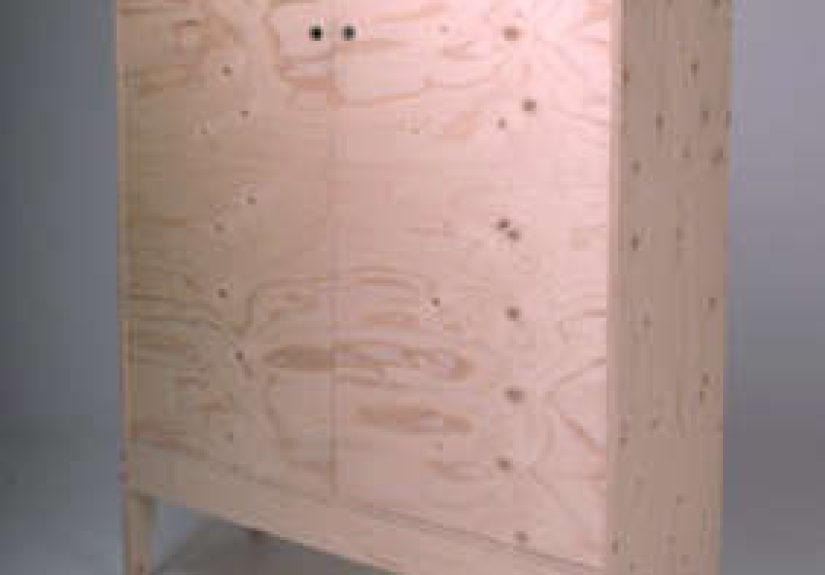
This cupboard is made from plywood or pressed sheet wood, with a finish that can leave the grain and knots visible even when painted. The result is a piece that feels honest rather than overly polished. It is practical enough for clothes, toys, blankets, books, craft supplies, and the mysterious tiny socks that seem to reproduce inside children’s rooms. Yet it also has a designer edge that makes it attractive to parents who want children’s furniture that does not look childish after six months.
What Is the Crisis 2 Doors Child’s Cupboard?
The Crisis 2 Doors Child’s Cupboard is a two-door children’s storage cabinet designed by Piet Hein Eek. Product listings identify it as part of the Crisis furniture family, a collection known for using sheet material in a thoughtful and visually direct way. Current product information lists the cupboard at approximately 122 x 36 x 160 cm, making it tall enough to provide meaningful storage while still scaled for a child’s room.
The cupboard has fixed dimensions, a simple architectural shape, and a surface that may be finished in different colors. Depending on the retailer or finish option, it may be available unlacquered or painted in muted tones such as white, pink, blue-gray, or green-gray. Unlike glossy mass-market cabinets that try to hide every trace of their material, this cupboard allows the wood character to remain part of the look. The grain is not a flaw; it is the point.
That makes the piece especially appealing for homes that lean toward Scandinavian interiors, modern nursery design, minimalist children’s rooms, natural materials, sustainable furniture, or creative family spaces. It is not loud, but it is also not anonymous. It has the quiet confidence of furniture that knows it does not need cartoon stickers to prove it belongs in a kid’s room.
The Design Philosophy Behind Piet Hein Eek’s Crisis Series
Piet Hein Eek is widely associated with furniture that celebrates reclaimed materials, imperfections, and practical construction. His best-known work helped push scrap wood and humble surfaces into the world of collectible design. Instead of treating waste or inexpensive material as something to disguise, Eek often lets material history become the visual language of the object.
The Crisis series follows that same spirit, but with an even more direct challenge: make strong, useful, good-looking furniture from simple sheet material. The cupboard’s name may sound dramatic, but the idea is refreshingly calm. During economic or material uncertainty, design does not have to become boring. It can become smarter.
For a child’s cupboard, this philosophy makes sense. Children’s rooms are not museums. They are tiny tornado zones filled with costumes, blocks, books, blankets, art projects, and occasionally one sticky object nobody wants to identify. A good child’s cabinet must be beautiful, but it also has to handle real life. The Crisis cupboard does that by focusing on clear structure, durable material, and an unfussy appearance that can age with the room.
Material and Finish: Why Plywood Works So Well Here
The Crisis 2 Doors Child’s Cupboard is commonly described as being made from plywood sheet or pressed wood material. Plywood is valued in furniture because it offers strength, dimensional stability, and a layered visual character. In this cupboard, the material is not hidden behind excessive ornament. Even painted versions may allow the grain and knots to remain visible, creating a surface that feels warm and tactile.
This matters because children’s furniture often falls into two extremes. On one end, there are overly cute pieces that look outdated the moment a child decides dinosaurs are “for babies.” On the other end, there are adult-style storage units that feel too cold for a young room. The Crisis cupboard lands in the middle. It is playful through color and scale, but serious through construction and simplicity.
For American buyers considering imported or designer children’s furniture, it is also wise to ask about finish safety, formaldehyde compliance, and recommended installation. Composite wood products sold in the United States are subject to federal formaldehyde emission standards, so buyers should request current compliance information when purchasing through a retailer, gallery, or reseller. It is not the glamorous part of furniture shopping, but it is more useful than pretending “natural-looking” automatically means “safe.”
Dimensions and Room Fit
With dimensions around 122 cm wide, 36 cm deep, and 160 cm high, the Crisis child’s cupboard is substantial without being overwhelmingly bulky. Its depth is especially practical for a child’s bedroom because it can provide storage while keeping a relatively slim profile. That is useful in small rooms, shared bedrooms, apartments, guest rooms that double as kid zones, and playrooms where every inch of floor space is already under attack by wooden trains.
The height allows parents to use the upper portion for items that children do not need daily, such as seasonal clothes, extra bedding, keepsake boxes, or art supplies requiring adult supervision. Lower interior sections can be reserved for child-accessible items like pajamas, sweaters, soft toys, picture books, or dress-up clothes. This vertical division can quietly teach organization: everyday things go low, occasional things go high, and glitter glue goes wherever an adult can guard it like national treasure.
How to Use the Crisis Cupboard in a Child’s Room
1. As a Children’s Wardrobe
The most obvious use is clothing storage. A two-door cupboard can help separate categories such as school clothes, weekend outfits, pajamas, seasonal wear, and accessories. Add small bins or labeled boxes inside, and suddenly the morning routine becomes slightly less like a live-action puzzle game.
2. As Toy and Book Storage
Because the cabinet doors conceal clutter, it works beautifully for toys, board games, puzzles, building blocks, stuffed animals, and books. Open shelving can look lovely in photos, but in real life it often becomes a public exhibition titled “Everything My Child Owns, Arranged by Gravity.” A closed cupboard gives the room visual calm.
3. As Shared Storage for Siblings
In a shared bedroom, the two doors can create a simple left-side/right-side system. One child gets one side, the other child gets the second side, and parents get the priceless joy of saying, “Your side, your responsibility.” Labels, color-coded baskets, or picture tags can help younger children understand where items belong.
4. As a Playroom Cabinet
In a playroom, the Crisis cupboard can store rotating toys. Keeping every toy available all the time can overwhelm children and make cleanup harder. A cabinet allows parents to rotate items weekly or monthly, keeping play fresh without buying more stuff. The toy dinosaur can take a vacation. He has earned it.
Safety First: A Beautiful Cupboard Still Needs Smart Installation
Any tall furniture used around children should be treated with safety in mind. Children climb. They climb when you are watching, when you are not watching, and sometimes while making direct eye contact as if testing both physics and your patience. A tall cupboard, wardrobe, dresser, bookcase, or cabinet should be properly secured to the wall with suitable anti-tip hardware.
In the United States, furniture tip-over prevention has become a major child safety topic. Modern guidance encourages anchoring furniture and televisions, keeping heavy items low, avoiding tempting objects on top of tall furniture, and checking that storage units remain stable even when doors or drawers are open. Even if a piece feels heavy or well-built, anchoring is still a smart step.
For the Crisis 2 Doors Child’s Cupboard, buyers should confirm whether anti-tip hardware is included and whether the wall type requires special anchors. Drywall, plaster, brick, concrete, and wood studs all require different installation methods. When in doubt, hire a professional. A designer cupboard deserves a proper installation, not a heroic five-minute experiment involving a mystery screw and optimism.
Why This Cupboard Works for Modern Family Interiors
Modern parents often want children’s furniture that balances three things: safety, storage, and style. The Crisis cupboard is attractive because it does not scream “temporary kid furniture.” Its minimal shape, visible material quality, and soft finish options allow it to live beyond the toddler years. It can begin as nursery storage, become a child’s wardrobe, later hold school materials, and eventually move into a hallway, studio, craft room, or guest space.
This long-term flexibility is important. Fast furniture can be tempting because it is cheap and immediately available, but it often loses value quickly. A better-designed piece may cost more upfront, yet it can remain useful through multiple stages of family life. In that sense, the Crisis cupboard is not only a storage object; it is a slower, more intentional alternative to disposable decorating.
Style Pairing Ideas
The Crisis 2 Doors Child’s Cupboard pairs well with natural wood beds, simple cotton bedding, wool rugs, linen curtains, painted floors, handmade toys, and soft wall colors. It can lean minimalist in a white room, playful in a pastel nursery, or artistic in a creative family home filled with books and objects.
For a Scandinavian-inspired child’s room, pair the cupboard with pale wood, off-white walls, muted blue or green textiles, and simple wall hooks. For a warmer modern look, add terracotta, ochre, cream, and woven baskets. For a more gallery-like space, keep the room restrained and let the cupboard’s material texture become the quiet focal point.
The best part is that the cupboard does not demand perfection. It looks comfortable in a real room, not only in a catalog. That is helpful because children’s rooms rarely remain catalog-perfect for more than eleven minutes.
What to Consider Before Buying
Before purchasing the Crisis cupboard, measure the room carefully. Check ceiling height, doorway width, stair clearance, and the path from delivery entrance to final location. Designer furniture can be thrilling until it gets stuck halfway up the stairs and becomes a very expensive conversation piece.
Ask the retailer about current lead time, finish availability, shipping method, assembly requirements, wall-anchoring recommendations, warranty details, and care instructions. Because some listings describe long lead times, this is not always an instant-purchase item. It may be made to order or shipped internationally, so planning ahead is wise.
Also consider the interior layout. If the cupboard comes with fixed shelves or a specific internal structure, make sure it suits your needs. A child with many hanging clothes may need a different setup than a child with mostly folded sweaters, toys, and books. Storage only works when it matches the actual chaos you are trying to contain.
Care and Maintenance
For everyday care, use a soft dry or slightly damp cloth and avoid harsh cleaners that could damage the finish. Painted plywood and pressed wood furniture should not be soaked with water. Spills should be wiped quickly, especially in a child’s room where water bottles, paint cups, and “science experiments” appear without warning.
Check hinges periodically, tighten hardware when needed, and inspect the wall anchor to ensure it remains secure. If the cupboard is moved, reinstall the anti-tip device correctly in the new location. Treat the piece as functional design: use it daily, enjoy it fully, but maintain it with basic common sense.
Experience Section: Living With a Crisis 2 Doors Child’s Cupboard
Imagine bringing the Crisis 2 Doors Child’s Cupboard into a child’s room that previously relied on a mix of plastic bins, one tired dresser, and a laundry basket pretending to be a storage strategy. The first thing you notice is visual calm. Two closed doors can do emotional miracles. Toys disappear. Pajamas stop migrating across the floor. The room suddenly looks like someone has a plan, even if that someone is still drinking coffee at 7:42 a.m. while searching for a missing shoe.
In daily use, the cupboard works best when it is divided into zones. The lower area should belong to the child. Put soft clothes, favorite books, simple toys, and safe dress-up items within reach. This gives children independence and makes cleanup easier. The upper area should belong to the adults. That is where extra bedding, seasonal clothing, keepsakes, backup art supplies, and less frequently used items can live peacefully away from small hands.
One practical experience is that closed storage reduces visual noise. In many kids’ rooms, open shelves look charming for about one afternoon. Then the shelves become crowded with puzzle boxes, plush animals, superhero accessories, and a rock collection named “very important rocks.” A two-door cupboard lets the room breathe. Children can still access their belongings, but parents do not have to stare at every single item all day.
Another useful experience is that a cupboard like this encourages editing. Because the storage space is generous but not infinite, it naturally asks the family to choose what matters. Outgrown clothes can be donated. Broken toys can finally retire. Duplicate items can leave the house before they form a tiny plastic civilization. The cupboard becomes not just a place to store things, but a tool for creating better habits.
Parents may also appreciate how the Crisis cupboard avoids the “baby furniture trap.” Many nursery pieces look adorable at first but feel too young once the child starts school. This cupboard has a more timeless character. It can hold toddler clothes today, school uniforms tomorrow, sports gear later, and perhaps art supplies or linens in another room years from now. That flexibility makes it feel less like a temporary purchase and more like a long-term household object.
The main lesson from using a tall child’s cupboard is simple: design and safety must work together. The piece may be beautiful, but it still needs to be anchored. Doors should open smoothly. Heavy items should stay low. Tempting toys should not be placed on top. Children should be taught not to climb, but adults should also assume that curiosity sometimes wins. Good furniture planning means reducing risk before a child has the chance to test it.
In the end, living with the Crisis 2 Doors Child’s Cupboard feels like upgrading from “Where do we put all this stuff?” to “Ah, yes, the stuff has a home.” That may not sound poetic, but for parents, it is practically a luxury spa treatment.
Conclusion: Is the Crisis 2 Doors Child’s Cupboard Worth It?
The Crisis 2 Doors Child’s Cupboard is a thoughtful choice for families who want children’s storage that is practical, design-forward, and able to grow with the room. Its plywood construction, simple two-door form, visible material character, and connection to Piet Hein Eek’s design philosophy give it more personality than ordinary children’s cabinets.
It is best suited for buyers who appreciate modern European furniture, natural materials, understated color, and long-term usability. It may not be the cheapest child’s cupboard available, and it may require patience due to lead times or international sourcing. But for homes that value design with a story, it offers something special: a children’s storage cabinet that looks calm, works hard, and refuses to be boring.
Just remember the golden rule: style is wonderful, but anchoring is non-negotiable. A well-installed cupboard can bring order, warmth, and character to a child’s room. And if it can also hide the toy avalanche behind two handsome doors, that is not just furniture. That is domestic magic.