Table of Contents >> Show >> Hide
- The Short Answer: Is There a Link?
- Why This Topic Is So Hard to Study
- Chemical Exposures That Deserve Serious Attention
- Chemicals That Are Plausible but Not Proven
- Popular Suspects That Have Not Held Up Well
- What You Can Actually Do Without Turning Into a Full-Time Ingredient Detective
- The Bottom Line on Common Chemicals and Breast Cancer
- Experiences People Commonly Have Around This Topic
- Conclusion
If you have ever stood in the personal-care aisle squinting at an ingredients list like it was a ransom note, you are not alone. Plenty of people wonder whether everyday chemicals in plastics, beauty products, cleaning sprays, food packaging, polluted air, or workplaces could raise breast cancer risk. It is a fair question, and science has an answer that is both helpful and gloriously annoying: some exposures are genuinely concerning, some are still under investigation, and some internet-famous suspects are not backed by strong evidence.
That means this is not a story where every bottle under your sink is a tiny villain in a cape. But it is also not a story where all chemical exposure worries should be waved away with a cheerful, “Relax, it’s probably fine.” Breast cancer risk is shaped by a complicated mix of genetics, hormones, age, reproductive history, lifestyle, and environment. Chemicals may be one piece of that puzzle, especially during certain stages of life when breast tissue is more vulnerable.
So, what does the evidence actually show? Let’s sort proven concerns from plausible risks, mixed evidence, and flat-out myths.
The Short Answer: Is There a Link?
Yes, some chemical exposures may be linked to breast cancer risk. But the strength of the evidence depends heavily on which chemical, how much exposure, how long the exposure lasts, and when in life it happens.
Researchers are especially interested in chemicals that can act like hormones or interfere with the body’s normal hormonal signaling. These are often called endocrine-disrupting chemicals. Because many breast cancers are hormone-sensitive, scientists want to know whether long-term or early-life exposure to these substances can influence breast development or cancer risk later on.
Here is the key point: biological plausibility is not the same thing as proof. A chemical may look suspicious in lab studies but still be hard to link clearly to breast cancer in people. Human exposure is messy, doses are usually low, people are exposed to mixtures rather than one chemical at a time, and cancer can take years or decades to develop. In other words, epidemiology rarely hands out neat little answer cards.
Why This Topic Is So Hard to Study
Breast cancer is not one single disease
Breast cancer includes different subtypes, and they do not all behave the same way. An exposure that matters for one subtype may matter less for another. That alone makes research harder.
Timing matters a lot
Scientists increasingly focus on “windows of susceptibility,” which are life stages when breast tissue may be more sensitive to harmful exposures. These windows include prenatal development, puberty, pregnancy, and the menopausal transition. An exposure during one of these periods may matter more than the same exposure at another time in life.
Most people are exposed to mixtures, not single chemicals
Real life is not a pristine laboratory. Nobody encounters just one ingredient in isolation while standing in a beam of scientific certainty. People are exposed to combinations of air pollutants, packaging chemicals, personal-care ingredients, workplace agents, and lifestyle factors. Untangling which strand matters most is difficult.
Low-dose exposure can still be tricky to interpret
Some chemicals may have effects at very low doses, particularly if they interfere with hormones. But proving what those low-dose exposures do over decades in humans is a lot harder than proving what happens in a dish of cells or in animal models.
Chemical Exposures That Deserve Serious Attention
1. Ethylene oxide
Ethylene oxide is one of the clearest examples of a chemical exposure that raises concern. It is used to sterilize medical equipment and in some industrial processes. Long-term inhalation exposure has been linked to increased cancer risk, including breast cancer in women. This is not usually about a random bottle in your bathroom cabinet; it is more relevant to occupational exposure and to communities near certain facilities.
That distinction matters. When people hear “common chemicals,” they often think only of deodorant, shampoo, or plastic leftovers. But some of the more serious risks may come from the air around industrial sites or from repeated workplace exposure, not from your humble tube of hand cream.
2. Air pollution and combustion-related chemicals
Air pollution has been studied as a possible contributor to breast cancer risk, especially fine-particle pollution and pollutants created by combustion. Researchers have also looked at chemicals such as polycyclic aromatic hydrocarbons, or PAHs, which can damage DNA. The evidence is still evolving, but the concern is real enough that polluted air is not just a lung issue. It may be part of the breast cancer conversation too.
This is one reason the “all chemicals are a personal shopping problem” view is too small. Environmental exposure is also a community issue, a workplace issue, and sometimes a policy issue.
3. Certain occupational exposures
Women working in jobs with repeated exposure to solvents, combustion byproducts, sterilizing agents, or other industrial chemicals may face higher risks in some studies. This does not mean every job with fumes is automatically a breast cancer trigger. It means occupation belongs in the risk discussion, especially where long-term exposure is involved and protective measures are inconsistent.
4. Hair dyes and chemical straighteners
Hair products have received serious research attention, and not just because beauty aisles can feel like chemistry class with better lighting. Some studies have found that use of permanent hair dye and chemical straighteners is associated with higher breast cancer risk, with stronger associations reported in Black women for certain products. That does not prove every dye job is destiny, but it does move these products into the “worth paying attention to” category.
The likely issue is not one single dramatic ingredient but the broader chemical cocktail involved in some formulations. This is also an environmental justice issue, because product marketing and ingredient patterns can differ across communities.
Chemicals That Are Plausible but Not Proven
BPA, phthalates, parabens, PFAS, pesticides, and similar compounds
These chemicals often show up in discussions about breast cancer because some can mimic or disrupt hormone activity. They may be found in plastics, food packaging, stain-resistant materials, fragrances, cosmetics, pesticides, and other consumer products. Scientists take them seriously for good reason.
Still, the human evidence is mixed. Lab and animal studies often suggest mechanisms that could influence breast development or cancer risk. But in people, the data are less tidy. Some studies suggest associations, while others do not find clear links. For PFAS in particular, human evidence has been stronger for some other health effects than for breast cancer itself. For parabens, the FDA says it does not currently have evidence showing that parabens as used in cosmetics harm human health.
So the honest answer is this: these chemicals remain under investigation, and caution is reasonable, but many are not established breast-cancer causes in the same way that scientists talk about a clearly proven carcinogen.
Popular Suspects That Have Not Held Up Well
Antiperspirants and deodorants
This myth has achieved the kind of staying power usually reserved for bad chain emails and glitter after a craft project. But the available evidence has not shown a convincing link between antiperspirant use and breast cancer. Major cancer organizations do not consider deodorant or antiperspirant a proven breast cancer cause.
That does not mean every ingredient question is forever settled, but it does mean the classic “your antiperspirant is trapping toxins in your breast” claim is not supported by good evidence.
One ingredient panic equals one disease explanation
Breast cancer is too complex for a neat one-ingredient fairy tale. When social media grabs one compound and announces it as the hidden cause, that is usually a sign to lower your eyebrows and raise your skepticism.
What You Can Actually Do Without Turning Into a Full-Time Ingredient Detective
You do not need to live in a glass box, lick only organic kale, or throw away your entire bathroom in a dramatic cleansing montage. A smarter approach is to reduce exposures that are practical to reduce while also paying attention to better-established breast cancer risks.
Practical ways to lower chemical exposure
- Use glass, stainless steel, or ceramic for very hot foods and drinks when possible instead of heating food in worn plastic containers.
- Choose fragrance-free or simpler personal-care products if you want to cut down on unnecessary chemical mixtures.
- Ventilate your home when using cleaning products, paints, solvents, or aerosol sprays.
- Follow workplace safety guidance carefully if your job involves sterilizing agents, solvents, smoke, dust, or industrial chemicals.
- Pay attention to local environmental health alerts if you live near industrial facilities with known emissions concerns.
- Reduce exposure to tobacco smoke and polluted indoor air whenever possible.
And do not ignore the better-proven risk factors
This part matters. While people understandably worry about mystery chemicals, some breast cancer risks are better established and easier to address. Alcohol increases breast cancer risk, even at relatively low levels. Excess body weight after menopause is linked to higher risk. Regular physical activity is linked to lower risk. In other words, it is wise to care about what is in your shampoo, but not at the expense of ignoring what is in your wine glass, your weekly routine, or your overall health habits.
Do not skip mammograms out of fear of radiation
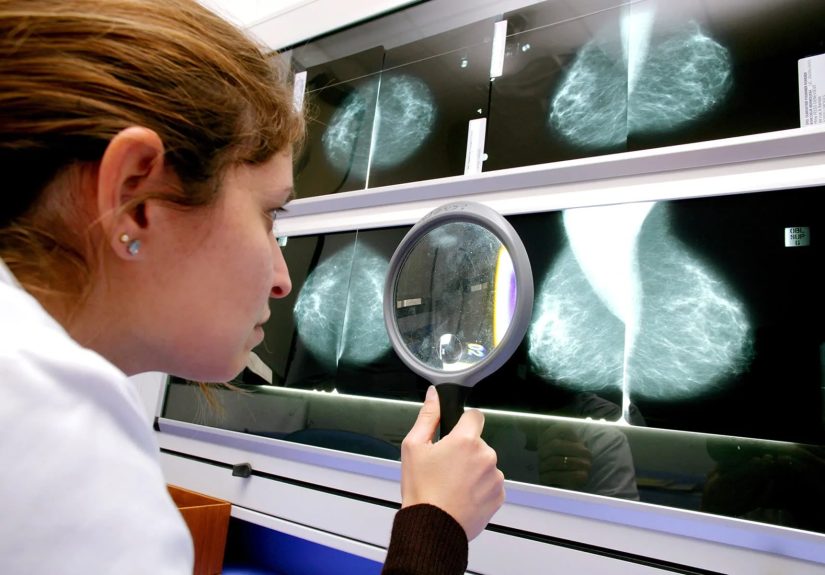
Radiation exposure can raise breast cancer risk under certain circumstances, especially at higher doses and younger ages. But that does not mean people should avoid recommended mammograms. Modern mammography uses a low dose of radiation, and the benefits of screening outweigh the possible harm from that exposure for people who should be screened. So please do not let internet fear win a fight it should not even be in.
The Bottom Line on Common Chemicals and Breast Cancer
There is no single yes-or-no answer to the question of whether common chemicals are linked to breast cancer. Some exposures, such as ethylene oxide and certain long-term occupational or environmental exposures, deserve clear concern. Others, especially endocrine-disrupting chemicals found in consumer products, remain scientifically plausible but not conclusively proven in humans. And some famous fears, like antiperspirants causing breast cancer, simply are not supported by strong evidence.
The smartest response is not panic. It is informed caution. Cut back on exposures that are practical to reduce. Support cleaner air and safer workplaces. Pay attention to product choices when it makes sense. And keep the big picture in view: breast cancer risk is shaped by more than one ingredient, more than one product, and definitely more than one viral post.
If science had a bumper sticker for this topic, it would probably read: Be cautious, not chaotic. That is not as catchy as a conspiracy theory, but it is a lot more useful.
Experiences People Commonly Have Around This Topic
One of the most common experiences is the “bathroom shelf reckoning.” Someone reads an article about endocrine disruptors, walks into the bathroom, and suddenly every bottle seems personally suspicious. The lavender lotion looks guilty. The hair serum looks evasive. The dry shampoo looks like it has legal counsel. What follows is usually a mix of confusion and fatigue. People want to make safer choices, but the labels are hard to interpret, claims are inconsistent, and one website says “danger” while another says “the evidence is unclear.” The emotional experience is less about vanity and more about uncertainty. People are trying to protect themselves, but they are forced to make decisions in a fog.
Another very real experience happens when breast cancer touches a family directly. After a diagnosis, many people replay years of habits and exposures in their minds. They think about the salon visits, the cleaning sprays, the plastic food containers, the office building near heavy traffic, the shift work, the smoking roommate from college, the years of stress, the years of trying to do everything right. This kind of reflection is deeply human, but it can also turn into self-blame. That is one reason accurate information matters so much. Not every exposure is a cause, and not every diagnosis can be traced back to one product or one decision. People deserve information that informs them without emotionally crushing them.
There is also the experience of living near an industrial site and feeling dismissed. People may notice unfamiliar odors, learn about emissions in their area, or hear news about chemicals like ethylene oxide and then wonder whether their neighborhood has been part of an invisible experiment. For many communities, especially those already dealing with economic or environmental disadvantages, this is not an abstract public-health debate. It is about whether the air around a school, apartment, or bus stop is safe. The experience is not just fear. It is frustration that the burden of uncertainty often falls hardest on people with the fewest resources to escape it.
Salon workers and other professionals with repeated chemical exposure often describe a different kind of worry: the slow accumulation question. It is not “Did one exposure harm me?” but “What does twenty years of this add up to?” That is a profoundly reasonable question. Many workers spend years around dyes, straighteners, aerosols, solvents, and poor ventilation. Even when the science is incomplete, the lived experience of repeated exposure makes caution feel practical rather than paranoid. Gloves, ventilation, product reformulation, and stronger occupational protections can feel less like overreaction and more like basic respect.
Finally, many patients describe relief when a clinician gives them a balanced answer. Not a shrug. Not a lecture. Not a fear campaign. Just a grounded explanation: some exposures matter more than others, no product choice offers perfect safety, and risk reduction is more realistic than risk elimination. That kind of conversation helps people move from panic to action. Instead of trying to build a chemically flawless life, they can focus on a healthier, saner goal: lower what they reasonably can, stay consistent with screening, and pay attention to the risk factors that carry the strongest evidence. For many people, that shift feels like getting their brain back.
Conclusion
So, are common chemicals linked to breast cancer? In some cases, yes. In many cases, maybe. In a few famous cases, probably not. The best response is not to ignore the issue or obsess over every ingredient label until breakfast feels unsafe. It is to understand the evidence, reduce avoidable exposures where you can, and remember that health decisions work best when they are guided by facts instead of fear. The goal is not perfection. The goal is making smarter choices, one realistic step at a time.