Table of Contents >> Show >> Hide
- Why This Classic Potato Salad Recipe Works
- Ingredients for Classic Potato Salad
- How to Make Classic Potato Salad
- Best Potatoes for Potato Salad
- Make-Ahead and Storage Tips
- Classic Potato Salad Variations
- What to Serve with Classic Potato Salad
- Common Potato Salad Mistakes to Avoid
- Extra Experience: Lessons from Making Classic Potato Salad Again and Again
- Conclusion
Classic potato salad is the quiet hero of American cookouts: not flashy, not fussy, and somehow always the first bowl people circle back to “just for one more spoonful.” It sits beside burgers, barbecue ribs, fried chicken, grilled corn, and picnic sandwiches with the confidence of a dish that knows it has been invited to every summer party for a reason.
This classic potato salad recipe is creamy, tangy, gently crunchy, and loaded with familiar comfort-food flavor. Tender potatoes are folded with hard-boiled eggs, celery, onion, pickles or relish, mayonnaise, mustard, vinegar, and simple seasonings. The goal is not to reinvent the wheel. The goal is to make the wheel taste so good that Aunt Linda stops guarding her “secret family recipe” like it is a national treasure.
The best potato salad balances three things: texture, acidity, and seasoning. The potatoes should be soft but not mushy. The dressing should be creamy but not heavy. The mix-ins should add crunch and brightness without hijacking the bowl. When those pieces work together, you get a side dish that tastes nostalgic, satisfying, and fresh all at once.
Why This Classic Potato Salad Recipe Works
A great homemade potato salad depends less on fancy ingredients and more on smart technique. Many traditional American potato salad recipes use the same core ingredients: potatoes, mayonnaise, mustard, eggs, celery, onion, and pickles or relish. What separates an average bowl from a memorable one is how those ingredients are handled.
First, the potatoes are started in cold salted water. This helps them cook evenly from the inside out instead of becoming soft on the outside while staying firm in the center. Second, the warm potatoes are lightly seasoned with vinegar. This small step gives the potatoes flavor before the creamy dressing enters the room. Third, the salad is chilled long enough for the flavors to blend. Potato salad is one of those dishes that improves after a little refrigerator time, like it went away to think about itself and came back more interesting.
This version uses Yukon Gold or red potatoes because they hold their shape well and have a naturally creamy texture. Russet potatoes can also be used if you prefer a softer, more absorbent potato salad, but they require gentler handling. For a classic cookout-style result, Yukon Golds are a reliable middle ground: tender, buttery, and not too fragile.
Ingredients for Classic Potato Salad
Main Ingredients
- 3 pounds Yukon Gold or red potatoes, scrubbed and cut into bite-size chunks
- 1 tablespoon kosher salt for boiling water, plus more to taste
- 2 tablespoons apple cider vinegar or white vinegar
- 4 large hard-boiled eggs, peeled and chopped
- 1 cup mayonnaise
- 2 tablespoons yellow mustard
- 1 tablespoon Dijon mustard, optional but recommended
- 2 celery ribs, finely diced
- 1/3 cup finely diced red onion or sweet onion
- 1/3 cup dill pickles or sweet pickle relish
- 1 tablespoon pickle juice, optional
- 1/2 teaspoon celery seed
- 1/2 teaspoon garlic powder
- 1/2 teaspoon freshly ground black pepper
- 1/2 teaspoon paprika, plus more for garnish
- 2 tablespoons chopped fresh parsley, dill, or chives
Ingredient Notes
Potatoes: Yukon Gold potatoes give the salad a buttery texture and a beautiful golden color. Red potatoes are slightly waxier and hold their shape especially well. If you use russets, peel them and watch them closely because they can break apart more easily.
Mayonnaise: Use a mayonnaise you actually enjoy. Since mayo is the backbone of the dressing, this is not the moment for a brand you bought during a mysterious grocery-store discount spiral.
Mustard: Yellow mustard gives classic color and tang. Dijon adds a sharper, more grown-up flavor without making the salad taste fancy in a “tiny portions on a giant plate” kind of way.
Pickles or relish: Dill pickles make the salad tangier, while sweet relish gives it that old-fashioned picnic flavor. Both are delicious. Choose based on whether your household likes sweet, sharp, or somewhere in the middle.
Eggs: Hard-boiled eggs add richness and make the salad feel complete. Chop them roughly for visible pieces, or mash the yolks slightly into the dressing for extra creaminess.
How to Make Classic Potato Salad
Step 1: Cook the Potatoes
Place the chopped potatoes in a large pot and cover them with cold water by about one inch. Add kosher salt to the water, then bring everything to a gentle boil over medium-high heat. Reduce the heat and simmer for 10 to 15 minutes, or until the potatoes are fork-tender.
Do not aggressively boil the potatoes like you are trying to win an argument with them. A steady simmer keeps the pieces intact and prevents the edges from crumbling into potato confetti.
Step 2: Drain and Season While Warm
Drain the potatoes well and transfer them to a large mixing bowl or baking sheet. While they are still warm, sprinkle them with vinegar and gently toss. Let them cool for 15 to 20 minutes.
This is one of the most important flavor-building steps. Warm potatoes absorb seasoning better than fully chilled potatoes. The vinegar brightens the flavor and keeps the finished salad from tasting flat under the creamy dressing.
Step 3: Make the Creamy Dressing
In a separate bowl, stir together the mayonnaise, yellow mustard, Dijon mustard, pickle juice, celery seed, garlic powder, black pepper, and paprika. Taste the dressing before adding it to the potatoes. It should taste slightly bold because the potatoes will mellow it out.
If the dressing tastes too sharp, add another spoonful of mayonnaise. If it tastes too rich, add a little more vinegar or pickle juice. Potato salad is forgiving, which is one of its greatest personality traits.
Step 4: Add the Crunchy Mix-Ins
Add the chopped eggs, celery, onion, and pickles or relish to the cooled potatoes. Spoon the dressing over the top and fold everything together gently until evenly coated.
The key word is “fold.” Stirring too hard can break the potatoes apart and turn the salad into mashed potatoes with ambitions. A few broken edges are fine because they help thicken the dressing, but you still want visible pieces of potato.
Step 5: Chill Before Serving
Cover the bowl and refrigerate the potato salad for at least 2 hours before serving. Overnight is even better if you have the patience and enough fridge space. Before serving, taste again and adjust with salt, pepper, mustard, or pickle juice if needed.
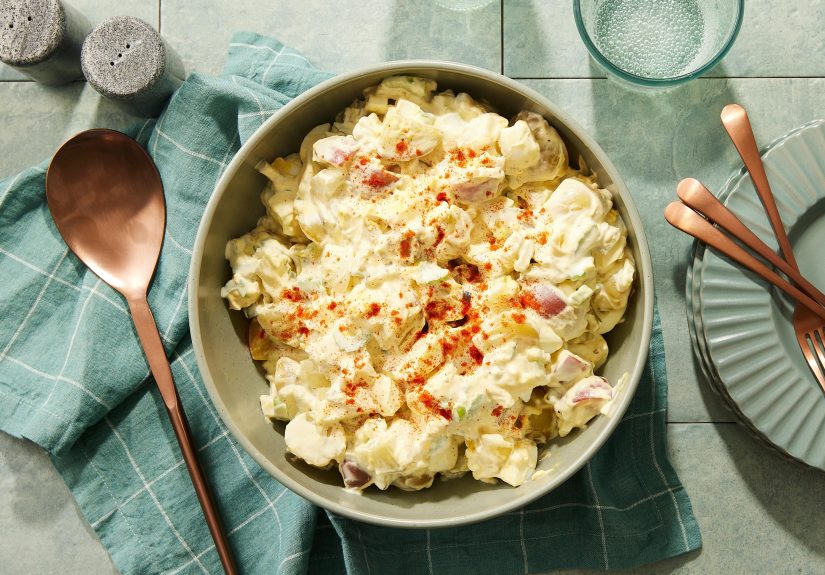
Finish with a sprinkle of paprika and fresh herbs. This final touch makes the salad look bright and intentional, not like it wandered into the bowl during a refrigerator cleanout.
Best Potatoes for Potato Salad
The best potatoes for classic potato salad are usually waxy or all-purpose potatoes. Waxy potatoes, such as red potatoes and new potatoes, have a lower starch content and hold their shape well after cooking. Yukon Gold potatoes are all-purpose potatoes with a naturally creamy texture, making them one of the best choices for a traditional American potato salad.
Russet potatoes are starchier and fluffier. Some cooks love them because they absorb dressing beautifully. Others avoid them because they can fall apart. If you want a very creamy, old-fashioned potato salad, russets can work well. If you want clean, tender chunks, choose Yukon Gold or red potatoes.
Make-Ahead and Storage Tips
Classic potato salad is an excellent make-ahead side dish. In fact, it often tastes better after several hours in the refrigerator because the potatoes, eggs, and dressing have time to become friends. Make it the night before a cookout, family dinner, picnic, or holiday meal, and you will thank yourself later.
Store potato salad in an airtight container in the refrigerator for up to 3 to 4 days. Keep it cold until serving. For outdoor gatherings, place the bowl over ice or return it to the cooler between servings. As a general food-safety rule, perishable dishes should not sit out for more than 2 hours, or more than 1 hour when the temperature is above 90°F.
Classic Potato Salad Variations
Southern-Style Potato Salad
For a Southern-style version, use sweet pickle relish, yellow mustard, hard-boiled eggs, celery, and a little onion. Some cooks add a spoonful of sugar for balance or a splash of vinegar for extra tang. The flavor is creamy, bright, and slightly sweet.
Dill Pickle Potato Salad
If you love tangy flavors, use chopped dill pickles, fresh dill, and a spoonful of pickle juice in the dressing. This version is especially good with grilled chicken, barbecue, and smoked meats.
Bacon Potato Salad
Fold in cooked, crumbled bacon just before serving for smoky crunch. Keep the bacon separate until the end so it stays crisp instead of disappearing into the dressing like a magician with poor boundaries.
Lighter Potato Salad
Replace half the mayonnaise with plain Greek yogurt or sour cream. The result is still creamy but slightly tangier and lighter. Add extra herbs to keep the flavor lively.
What to Serve with Classic Potato Salad
This easy potato salad recipe pairs beautifully with classic American mains. Serve it with grilled burgers, hot dogs, barbecue ribs, pulled pork, fried chicken, baked beans, grilled sausages, or deli sandwiches. It also works well as part of a picnic spread with coleslaw, pasta salad, corn on the cob, watermelon, and lemonade.
For holidays, classic potato salad is a natural fit for Memorial Day, Fourth of July, Labor Day, Easter, potlucks, family reunions, and backyard birthdays. Basically, if there is a folding table, a stack of paper plates, and at least one person asking who brought the good mustard, potato salad belongs there.
Common Potato Salad Mistakes to Avoid
Undercooking the Potatoes
Potatoes that are too firm will not absorb flavor properly and can make the salad taste unfinished. Cook them until a fork slides in easily, but remove them before they collapse.
Skipping the Vinegar
A little vinegar on warm potatoes adds brightness and depth. Without it, the salad may taste creamy but bland.
Adding Dressing Too Early
If the potatoes are piping hot, mayonnaise-based dressing can loosen or separate. Let the potatoes cool until warm or room temperature before folding in the dressing.
Forgetting to Taste After Chilling
Cold foods often need a little extra seasoning. Taste the potato salad after it chills and adjust before serving. A pinch of salt or a splash of pickle juice can wake everything up.
Extra Experience: Lessons from Making Classic Potato Salad Again and Again
After making classic potato salad for cookouts, family dinners, weeknight leftovers, and the occasional “I bought too many potatoes and now this is my personality” situation, one lesson becomes clear: potato salad rewards patience. It is not difficult, but it does not like being rushed. The best bowls usually come from small decisions that seem almost too simple to matter.
The first practical experience is to cut the potatoes into similar sizes. This sounds obvious, but it is the difference between a bowl of evenly tender potatoes and a dramatic mix of crunchy centers and collapsing edges. Aim for chunks around one inch. They do not need to look like they were measured by a tiny potato architect, but they should be close enough to cook at the same pace.
The second lesson is to season in layers. Salt the cooking water, add vinegar while the potatoes are warm, season the dressing, then taste again after chilling. Many people try to fix bland potato salad by dumping salt into the finished bowl. That can help, but it does not create the same deep flavor as seasoning throughout the process. Potatoes are humble, but they are also little starch sponges. Give them flavor early and they will carry it proudly.
The third lesson is to respect texture. Celery, onion, pickles, and herbs make the salad feel fresh. Without crunch, potato salad can become heavy quickly. Finely dice the onion so it does not overpower the dressing. Chop celery small enough to blend into every bite. If using pickles, pat them dry if they are very wet, especially if you are making the salad ahead.
The fourth lesson is that potato salad changes as it rests. Right after mixing, the dressing may seem a little loose or bold. After a few hours in the refrigerator, the potatoes absorb moisture and the flavors calm down. This is why tasting before serving matters. Sometimes the salad needs more mustard. Sometimes it needs more black pepper. Sometimes it needs absolutely nothing except someone with a spoon and excellent judgment.
The fifth lesson is to think about the crowd. Some families expect sweet relish. Others believe dill pickles are the only morally correct option. Some love lots of eggs; others prefer the potatoes to be the main event. A flexible classic potato salad recipe lets you adjust without losing the heart of the dish. For a sweeter crowd, use sweet relish and a tiny pinch of sugar. For a tangier crowd, use dill pickles, pickle juice, and extra mustard. For a richer salad, mash one or two egg yolks into the dressing.
The sixth lesson is about serving temperature. Potato salad should be cold, but not icy and stiff. Pull it from the refrigerator about 10 minutes before serving if you are indoors. Give it a gentle stir, garnish with paprika and herbs, and let it look like the picnic legend it is. Outdoors, keep it cold and safe. A chilled bowl set over ice is simple, practical, and far better than letting your beautiful salad slowly audition for a food-safety warning.
Finally, classic potato salad is one of those recipes that becomes personal over time. You may start with exact measurements, but eventually you will know whether your bowl needs another spoonful of mustard or a little more celery seed. That is the charm of it. It is familiar, flexible, and generous. It does not demand perfection. It simply asks for good potatoes, a balanced dressing, enough chill time, and maybe a sprinkle of paprika because we are civilized people.
Conclusion
A classic potato salad recipe should be creamy, tangy, tender, crunchy, and easy to serve with almost anything. By choosing the right potatoes, seasoning them while warm, using a balanced mayonnaise and mustard dressing, and allowing the salad to chill before serving, you can make a dependable side dish that tastes like summer, family gatherings, and second helpings.
This recipe keeps the tradition intact while giving you enough flexibility to make it your own. Serve it at a backyard barbecue, bring it to a potluck, pack it for a picnic, or make it on a quiet weekend just because potatoes and mayonnaise have never needed a formal invitation.