Table of Contents >> Show >> Hide
- Quick Answer: Can You Smoke Magic Mushrooms?
- Why People Even Ask This Question
- The Chemistry Part (Without the Lab Coat Drama)
- Why Smoking Magic Mushrooms Is a Bad Idea
- Health Risks People Often Underestimate
- Important Reality Check: “Mushroom” Products Aren’t Always What They Claim
- What About the “Medical” Side of Psilocybin?
- Legal Status in the U.S. (It’s Complicated)
- If Someone Is Having a Bad Reaction
- Experiences Related to “Can You Smoke Magic Mushrooms?” (Extended Section)
- Final Takeaway
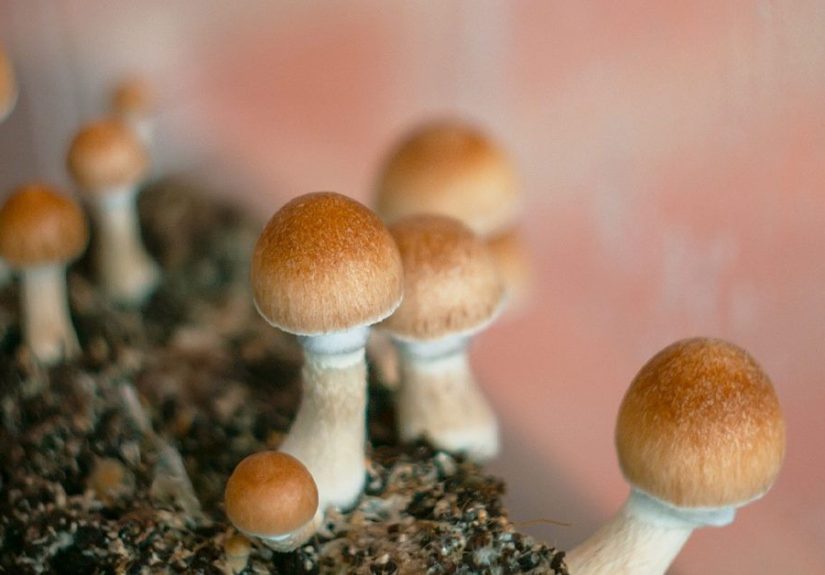
Short answer: you can try, but it’s a bad ideaand not just because it sounds like a “science experiment” someone suggested at 2 a.m. The bigger issue is that the main compounds in magic mushrooms (psilocybin and psilocin) are sensitive to heat and oxidation, which means smoking is likely to be unreliable and may destroy much of what people think they’re trying to get. On top of that, inhaling burnt mushroom material can irritate your lungs, and the risks of panic, confusion, accidental injury, or toxic mushroom mix-ups are real.
This article breaks down the chemistry, health risks, legal reality, and what real-world experiences around this question tend to look like. It’s educational, not a how-to guide, and it’s written for people who want facts without internet myths.
Quick Answer: Can You Smoke Magic Mushrooms?
Technically, people talk about it onlinebut medically and practically, it’s not considered a useful or safe route. Most reputable health and government sources describe psilocybin mushroom use as being ingested orally (eaten, brewed, or mixed into food), not smoked. That’s an important clue.
Why? Because psilocybin-related compounds are not especially friendly to high heat. Lab and analytical literature repeatedly emphasizes careful temperature control and notes that psilocin is particularly vulnerable to degradation from environmental stressors like heat, oxygen, and light. In plain English: if you burn it, you may be ruining the very compounds you expected to act on the brain.
Why People Even Ask This Question
Usually, people asking “Can you smoke magic mushrooms?” are trying to figure out one of three things:
- Whether smoking works faster (like with some other substances).
- Whether it avoids stomach upset.
- Whether internet rumors about “stronger effects” are true.
The problem is that mushrooms aren’t a clean, standardized product. They’re biological material, and the active compounds vary naturally. Add heat, smoke, and combustion byproducts, and you’re basically turning an already unpredictable substance into an even less predictable one. That’s not “optimization.” That’s chaos with a lighter.
The Chemistry Part (Without the Lab Coat Drama)
Psilocybin is the starting compound
Psilocybin is often described as a prodrug, meaning your body converts it into psilocin, which is the compound more directly linked to psychedelic effects. That conversion happens in the body after ingestion. This is one reason oral use is the route most often discussed in medical and scientific contexts.
Psilocin is less stable
Psilocin is more chemically reactive and less stable than psilocybin. Analytical research notes that psilocin is more susceptible to degradation in the presence of oxygen, heat, and light. In extraction and testing methods, researchers intentionally control temperatures to avoid thermal degradation. That’s the opposite of what smoking does.
So what does heat do?
Heat can accelerate breakdown and conversion in ways that make the final result inconsistent. Even if some compound survives, the amount is unpredictable. That means smoking magic mushrooms is not just riskyit’s also inefficient and unreliable. If someone expects a consistent effect, smoking is a poor bet from a chemistry standpoint.
Why Smoking Magic Mushrooms Is a Bad Idea
1) It may destroy what you’re trying to use
The active compounds are not built for high-heat combustion. Research methods that analyze psilocybin and psilocin go out of their way to avoid excessive heat and environmental exposure. Smoking does the exact opposite.
2) It adds lung irritation for no clear benefit
Mushrooms are not designed to be inhaled. Burning plant or fungal material creates smoke and irritants. Even if a person is focused only on “getting effects,” they may end up with coughing, throat irritation, chest discomfort, or a harsh inhalation experience while getting little of the intended psychoactive response.
3) It increases unpredictability
Psilocybin mushrooms already vary in potency. Add combustion heat, unknown degradation, and inconsistent inhalation, and you get a situation where people can’t reliably predict what will happen. Unpredictability is a major reason bad outcomes happenespecially panic, risky behavior, and accidental overexposure in other forms.
Health Risks People Often Underestimate
Even without smoking, psilocybin can affect judgment, mood, and perception in ways that become dangerous fast. Poison control and medical sources warn about:
- Nausea and vomiting
- Increased heart rate and blood pressure
- Dizziness, weakness, and loss of coordination
- Anxiety, panic, paranoia, or extreme fear
- Confusion, disorientation, and dangerous behavior
- Psychosis-like symptoms in some cases
One of the most serious risks is mistaken mushroom identity. Toxic look-alike mushrooms can cause severe poisoning, including liver or kidney failure. And no, “cooking it” or processing it does not magically make poisonous mushrooms safe. A mushroom misidentification can become an emergency, not a “bad trip.”
Important Reality Check: “Mushroom” Products Aren’t Always What They Claim
Public health investigations in the U.S. have documented severe illnesses linked to products marketed as mushroom-based psychoactive edibles. In some cases, testing found compounds consumers did not expect from the label. That matters here because many people asking about smoking mushrooms are also comparing other routes (edibles, chocolates, gummies, etc.).
Bottom line: if a product says “mushroom,” that does not guarantee it contains only psilocybin-related compoundsor that it contains them at all. Public health agencies have warned that some mushroom-labeled products can cause severe neurologic and cardiac symptoms and may require emergency care.
What About the “Medical” Side of Psilocybin?
This is where the conversation gets messy online. Yes, psilocybin is being studied in clinical and academic settings for mental health conditions. NIH and major research centers like Johns Hopkins and Yale discuss ongoing research and potential therapeutic uses.
But that does not translate into “random use is safe,” and it definitely does not support smoking mushrooms. Clinical research is structured, screened, monitored, and supported. People aren’t just winging it in a parking lot with a lighter and a bad plan.
In other words, “promising research” and “safe casual use” are not the same thing. The gap between those two ideas is where a lot of internet confusion lives rent-free.
Legal Status in the U.S. (It’s Complicated)
Federally, psilocybin remains a controlled substance, and public health agencies still warn about its abuse potential and risks. At the same time, some states and cities have changed local policy.
For example, Oregon operates a regulated psilocybin services framework with licensed service centers and facilitators, including preparation and follow-up requirements. Colorado also has an official Natural Medicine Program with licensing, rules, and program infrastructure. These are tightly structured frameworksnot a free-for-all.
So if you hear “it’s legal now,” that’s usually an oversimplification. Laws vary by state and city, and “decriminalized,” “regulated services,” and “federally legal” are very different things.
If Someone Is Having a Bad Reaction
If someone is confused, panicking, vomiting repeatedly, having chest symptoms, acting dangerously, or showing severe agitation, treat it like a real medical situationnot a joke, not a social media story, and definitely not a “they’ll sleep it off” moment.
In the U.S., poison centers are available 24/7 through the Poison Help line. If symptoms are severe (trouble breathing, seizures, loss of consciousness, or immediate danger), emergency services are appropriate.
If you’re a teen reading this because a friend is experimenting: get a trusted adult involved fast. That is not snitching. That is basic survival strategy.
Experiences Related to “Can You Smoke Magic Mushrooms?” (Extended Section)
When people share experiences around this exact question, they usually fall into a few repeating patternsand none of them sound like a glowing product review.
The first pattern is disappointment. People expect smoking to “kick in faster” because that’s how many other substances behave. But mushrooms don’t work the same way. What they often report instead is harsh smoke, an unpleasant taste, throat irritation, coughing, and then… not much else. This is completely consistent with the chemistry problem: heat and combustion may degrade the compounds they were hoping to feel.
The second pattern is confusion and false assumptions. Someone tries smoking mushrooms, doesn’t feel a clear effect, and then assumes the material was weak. Later, they may switch to another route and take too much because they think “nothing happened last time.” That kind of thinking can create a dangerous situation, especially because potency varies naturally between mushrooms and even between different parts of the same batch.
Another common theme is stomach-and-anxiety tradeoff thinking. Some people ask about smoking because they’ve heard mushrooms can cause nausea and they want to avoid it. The issue is that smoking doesn’t solve the core unpredictability problemand it introduces new problems like inhaling burnt material. People end up swapping one concern for another, often without improving safety.
There’s also a social pattern: internet myth recycling. One person posts that smoking worked “great,” others repeat it, and suddenly the claim sounds established even when there’s no good evidence behind it. Meanwhile, medical and poison resources keep reporting the same real-world outcomes: anxiety, panic, confusion, vomiting, elevated heart rate, and risky behavior. In other words, the internet is often telling a cool story while toxicology data is writing a very different one.
A more serious category of experiences comes from poison center and emergency reports. These are the stories that don’t trend because they’re not fun: a person becomes severely agitated, someone can’t stop vomiting, a teenager takes something that wasn’t what they thought it was, or a “mushroom” product contains other psychoactive substances. Public health investigations have shown that mushroom-branded products can involve unexpected ingredients, which makes the entire “what experience should I expect?” question even harder to answer safely.
Finally, there’s a sharp contrast between casual experimentation and clinical research settings. In medical studies, participants are screened, supported, and monitored. There are preparation sessions, follow-up, and professional oversight. In casual situations, people may be sleep-deprived, anxious, mixing substances, or surrounded by friends who are just as unprepared. That difference matters more than most people realize.
So when people ask, “Can you smoke magic mushrooms?” the most honest experience-based answer is usually this: people who try it often get a rough, inconsistent, or disappointing outcome, and the risk of confusion, panic, or unsafe behavior is still very real. It’s not a shortcut. It’s mostly a bad idea wrapped in internet confidence.
Final Takeaway
Can you smoke magic mushrooms? You can attempt it, but the evidence-backed answer is that it’s not a smart or reliable method. The active compounds are sensitive to heat, the effects become more unpredictable, and the health risks (including panic, impaired judgment, and toxic look-alike mushrooms) don’t disappear just because the route changes.
Add in legal complications, mislabeled products, and poison center trends, and the “smoke it” idea starts to look less like a clever hack and more like a fast track to a preventable problem.
If your goal is accurate information, the best takeaway is simple: don’t trust drug myths, don’t trust labels blindly, and don’t confuse clinical research with DIY experimentation.