Table of Contents >> Show >> Hide
- What Is Boston Dynamics Spot?
- Why the Boston Dynamics Robot Dog Gets So Much Attention
- Spot Specifications That Actually Matter to Buyers
- What Spot Can Actually Do in the Real World
- Can You Buy the Boston Dynamics Robot Dog?
- What Determines the Cost of a Spot Deployment?
- Who Should Buy Spot?
- How to Decide Whether Spot Is Worth It
- The Real Experience of Working With Spot
- Final Verdict: Should You Buy Boston Dynamics Spot?
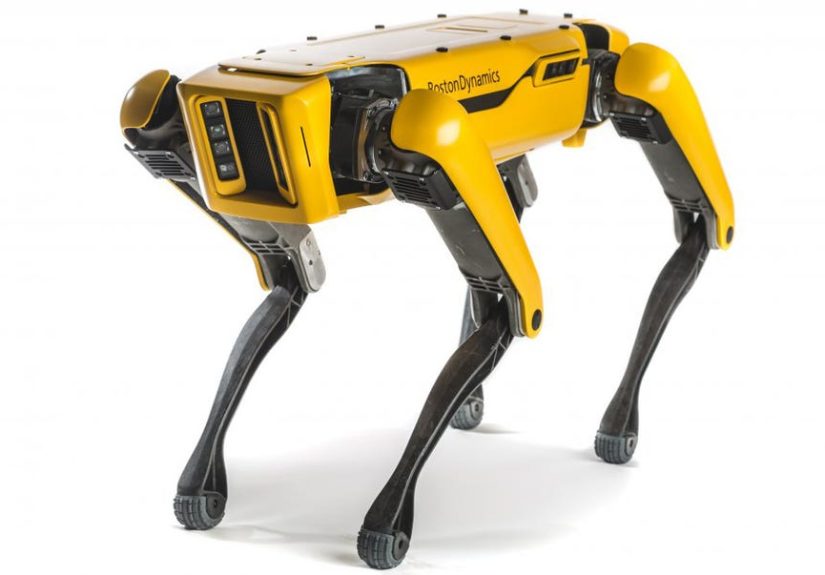
If you have ever seen a yellow four-legged robot trotting through a factory, climbing stairs like it owns the place, or casually strolling around a construction site like the world’s most overqualified intern, you have probably met Boston Dynamics Spot. And yes, it really is that famous robot dog. No, it is not a toy. And no, it is not the kind of “dog” that will bring you slippers, wag its tail, or guilt-trip you for eating pizza without sharing.
Spot is a serious business machine designed for industrial inspection, remote data collection, hazardous-environment work, construction monitoring, public safety support, and research. That is exactly why so many people search phrases like Boston Dynamics Spot, Boston Dynamics robot dog, and buy robot dog. They want to know what it is, what it does, and the all-important question: Can I actually buy one?
The short answer is yes, but not in the way you buy a laptop, vacuum, or overly confident espresso machine. Spot is sold as a commercial robotics solution. It is aimed at companies, industrial operators, first responders, and research institutions that want a mobile robot capable of collecting useful data, reducing human exposure to risk, and automating repetitive inspections. In other words, Spot is less “cute robo-pet” and more “high-end field employee who never complains about the night shift.”
What Is Boston Dynamics Spot?
Boston Dynamics Spot is a quadruped mobile robot built to move through real-world environments that are messy, uneven, cramped, slippery, or just generally rude. Unlike wheeled robots that prefer smooth floors and polite architecture, Spot is built to handle stairs, obstacles, tight industrial spaces, and changing terrain. That makes it valuable in places where conventional automation struggles.
At its core, Spot is a mobility platform. It walks, maps, senses, records, streams, and carries payloads. Companies can equip it with cameras, thermal tools, acoustic sensors, LiDAR, robotic arms, and software integrations that turn it into an inspection tool, a site documentation machine, a remote eyes-and-ears unit, or a research platform.
That flexibility is a big part of Spot’s appeal. One organization may use it to capture thermal data in an energy facility. Another may use it to generate digital twins on a jobsite. Another may deploy it in hazardous public safety scenarios. A research lab may use the same platform for mobility, autonomy, and manipulation experiments. Same robot body, very different day jobs.
Why the Boston Dynamics Robot Dog Gets So Much Attention
Spot gets attention because it lives at the intersection of robotics spectacle and real-world utility. Plenty of robots look impressive in demos. Fewer survive the awkward moment when a customer says, “Great, now go work in a dusty plant, around pipes, on stairs, every day, and please produce data we can actually use.” Spot is one of the few robots that has crossed from viral video fame into real commercial deployment.
Part of that comes from its movement. Humans instantly understand legs. When a robot walks up stairs or steps over obstacles, it feels more capable than a machine that politely stops at a floor crack like it has encountered the Grand Canyon. But the real reason Spot matters is not the walking itself. It is what that mobility unlocks: consistent inspections, safer data capture, remote visibility, and repeatable missions in places humans either should not go or should not have to visit as often.
This is why Spot has shown up in energy, utilities, construction, manufacturing, research, and public safety conversations. The robot dog image gets the click, but the automation value keeps the meeting going.
Spot Specifications That Actually Matter to Buyers
Buyers do not need a fan club brochure. They need to know whether Spot can do real work. Here are the practical numbers and capabilities that matter most:
Payload and Flexibility
Spot can carry up to 14 kg, or about 30 pounds, of payload. That matters because the robot becomes far more useful when it can support specialized equipment. Cameras, sensors, scanners, edge computers, and custom research payloads can turn the same base robot into entirely different business tools.
Battery Life
Average runtime is about 90 minutes, which sounds short if you are imagining an all-day companion robot, but it makes sense in enterprise operations where missions are planned, batteries are swappable, and docking or scheduled charging can be part of the workflow. For many inspection rounds, that is enough to get meaningful work done before returning to recharge.
Mobility
Spot’s maximum speed is about 1.6 meters per second, and it is designed to navigate stairs, uneven surfaces, and obstacles. Its maximum step height and slope capabilities make it better suited than many traditional mobile robots for industrial sites and partially finished buildings.
Environmental Durability
Spot is IP54 rated, which means it has meaningful protection against dust and splashing water. Translation: it is built for work, not for luxury spa treatment. That durability makes it viable for industrial and outdoor-adjacent settings where consumer robots would immediately begin negotiating their resignation.
Sensing and Autonomy
Spot uses 360-degree perception and object avoidance to move safely around stationary obstacles. It supports both manual operation and autonomous missions, which is important because real deployments often start with human-supervised runs before maturing into repeatable autonomous workflows.
Software and Integrations
One of Spot’s biggest strengths is its API and development ecosystem. Organizations can build on Boston Dynamics software, integrate with partner tools, manage robots through Orbit, and customize missions around their own sites and inspection requirements. That means you are not just buying a robot body. You are buying a platform.
What Spot Can Actually Do in the Real World
1. Industrial Inspection
This is probably Spot’s most natural home. In industrial facilities, Spot can walk predetermined routes, capture visual and thermal data, read gauges, look for abnormalities, and send information back to operators who would otherwise spend hours doing manual rounds.
That is not just a convenience upgrade. It can improve reliability, reduce exposure to hazardous environments, and create more consistent data collection. Humans get tired, distracted, rushed, and occasionally pulled into a meeting that should have been an email. Robots, on the other hand, are excellent at repetitive patrols.
2. Construction Monitoring and Documentation
Construction sites are chaotic, constantly changing, and rarely designed for elegant automation. That makes Spot especially interesting there. Builders have used it for progress monitoring, reality capture, digital twin workflows, QA/QC support, and repeatable image collection.
Instead of sending staff to walk the same route again and again to document progress, Spot can run scheduled missions and capture consistent site data. That can help teams compare as-built conditions to BIM models, maintain visual records, and speed up coordination.
3. Utilities and Critical Infrastructure
In power and utility environments, Spot’s value becomes very obvious very quickly. If a facility contains electrical hazards, high-risk zones, tight spaces, or equipment that should be monitored without constant human exposure, a mobile inspection robot starts to look a lot less futuristic and a lot more sensible.
For utilities, the robot dog is not a novelty. It is a way to put cameras, thermal sensing, and inspection logic where people would rather not linger.
4. Public Safety and Hazardous Response
Spot has also been used to give first responders remote visibility into dangerous situations. That can include suspicious packages, unstable scenes, or environments that may contain hazards. In those contexts, the robot can help incident commanders assess risk before sending people closer.
That said, public safety use has also raised ethical questions around surveillance, policing, and mission creep. Boston Dynamics has publicly emphasized non-weaponization and says it does not support uses that violate privacy or civil rights. Any agency evaluating Spot for this kind of work should take policy, oversight, and public trust as seriously as the robot itself.
5. Research and Education
Spot is also attractive to universities and research teams because it offers advanced mobility and APIs without requiring them to build a legged robot from scratch. That is a huge advantage. Researchers can spend less time reinventing locomotion and more time working on autonomy, manipulation, vision, or specialized payloads.
For students, it is also a powerful teaching platform. It turns robotics from abstract slides into a machine that can map, walk, inspect, and respond in physical space. Suddenly the lab demo has legs. Literally.
Can You Buy the Boston Dynamics Robot Dog?
Yes, but there is a catch: Spot is not marketed like a consumer gadget. Boston Dynamics currently directs buyers through a sales process. The company clearly frames Spot as a solution for commercial, industrial, enterprise, and university research use. It is not intended for individual, non-commercial purchase.
That distinction matters. If you are searching buy robot dog because you want a futuristic home companion, Spot is almost certainly the wrong product. If you are a facilities operator, contractor, utility, safety team, or research lab with a defined use case, then Spot becomes a very serious option.
Historically, Boston Dynamics did publicly offer a Spot Explorer package around the mid-$70,000 range in 2020. That figure still gets repeated all over the internet like it is immortal truth. It is not. Today, the smarter assumption is that pricing depends on configuration, attachments, software, services, support, deployment scope, and the exact problem you are trying to solve.
So yes, you can buy Spot. But you are really buying into a robotics deployment process, not just a robot in a box.
What Determines the Cost of a Spot Deployment?
If you are trying to estimate the real cost of a Boston Dynamics robot dog, the base unit is only part of the conversation. Total cost depends on several layers:
- Base robot: the core Spot platform.
- Payloads: cameras, thermal systems, acoustic imagers, LiDAR, scanning tools, or custom research hardware.
- Spot Arm: for manipulation tasks like opening doors or interacting with the environment.
- Docking and charging: useful for autonomous and repeated operations.
- Software: Orbit and partner platforms for fleet management, inspections, scheduling, and analytics.
- Integration work: connecting robot data to business systems, asset management tools, or digital twin workflows.
- Training and support: teams need onboarding, maintenance knowledge, and operational planning.
That is why the question should not be “How much is the robot dog?” but “What does a successful deployment cost, and what does it save?” For some companies, the return comes from reduced manual inspections. For others, it is faster documentation, safer operations, more frequent data, less downtime, or better asset visibility.
Who Should Buy Spot?
You Should Consider Spot If:
- You run repetitive inspections in large, hazardous, or hard-to-access environments.
- You need consistent visual, thermal, acoustic, or spatial data.
- You want remote visibility across plants, facilities, substations, or jobsites.
- You are building digital twin or reality capture workflows.
- You are a research lab that needs a mature legged robotics platform.
- You can define a clear operational use case and a measurable ROI target.
You Probably Should Not Buy Spot If:
- You just want a cool robot dog for the office lobby.
- You expect a consumer-style plug-and-play gadget.
- You do not have a workflow that benefits from repeatable mobile sensing.
- You are looking for a replacement for a human worker in every context.
- You want a house pet that happens to be made of aluminum and ambition.
How to Decide Whether Spot Is Worth It
The best Spot buyers do not start with the robot. They start with a painfully specific problem.
Maybe technicians spend three hours every day walking routes to check gauges and take pictures. Maybe project teams need nightly progress documentation. Maybe a utility has zones where remote inspection could improve safety. Maybe a research program needs a legged platform with APIs, autonomy tools, and payload support already solved.
If the workflow is repetitive, risky, expensive, data-heavy, and physically distributed, Spot starts to make sense. If the workflow is vague, occasional, or based mostly on “this would look awesome on LinkedIn,” the business case gets shaky fast.
A smart evaluation checklist includes:
- What task will Spot perform?
- How often does that task happen?
- What is the current labor cost and safety exposure?
- What data will the robot collect?
- How will that data be used?
- What systems need integration?
- How quickly can the deployment prove value?
That is how serious buyers separate “cool demo” from “useful machine.”
The Real Experience of Working With Spot
One of the most interesting things about Spot is that the experience of working with it changes fast. On day one, most teams react the same way: curiosity, excitement, a few nervous laughs, and at least one person saying, “Well, this is either brilliant or the beginning of a sci-fi movie.” Then the novelty fades, and the real question shows up: can this thing help us do our jobs better?
In many real deployments, the answer becomes clear when Spot starts doing boring work consistently. That may sound underwhelming, but it is exactly the point. On a construction site, the magic is not that a robot dog can walk around. The magic is that it can walk the same route again and again, capture visual records, help compare site progress over time, and reduce how much manual documentation staff need to do. Teams stop seeing a robot and start seeing a repeatable data pipeline with legs.
In industrial settings, the experience can be even more practical. Operators are often not impressed by flashy robotics for very long. They want to know whether the machine can survive the environment, respect safe distances, collect usable inspection data, and fit into the maintenance rhythm of the site. Once Spot proves that it can do that, it begins to earn trust. Trust is a huge word in industrial automation. People do not hand over critical routines just because a vendor video looks cool. They do it when the tool shows up reliably, returns useful information, and avoids creating extra work.
Another part of the experience is remote visibility. Teams often describe value not just in terms of what Spot sees, but in who no longer has to travel, climb, suit up, or enter an uncomfortable environment just to get basic information. That shift can feel subtle at first. Then it becomes normal. Suddenly the expert can review the issue from an office, the site team has better documentation, and the decision cycle gets faster. It is not glamorous, but it is deeply operational.
There is also a human factor nobody should ignore: morale. When deployed well, Spot can move workers away from repetitive, tedious, low-value patrols and toward more analytical tasks. That does not mean the robot replaces the team. It means the team starts using its time differently. Instead of collecting the same photos every day, staff can interpret data, solve problems, coordinate fixes, and focus on higher-value work. That is where the robot begins to feel less like a gadget and more like a force multiplier.
Of course, the experience is not friction-free. Teams still need training. Missions need planning. Payloads must match the use case. Battery and charging logistics matter. Site connectivity matters. Integration work matters. And there is a difference between an impressive pilot and a repeatable deployment that delivers value month after month. Spot does not remove that operational discipline. It rewards it.
What surprises many organizations most is that Spot’s coolest feature is not actually the walking. It is the consistency. The robot does not get bored, skip a checkpoint, rush a routine, or decide the far end of the site can wait until tomorrow. When that consistency is paired with the right sensors and software, the result feels less like owning a futuristic robot dog and more like adding a new layer of digital infrastructure to your operation.
That is the real Spot experience. First it makes people smile. Then, if the deployment is smart, it makes the workflow better. And in business, the second part is the one that pays the bills.
Final Verdict: Should You Buy Boston Dynamics Spot?
If you are searching for the most famous robot dog on the market, yes, Boston Dynamics Spot is the one. It is agile, proven, configurable, and backed by one of the most recognizable robotics companies in the world. It is also a real working platform, not just a viral video star with excellent posture.
If you are an enterprise buyer with a clear need in inspection, safety, documentation, autonomy, or research, Spot deserves serious attention. Its mobility, payload flexibility, and software ecosystem make it one of the most compelling legged robots available for real operations.
If you are a casual shopper hoping to buy a robot dog for the house, Spot is the wrong lane entirely. This is not a living-room entertainment gadget. This is a commercial robotics solution built for worksites, facilities, and institutions.
So, should you buy Spot? Buy it if you need a robot that can go where wheels struggle, gather data humans are tired of collecting, and support workflows where safety, repeatability, and visibility matter. Do not buy it because it looks cool online. Plenty of expensive mistakes start that way. Very few of them can climb stairs.