Table of Contents >> Show >> Hide
- What is blue light therapy for acne?
- How blue light therapy works
- Benefits of blue light therapy for acne
- What blue light therapy does not do very well
- Side effects and risks
- How much does blue light therapy for acne cost?
- Is blue light therapy worth it?
- Common real-world experiences with blue light therapy for acne
- Final thoughts
- SEO Tags
Acne has a special talent for showing up at the worst possible time: before a first date, before picture day, before a wedding, or approximately five minutes after you finally think your skin is behaving. That is one reason blue light therapy keeps getting attention. It sounds futuristic, looks a little like skincare from a sci-fi movie, and promises something many people want: fewer breakouts without piling on yet another cream, pill, or “miracle” serum with a dramatic name and disappointing results.
But is blue light therapy actually worth the hype? The honest answer is a very dermatologist-style, “It depends.” For the right person, it can be a helpful tool. For the wrong type of acne, it can be an expensive glowing disappointment. The best way to understand it is to skip the marketing sparkle and look at what blue light therapy can do, what it cannot do, what side effects to expect, and how much money your wallet may need to emotionally prepare for.
What is blue light therapy for acne?
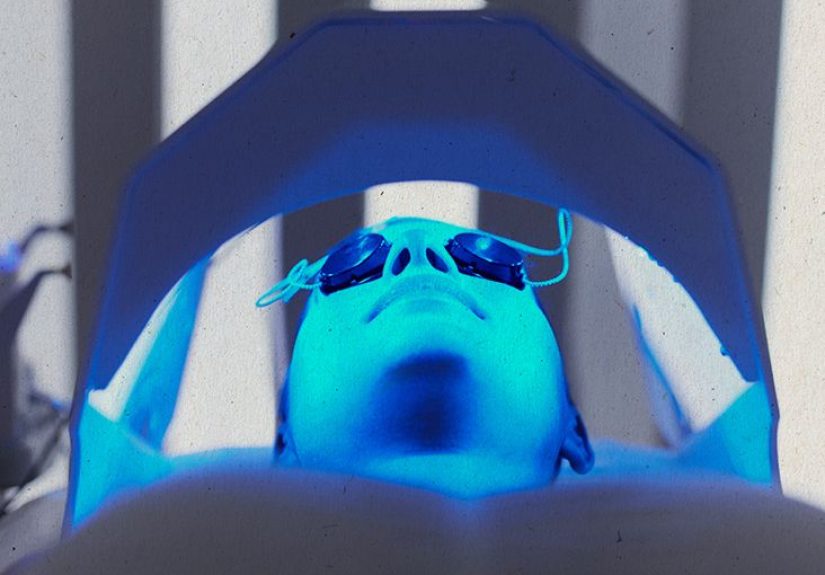
Blue light therapy is a noninvasive treatment that uses specific wavelengths of visible blue light to help reduce acne. Most acne-focused devices are designed for mild to moderate inflammatory acne, meaning the red, swollen pimples and pustules that make your skin feel like it is staging a tiny rebellion. The treatment is available in dermatology offices, med spas, and at home through FDA-cleared LED masks, panels, or handheld devices.
The basic idea is simple: acne-causing bacteria, now commonly called Cutibacterium acnes, produce compounds known as porphyrins. Blue light activates those compounds, which helps create a reaction that damages the bacteria. In plain English, the light helps make life harder for the bacteria that contribute to inflammatory breakouts. Some experts also believe blue light may help calm inflammation, which is useful because angry acne tends to act like it pays rent and plans to stay.
How blue light therapy works
Blue light therapy is not the same as tanning, and it is not ultraviolet light. That matters. The treatment uses visible light, usually in a narrow range associated with acne therapy. Dermatologists often use blue light alone or combine it with red light, because red light may help reduce inflammation and support recovery. In some cases, doctors use blue light as part of photodynamic therapy, or PDT, where a light-sensitizing medication is applied before the light exposure. That version is more aggressive and usually comes with more side effects.
There is also an important difference between in-office treatment and at-home treatment. In-office systems are generally more powerful and supervised by professionals. At-home devices are more convenient and usually more affordable over time, but they often require patience, consistency, and realistic expectations. Translation: the mask might look impressive, but it still cannot fix a month of breakouts in one heroic session.
Benefits of blue light therapy for acne
1. It can help reduce inflammatory breakouts
The biggest benefit is that blue light therapy may reduce inflamed pimples. That makes it most appealing for people with mild to moderate acne who are dealing with recurring red bumps rather than deep cysts or severe nodular acne. Some newer evidence on at-home LED devices is encouraging, suggesting that regular use can lower both inflammatory and noninflammatory lesion counts. At the same time, the overall research base still has limits, so this is best viewed as a helpful tool, not a magic wand with a charging cable.
2. It is a non-drug option
For people who cannot tolerate benzoyl peroxide, topical retinoids, or antibiotics, blue light therapy can feel refreshingly simple. No swallowing pills. No applying three products in the correct order like you are assembling skincare furniture. No peeling yourself into another dimension. It can also appeal to people who want to reduce their reliance on medication or who need an add-on to a broader acne plan.
3. It usually has mild downtime
Standard LED blue light therapy is generally well tolerated. Most people do not need to hide indoors for a week or cancel every social plan they had. Mild redness or dryness can happen, but the recovery is usually much easier than with stronger procedures. That makes it attractive to students, busy professionals, and anyone else who cannot take a week off to explain why their face currently resembles a tomato with opinions.
4. It can work well as part of combination treatment
Blue light therapy may be more useful when paired with smart acne basics. Dermatologists often combine light treatment with topical medications, a gentle cleanser, noncomedogenic moisturizer, or other acne therapies. This matters because light therapy alone rarely clears acne completely. If your breakouts are driven by clogged pores, hormones, oil production, and inflammation all at once, one treatment type may not be enough to win the whole battle.
5. At-home devices offer convenience
At-home LED devices have become more popular because they let people treat acne without booking repeated appointments. For someone with mild acne and excellent consistency, a home device may fit better into real life than office visits every week. The catch is that consistency becomes the entire game. If your device ends up in a drawer next to abandoned resistance bands and a journal you used twice, the results will not be thrilling.
What blue light therapy does not do very well
Here is where expectations need a firm but loving reality check. Blue light therapy is not usually the best choice for blackheads, whiteheads, deep cysts, or nodules. It also does not erase acne scars, close every pore, or deliver overnight perfection. The American Academy of Dermatology notes that lasers and light treatments can reduce acne, but they rarely clear it on their own. That means blue light therapy is often better as an assist than as the star player.
If you have severe acne, scarring, or acne that clearly flares with hormonal changes, a dermatologist may steer you toward other evidence-based options first. Blue light therapy can still have a role, but it may not be the treatment doing the heaviest lifting.
Side effects and risks
For standard LED blue light therapy, side effects are usually mild. The most common ones include:
- Temporary redness
- Mild dryness or tightness
- Minor irritation or warmth
- Occasional peeling or itchiness
Eye protection matters. Bright light and eyeballs are not a dream team, so protective goggles or built-in shields should be used exactly as directed. People with certain eye conditions or a history of light sensitivity should be especially cautious.
Blue light therapy may not be appropriate for everyone. You should talk to a dermatologist before trying it if you have a photosensitivity disorder, a history of certain eye diseases, very reactive skin, or if you take medications that increase light sensitivity. That includes some medications used in dermatology and psychiatry, among others.
Things get more intense with photodynamic therapy, where a photosensitizing medication is used before the light. That version can cause stinging, burning, swelling, peeling, and increased sensitivity to sunlight or bright indoor light for a period after treatment. In other words, regular LED blue light is usually the easygoing cousin; PDT is the relative who arrives loudly and requires planning.
How much does blue light therapy for acne cost?
Cost is where the conversation gets very real. Blue light therapy pricing varies based on where you live, whether you go to a dermatologist or spa, whether the treatment is bundled with a facial, and whether your acne care plan includes stronger procedures like PDT.
Typical cost ranges
In-office LED sessions can sometimes be on the lower end of the spectrum, with average blue light session pricing often around the mid-double digits. Some U.S. clinics list LED add-ons or boosters in roughly the $60 to $95 range, while other sources note that treatment sessions can run $80 or more depending on provider and market. Photodynamic therapy is in a very different price tier and can be several hundred dollars or more per treatment.
That means a realistic cost discussion should focus on the full course, not one visit. You may need weekly sessions for about a month, then occasional maintenance. A treatment that sounds affordable per session can become pricey when multiplied by four, six, or eight visits. Your skin may glow, but your budgeting spreadsheet may not.
What about at-home devices?
At-home blue light devices range from relatively affordable handheld tools to more expensive full-face masks. The advantage is convenience and potentially lower long-term cost if you stick with the treatment. The downside is variability. Not all devices are created equal, not all are equally powerful, and not all users are equally disciplined. Look for an FDA-cleared device, read the instructions like they matter, and avoid the temptation to improvise because “more light” is not automatically better.
Will insurance cover it?
Insurance coverage is unpredictable and often limited, especially when treatment is considered cosmetic or elective. PDT or medically supervised acne treatment may have different billing implications than a spa-style LED facial, but many people should expect at least some out-of-pocket costs. Before starting, ask for the total expected number of sessions, the cost per visit, maintenance pricing, and whether there are consultation fees.
Is blue light therapy worth it?
Blue light therapy can be worth it for people with mild to moderate inflammatory acne who want a non-drug option, cannot tolerate standard topicals, or want to add another tool to their routine. It may also appeal to people who are committed enough to use an at-home device regularly and patient enough to wait several weeks for gradual results.
It may be less worth it if you have mostly blackheads, deep cysts, severe acne, significant scarring, or a habit of buying skincare devices during moments of optimism and then forgetting they exist by next Tuesday. In those situations, conventional acne treatments or a dermatologist-directed plan may deliver better value.
The smartest approach is not asking whether blue light therapy is good or bad in general. It is asking whether it matches your acne type, skin goals, tolerance for maintenance, and budget. That is the question that saves time, money, and a lot of very hopeful online shopping.
Common real-world experiences with blue light therapy for acne
In real life, people’s experiences with blue light therapy usually fall into a few familiar patterns. The first group is the “pleasantly surprised” crowd. These are often people with mild to moderate inflammatory acne who use the treatment consistently for several weeks. They may not wake up with movie-star skin, but they notice that their pimples look less red, heal a little faster, and show up with less dramatic flair. Their usual comment is not “This changed my life overnight,” but something more practical like, “My skin seems calmer, and I’m not getting those angry clusters as often.” Honestly, that kind of boring progress is often the good kind.
The second group is the “I expected a miracle and got a decent helper” group. These users often like the treatment, but only after adjusting their expectations. They learn that blue light therapy is rarely a one-and-done fix. It works more like a steady teammate than a superhero. If they keep using a gentle cleanser, a noncomedogenic moisturizer, and whatever acne treatment their dermatologist recommended, the light therapy can become part of a routine that feels manageable. If they expect one glowing session to erase months of breakouts, disappointment arrives early and usually without knocking.
Then there is the “home device reality check” experience. Many people love the convenience of treating their skin at home, especially if office visits are expensive or hard to schedule. But home treatment success often depends on consistency. The people who do best tend to use the device exactly as directed, protect their eyes, and keep going long enough to judge it fairly. The people who struggle are often the ones who use it for four days, skip a week, try again once while watching television, and then declare the technology useless. To be fair, modern life does make routines hard. Still, acne does not respond well to chaos.
Some people also report mild side effects, especially in the beginning. A little dryness, temporary redness, or a slightly warm feeling after treatment is pretty common. Usually, that is manageable with a gentle moisturizer and sensible use. The stronger reactions tend to show up more with photodynamic therapy, where the treatment is more intense and the skin may feel irritated, sting, or become temporarily more light-sensitive. That version is usually the one that makes people say, “Okay, this is effective, but wow, this is not exactly a spa nap.”
Cost shapes the experience too. People who do several office sessions often like the professional oversight but sometimes feel the cumulative price more than they expected. People who buy an at-home mask often feel better about the long-term math, but only if they actually use it. The emotional arc is very different when a device becomes part of your weekly routine versus when it becomes a high-tech paperweight. In the end, the best experiences usually come from people who understand what blue light therapy is good at, what it is not good at, and how it fits into a bigger acne plan instead of treating it like glowing sorcery.
Final thoughts
Blue light therapy for acne sits in that interesting middle ground between skincare trend and legitimate dermatology tool. It has real science behind it, real limitations, and real costs. For mild to moderate inflammatory acne, it can be helpful, especially when used consistently and paired with a smart routine. For severe acne, deep cysts, or scar-focused goals, it is usually not enough by itself.
The bottom line is simple: blue light therapy can be useful, but it works best when your expectations are brighter than your breakouts and more realistic than the average internet ad. If you are considering it, choose an FDA-cleared device or a reputable dermatologist, protect your eyes, ask about the full cost of treatment, and make sure the plan matches the kind of acne you actually have.