Table of Contents >> Show >> Hide
- What Are the Little Onsen Cabins?
- Why “Big Sister” and “Little Brother” Is Such a Smart Framing Device
- The Design Language: Warm Wood, Quiet Drama, and Zero Unnecessary Fuss
- Why Hokkaido Is the Perfect Setting
- The Onsen Factor: Privacy, Ritual, and the Luxury of Slowing Down
- Food, Fireplaces, and the Domestic Side of Travel
- What the Little Onsen Cabins Say About Modern Design Travel
- 500 More Words on the Experience: What a Stay Here Actually Feels Like
- Conclusion
Some getaways are built for sightseeing. Others are built for bragging. And then there are the rare ones that seem designed to lower your blood pressure before you have even taken off your boots. The Little Onsen Cabins in Hokkaido, Japan fall squarely into that last category. Tucked into a natural hot spring area in the Niseko region, these two restored log cabinsAne, or “big sister,” and Otōto, or “little brother”offer a version of luxury that feels less like a performance and more like a deep exhale.
That distinction matters. In an age when “cabin getaway” can mean anything from a rustic shack with a heroic amount of plaid to a glass box pretending to be humble, the Little Onsen Cabins do something smarter. They combine the warmth of Japanese mountain living, the ritual of private onsen bathing, and the visual calm of beautifully edited interiors. The result is not flashy. It is intimate, layered, and wonderfully sure of itself.
This is what makes Big Sister, Little Brother: Little Onsen Cabins in Hokkaido, Japan such a compelling design story. Yes, the setting is gorgeous. Yes, the baths are dreamy. But the real magic is how the cabins balance restoration, cultural respect, and comfort without turning the whole thing into a museum piece or a social media trap with suspiciously good lighting. These cabins feel lived in, thoughtful, and deliciously quiet.
What Are the Little Onsen Cabins?
The Little Onsen Cabins are a pair of Japanese log houses in Hokkaido that were originally built in the 1990s by a family from Sapporo as a retreat centered on simple pleasures: soaking in natural spring water, cooking over an irori-style hearth, listening to jazz, and spending time in the woods. Later, Jamie and Ingrid Kwongcreatives based in Sydney with a track record of restoring small, soulful retreatstook on the property and carefully reimagined it for modern stays.
The larger cabin, Ane, sleeps four and functions as the roomy older sibling. The smaller Otōto was built first and now works beautifully as a couples’ escape. Both cabins come with private natural spring water baths, equipped kitchens, fireplaces, outdoor decks, and a design scheme that mixes original Japanese details with antiques, vintage furniture, and handmade pieces. In other words, they are not trying to be “inspired by Japan.” They are in Japan, rooted in Japan, and all the better for it.
That family backstory gives the cabins extra emotional weight. The older owners hand-built furniture, collected stones for the onsen in the larger cabin, and shaped the place around everyday rituals rather than hotel logic. The newer restoration respects that spirit. Instead of wiping the slate clean, the redesign leaned into the cabins’ memory. That is often where the best hospitality design begins: not with a mood board, but with a willingness to listen to the building.
Why “Big Sister” and “Little Brother” Is Such a Smart Framing Device
The naming is charming, but it also explains the architecture. Ane and Otōto are not twins. They are related, but not identical. One offers more room and social ease; the other is more compact and intimate. That contrast creates a built-in narrative, and it is part of the appeal. You are not simply choosing between two units. You are choosing a mood.
Ane is for the traveler who wants a little more breathing roommore space to cook, lounge, and settle in with family or friends. Otōto is for the traveler who wants the mountain-cabin fantasy distilled to its most potent form: light, timber, steam, and silence. One cabin says, “Let’s spend the weekend here.” The other says, “Let’s forget what day it is.” Both are excellent messages.
From an SEO and editorial angle, that “big sister/little brother” distinction also makes the project memorable. Readers can instantly picture the concept. More importantly, it keeps the article from becoming another generic “beautiful stay in Japan” piece. The cabins have personality. Good design writing needs that.
The Design Language: Warm Wood, Quiet Drama, and Zero Unnecessary Fuss
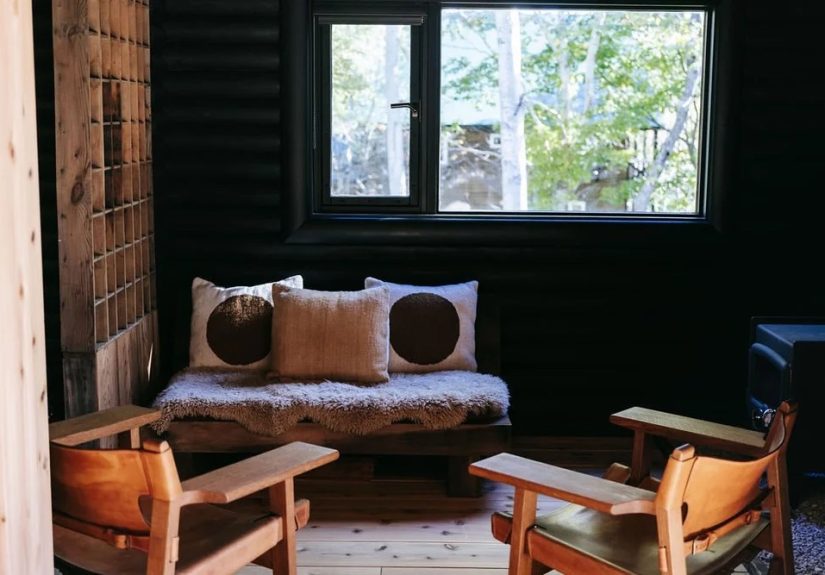
The interiors succeed because they avoid the two easiest mistakes in cabin design: kitsch and sterility. These spaces do not drown in nostalgia, and they do not scrub out character in pursuit of minimalism. Instead, they sit in that lovely middle ground where texture does most of the talking.
Otōto, the smaller cabin, pairs antique Japanese furniture, doors, windows, and light fittings with iconic vintage chairs and custom-made pieces. There is a loft bedroom with a handmade Japanese-style king bed, a fully equipped kitchen, and a low-key atmosphere that feels edited but not fussy. Ane carries the same philosophy with a bit more room to spread out and entertain. Throughout the project, the materials are the stars: wood grain, stone, glass, linen, metal, and the kind of patina money tries very hardand usually failsto imitate.
The private onsen areas deserve special mention. In Otōto, the bath is handmade with local river stones and finished with details in hinoki cypress, a prized Japanese wood associated with bathing spaces and humid environments. In Ane, the onsen was made with local beach stones, and the bathing area opens toward the trees, pulling the landscape directly into the room. These are not tubs placed near windows for effect. They are bathing spaces designed as thresholds between shelter and forest.
If the overall mood feels adjacent to Japandi, that is because the cabins naturally share the ingredients often associated with the style: natural materials, low furniture, soft restraint, and a balance between simplicity and warmth. But unlike trend-heavy interiors that paste the label on everything from beige candles to aggressively calm sofas, these cabins arrive at that serenity honestly. They do not perform tranquility. They earn it.
Why the cabins feel so emotionally convincing
They are layered with old and new. They privilege craft over spectacle. They use windows to frame weather, not just views. And they understand something many luxury properties forget: coziness is not the opposite of sophistication. In a snowy climate, especially, warmth is design. Texture is design. The placement of a chair near a stove is design. The cabins get that, and the experience is richer for it.
Why Hokkaido Is the Perfect Setting
You could transplant this design language somewhere else, but it would lose half its power. Hokkaido is not just a backdrop; it is the co-author. Japan’s northernmost main island is famous for powder snow, volcanic landscapes, hot springs, seafood, dairy, and a slower, more spacious rhythm than the country’s big urban centers. It is the kind of place where a private onsen cabin makes immediate emotional sense.
In the Niseko area, that logic becomes even stronger. The region sits in an active volcanic zone with abundant hot springs, and the cabins are positioned in a natural hot spring area close to ski terrain. Moiwa and Niseko Annupuri are only a short drive away, while Grand Hirafu is farther but still easily reachable. For winter travelers, that means you can spend the day skiing or snowboarding and return to a steaming bath in the forest rather than an overcrowded lobby where someone is clomping around in rental boots. Civilization is useful; a private onsen is better.
But this is not just a winter story. Hokkaido also shines in summer, when milder temperatures, hiking, rivers, lakes, coastal drives, and excellent produce make the island feel like an entirely different destination. The official cabin materials lean into that seasonal shift, highlighting river rafting, paddleboarding, kayaking, forest walks, art galleries, and day trips to places like Lake Toya and the fishing village of Suttsu. That is part of what makes these cabins so persuasive as a hospitality concept: they are not one-season novelties. They are adaptable shelters for a region with dramatic seasonal character.
The Onsen Factor: Privacy, Ritual, and the Luxury of Slowing Down
Let’s be honest: the phrase private onsen cabin in Hokkaido is doing a lot of heavy lifting, and rightly so. Bathing culture in Japan is both practical and deeply ritualized. Traditional onsen etiquette emphasizes washing thoroughly before entering the bath, keeping the atmosphere quiet, and treating the soak as a time for restoration rather than entertainment. In public settings, that ritual can be beautiful, but it can also feel intimidating to first-time visitors who are busy wondering whether they are holding the little towel correctly.
A private onsen changes the equation. It offers the sensory pleasure and mental reset of hot spring bathing with a greater sense of ease. At the Little Onsen Cabins, that privacy is not merely a convenience. It is part of the design philosophy. The baths frame the outdoors, emphasize natural materials, and invite a slower pace. You soak, look out at the trees, listen to the wind or snow, and remember that your phone does not need to be involved in every meaningful experience. Radical concept, I know.
From a hospitality standpoint, this is where the cabins separate themselves from ordinary vacation rentals. A lot of short-term stays can provide a bed, a kitchen, and a nice view. Far fewer can offer a repeatable ritual that shapes the entire day. Here, the bath is the anchor. Morning soak, afternoon outing, evening fire, late-night tea, sleep. The architecture supports that rhythm instead of interrupting it.
Food, Fireplaces, and the Domestic Side of Travel
One of the smartest details in both cabins is the kitchen setup. The owners make a point of stocking Japanese pantry basics and cookbooks, nudging guests toward a more domestic kind of travel. That matters because Hokkaido is known for exceptional seafood, dairy, and produce. It is one thing to admire a region’s ingredients in a restaurant; it is another to carry them home, cook slowly, and eat by a low table with the forest outside the window.
This is where the project becomes more than a beautiful place to sleep. It becomes a framework for living differently, even briefly. You cook more. You linger more. You pay attention to weather. You notice the smell of timber near the fire. You stop treating travel like a checklist and start treating it like temporary membership in another rhythm of life.
That may sound lofty for a cabin with a Bluetooth stereo, but good places often work that way. They sneak philosophy into ordinary pleasures. A perfect bowl of miso ramen after a ski day is nice. Making your own breakfast with local coffee the next morning, while steam still hangs in the cold air outside the bath window, might be even nicer.
What the Little Onsen Cabins Say About Modern Design Travel
Design-led travel has matured. Travelers increasingly want places that feel specific, rooted, and emotionally coherent. Cookie-cutter luxury is losing ground to smaller properties that respect local materials, climate, craft, and pace. The Little Onsen Cabins fit that shift perfectly.
They are also part of a broader appetite for stays that feel restorative without becoming clinical. The cabins are not wellness resorts in the usual sense. There is no heavy branding around transformation, no smoothie sermon, no pressure to become a new person by checkout. The wellness here is quieter. It comes through bathing, silence, timber, cooking, weather, and sleep. That is both more modest and, frankly, more believable.
There is also a sustainability angle worth noticing. The owners describe the cabins as rescues, and their restoration approach focused on preserving existing character, using handmade and vintage pieces, and working with local carpenters. In a hospitality landscape where “sustainable” is too often slapped onto anything containing one potted plant and a reusable water bottle, this kind of adaptive reuse feels more substantive. The greenest building is often the one already standing, especially when it is loved back to life rather than bulldozed into oblivion.
500 More Words on the Experience: What a Stay Here Actually Feels Like
Picture arriving in late afternoon, when Hokkaido light starts to turn silvery and the trees around the cabin look as if they have been sketched in charcoal. The first thing you notice is not some grand entrance sequence. It is the quiet. Not silence exactly, but a soft, wooded hush that makes city noise feel like a bizarre social experiment. You open the door and step into warmth, timber, and the kind of calm that instantly improves your posture.
The cabin does not scream for attention. It wins you over slowly. A chair is exactly where it should be. A lamp throws the right amount of light. An antique door, an old cabinet, a low dining table, a shelf with cookbooksnone of it feels staged, but all of it feels considered. You put down your bags and do what people almost never do in real life anymore: you stop. For an entire minute, maybe two. That alone is worth something.
Then comes the first bath. Maybe you wait until evening. Maybe you cannot, because there is hot spring water ten steps away and you are only human. You slide open the screen or window, and suddenly the cabin expands into the forest. Steam lifts, cold air brushes your face, and the contrast between warm water and winter air feels almost theatrical. Except it is not theater. It is geology, weather, wood, and good judgment. That is the beauty of an onsen: it makes luxury feel elemental.
Later, dinner becomes part of the story rather than a logistical break between activities. Hokkaido is famous for seafood, dairy, and produce, and the cabins are set up for guests to actually use those ingredients. So you cook. Maybe it is a simple meal. Maybe it is just rice, grilled fish, vegetables, and something warming in a pot. Somehow it tastes better here, which is probably the combined effect of local ingredients, mountain air, and the absence of six open browser tabs.
At night, the cabins come into their own. Firelight makes the wood glow. Shadows soften. The rooms feel intimate rather than small. In Otōto, that intimacy reads as romance; in Ane, it feels more communal, the sort of place where conversation stretches out and nobody rushes to clean up. If it is snowing, even better. Hokkaido’s winter weather turns the windows into moving artwork. You do not need television when the whole forest is doing atmosphere for free.
Morning is quieter still. Coffee helps, naturally. So does the view. You wake not to urban alarms and delivery trucks, but to weather and light. Maybe you head to the slopes. Maybe you take a drive, visit an izakaya, browse a local gallery, or plan a summer walk by a lake. Maybe you do absolutely nothing ambitious, which in this setting feels less like laziness and more like intelligence.
That is the hidden genius of the Little Onsen Cabins. They make ordinary acts feel rich again. Bathing becomes a ritual. Cooking becomes entertainment. Looking out the window becomes an event. And when architecture can do thatwhen it can make a person more attentive, more relaxed, more presentit has done more than provide shelter. It has changed the texture of time, at least for a weekend.
Conclusion
Big Sister, Little Brother: Little Onsen Cabins in Hokkaido, Japan is not just a catchy title for a pair of mountain stays. It is a neat summary of why the project resonates. These cabins are related but distinct, modest but luxurious, beautifully designed but never overworked. They honor the original spirit of the place while making it newly livable, and they do so in one of Japan’s most atmospheric regions.
For travelers, the appeal is obvious: private onsen bathing, forest views, excellent access to the Niseko area, and interiors with genuine soul. For design lovers, the lesson is just as strong: the best spaces do not chase trends. They listen to climate, material, memory, and ritual. Ane and Otōto do exactly that. Big sister and little brother, yesbut also a master class in how small hospitality design can feel deeply personal, culturally aware, and wonderfully restorative.