Table of Contents >> Show >> Hide
- What You’ll Learn
- What Is the Baking Soda Gender Test?
- How to Do the Baking Soda Gender Test (Step-by-Step)
- Baking Soda Gender Test Results: What Does Fizz Mean?
- The Science Behind the Fizz (The Part That’s Actually Real)
- Does the Baking Soda Gender Test Work?
- What Actually Works: Reliable Ways to Learn Baby’s Sex
- Is the Baking Soda Gender Test Safe?
- FAQ: Quick Answers People Google at 2 a.m.
- Real-World Experiences: What People Say After Trying the Baking Soda Gender Test (About )
- Conclusion
If you’ve ever typed “baking soda gender test” into your phone at 2 a.m. while holding a pickle in one hand and
a pregnancy app in the other… welcome. You’re in excellent company. The baking soda gender test is one of those
old-school pregnancy “tricks” that refuses to retireright up there with the ring-on-a-string pendulum and the
“carry high vs. carry low” bump analysis.
The short version: it’s a folk method that mixes urine with baking soda and uses fizz (or lack of fizz) to guess
whether you’re having a boy or a girl. The longer version: it’s fun for curiosity, terrible for accuracy, and a
great reminder that chemistry is realeven when the myth isn’t.
What Is the Baking Soda Gender Test?
The baking soda gender test is an at-home “gender prediction” (more accurately: fetal sex prediction) method based
on an old wives’ tale. The idea is simple:
- Fizzing/bubbling after adding urine to baking soda = boy
- No reaction (or mostly flat) = girl
The logic behind the legend is that carrying a boy supposedly makes your urine more alkaline, while carrying a girl
supposedly makes it more acidic. Baking soda (a base) reacts with acid, soaccording to the mythmore acid means
more reaction. In reality, urine pH is influenced by many things that have nothing to do with fetal sex (we’ll get
into that delicious mess soon).
Also worth saying out loud: sex refers to biological characteristics (often related to chromosomes
and anatomy), while gender is a social identity. Most “gender tests” you see online are attempting
to predict fetal sex, not gender identity.
How to Do the Baking Soda Gender Test (Step-by-Step)
If you want to try the baking soda gender test, treat it like a harmless party trickbecause that’s the lane it
belongs in. Here’s the typical method people use.
What you’ll need
- A clean, disposable cup (or a clean container you can wash well)
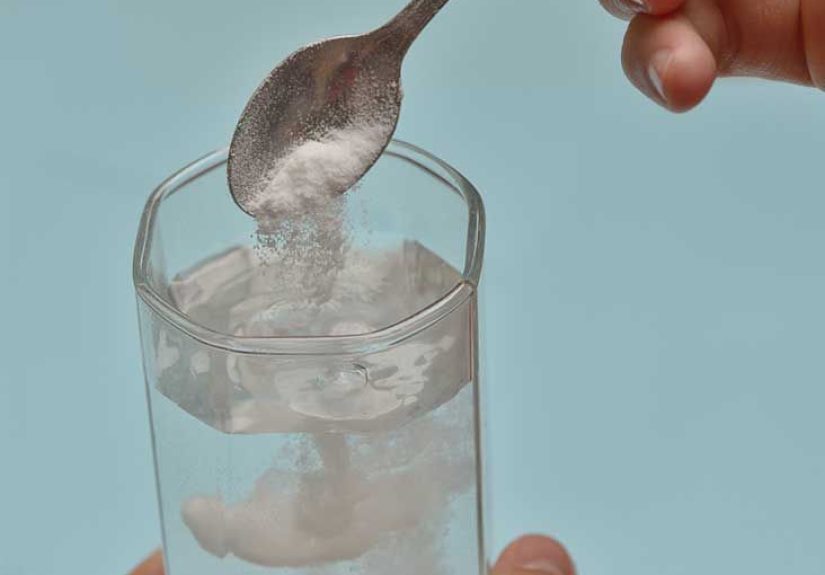
- 1–2 tablespoons of baking soda
- First-morning urine (many instructions recommend this because it’s more concentrated)
- A spoon (optional, for measuring)
- Soap and water for handwashing (non-negotiable)
Steps
- Wash your hands. (Congratulations, you’ve already improved the scientific rigor.)
- Collect a small amount of urine in a clean cupoften recommended first thing in the morning.
- Add baking soda to a second cup (or add it first to the same cup if you want to live dangerously).
- Slowly pour the urine onto the baking soda. Don’t stir. Just observe.
- Watch for a reaction for about 30–60 seconds.
Pro tips (for the “I’m doing this anyway” crowd)
- Don’t do this in your favorite coffee mug. Future You will not be amused.
- Use a consistent amount of urine and baking soda if you repeat the test.
- Ventilation helps if you’re sensitive to smell. Pregnancy noses are heroic, but also dramatic.
Baking Soda Gender Test Results: What Does Fizz Mean?
In folklore terms:
- Big fizz / lots of bubbles quickly → “It’s a boy!”
- Little to no fizz → “It’s a girl!”
In real-life terms: a reaction mostly reflects urine chemistryespecially acidity and concentration.
And urine chemistry can change based on hydration, food choices, medications, supplements, vomiting, and urinary
tract issues. That’s why one person can try the test twice and get two different “answers” on two different days.
If you’re seeing a mild foam or a slow, weak bubbling, you’re not alone. The test doesn’t come with a standardized
“fizz scale,” and the internet is not a certified laboratory (even if your group chat insists otherwise).
The Science Behind the Fizz (The Part That’s Actually Real)
Here’s where baking soda shines: baking soda is sodium bicarbonate, and it reacts with acids to
produce carbon dioxide gas (that’s your bubbling). This is the same general reason baking soda helps cakes rise and
makes vinegar volcanoes a timeless childhood classic.
So what makes urine more acidic or more alkaline?
Urine pH isn’t a fixed number. It commonly shifts across a broad range depending on what’s going on in your body.
Factors that can influence urine pH include:
- Diet: More meat and protein can push urine more acidic; more fruits/vegetables can push it more alkaline.
- Hydration: More concentrated urine can behave differently than diluted urine.
- Vomiting/morning sickness: Dehydration and metabolic changes can affect urine concentration and chemistry.
- Medications and supplements: Some can shift acid-base balance.
- Urinary tract infections (UTIs): Some infections can raise urine pH.
- Underlying conditions: Kidney and metabolic issues can affect urine pH (rare, but medically relevant).
Notice what’s missing from that list: “whether the baby has XX or XY chromosomes.”
Does the Baking Soda Gender Test Work?
There’s no solid scientific evidence that the baking soda gender test can accurately predict fetal sex.
Most medical guidance treats it as a myth or a fun guessing game. If it were truly reliable, OB offices would be
handing out baking soda packets with prenatal vitamins. (They are not.)
The biggest issue is that the test is built on an assumption that doesn’t hold up: that fetal sex meaningfully
changes urine pH in a consistent, predictable way. Urine pH varies for many reasons, and those reasons can change
day-to-daysometimes meal-to-meal.
Why it can feel “accurate” anyway (hello, human brain)
- Confirmation bias: When it “gets it right,” people remember and share it. When it’s wrong, it becomes “Well, it was just for fun.”
- 50/50 odds: Even a coin flip looks psychic sometimes.
- Vague outcomes: “A little fizz” becomes “boy-ish fizz,” and the story evolves from there.
A quick, concrete example
Imagine two pregnant people, both carrying girls:
- Person A eats a high-protein dinner and wakes up slightly dehydrated. Urine is more acidic/concentrated → more fizz.
- Person B eats lots of fruits/vegetables, drinks more water, and takes certain supplements. Urine trends more alkaline/diluted → less fizz.
Same fetal sex, different chemistry, different “prediction.” That’s the baking soda test in a nutshell.
What Actually Works: Reliable Ways to Learn Baby’s Sex
If you truly want a dependable answer, here are the mainstream, science-based options used in the United States.
Availability and timing vary by provider, pregnancy history, and medical needs.
1) Second-trimester anatomy ultrasound (often around 18–22 weeks)
The mid-pregnancy ultrasound (often called the anatomy scan) is commonly performed in the second trimester and can
often identify fetal sex if the view is clear and the baby cooperates (which is never guaranteedsome fetuses are
already masters of “no pictures, please”).
2) Cell-free DNA screening (often called NIPT/NIPS)
Noninvasive prenatal testing (NIPT) is a blood test that screens for certain chromosomal conditions and can also
detect the presence of Y-chromosome DNAoften allowing fetal sex to be identified earlier than ultrasound in many
cases. It’s considered a screening test (not a diagnostic test), and your clinician is the best person to explain
what it can and cannot tell you.
3) Diagnostic testing (CVS or amniocentesis, when medically indicated)
Chorionic villus sampling (CVS) and amniocentesis can provide definitive genetic information, including fetal sex,
but they’re invasive and typically used for medical reasons (not curiosity). Your provider will discuss benefits,
risks, and timing if these are relevant to your situation.
4) “Early ultrasound theories” (less reliable than the options above)
You may see early ultrasound myths like nub theory or Ramzi theory floating around online. Some of these have mixed
evidence and are highly dependent on timing, image quality, and interpretation. If you’re using them, keep them in
the “fun guess” categorynot the “paint the nursery today” category.
Is the Baking Soda Gender Test Safe?
In most cases, mixing urine with baking soda is low-risk as long as you treat it hygienically and don’t ingest
anything. The primary “danger” is taking the result too seriously.
Basic safety checklist
- Do not drink the mixture. (Yes, this needs to be said.)
- Avoid splashes and wash hands after handling.
- Use a disposable container if you don’t want to sterilize anything afterward.
- Don’t douche with baking soda or vinegar to try to influence sexmedical experts warn this can be harmful.
When to call your healthcare provider instead of doing kitchen chemistry
If you have symptoms like burning with urination, fever, pelvic pain, foul-smelling urine, or urgency/frequency that
feels unusualtalk to your provider. UTIs in pregnancy deserve prompt attention, and no home gender test is worth
ignoring symptoms.
FAQ: Quick Answers People Google at 2 a.m.
Can the baking soda gender test be accurate for some people?
Sureby coincidence. With two common outcomes, some people will get a “correct” guess. That doesn’t make the method
reliable.
Does the intensity of fizz mean anything?
It likely reflects urine concentration and acidity more than anything about fetal sex. Big fizz can happen for lots
of reasons unrelated to the baby’s chromosomes.
Should I do it more than once?
If you’re doing it purely for fun, repeat awaybut don’t be surprised if you get different “answers.” That
variability is part of why it’s not considered a real test.
Is urine pH “bad” if it’s acidic?
Not automatically. Urine pH can vary widely. What matters is the bigger clinical picturesymptoms, lab findings,
and your provider’s guidance.
Real-World Experiences: What People Say After Trying the Baking Soda Gender Test (About )
Because the baking soda gender test is easy, cheap, and mildly entertaining, it shows up everywherebaby showers,
TikTok reels, family group chats, and that one aunt who treats folklore like it’s peer-reviewed. And if you collect
enough stories, a pattern appears: not a scientific one, but a very human one.
Experience #1: “It fizzed like a science fair volcano… and it was wrong.”
A common story goes like this: someone tries the test early in pregnancy, gets a dramatic fizz, announces “boy
vibes,” and then later learns via ultrasound or blood testing that they’re having a girl. The takeaway usually
isn’t angermore like amused resignation. Many people chalk it up to hydration, diet, or just the universe enjoying
a harmless prank.
Experience #2: “It was rightso now my family thinks it’s magic.”
When the test “matches” the eventual result, it tends to become family lore. Someone screenshots the fizz, sends it
to everyone they’ve ever met, and suddenly baking soda becomes the unofficial mascot of the pregnancy. This is how
myths stay alive: the successful stories spread faster than the incorrect ones, because correct guesses feel like
proofeven when they’re just probability wearing a party hat.
Experience #3: “I tried it twice and got two different answers.”
This one is incredibly common. One day: fizz city. Next day: flat as a pancake. Some people turn it into a running
joke (“The baby is a boy on Mondays and a girl on Fridays”), while others spiral into confusion until someone
gently reminds them that urine chemistry changes all the time. Repeating the test often highlights exactly why it
isn’t reliable.
Experience #4: “We used it as a baby shower game, and that was perfect.”
Many families treat the baking soda gender test as a group activityespecially when they already know the result
and want a playful moment. In that setting, it’s great: it gets people laughing, reacting, taking guesses, and
feeling included. When you frame it as entertainment rather than evidence, it can be a genuinely fun tradition.
Experience #5: “I wanted certainty, but what I actually wanted was connection.”
There’s also a softer side to these stories. For some people, the baking soda test isn’t about “proving” anything.
It’s about making the waiting feel shorter, inviting a partner into the moment, or creating a tiny ritual during
an uncertain time. The emotional value is realeven if the predictive value is not.
If you’re trying the baking soda gender test, the best mindset is: fun experiment, not medical answer.
Enjoy the fizz (or the lack of fizz), take a photo if you want, and let the real confirmation come from clinical
methods when the time is right.
Conclusion
The baking soda gender test is a classic piece of pregnancy folklore: simple, shareable, and powered by real
chemistrybut not by real evidence of fetal sex prediction. If it makes you smile, go ahead and try it with proper
hygiene and zero expectations. If you want accurate information, talk with your prenatal care provider about
options like the anatomy ultrasound or prenatal screening tests.