Table of Contents >> Show >> Hide
- Introduction: Bath Time Is Cute, Slippery, and Slightly Terrifying
- What Is the Ideal Baby Bath Temperature?
- Set Your Water Heater to Help Prevent Scalds
- How Much Water Should Be in a Baby Bath?
- The Golden Rule: Touch Supervision
- Baby Bath Seats and Rings: Helpful-Looking, Not Hands-Free
- Before the Bath: Set Up Like a Pro
- Newborn Bath Safety: Sponge Baths First
- Choosing Baby Soap, Shampoo, and Skin Products
- Step-by-Step: A Safe Baby Bath Routine
- Common Baby Bath Mistakes to Avoid
- When to Call the Pediatrician
- Real-Life Experience Notes: What Parents Learn After a Few Baths
- Conclusion: Warm Water, Calm Hands, Safer Baths
- SEO Tags
Note: This article is for general education and does not replace advice from your baby’s pediatrician, especially if your baby was born prematurely, has eczema, has a medical condition, or has special care instructions.
Introduction: Bath Time Is Cute, Slippery, and Slightly Terrifying
Few parenting moments look sweeter than a freshly bathed baby wrapped like a tiny burrito in a hooded towel. The cheeks are rosy, the hair is fluffy, and everyone pretends the baby did not just kick bathwater directly into your shirt. But behind all that splish-splash sweetness, bath time deserves serious attention. Babies are small, wiggly, and surprisingly talented at becoming slippery at the exact moment you need them to stay still.
The right baby bath temperature is one of the most important parts of safe bathing. Water that feels pleasantly warm to an adult may be too hot for a baby’s delicate skin. Water that is too cool can chill a newborn quickly. Add soap, a hard tub surface, faucets, distractions, and a tired parent running on coffee fumes, and suddenly bath time becomes less “adorable commercial” and more “operation: keep everyone safe.”
The good news: safe baby bathing is not complicated. You do not need a spa tub, a twelve-step routine, or a rubber duck with an advanced degree. You need warmnot hotwater, a shallow bath, close supervision, simple supplies, and a plan before your baby ever touches the tub. This guide explains the ideal baby bath water temperature, how to test it, how much water to use, how to prevent scalds and drowning, and how to make bath time calmer for both baby and grown-up.
What Is the Ideal Baby Bath Temperature?
The best baby bath temperature is generally around 100°F, or about 38°C. A safe range often feels warm and comfortable, never hot. Some pediatric and children’s health sources describe this as “around 100°F,” while others recommend keeping bathwater under 100°F. In everyday parent language, the goal is simple: the water should feel pleasantly warm on the inside of your wrist or elbow, not steamy, sharp, or hot.
Why so careful? Baby skin is thinner and more sensitive than adult skin. A temperature that makes you think, “Ah, nice hot bath,” may make your baby’s skin think, “Excuse me, absolutely not.” Babies also cannot move away from hot water by themselves, and they cannot tell you, “Parent, this is a little too lobster-pot for my taste.” Crying may be the first sign you get, and by then the water may already be uncomfortable or unsafe.
Use a Bath Thermometer, But Trust Your Skin Too
A baby bath thermometer can be helpful, especially for new parents who want a clear number. Aim for about 100°F. But do not rely on the thermometer alone. Always test the water with your wrist or elbow before placing your baby in the tub. Fingers are not the best judge because they tolerate heat differently and may not notice subtle changes as well as the more sensitive wrist or elbow area.
Mix the Water Before Testing
Water can have hot and cool spots, especially if you just filled the tub. Swirl the water with your hand before testing. Then check the temperature in more than one area. If it feels hot anywhere, it is too hot for your baby.
Set Your Water Heater to Help Prevent Scalds
One of the smartest baby bath safety tips happens before bath time even begins: set your home water heater to 120°F or lower, or follow the manufacturer’s safest recommended setting. This helps reduce the chance that dangerously hot tap water will come out of the faucet. It is especially important in homes with toddlers, older siblings, or curious little hands that may eventually learn how faucet handles work.
Hot tap water can burn a young child quickly. Babies and toddlers are more vulnerable because their skin is delicate, and they cannot escape danger as fast as an adult can. An anti-scald device for faucets or showerheads can add another layer of protection. Think of it as a tiny bathroom bodyguardless dramatic than sunglasses and an earpiece, but much more useful.
Never Put Your Baby Under Running Water
Do not bathe your baby under running water. Water temperature can change suddenly if someone flushes a toilet, runs a dishwasher, starts laundry, or adjusts another faucet. Fill the baby tub or basin first, turn off the faucet, mix and test the water, and only then place your baby in the bath.
How Much Water Should Be in a Baby Bath?
For babies, shallow is safer. A common recommendation is about 2 inches of water. That may not look like much, especially if you were imagining a luxurious mini hot spring, but babies do not need deep water to get clean. They need enough warm water to wash comfortably while their head, face, and most of the body remain safely above the water level.
During the bath, pour warm water gently over your baby’s body to keep them comfortable. A small cup works well. Keep the room warm, close drafts, and have a towel ready. Wet babies lose heat quickly, and a cold baby can go from peaceful cherub to outraged opera singer in about three seconds.
Never Leave Standing Water After Bath Time
Drain the tub immediately after the bath. This applies to baby tubs, sinks, bathtubs, buckets, and any container that holds water. Young children can drown in very small amounts of water, and drowning can happen silently. Emptying water right away is a simple habit that prevents risk later.
The Golden Rule: Touch Supervision
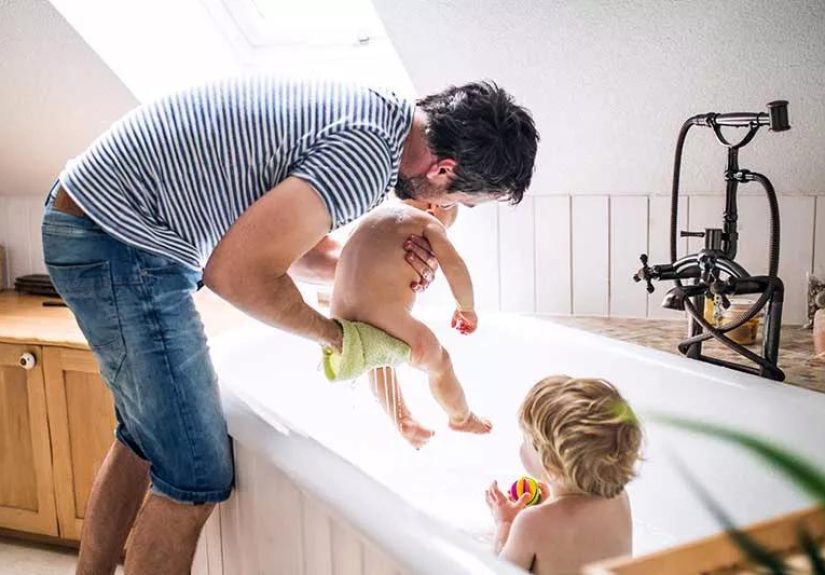
The most important bath safety rule is this: keep one hand on your baby at all times. This is often called touch supervision. It means you are not just nearby. You are actively supporting and watching your baby, close enough to respond instantly.
Never leave a baby alone in the bath, not for a towel, not for the doorbell, not for your phone, not because “it will only take one second.” If you forget something, lift your baby out, wrap them in a towel, and take them with you. A wet floor can dry. A missed text can wait. Your baby’s safety cannot.
Do Not Assign Bath Duty to a Young Sibling
An older child may be loving, careful, and very proud to help. That still does not make them a safe bath supervisor. Children should not be responsible for watching a baby in water. An adult should supervise closely, without distractions.
Baby Bath Seats and Rings: Helpful-Looking, Not Hands-Free
Baby bath seats and bath rings may look like they solve the slippery-baby problem, but they can create a false sense of security. They may tip, slide, or allow a baby to slip into the water. If you use a bath support product, treat it only as a support toolnot a babysitter, not a safety guarantee, and definitely not permission to look away.
Your hands and attention are the safety system. The bath seat is just a piece of gear. Gear can fail. Parents paying attention are much harder to replace.
Before the Bath: Set Up Like a Pro
The best bath is the one you prepare before the baby is undressed. Gather everything first: a soft washcloth, mild fragrance-free baby soap or cleanser, a towel, clean diaper, clean clothes, baby brush if needed, and any prescribed skin-care product your pediatrician recommends.
Place supplies within arm’s reach, but not where your baby can grab bottles, caps, razors, cosmetics, or electrical items. Keep hair dryers, curling irons, electric razors, and plugged-in devices far away from the tub. Water and electricity are not friends. They are not even polite acquaintances.
Choose the Right Bath Location
A baby tub placed on a stable surface is often easiest. A sink can work if it is clean, safe, and lined with a towel to reduce slipping, but the faucet should be off before baby goes in. Avoid unstable surfaces, wobbly counters, or anything that requires awkward reaching.
Newborn Bath Safety: Sponge Baths First
Many newborns start with sponge baths until the umbilical cord stump falls off and the area heals. Sponge bathing keeps your baby clean without soaking the cord area. Use a warm room, a flat padded surface, a bowl of warm water, and a soft washcloth. Keep your baby wrapped in a towel and uncover only the part you are washing.
Clean gently. Start with the face using plain water, then move to the neck folds, arms, hands, chest, back, legs, feet, and diaper area. Those adorable neck rolls can hide milk, lint, and mystery crumbs from another dimension, so check folds carefully. Pat dry, especially in creases, before dressing your baby.
How Often Should You Bathe a Baby?
Most newborns do not need a daily bath. Two to three baths per week is often enough, as long as you clean the diaper area well during changes and wipe the face, neck, and skin folds as needed. Too much bathing can dry out delicate skin. Once babies become more mobile, eat solids with artistic enthusiasm, or discover the joy of smearing banana behind one ear, bath frequency may naturally increase.
Choosing Baby Soap, Shampoo, and Skin Products
For baby skin care, less is usually more. Use lukewarm water and a mild, fragrance-free baby cleanser only where needed. Focus on dirty areas such as the diaper zone, neck folds, armpits, and hands. You do not need to scrub your baby like a casserole dish. Gentle washing is enough.
Avoid adult soaps, heavily scented products, bubble baths, exfoliating products, and anything that promises a perfume-cloud experience. Babies already smell wonderful most of the time, except for the moments when they absolutely do not. For dry skin, ask your pediatrician whether a fragrance-free moisturizer is appropriate. If your baby has eczema, follow medical advice about bath length, cleanser choice, and moisturizing right after the bath.
Powders Are Usually Not Needed
Baby powder may seem old-fashioned and harmless, but powders can be inhaled and may irritate a baby’s lungs. Unless your pediatrician specifically recommends a product, skip powders and focus on keeping skin clean and dry.
Step-by-Step: A Safe Baby Bath Routine
- Warm the room. Close windows and avoid drafts.
- Gather supplies. Towel, washcloth, clean diaper, clothes, cleanser, and cup for rinsing should be within reach.
- Fill the tub first. Use about 2 inches of water. Turn off the faucet.
- Check the temperature. Aim for around 100°F and confirm with your wrist or elbow.
- Lower baby feet first. Support the head and neck securely.
- Keep one hand on baby. Maintain touch supervision the entire time.
- Wash from cleanest to dirtiest. Face first, diaper area last.
- Rinse gently. Use a cup or damp washcloth, keeping water away from the face.
- Lift carefully. Babies are slippery when wet, so use both hands and move slowly.
- Dry well. Pat skin dry, especially in folds, then diaper and dress promptly.
Common Baby Bath Mistakes to Avoid
Making the Bath Too Hot
If the water feels hot to your wrist or elbow, it is too hot for your baby. Add cool water, mix thoroughly, and test again before baby enters.
Filling the Tub Too Deep
More water does not mean more fun for a baby. It means more risk. Keep the bath shallow and controlled.
Getting Distracted
Phones, doorbells, pets, dinner timers, and older children can all wait or come with you. During bath time, your baby is the main event.
Using Too Many Products
A cabinet full of scented baby products is not necessary. Mild, fragrance-free, baby-safe basics are usually better for sensitive skin.
Letting the Bathroom Get Cold
Babies can become chilled quickly. Keep baths short at first, usually around 5 to 10 minutes, and wrap your baby in a towel right away.
When to Call the Pediatrician
Call your baby’s pediatrician if your baby develops a rash that does not improve, cracked or bleeding skin, signs of infection, persistent cradle cap, worsening eczema, or unusual fussiness during baths. Seek urgent medical help for any burn, breathing concern, limpness, choking episode, or possible drowning event, even if your baby seems better afterward.
If bath time suddenly becomes stressful for your baby, look for simple causes first. Is the water too cool? Too warm? Is the room chilly? Is baby hungry, overtired, or newly aware that being naked is not their favorite hobby? Adjusting timing and temperature often helps.
Real-Life Experience Notes: What Parents Learn After a Few Baths
Parents often imagine baby bath time will be calm: soft music, warm water, gentle splashes, maybe a smiling baby gazing lovingly into their eyes. Sometimes that happens. Other times, your baby acts as if the bathtub is a tiny ocean of betrayal. Both versions are normal. Experience teaches that bath safety is not just about rules; it is about building a repeatable rhythm that keeps your hands, eyes, and brain where they need to be.
One of the most useful habits is preparing the bathroom like a mini command center. Before the diaper comes off, everything should be ready. The towel is open, the clean diaper is unfolded, the pajamas are waiting, and the washcloth is already damp. This prevents the classic parent mistake of realizing the towel is across the room while holding a wet baby who has suddenly developed the flexibility of a soap-covered noodle.
Another real-life lesson: babies do not always love the first few baths. Some cry because they are cold. Some dislike being undressed. Some are startled by the feeling of water. A warm washcloth placed gently over the belly can help many babies feel secure. Talking, singing, or narrating the bath in a calm voice can also help. You do not need to have a good singing voice. Your baby is not judging pitch; your baby is judging whether you sound safe and familiar.
Parents also learn that timing matters. Bathing a baby right after feeding may lead to spit-up drama. Bathing a baby when they are too hungry may turn the room into a tiny protest rally. A sweet spot is often when baby is calm, alert, and not freshly fed. Some families like morning baths because everyone has more energy. Others use baths as part of a bedtime routine. There is no universal magic hour. The best bath time is the one when the adult is not rushed and the baby is reasonably content.
Temperature checking becomes second nature with practice. At first, many parents use both a thermometer and the wrist test. Over time, they learn what safe warm water feels like. Still, the thermometer remains helpful because adult perception changes. If you are tired, cold, or overheated, your skin may not judge temperature perfectly. A quick number check adds confidence.
Finally, experienced caregivers respect how fast babies change. A newborn who barely moves during a sponge bath may become a kicking, rolling, grabbing bath-time athlete in a few months. Safety routines should grow with the baby. Keep products out of reach, face babies away from faucets when they get older, drain water immediately, and never assume yesterday’s calm baby will be today’s calm baby. Babies update their software constantly, usually without warning.
Conclusion: Warm Water, Calm Hands, Safer Baths
A safe baby bath does not require perfection. It requires preparation, attention, and the right water temperature. Keep baby bath water around 100°F, set your water heater to 120°F or lower, use only a shallow amount of water, and test the bath with your wrist or elbow every time. Keep one hand on your baby, avoid running water, skip unnecessary products, and never leave your baby alone in the tubnot even for a moment.
Bath time can become one of the sweetest routines of early parenthood. It is a chance to clean tiny fingers, rinse milk from neck folds, soothe a fussy evening, and bond through touch and voice. With a few smart safety habits, you can enjoy the warm, splashy, towel-snuggly parts of bath time while keeping the risks firmly out of the tub.