Table of Contents >> Show >> Hide
- Who Is Jenny Jinya, and Why Do Her Animal Comics Hit So Hard?
- The Story Behind the Freezing Dog Comic
- Why the Comic Feels So Painful
- The Real Issue: Dogs and Cold Weather
- Signs a Dog May Be Too Cold
- Why Animal Comics Can Change Behavior
- The Role of Online Readers
- Why Zeus Represents More Than One Dog
- What Pet Owners Can Learn From the Comic
- Why This Comic Belongs in the Bigger Conversation About Animal Welfare
- Experiences and Reflections: Why a Freezing Dog Comic Stays With Readers
- Conclusion
Some comics make you laugh. Some make you think. And then there are Jenny Jinya’s animal comics, which quietly walk into your heart, sit down, and say, “We need to talk.” Her new tragic comic about a freezing dog does exactly that. It is not loud, flashy, or overloaded with drama. Instead, it uses tenderness, silence, and a painfully familiar situation to remind readers that neglect is not always cinematic. Sometimes it looks like a dog waiting outside, still loving the people who forgot what love requires.
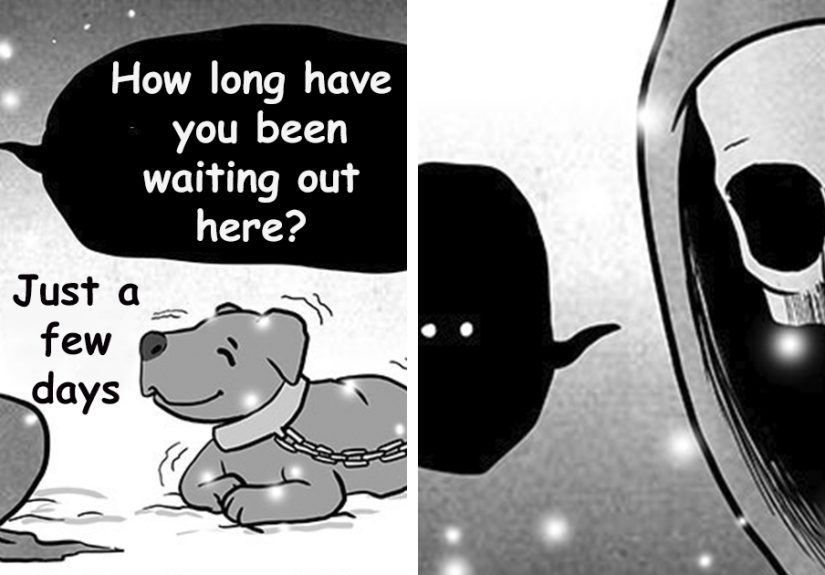
The comic centers on Zeus, a dog left outside in freezing weather. Like many of Jenny Jinya’s best-known works in the Loving Reaper series, the story blends heartbreak with compassion. The Reaper is not shown as a monster, but as a gentle final companion for animals who were failed by humans. That creative choice is why her work has gained such a devoted audience: she does not simply tell readers that animals suffer; she makes them feel the emotional weight of being responsible for a life that trusts us completely.
Yes, it is sad. Bring tissues. Possibly a blanket. Maybe also your dog, if you have one, because after reading this kind of comic, many people suddenly feel the need to apologize to every pet they have ever mildly inconvenienced.
Who Is Jenny Jinya, and Why Do Her Animal Comics Hit So Hard?
Jenny Jinya is the artist behind Loving Reaper, a webcomic series known for short, emotional stories about pets, wildlife, and the consequences of human cruelty or neglect. The series often features animals at the end of their lives being guided by a gentle Reaper. Instead of turning death into horror, Jenny turns it into comfort, closure, and sometimes a quiet demand for better behavior from the living.
Her art style is deceptively simple. The panels are clean, the characters are expressive, and the dialogue is usually minimal. That simplicity is part of the power. There is no need for complicated visual fireworks when a dog’s hopeful expression can do the emotional heavy lifting of an entire orchestra. Jenny understands that the most devastating stories are often the ones told softly.
The Loving Reaper series has appeared on platforms such as WEBTOON, where it is categorized around animals and drama, and it has attracted a large readership. Its official description emphasizes stories about pets and wildlife, with the Reaper helping them cross over while raising awareness and supporting good causes. In other words, it is not sadness for sadness’ sake. The pain has a purpose.
The Story Behind the Freezing Dog Comic
The tragic comic about Zeus follows a familiar pattern in Jenny Jinya’s work: an animal remains loving, loyal, and trusting even while humans fail to provide basic care. Zeus is portrayed as optimistic despite being left in the cold. The emotional conflict is clear. The dog does not understand neglect as betrayal. He simply waits, hopes, and loves.
That is what makes the story so difficult to shake. It does not rely on shocking scenes. It relies on a truth most animal lovers already know: dogs often give people the benefit of the doubt long after we have stopped deserving it. A dog may not understand excuses, busy schedules, or the phrase “I’ll bring him inside later.” A dog understands tone, warmth, food, shelter, and whether someone comes back.
Jenny has said in interviews that she researches the topics behind her comics, and this subject is grounded in a real-world problem. Every winter, animal shelters, rescue groups, veterinarians, and humane organizations warn pet owners that cold weather can be dangerous and even deadly for dogs. Fur is not a magic shield. Dogs are not tiny wolves with rent-free survival manuals installed at birth. They are domesticated companions whose safety depends on human decisions.
Why the Comic Feels So Painful
It Uses Innocence Instead of Anger
The freezing dog comic does not lecture readers from a soapbox. It lets Zeus’s innocence speak for itself. That is more powerful than a scolding paragraph because it removes the audience’s favorite escape route: defensiveness. Readers are not asked to debate an argument. They are asked to witness trust.
This is a common strength in Jenny Jinya’s animal comics. The animals are not written as symbols first; they are written as emotional beings. A dog is not simply “a neglected pet.” He is Zeus. He has a personality. He hopes. He waits. He loves. Suddenly, the issue is not abstract anymore. It has a face, a name, and a tail that probably would have wagged at the first sign of kindness.
It Turns the Reaper Into Comfort
In many stories, the Grim Reaper is scary. In Loving Reaper, he is gentle. That reversal changes everything. The Reaper becomes the character who sees the animals clearly, offers companionship, and treats them with the tenderness they were denied. It is bittersweet, but it also prevents the comic from becoming pure despair.
This is why readers often describe Jenny’s comics as heartbreaking but comforting. They hurt, but they also offer a kind of moral repair. The animal may have suffered, but the story refuses to let that animal be unseen. In a strange way, the Reaper becomes the responsible adult in the room. Honestly, humanity should probably be embarrassed when Death is the one bringing empathy to the group project.
The Real Issue: Dogs and Cold Weather
The comic resonates because the danger is real. Veterinary and animal-welfare organizations repeatedly warn that winter conditions can harm pets. Cold air, snow, ice, wind, damp fur, salt, antifreeze, and long exposure can all create risks. Dogs may suffer from frostbite, paw injuries, dehydration, or hypothermia. Small dogs, puppies, senior dogs, short-haired breeds, and dogs with health problems are often more vulnerable.
One of the most important points is that there is no single temperature that applies to every dog. A husky and a chihuahua do not experience winter the same way, just as a professional skier and a person wearing pajama pants to grab the mail are not equally prepared for a blizzard. Breed, coat type, age, size, body condition, health, wind chill, wetness, and time outside all matter.
Still, the general advice is simple: when it is too cold for a person to remain outside comfortably for long, it is probably too cold for many pets as well. Dogs should have access to warmth, shelter, unfrozen water, and human supervision. If a dog must spend time outdoors, the shelter should be dry, insulated, protected from wind, and appropriate for the dog’s size. But for most companion animals, the safest place during extreme cold is indoors.
Signs a Dog May Be Too Cold
A responsible pet owner should pay attention to body language. Dogs cannot say, “Excuse me, my paws are reaching popsicle status.” They communicate through behavior. Common warning signs include shivering, whining, barking, lifting paws off the ground, reluctance to walk, a tucked tail, hunched posture, weakness, or sudden anxiety. If the dog seems uncomfortable, the answer is not to “toughen him up.” The answer is to bring him somewhere warm and safe.
More serious signs, such as unusual weakness, confusion, slowed movement, collapse, or signs of frostbite, require veterinary care right away. The comic about Zeus is tragic because nobody listens soon enough. In real life, listening early can save lives.
Why Animal Comics Can Change Behavior
Facts matter. Statistics matter. Veterinary advice matters. But stories often reach people who would scroll past a checklist. That is why Jenny Jinya’s work is so effective. A comic can translate an animal-welfare warning into an emotional memory. After reading a story like Zeus’s, “bring the dog inside” stops sounding like generic advice and starts feeling like a moral emergency.
This is not manipulation. It is empathy doing its job. Art has always been one of humanity’s strongest tools for making invisible suffering visible. A short comic can do what a long lecture cannot: bypass the noisy part of the brain that says, “This does not apply to me,” and speak directly to the quieter part that knows we can do better.
That is especially important with pet neglect, because neglect often hides behind normal routines. The dog is always outside. The chain has always been there. The bowl is usually filled. The family is busy. The weather is “not that bad.” A comic like this interrupts that routine and asks: what does this situation feel like from the dog’s side?
The Role of Online Readers
Part of the reason Jenny Jinya’s comics spread widely is that readers share them not only as entertainment, but as warnings, reminders, and emotional wake-up calls. Comment sections under her work often fill with people talking about pets they rescued, animals they lost, or neighbors’ dogs they worry about. The comics become little community alarms.
That does not mean every reader should rush into confrontation. If someone sees an animal left outside in dangerous conditions, the safest and most effective response depends on local laws and resources. In many areas, people can contact animal control, a local humane society, or a non-emergency city service. The key is to act responsibly, document concerns when appropriate, and prioritize the animal’s safety without creating additional danger.
The best outcome, of course, is prevention. Bring pets indoors during dangerous weather. Check on outdoor animals. Provide proper shelter. Talk to neighbors kindly when possible. Support shelters and rescues. Foster or adopt if your home is ready. Donate supplies. Share reliable information. Tiny actions are not tiny to the animal on the receiving end.
Why Zeus Represents More Than One Dog
Zeus is fictionalized, but he represents many real animals whose suffering is ordinary enough to be overlooked. That is what gives the comic its lasting sting. The tragedy is not that Zeus is unbelievable. The tragedy is that he is too believable.
Many pet owners love their animals but underestimate winter risks. Others view dogs as property rather than family. Some people assume that because an animal survived outside yesterday, it will survive outside tomorrow. But survival is not the same as care. A dog may endure cold, loneliness, and discomfort without complaint because dogs are astonishingly forgiving. That forgiveness should inspire responsibility, not laziness.
Jenny Jinya’s comic turns that responsibility into an emotional image readers remember. It is not just about cold weather. It is about attention. It is about noticing the beings who depend on us before their quiet suffering becomes a tragedy.
What Pet Owners Can Learn From the Comic
Bring Dogs Inside During Harsh Weather
The most obvious lesson is also the most important. When temperatures drop, dogs need warmth and protection. Some breeds tolerate cold better than others, but no dog should be forgotten outside. A safe indoor space, even a laundry room, mudroom, garage area prepared properly, or cozy crate, can be the difference between danger and comfort.
Do Not Use Clothing as a Substitute for Care
Sweaters, coats, and booties can help many dogs, especially short-haired, small, elderly, or young dogs. But they are not permission slips for neglect. A jacket does not replace supervision. Booties do not replace shelter. A cute winter outfit may make a dog look like a tiny retired ski instructor, but the human still has to pay attention.
Check Paws, Water, and Shelter
Winter hazards are not limited to temperature. Ice can cut paw pads. Salt and de-icers can irritate skin. Water bowls can freeze. Damp bedding can become useless. A responsible owner checks these details regularly. Love is not only cuddles and birthday bandanas. Love is also making sure the water bowl has not turned into a sad little hockey puck.
Why This Comic Belongs in the Bigger Conversation About Animal Welfare
Animal welfare is often discussed in terms of laws, shelters, adoption numbers, and veterinary care. Those things are essential. But culture matters too. The stories people share shape what they consider acceptable. If enough people see outdoor neglect as normal, it remains normal. If enough people see it as preventable cruelty, expectations change.
Jenny Jinya’s freezing dog comic contributes to that cultural shift. It makes neglect emotionally unacceptable. It gives readers a simple moral picture: a trusting animal, a preventable danger, and a human responsibility. That clarity is powerful.
The comic also avoids the trap of making animal welfare feel hopeless. Yes, the story is tragic. But its existence encourages action. The reader closes the comic with a choice: feel sad and move on, or feel sad and do something useful. The second option is where the real value lives.
Experiences and Reflections: Why a Freezing Dog Comic Stays With Readers
Many people have had some version of the “cold dog” experience. Maybe it was a neighbor’s dog barking on a winter night. Maybe it was a stray curled near a storefront. Maybe it was a childhood memory of realizing, for the first time, that not every pet is treated like a family member. These moments stay with people because they create a specific kind of helplessness. You see an animal depending on humans, and suddenly the world feels less organized than it should.
That is why Jenny Jinya’s comic about Zeus lands with such force. It connects to memories people may not talk about often. A reader might remember checking the window during a storm and wondering if the dog down the street had shelter. Another might remember helping a lost dog into a garage with a bowl of water while waiting for animal control. Someone else might remember adopting a rescue who flinched at sudden movements but slowly learned that blankets, food, and gentle voices were now part of daily life.
These experiences prove that animal welfare is not only a topic for experts. It is part of ordinary life. It happens in neighborhoods, apartment complexes, farms, suburbs, and city sidewalks. It happens when someone chooses to knock on a door, call a local agency, donate an old blanket, foster a pet, or simply bring their own dog inside before the weather gets dangerous.
There is also a quieter experience many pet owners recognize: guilt followed by improvement. Maybe a person once thought a doghouse was enough in winter, then learned better. Maybe someone used to take long walks on icy sidewalks without checking their dog’s paws, then noticed discomfort and changed the routine. Growth matters. The goal of stories like Zeus’s is not to make every reader feel like a villain. It is to make better care feel urgent, practical, and human.
For families, the comic can also become a teaching moment. Children often understand animal emotions quickly. They may not know the details of hypothermia or shelter standards, but they understand cold, fear, and loneliness. A parent can use a story like this to explain responsibility: pets are not decorations, alarms, toys, or outdoor accessories. They are living companions. They need food, water, warmth, medical care, attention, and patience. In return, they offer the kind of loyalty that makes humans look suspiciously underqualified.
For readers who have lost pets, the comic may feel especially intense. The gentle Reaper in Jenny’s work can be comforting because he gives animals dignity at the end of their stories. People who have said goodbye to a beloved dog or cat often understand that final kindness matters. A warm hand, a soft voice, and the promise that the animal is not alone can mean everything.
Ultimately, the experience of reading this freezing dog comic is not just about crying. Crying is easy. The harder, better part is remembering. Remember the dog outside. Remember the warning signs. Remember that “later” can become too late. Remember that compassion is not a mood; it is a habit. And if the comic makes someone stand up, check the weather, refill a bowl, bring a pet indoors, or call for help when an animal is in danger, then Zeus’s story has done more than break hearts. It has moved them.
Conclusion
Jenny Jinya’s tragic comic about a freezing dog is painful because it is simple, honest, and rooted in a real problem. Zeus is not written as a dramatic symbol, but as a loving dog whose trust makes human neglect feel even heavier. Through the Loving Reaper series, Jenny has created a rare kind of animal comic: one that breaks hearts while pointing them toward responsibility.
The lesson is not complicated. Dogs need more than affection when it is convenient. They need shelter, warmth, attention, and protection. They need humans who notice discomfort before it becomes danger. If a short comic can make thousands of readers rethink how animals are treated in winter, then it is doing exactly what meaningful art should do. It is making empathy harder to ignore.
Note: This article is an original, research-based rewrite for web publication. It does not reproduce the comic panels, captions, or protected artwork.