Table of Contents >> Show >> Hide
- What Is an Ingenious Blu-Ray Mini-Disk Player?
- Why the Idea Feels So Clever
- Blu-ray Technology in Plain English
- The MiniDisc Connection: Nostalgia With a Purpose
- Inside the Build: Small Device, Big Engineering
- Why Physical Media Still Has Fans
- Could a Blu-Ray Mini-Disk Player Become a Real Product?
- Design Lessons From the Blu-Ray Mini-Disk Player
- Who Would Love This Kind of Device?
- The Bigger Meaning: A Tiny Protest Against Disposable Tech
- Experience Section: Living With the Idea of a Blu-Ray Mini-Disk Player
- Conclusion
Note: This article is written for web publication and is based on verified information about Blu-ray technology, MiniDisc history, portable optical media, DIY electronics, and the custom Blu-ray mini-disk player project that inspired renewed interest among retro-tech fans.
Every so often, a gadget appears that makes the internet collectively lean forward and say, “Wait, why does this not already exist?” The Blu-ray mini-disk player is exactly that kind of device. It feels like a product from an alternate timeline where portable media never fully surrendered to smartphones, streaming apps, and the endless tyranny of “buffering at 87%.” Instead of another black rectangle begging for notifications, this little machine celebrates spinning discs, physical buttons, visible engineering, and the deep satisfaction of owning the thing you are playing.
The phrase “Blu-ray mini-disk player” sounds almost fictional at first. MiniDisc was Sony’s beloved magneto-optical audio format from the 1990s, while Blu-ray is the high-capacity disc format associated with HD and 4K home theater. Put them together and you get a delightful contradiction: high-definition optical media squeezed into a pocketable, portable form factor. The result is not a mass-market product you can casually grab next to a phone charger. It is a brilliant DIY hardware project, a proof of concept, and a reminder that consumer electronics used to be wonderfully weird.
What Is an Ingenious Blu-Ray Mini-Disk Player?
An ingenious Blu-ray mini-disk player is best understood as a compact custom device that combines the spirit of old portable CD players and MiniDisc Walkman-style machines with the storage and playback potential of Blu-ray technology. The standout project that brought attention to the idea was built by a maker known as befi, who dismantled a Blu-ray drive, cut away unnecessary case material, designed new structural parts, and created custom electronics around the mechanism.
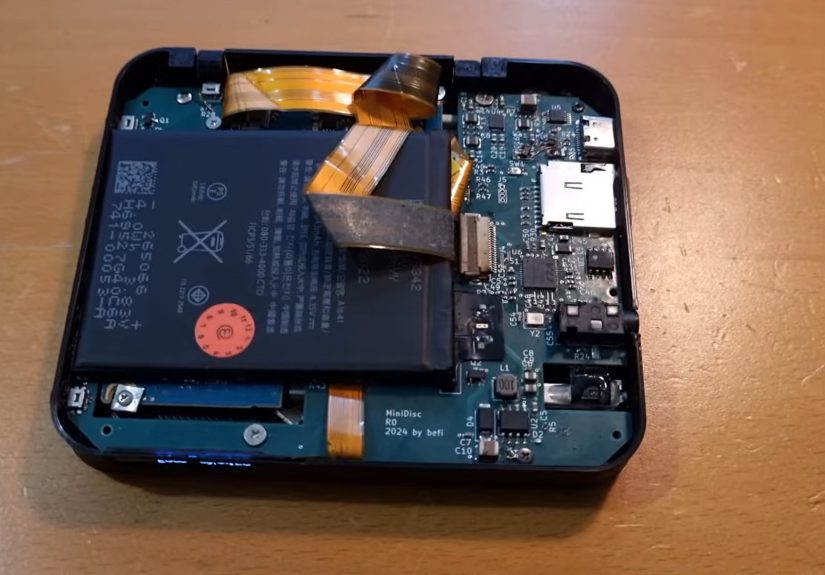
This was not simply a matter of taking a laptop Blu-ray drive and wrapping it in a plastic shell. The build involved serious hardware work: trimming the original drive assembly, fitting the optical mechanism into a much smaller footprint, using 3D-printed components for support, and integrating a custom board powered by an Allwinner F1C100S system-on-chip. Add in a USB-SATA bridge, battery management, buttons, an OLED display, and careful routing for USB modes, and suddenly the project starts looking less like a weekend experiment and more like a tiny electronics thesis with a disc tray.
What makes the device so charming is that it is both modern and nostalgic. It uses technologies associated with embedded Linux, custom PCBs, and compact digital controllers, yet the emotional appeal comes from the old ritual of loading physical media. There is no login screen. No algorithm recommends “because you watched half of a cooking video three years ago.” You insert a disc, press a button, and the machine does one job with delightful stubbornness.
Why the Idea Feels So Clever
The brilliance of a Blu-ray mini-disk player is not only that it works. It is that it solves a question most companies stopped asking: what if portable physical media still mattered?
Portable CD players gave people music on the move. MiniDisc players made that experience smaller, tougher, and more editable. Later, portable DVD players brought movies to car rides, dorm rooms, and kitchen counters. Blu-ray, however, largely skipped the pocketable era. It became a living-room format, a home theater format, a collector’s format. The idea of making Blu-ray feel personal and portable again is what gives this project its spark.
There is also a design joke hiding in plain sight. Blu-ray discs are physically the same 12 cm size as CDs and DVDs, but the phrase “mini-disk” makes the whole project feel like a shrunken piece of the future. It calls back to the smaller 8 cm disc era, when tiny optical media appeared in camcorders, game systems, and novelty formats that looked like they belonged in a spy movie. The befi-style project captures that same energy: small enough to feel playful, complex enough to feel impressive, and strange enough to make hardware nerds grin.
Blu-ray Technology in Plain English
Blu-ray was designed as a major leap beyond DVD. A standard single-layer Blu-ray disc can hold 25 GB of data, while a dual-layer disc can hold 50 GB. That extra space made the format suitable for high-definition video, larger audio tracks, bonus features, and cleaner compression than DVD could realistically provide.
The name “Blu-ray” comes from the blue-violet laser used to read and write data. Compared with the red laser used by DVD, the shorter wavelength allows data to be packed more densely on the disc. In everyday terms, it means more movie, more detail, and more room for quality. For home theater fans, that difference still matters. A well-mastered Blu-ray or Ultra HD Blu-ray can offer excellent picture and sound quality, especially when compared with heavily compressed streaming video.
Ultra HD Blu-ray pushed the format even further with 4K resolution, HDR, wide color, and immersive audio support. That is why physical media still has loyal defenders. Streaming is convenient, but convenience and quality are not always roommates. Sometimes they are neighbors who wave politely and then complain about each other’s lawn.
The MiniDisc Connection: Nostalgia With a Purpose
To understand why this project feels so emotionally satisfying, it helps to remember MiniDisc. Sony’s MiniDisc format arrived in the early 1990s as a compact, rewritable, shock-resistant alternative to cassette tapes and CDs. The first MD Walkman, the Sony MZ-1, offered recording, playback, track access, editing, and anti-skip technology. For music lovers, journalists, students, and gadget fans, MiniDisc felt futuristic in a very tactile way.
MiniDisc never conquered the world in the way CDs did, and it eventually lost ground to MP3 players and smartphones. Still, it built a loyal fan base because it had personality. The discs came in protective cartridges. The players had tiny screens, satisfying controls, and a sense of precision. You did not just play music; you handled a format.
The Blu-ray mini-disk player borrows that emotional language. It is not literally a Sony MiniDisc machine, but it shares the same spirit: compact optical media, purposeful controls, and a refusal to make everything disappear into a touchscreen. In a world where most devices are sealed slabs, a visible disc mechanism feels almost rebellious.
Inside the Build: Small Device, Big Engineering
The technical challenge is the real story. A Blu-ray drive is not naturally pocket-friendly. It has moving parts, a spindle motor, laser optics, rails, a tray or slot mechanism, control electronics, and power demands. Shrinking the experience means removing anything unnecessary without damaging the precision parts that make the drive function.
That is why the project is so impressive. The drive had to be physically modified, but not recklessly. Cutting away structure from an optical drive is a little like trimming a house down to fit inside a suitcase while insisting the plumbing still work. The optical path must remain aligned. The disc must spin evenly. The laser sled must move correctly. The device must survive being handled, powered, and transported.
The custom electronics are just as important. A small embedded board gives the player its brain, while the USB-SATA interface lets the system communicate with the Blu-ray drive. Battery and power management make the device portable instead of merely “small and attached to a cable,” which is the electronic equivalent of wearing a backpack full of soup. The OLED display and buttons complete the user experience, turning exposed engineering into something that feels usable.
Why Physical Media Still Has Fans
Physical media keeps surviving because it offers something streaming cannot fully replace: possession. When you own a disc, you are not relying on a licensing deal, a monthly subscription, or a platform deciding that your favorite movie now lives on a different service with a different password and a more annoying home screen.
Collectors also care about presentation. Blu-ray packaging, cover art, special editions, director commentaries, behind-the-scenes features, and restored transfers all contribute to the experience. A streaming thumbnail cannot fully replace the joy of pulling a favorite film from a shelf. It is the difference between borrowing a chair and having a cozy reading nook that smells faintly of popcorn and good decisions.
The Blu-ray mini-disk player taps into that love. It suggests a more personal relationship with movies and media. Instead of building a huge home theater around a disc, it brings the disc closer to the user. It makes Blu-ray feel handheld, intimate, and slightly mischievous.
Could a Blu-Ray Mini-Disk Player Become a Real Product?
In theory, yes. In practice, it would be difficult. A commercial portable Blu-ray player would need to solve several problems at once: battery life, heat, mechanical durability, disc protection, licensing, codec support, digital rights management, display output, and cost. That is a large checklist for a market that has mostly moved toward streaming sticks, tablets, and downloadable files.
The biggest challenge may not be technical. It may be demand. Companies build products when enough people will buy them at a profitable price. A pocketable Blu-ray device would excite collectors, retro-tech fans, makers, archivists, and physical media enthusiasts, but that audience is smaller than the market for phones or wireless earbuds. Still, niche does not mean pointless. Some of the most beloved gadgets in history were never for everyone.
A modern commercial version could be fascinating. Imagine a portable optical player with USB-C charging, HDMI output, a small color screen, headphone support, disc ripping disabled for legal compliance, and a rugged clamshell design. Add a beautiful interface, quiet drive tuning, and support for standard Blu-ray and DVD playback, and suddenly the idea sounds less absurd. Expensive? Probably. Charming? Absolutely.
Design Lessons From the Blu-Ray Mini-Disk Player
1. Good Gadgets Do Not Always Need to Be Practical
Some devices exist because they are useful. Others exist because they make people imagine. The Blu-ray mini-disk player lives in the second category, but that does not reduce its value. Experimental hardware expands what people think is possible.
2. Physical Controls Still Matter
Buttons are underrated. A play button, a stop button, and a simple display can make a device feel focused. Touchscreens are powerful, but they often turn every device into a tiny computer with commitment issues.
3. Repairability and Modding Create Culture
This project would not exist without a maker willing to open hardware, understand it, reshape it, and rebuild around it. That culture is important. It keeps old formats alive and teaches new generations how devices actually work.
4. Nostalgia Works Best With Real Engineering
Nostalgia alone can become decoration. Here, the nostalgia is backed by actual design and problem-solving. That is why the project feels meaningful rather than gimmicky.
Who Would Love This Kind of Device?
A Blu-ray mini-disk player would appeal to several groups. Movie collectors would love the novelty of portable disc playback. Retro-tech fans would appreciate the MiniDisc-inspired form factor. Makers would admire the custom electronics and mechanical adaptation. Archivists might appreciate the reminder that optical media still has a role in long-term storage discussions. And design enthusiasts would simply enjoy seeing a familiar technology reimagined.
It would also be perfect for people who miss single-purpose devices. There is something calming about a gadget that does not do everything. A dedicated music player, camera, e-reader, or disc player can feel less distracting because it does not drag the entire internet into your pocket. Sometimes a limited device gives you more freedom than a limitless one.
The Bigger Meaning: A Tiny Protest Against Disposable Tech
The most interesting thing about the Blu-ray mini-disk player is not the disc. It is the attitude. The project says old technology can still be explored. It says formats do not become worthless just because the market moved on. It says a person with skill, curiosity, and a rotary tool can ask better questions than a boardroom obsessed with quarterly trends.
Modern consumer tech often hides complexity. Devices are glued shut, software-controlled, cloud-dependent, and designed to be replaced rather than understood. A handmade Blu-ray mini-disk player goes the opposite direction. It exposes the work. It celebrates the mechanism. It turns the act of playback into something visible and physical.
That is why people respond to projects like this. They are not just admiring a gadget. They are admiring the possibility that technology can still be personal.
Experience Section: Living With the Idea of a Blu-Ray Mini-Disk Player
Imagine taking a Blu-ray mini-disk player on a weekend trip. Not because it is the most efficient way to watch a movie, but because efficiency is not always the point. You pack one or two favorite discs the way someone might pack a paperback novel. There is a tiny ritual to it: choosing the movie, sliding the case into your bag, knowing that your evening entertainment is not dependent on hotel Wi-Fi that behaves like it is powered by a sleepy hamster.
The first thing you notice is the change in mood. With streaming, browsing often becomes the main event. You open an app, scroll through rows of posters, read half a description, switch apps, forget what you wanted, and somehow end up watching a trailer for a show you will never start. With a physical player, the decision has already been made. The disc is there. The movie is there. The experience begins faster because the choices are fewer.
Handling a compact optical player would also feel pleasantly mechanical. You would hear the disc spin up, see the small display wake, and press real buttons. That might sound minor, but physical feedback changes how people connect with devices. A button has a beginning and an end. A touchscreen gesture sometimes feels like asking a pane of glass for a favor.
There would be quirks, of course. A spinning disc device needs care. You would not toss it around like a pair of socks. Battery life would matter. Drive noise might be noticeable in a quiet room. The device might get warm. It would probably attract questions from anyone nearby. “Is that a tiny Blu-ray player?” someone would ask, immediately proving that the gadget has succeeded as a conversation starter.
The best experience would be personal viewing with headphones, perhaps connected to a small external display or used as a portable media station during travel. It would not replace a full home theater, and it would not beat a tablet for convenience. But it would offer something different: intention. You are not opening a feed. You are playing a chosen object.
For collectors, that matters. A favorite film on disc is more than data. It is cover art, menus, bonus material, audio tracks, subtitles, and sometimes a transfer that looks better than the version floating around on streaming platforms. A Blu-ray mini-disk player would make that collection feel active instead of decorative. The shelf would no longer be a museum; it would be a portable library.
There is also an educational experience hidden inside the concept. Anyone who studies this kind of build learns about optical drives, embedded computing, power design, mechanical tolerances, interface standards, and user experience. It is the kind of project that can inspire someone to pick up electronics, CAD design, Linux tinkering, or repair work. That is a big achievement for something small enough to fit in a bag.
Most importantly, the device reminds us that joy is a valid design goal. Not every gadget must optimize productivity, track habits, sync with the cloud, or ask for a firmware update while you are trying to relax. Sometimes a gadget can simply be clever, tactile, and a little ridiculous in the best possible way. The Blu-ray mini-disk player is exactly that: a tiny love letter to physical media, written in circuit boards, plastic, lasers, and stubborn imagination.
Conclusion
An ingenious Blu-ray mini-disk player is more than a quirky hardware project. It is a compact argument for creativity in an era of predictable devices. By combining Blu-ray’s high-capacity optical media with the pocketable charm of MiniDisc-style design, the concept proves that old formats can still inspire new ideas. It may never become a mainstream product, but that almost makes it better. Mainstream gadgets usually arrive polished, predictable, and focus-grouped until the fun falls off. This one feels handmade, curious, and alive.
For SEO readers, tech fans, collectors, and anyone who misses the satisfying click of physical media, the Blu-ray mini-disk player is a reminder that innovation does not always mean abandoning the past. Sometimes it means taking the past apart, trimming it carefully with a Dremel, designing a custom board, and making it pocket-sized just because nobody said you could not.