Table of Contents >> Show >> Hide
- What is Alkeran (melphalan HCl) IV?
- How Alkeran IV is given
- Dosing overview (why you should never DIY this)
- Common side effects
- Serious side effects and warnings
- Interactions: what to avoid (and what to disclose)
- Pictures: what Alkeran IV typically looks like
- Practical tips for getting through treatment days
- FAQ
- Real-world experiences: what patients and caregivers often report (about 500+ words)
- Conclusion
Alkeran (as HCl) intravenous is a brand-name form of melphalan hydrochloride injection, a chemotherapy medication in the “alkylating agent” family. Translation: it’s designed to damage cancer-cell DNA so those cells can’t keep copying themselves like they own the place. (They do not.)
This guide is written for real humansnot pharmacology robots. It’s also not a substitute for your oncology team’s instructions, because chemo dosing is the opposite of “one-size-fits-all.” If you’re reading this because you or someone you love is starting Alkeran IV, I’m glad you’re getting informed. Knowledge doesn’t cure cancerbut it can make treatment feel less like walking into a surprise pop quiz.
What is Alkeran (melphalan HCl) IV?
Alkeran IV is a prescription chemotherapy medication given by vein (IV). It typically comes as a vial of freeze-dried powder that a pharmacist reconstitutes into a solution shortly before administration. Unlike many everyday meds, it’s handled with extra safety precautions because it’s a hazardous drug (effective, but not something you want casually spilled on skin or countertops).
What it’s commonly used for
In the U.S., Alkeran for Injection is classically used for the palliative treatment of multiple myeloma when oral therapy isn’t appropriate. In real-world oncology practice, melphalan (the active drug) is also widely known for its role in high-dose conditioning regimens before certain stem cell transplantsoften using specific transplant protocols and sometimes different formulations. The exact “why this drug, why this dose, why now” depends on diagnosis, goals of care, and the larger treatment plan.
How it works (in plain English)
Melphalan is an alkylating agent. It binds to DNA and creates cross-linksbasically gum in the zipperso fast-growing cells can’t divide properly. Cancer cells tend to divide quickly, which is why chemo targets them. The problem is that some healthy cells divide quickly too (like bone marrow cells, hair follicles, and cells lining your mouth and GI tract). That overlap explains many side effects.
How Alkeran IV is given
Alkeran IV is usually administered as an infusion over a short period of time (often minutes, not hours), but the schedule depends on the protocol. Many people receive it in an infusion center or hospital setting.
Vein access: peripheral IV vs. central line
Some patients receive Alkeran through a regular IV in the arm. If peripheral access is difficultor if the treatment plan involves repeated infusionsyour team may prefer a central line (like a port or PICC). This isn’t about “extra drama”; it’s about reliable access and reducing the chance of irritation if medication leaks outside the vein (extravasation).
Pre-meds you might see
Nausea prevention is common because melphalan can be rough on the stomach. Your clinician may prescribe anti-nausea medications before and/or after the infusion. You might also see other supportive meds based on your overall regimen.
Dosing overview (why you should never DIY this)
Alkeran IV dosing is individualized. It’s commonly calculated using body surface area (mg/m²) or sometimes weight-based dosing in specific protocols. Your oncology team also considers labs, kidney function, prior therapies, and how you tolerated earlier cycles.
A commonly referenced schedule for IV melphalan in multiple myeloma (palliative)
One traditional approach uses 16 mg/m² IV given over about 15–20 minutes, repeated at 2-week intervals for 4 doses, then (after recovery from toxicity) at 4-week intervals. This is an example of a labeled-style schedule, not a promise that it’s your schedule.
Kidney function and dose adjustments
Melphalan exposure and toxicity can increase when kidney function is reduced. In some labeling and clinical references, a substantial dose reduction may be considered for patients with significant renal insufficiency (for example, elevated BUN). Your team will interpret your labs and adjust accordingly.
High-dose melphalan (transplant setting)
If you’re hearing phrases like “high-dose melphalan” and “autologous stem cell transplant,” that’s a different intensity level and a different supportive-care universe. High-dose melphalan is typically paired with very close monitoring and proactive management of side effects. If this is your path, your transplant team will give you a detailed roadmapfollow that roadmap like it’s the last flashlight in a blackout.
Common side effects
Side effects vary depending on dose, schedule, other medications, and your baseline health. Some people get a few mild issues. Others get the whole “chemo bingo card.” The key is reporting symptoms early so your team can help before small problems become big ones.
Gastrointestinal (GI) effects
- Nausea and vomiting (sometimes significant, even with prevention meds)
- Loss of appetite and taste changes
- Diarrhea (especially with higher-dose regimens)
- Mouth sores (mucositis), which can make eating and drinking miserable
If you can’t keep fluids down, have severe diarrhea, or mouth pain prevents you from eating/drinking, tell your oncology team promptly. There are supportive optionsnobody gets a trophy for suffering silently.
Blood count changes (bone marrow suppression)
This is a big one. Alkeran can reduce bone marrow production of blood cells, leading to:
- Low white blood cells (higher infection risk)
- Low platelets (higher bleeding/bruising risk)
- Low red blood cells (anemia → fatigue, weakness, shortness of breath)
Because of this, you’ll usually have frequent blood tests. Your team may delay treatment, adjust dosing, or prescribe supportive therapies based on results.
Fatigue
Chemo-related fatigue can feel like your phone battery is stuck at 12%even after you “charged” (rested). It’s common and can be multifactorial: anemia, poor sleep, stress, dehydration, and the body doing repair work behind the scenes.
Hair and skin changes
Hair thinning or hair loss can happen, especially with certain regimens. Skin rashes or itching are also possible. Let your team know about new or worsening rashessome reactions need quick attention.
Infusion-site irritation
Pain, redness, swelling, or a burning sensation around the IV site should be reported immediately during infusion. If medication leaks outside the vein, it can damage local tissue.
Serious side effects and warnings
Every chemo drug has a “serious but less common” list. Reading it can feel scary, but it’s better to know what symptoms deserve urgent attention.
Severe bone marrow suppression
Alkeran can cause profound drops in blood counts, which can lead to serious infection or bleeding. Call your clinician right away for fever, chills, signs of infection, unusual bruising/bleeding, or severe weakness.
Hypersensitivity (allergic-type) reactions
Serious hypersensitivity reactionsincluding anaphylaxishave been reported with IV melphalan. Symptoms can include hives, swelling, breathing trouble, dizziness, or sudden flushing. Infusion centers are prepared for this, which is one reason chemo is administered under medical supervision.
Secondary cancers (long-term risk)
Melphalan is considered leukemogenic, meaning it can increase the risk of developing certain blood cancers later (such as leukemia), especially with higher cumulative exposure and in combination with other cancer therapies. This risk is weighed against the benefit of treating a current, serious canceryour oncology team makes that calculation with you, not for you.
Lung toxicity (rare, but important)
Pulmonary toxicity (including inflammation or scarring) has been reported. Contact your care team if you develop persistent cough, new shortness of breath, or worsening breathing symptomsespecially if you’re also receiving other drugs that can affect the lungs.
Fertility, pregnancy, and breastfeeding
- Pregnancy: Melphalan can harm a developing fetus. Effective contraception is typically recommended during treatment (and often for a period afterwardask your team for specifics).
- Fertility: Melphalan may affect ovarian or testicular function, sometimes temporarily and sometimes permanently. If fertility preservation matters to you, bring it up earlybefore treatment starts, if possible.
- Breastfeeding: Breastfeeding is generally not recommended with this medication.
Interactions: what to avoid (and what to disclose)
Drug interactions with chemotherapy are less about “will it cancel out my pill?” and more about “will it increase toxicity or infection risk?” Always provide your oncology team with an updated list of:
- Prescription medications
- Over-the-counter meds (pain relievers, cold meds, antacids, etc.)
- Vitamins and supplements (including “natural” products)
- Herbal products (especially those that may affect bleeding or liver metabolism)
Notable interaction categories
- Live vaccines: Often avoided during immunosuppressive chemotherapy because the immune system may not handle them safely or effectively.
- Other chemotherapy agents: Combining treatments can intensify bone marrow suppression and other toxicities.
- Kidney-impacting drugs: Some combinations may increase kidney stress or change melphalan clearance.
- Specific medications reported in references: Certain regimens involving drugs like cisplatin, cyclosporine, or carmustine (BCNU) have been associated with heightened risks in particular contextsyour team accounts for this when designing the plan.
Pictures: what Alkeran IV typically looks like
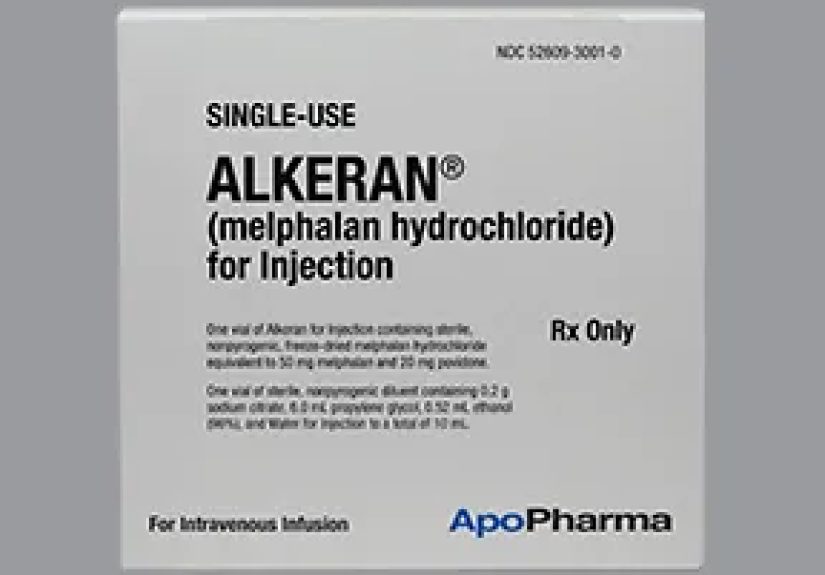
Medication photo pages (like those you might see on consumer drug sites) generally show the vial and labeling. Alkeran IV is often supplied as a vial of powder (commonly 50 mg melphalan equivalent per vial in classic labeling), plus diluent. After reconstitution, the solution is prepared for IV administration fairly quickly because stability can be limited after mixing.
Tip: If you’re trying to identify a medication from a photo, use the exact printed name, strength, and manufacturer informationnot just color or vial shape. Different manufacturers and formulations can look similar, and “similar” is not a safe standard in chemo-land.
Practical tips for getting through treatment days
Before infusion
- Bring your medication list (or keep it on your phone).
- Ask what symptoms should trigger a same-day call vs. an ER visit.
- If you’re prone to nausea, ask about pre-meds and at-home rescue meds.
During infusion
- Tell the nurse immediately about burning, pain, or swelling near the IV site.
- Report sudden itching, rash, chest tightness, dizziness, or trouble breathing.
- Don’t downplay symptoms. “I don’t want to bother anyone” is not a medical strategy.
After infusion
- Track symptoms (nausea, mouth pain, diarrhea, fever, fatigue) so patterns are clear.
- Protect your immune system: good hand hygiene, avoid sick contacts when possible, and follow your team’s guidance on masks and crowds.
- Hydration and nutrition mattersmall, frequent meals can be easier than big ones.
FAQ
Is Alkeran IV the same as oral Alkeran?
They contain the same active drug (melphalan), but the formulation, absorption, and side-effect intensity can differ. Historically, IV melphalan has been associated with more pronounced blood count suppression than oral formulations in some comparisons.
How quickly do side effects show up?
Some effects (nausea, infusion reactions) can occur the same day. Blood count drops often happen later, commonly reaching a low point (nadir) in the weeks after treatment, depending on regimen. Your team schedules labs to catch this.
What should I do if I miss a dose?
Don’t try to “make it up.” Call your oncology team. Missed chemo doses are managed by clinicians, not by calendar guilt.
Real-world experiences: what patients and caregivers often report (about 500+ words)
People’s experiences with Alkeran IV (melphalan hydrochloride) tend to fall into a few familiar chapters. The first chapter is often anticipation: you read the side effects, your brain starts doom-scrolling, and suddenly “bone marrow suppression” feels like a phrase that should come with a warning label of its own. What many patients say later is that the most helpful thing wasn’t memorizing every possible adverse eventit was learning the few symptoms that truly require urgent action (like fever) and having a clear plan for who to call.
The second chapter is infusion day. Some people are surprised by how fast the actual infusion can be. The appointment may be long because of check-in, labs, pre-meds, and observation, but the drug itself can be administered relatively quickly in certain protocols. Patients often describe infusion days as mentally tiring more than physically dramatic: you sit, you wait, you watch vital signs, you try to distract yourself with music, podcasts, or that one TV show you “save” for stressful moments. A common theme is that having a small routinesame blanket, same snack, same playlistcan make the day feel less chaotic.
The third chapter, for many, is nausea management. Even with anti-nausea medications, some patients report waves of queasiness that come and go. Others do fine at first and then get hit later. The pattern can feel unpredictable, which is why clinicians often emphasize taking antiemetics exactly as prescribed, rather than waiting until nausea is already intense. Patients frequently mention that tiny adjustmentslike smaller meals, bland foods, and sipping fluidscan be more realistic than trying to “eat normally” through a rough patch. And yes, taste changes are a real plot twist: foods you loved can suddenly taste “off,” and foods you ignored can become strangely tolerable. Your taste buds are not being dramatic; they’re just reacting to chemotherapy.
Another common lived experience is mouth and throat soreness (mucositis), especially with higher-dose regimens. People describe it as anything from mild tenderness to “why does water feel spicy?” Mouth discomfort can affect eating, drinking, and sleepso it becomes a quality-of-life issue fast. Patient education resources often encourage early reporting, because supportive care works best when started early. Patients also talk about how mouth symptoms can sneak up, so staying alert to small changes matters.
Then there’s the chapter called “the lab results era”. With melphalan, blood count monitoring can become a central part of the routine. Many patients say the emotional ups and downs of lab trends can be harder than they expectedespecially when counts dip and precautions increase. It’s common to hear people talk about being extra cautious around crowds or sick contacts, not out of fear, but out of practicality: if your immune system is temporarily lowered, a “simple cold” can become a serious complication. Caregivers often describe this phase as a balancing actsupporting safety while still protecting normalcy and mental health.
Finally, patients often emphasize the value of team communication. The people who feel most “in control” aren’t the ones who never have side effectsthey’re the ones who know what’s expected, what’s not, and when to call. Many patients recommend keeping a symptom log (even brief notes), asking for written instructions, and bringing a second person to appointments when possible to help remember details. Chemo can make your brain foggy; it’s not the ideal time to rely on perfect memory.
If there’s one encouraging thread across many experiences, it’s this: side effects can be real and sometimes intense, but supportive care has improved a lot. You don’t have to white-knuckle your way through treatment. Your job is to report honestly; your care team’s job is to help you get through it as safelyand as comfortablyas possible.
Conclusion
Alkeran (as HCl) intravenousmelphalan hydrochloride injectionis a powerful chemotherapy option used in specific cancer settings, especially in multiple myeloma care. Its benefits come with serious risks, particularly bone marrow suppression and infection/bleeding risk, plus potential long-term effects like secondary cancers and fertility impacts. The good news: treatment is delivered under close medical supervision, dosing is individualized, and supportive care can make a major difference. Ask questions, report symptoms early, and let your care team do what they’re trained to dokeep you as safe as possible while targeting the cancer.